Lucknow Fire Probe Exposes Building Safety Failures After 15 Deaths
A Special Investigation Team is probing the Aliganj fire that killed 15 people, mostly young students, after an FIR flagged missing fire-safety arrangements and the absence of any emergency exit.
Commentary & Analysis ·
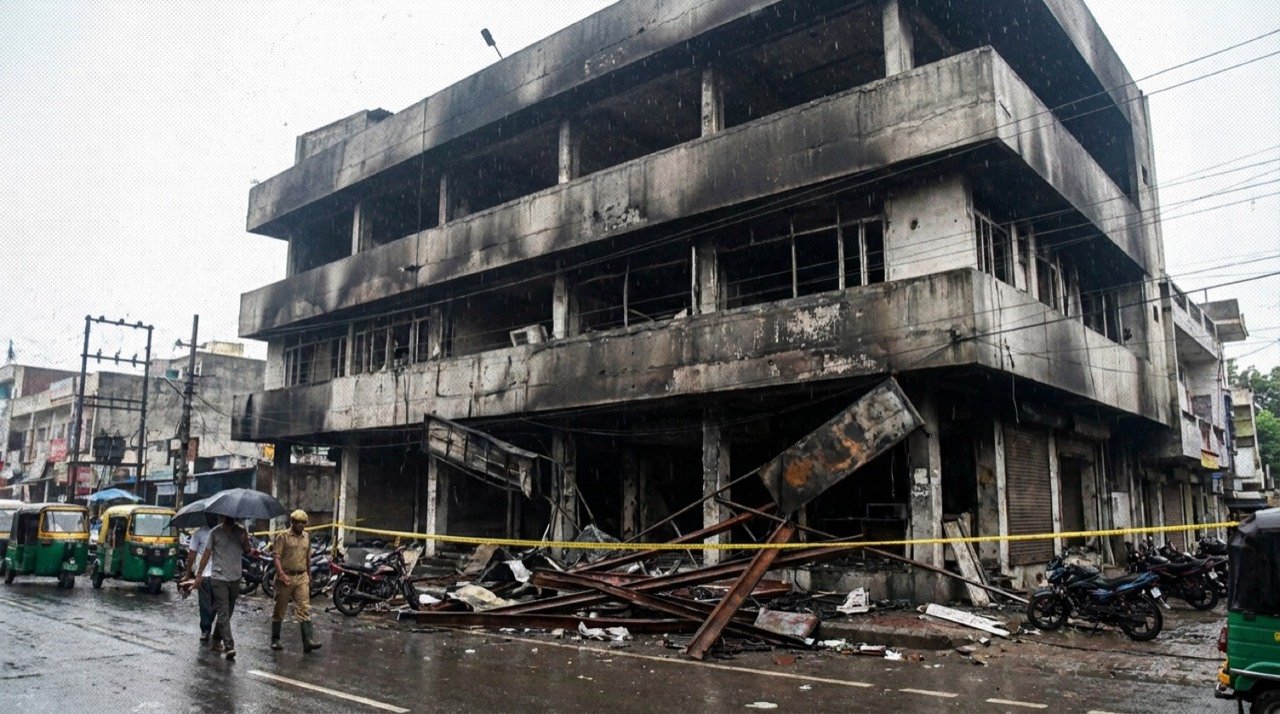
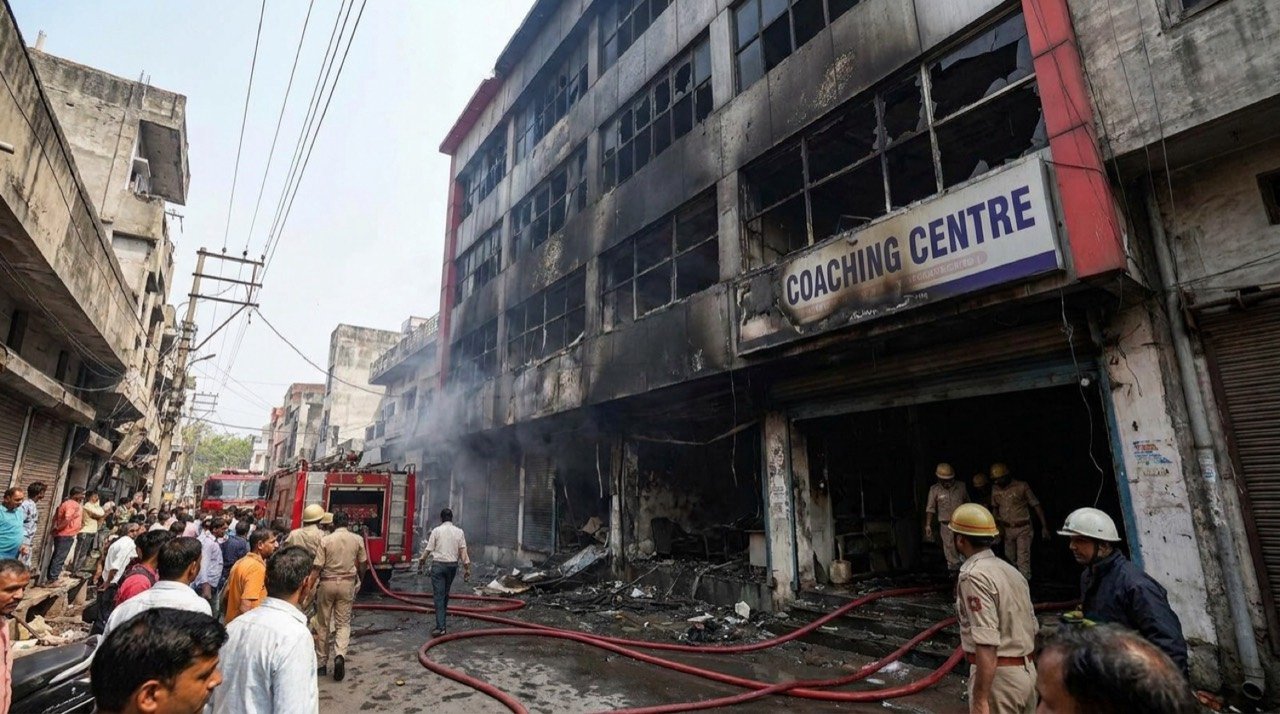
A Special Investigation Team has begun probing the Lucknow building fire that killed 15 people, most of them young students, in the Aliganj locality, with early findings pointing squarely at a failure to enforce basic safety norms. The blaze tore through a three-storey commercial building on Usha Mehta Marg and left several others injured. What makes this tragedy especially hard to absorb is not simply the scale of the loss but how familiar the contributing factors already appear to be: a building operating outside its sanctioned purpose, an absence of emergency exits, and a paper trail of regulatory red flags that were, in the end, allowed to lapse into inaction.
Arrests and an FIR
Police sealed the building, registered an FIR against six people and arrested four as forensic teams combed the site for the cause of the fire. The FIR cited a lack of fire-safety arrangements and the absence of an emergency exit or any alternative escape route, conditions that investigators believe turned a manageable blaze into a mass-casualty event. That distinction matters enormously. A fire, however it starts, is in principle a containable hazard if a structure has been built and maintained to give occupants a way out. When there is no second exit, no alarm system, and no clear evacuation route, even a modest fire can trap dozens of people within minutes. The fact that so many of the victims were young students only sharpens the sense that this was a preventable catastrophe rather than an unavoidable one.
Forensic examination is expected to establish how the fire started and how it spread so quickly, but the structural shortcomings already on record have shifted the inquiry toward questions of negligence and accountability. In other words, regardless of the technical origin of the flames, the investigation has already moved past ignition and into the more consequential territory of who allowed the building to operate in a condition that made survival so difficult.
A building with a troubled history
The premises had reportedly been sanctioned as residential property but were later used for commercial activity, a mismatch that often slips through the cracks of municipal oversight. This kind of unauthorised conversion is not an isolated administrative footnote; it goes to the heart of how safety codes are designed. Residential sanctions typically assume a different pattern of occupancy, different fire-load calculations, and different exit requirements than commercial use, particularly where coaching centres, offices or other high-footfall operations are involved. When a building's actual use diverges from its sanctioned use, the safety assumptions baked into its original approval no longer hold, yet enforcement mechanisms rarely catch up in time.
The building had also faced a demolition order in 2016 that was subsequently withdrawn. That single fact deserves close attention. A demolition order is not issued lightly, it typically reflects a serious violation identified by civic authorities. That such an order could be withdrawn, and the building allowed to continue operating for years afterward, raises uncomfortable questions about the process by which such orders are reversed, who reviews them, and whether follow-up inspections ever took place to verify that the underlying violations had actually been resolved. That paper trail has sharpened scrutiny of how mixed-use structures are inspected, approved and monitored in fast-growing cities where commercial demand frequently outpaces regulation.
Why enforcement gaps persist
Cities such as Lucknow have seen rapid, often informal commercial growth, with coaching institutes, small offices and retail operations moving into buildings never designed or certified for that purpose. Municipal bodies are frequently stretched thin, tasked with inspecting thousands of properties with limited staff and, in many cases, limited political appetite to shut down businesses that provide local employment and services. The result is a system where approvals exist on paper, but the on-the-ground reality of exits, alarms and occupancy limits is rarely verified with any consistency. Repeated incidents across urban India have shown this pattern again and again: a violation is flagged, a notice is issued, and then, through appeal, negotiation or simple inertia, enforcement quietly fades until the next disaster forces the issue back into public view.
The wider warning here is not specific to Lucknow. The tragedy has widened concerns about inspection discipline and the enforcement of fire norms across urban India more broadly. Every city with a similar mix of ageing infrastructure, converted properties and understaffed regulatory bodies faces the same latent risk. The Aliganj fire is a reminder that the gap between what is sanctioned and what is actually built or occupied is not a hypothetical concern confined to one address on Usha Mehta Marg, but a structural feature of how many Indian cities have grown.
What accountability should look like
As the SIT pieces together the sequence of events, the case is likely to renew pressure on civic authorities to audit mixed-use buildings and close the gap between sanctioned use and actual occupancy before the next tragedy strikes. The six named in the FIR and the four already arrested will likely face the immediate legal consequences of this case. But the harder, more institutionally uncomfortable question is whether the officials responsible for approving, inspecting, and ultimately reversing the 2016 demolition order will face any scrutiny at all. As one fire-safety official familiar with urban inspections put it, approvals on paper count for nothing when there is no way out of a burning building. That observation captures precisely why this case cannot be allowed to end with the building owner alone.
If the pattern seen elsewhere in India repeats itself, the investigation may conclude with penalties for the immediate operators of the building, while the officials who signed off on inspections, or who reversed the demolition order without follow-up, escape any meaningful consequence. That asymmetry, where private operators bear legal risk while public officials bear none, is precisely what allows unsafe buildings to persist for years despite documented red flags.
The NE Times View
Fifteen deaths, mostly students, in a building with no emergency exit is not an accident but a predictable consequence of unenforced codes. The SIT will name culprits, yet India has been here too often, the pattern is lax inspection, paperwork compliance and blame that rarely climbs past the lowest rung. Accountability must reach the officials who certify safety, not just the building owner. Until enforcement carries real cost, the next tragedy is only a matter of time.
Key takeaways
- Fifteen people, mostly young students, died in the Aliganj fire on Usha Mehta Marg in Lucknow; an FIR was registered against six people and four have been arrested.
- The FIR cites missing fire-safety arrangements and the absence of an emergency exit, conditions investigators believe turned the blaze into a mass-casualty event.
- The building was sanctioned as residential but used commercially, and a 2016 demolition order against it was later withdrawn without apparent follow-up.
- The case highlights a wider pattern across urban India of approvals existing on paper while exits, alarms and occupancy rules go unverified on the ground.
- Genuine accountability requires scrutiny of the officials who certify and reverse safety orders, not just the immediate operators of the building.
You may also like to read
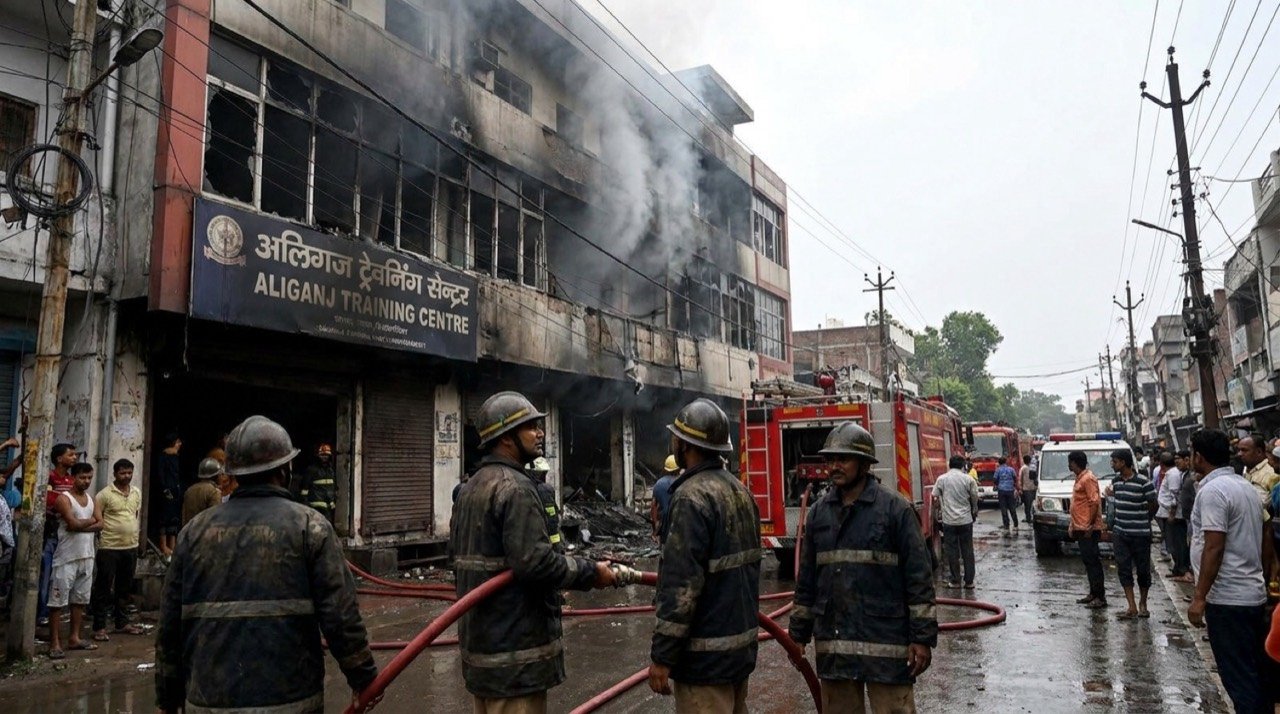
Lucknow Fire Puts Coaching and Training Centre Safety Under Scrutiny
At least 15 people, mostly students and trainees, died in a Lucknow fire, forcing a hard look at fire-safety compliance in coaching centres, gaming studios and training spaces inside commercial buildings.
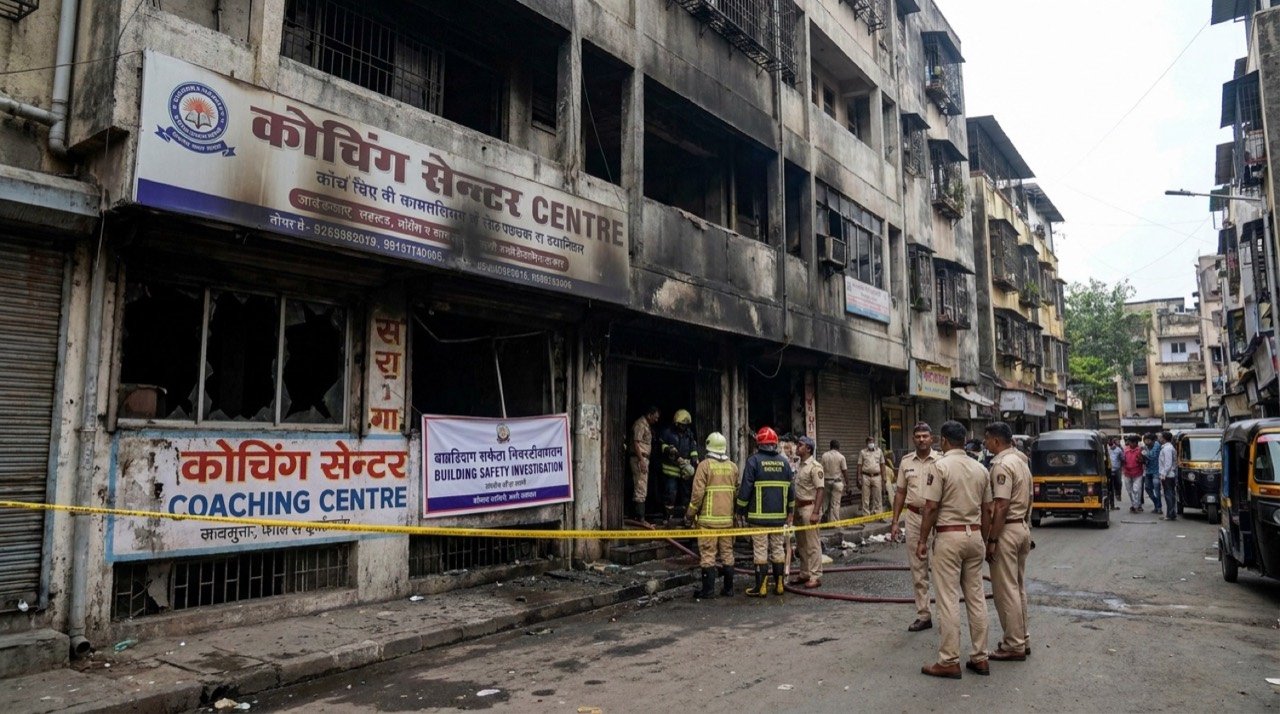
Lucknow Coaching Centre Fire: Probe Spotlights Ignored Building-Safety Warnings
A deadly fire at a coaching centre in Lucknow's Aliganj that killed 15 people has widened into an investigation of building-safety failures, with four arrests, an SIT probe and a fresh demolition notice.
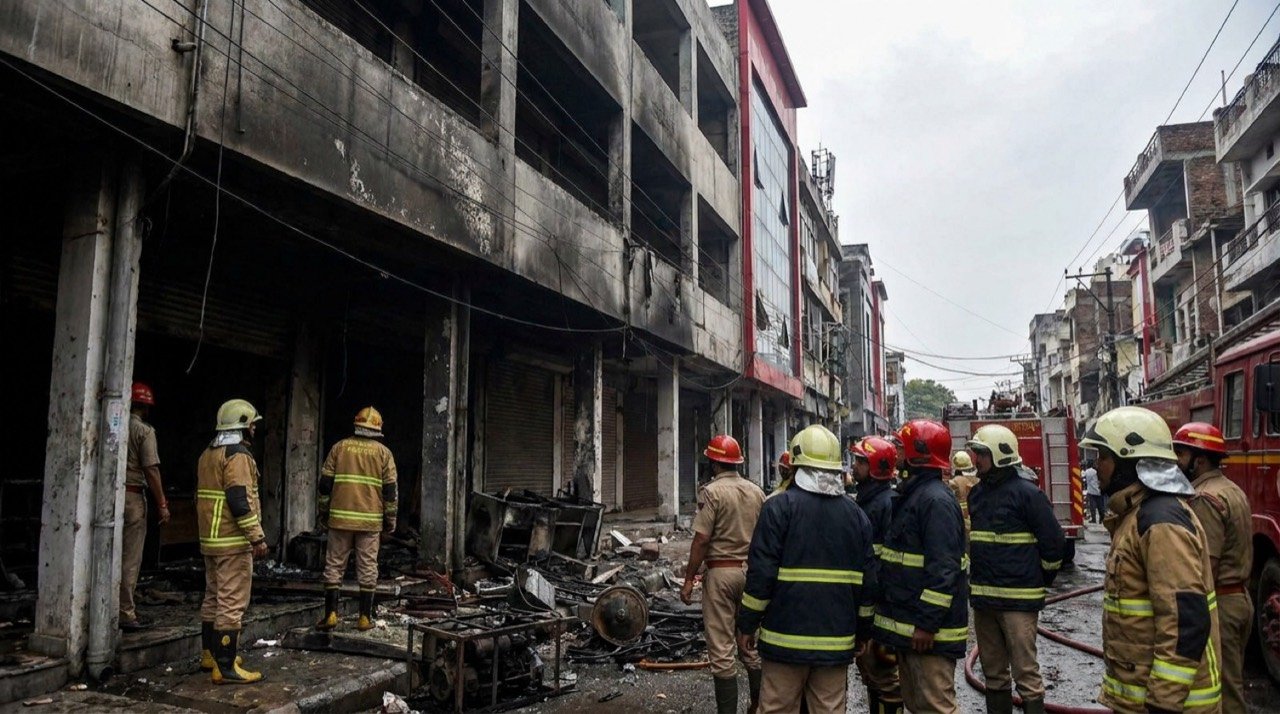
Lucknow Fire Probe Widens, Building Safety Under Scrutiny
A deadly fire in Lucknow's Aliganj that killed 15 people in a coaching-and-studio building has triggered demolition notices, suspensions and arrests, with illegal commercial use and blocked exits now in focus.
Lucknow Coaching-Centre Fire: Officials Suspended and Owners Arrested After 15 Deaths
A deadly fire at a Lucknow building housing a coaching centre has killed 15 people, triggering suspensions, arrests and a special probe into safety and construction violations.
More from this section
More
AICTE Industry Fellowship 2026: Rs 1.5 Lakh Scheme Closes July 5
The AICTE Industry Fellowship Programme 2026, which places technical-education faculty inside leading companies on a Rs 1.5 lakh monthly stipend, reached its application deadline on July 5.

Bay of Bengal Low Pressure System Revives Monsoon Over Western India
A low-pressure system over the Bay of Bengal has pushed the monsoon back into an active phase, bringing steady heavy rain to Kerala, coastal Karnataka and Maharashtra, and putting Mumbai and Pune on preparedness watch.
Bishnoi Gang Suspects Injured in Haryana Encounter as Police Tighten Net
A joint Haryana-Delhi Police operation in Bahadurgarh left two suspected Lawrence Bishnoi gang members injured, spotlighting the multi-state coordination now central to India's fight against organised crime networks.