India Becomes World's Top Ship-Recycling Nation in 2025
India's global share of ship recycling rose to 35.4 percent in 2025, the Ministry of Ports cited UNCTAD data as saying, helping the country meet a Maritime India Vision 2030 target years ahead of schedule.
Commentary & Analysis ·
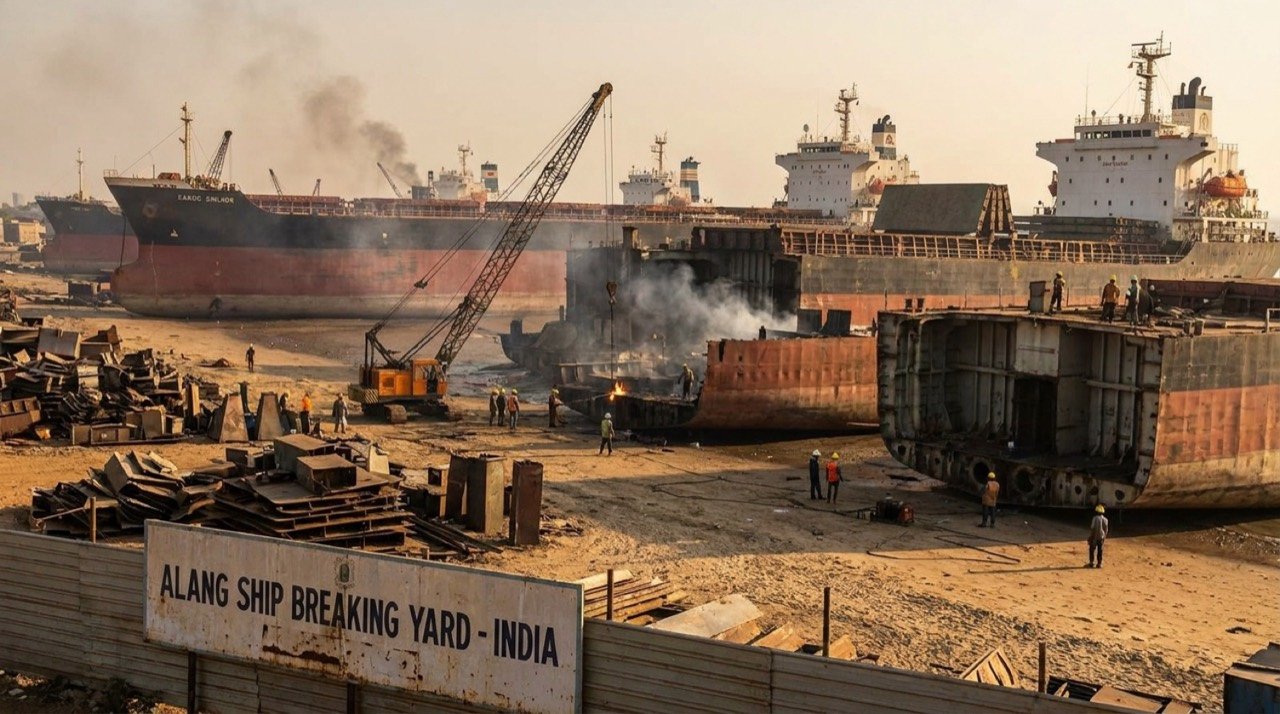
India has emerged as the world's leading ship-recycling nation in 2025, with the Ministry of Ports, Shipping and Waterways citing UNCTAD data that places the country's global share at 35.4 percent, up from 30.1 percent in 2024. The volume of tonnage dismantled rose to about 2.99 million gross tons, propelling India past a key Maritime India Vision 2030 target well ahead of schedule. On the surface, this is a straightforward industrial success story: a rise of more than five percentage points in global market share within a single year, in a sector where India has long held a substantial presence but not always outright dominance. Read more closely, though, the numbers raise a familiar question for Indian heavy industry: can scale be matched by standards, or will growth simply outpace the safeguards meant to keep it accountable.
What the numbers actually represent
A jump from 30.1 percent to 35.4 percent of global ship-recycling tonnage is not a marginal shift. It implies that more than a third of all end-of-life ships broken down anywhere in the world in 2025 were dismantled on Indian shores. With total tonnage recycled reaching close to 2.99 million gross tons, India has consolidated a position it has held for years as one of the top destinations for ship-breaking, alongside competitors such as Bangladesh and Pakistan, and pulled further ahead of them in relative terms. For a country whose maritime ambitions are often measured against port capacity, shipbuilding orders and container throughput, ship recycling is a less glamorous but economically significant marker: it reflects an entire downstream ecosystem of steel recovery, equipment resale and labour-intensive dismantling that quietly complements the shinier headline metrics of the shipping economy.
The scale of the achievement is best understood against the backdrop of the Maritime India Vision 2030, the government's roadmap for expanding the country's maritime economy. That plan set targets across ports, shipbuilding, coastal shipping and recycling, with ship-breaking tonnage as one measurable benchmark. Hitting that particular target years ahead of the 2030 deadline is unusual in Indian infrastructure planning, where slippage is often the norm rather than the exception. It suggests that whatever combination of policy support and market conditions has been at work in this sector, it has functioned with more efficiency than many comparable government-led initiatives.
Alang and the yards driving the surge
Much of the activity is concentrated at Alang in Gujarat, long the centre of India's ship-breaking industry, alongside other coastal yards. Alang's dominance is not new; it has for decades been one of the largest ship-breaking sites in the world, a sprawling stretch of beach-based yards where vessels are run aground and then dismantled piece by piece. What has changed in 2025 is the intensity and consistency of throughput, translating a long-established industrial base into a sharper competitive edge over rival ship-breaking hubs elsewhere in South Asia.
The sector recovers vast quantities of steel and reusable equipment from end-of-life vessels, feeding raw material back into the economy and sustaining thousands of jobs in the surrounding region. This is worth dwelling on: ship recycling is, in effect, a form of resource circularity. Steel plate, engines, fittings, furniture and machinery salvaged from decommissioned vessels re-enter domestic supply chains, reducing dependence on virgin steel production and offering a cheaper input stream for construction and manufacturing. For the towns around Alang, the industry is also a direct employment engine, supporting workers ranging from cutters and riggers to scrap traders and logistics operators, in a region where alternative large-scale industrial employment is limited.
The policy and market forces behind the jump
Officials attribute the jump in market share to a mix of policy support, credit-note incentives and sustained engagement with shipowners and recyclers. These measures have made Indian yards more attractive at a time when global tonnage being retired remains high. In practice, this means the government and industry bodies have worked to reduce the friction and cost of choosing Indian yards over competitors, whether through financial instruments, regulatory clarity or direct outreach to the international shipowners who decide where their vessels will ultimately be broken up. That the strategy appears to have worked, at least in terms of tonnage captured, points to India successfully competing not just on cost but on reliability and capacity at a moment when a large wave of ageing global tonnage needs retiring.
This context matters because ship recycling is fundamentally a buyer's market from the perspective of the recycling nation: shipowners choose where to send their vessels based on price, turnaround time, and increasingly, regulatory reputation. A rising global share suggests Indian yards are becoming a more attractive default choice, which in turn should reinforce further investment in yard infrastructure and processes, provided the momentum is sustained rather than treated as a one-year spike.
Hitting a 2030 target early, and what that signals
Reaching the Maritime India Vision 2030 milestone ahead of time is a notable marker of intent. The plan set out ambitious goals for the country's maritime economy, and an early win on recycling tonnage strengthens the narrative that India can scale its port-led industries faster than projected. Beyond the symbolism, early achievement of a stated target gives policymakers room to revise ambitions upward, and gives industry a data point to justify further capital deployment in yard modernisation.
The achievement also positions India to align with the Hong Kong International Convention framework, which sets safer and more environmentally sound standards for ship recycling worldwide. This alignment is significant because it links a purely quantitative success, tonnage recycled, to a qualitative benchmark that the international shipping industry increasingly uses to judge which recycling nations are credible long-term partners. Shipowners under growing pressure from their own regulators and insurers to demonstrate responsible end-of-life disposal practices are more likely to favour yards that can demonstrate convention-compliant standards, meaning India's tonnage lead could become self-reinforcing if compliance keeps pace.
Opportunity matched by responsibility
The expansion is not without its obligations. Ship recycling has historically raised concerns over worker safety, hazardous materials and coastal pollution. Beach-based dismantling of the kind practised at Alang has, over the decades, drawn scrutiny from labour rights groups and environmental observers for exposing workers to asbestos, heavy metals and other hazardous substances embedded in old vessels, as well as for the risk of oil and chemical contamination of coastal waters and sediment.
As volumes grow, the pressure mounts to ensure that the industry balances job creation and steel recovery against the protection of workers and the marine environment, and against compliance with tightening international rules. A higher market share means more vessels, more hazardous material moving through Indian yards, and more workers exposed to the physical risks of dismantling large steel structures. Unless safety infrastructure, protective equipment, waste-handling protocols and regulatory oversight expand in step with tonnage, the very success being celebrated risks widening the gap between industrial output and worker welfare.
The NE Times View
Topping global ship recycling years ahead of target is a genuine industrial achievement, and Alang's scale is hard to match. But leadership in this trade carries an asterisk: worker safety and toxic-waste handling have long trailed the tonnage. Meeting a Maritime Vision number is the easy half. The harder, more meaningful target is making Indian yards the cleanest and safest in the world, not merely the busiest. India's ability to convert a market-share statistic into durable industrial credibility will depend on whether the same energy applied to attracting shipowners is applied to protecting the workers who do the actual dismantling. The outlook is broadly positive, provided India can keep regulatory standards in step with rising volumes. Sustaining leadership will depend not just on capturing more tonnage but on demonstrating that growth can coexist with safer practices and cleaner coastlines, turning a numerical milestone into a durable, responsible industry.
Key takeaways
- India's global ship-recycling share rose to 35.4 percent in 2025 from 30.1 percent in 2024, according to Ministry of Ports, Shipping and Waterways figures citing UNCTAD data.
- Tonnage recycled reached about 2.99 million gross tons, allowing India to meet a Maritime India Vision 2030 target years ahead of schedule.
- Alang in Gujarat, alongside other coastal yards, remains the anchor of the industry, recovering steel and equipment while sustaining thousands of regional jobs.
- Policy support, credit-note incentives and sustained engagement with shipowners and recyclers are credited with driving the gain in market share.
- Worker safety, hazardous-material handling, coastal pollution and alignment with the Hong Kong International Convention remain the key tests of whether this leadership is sustainable.
You may also like to read
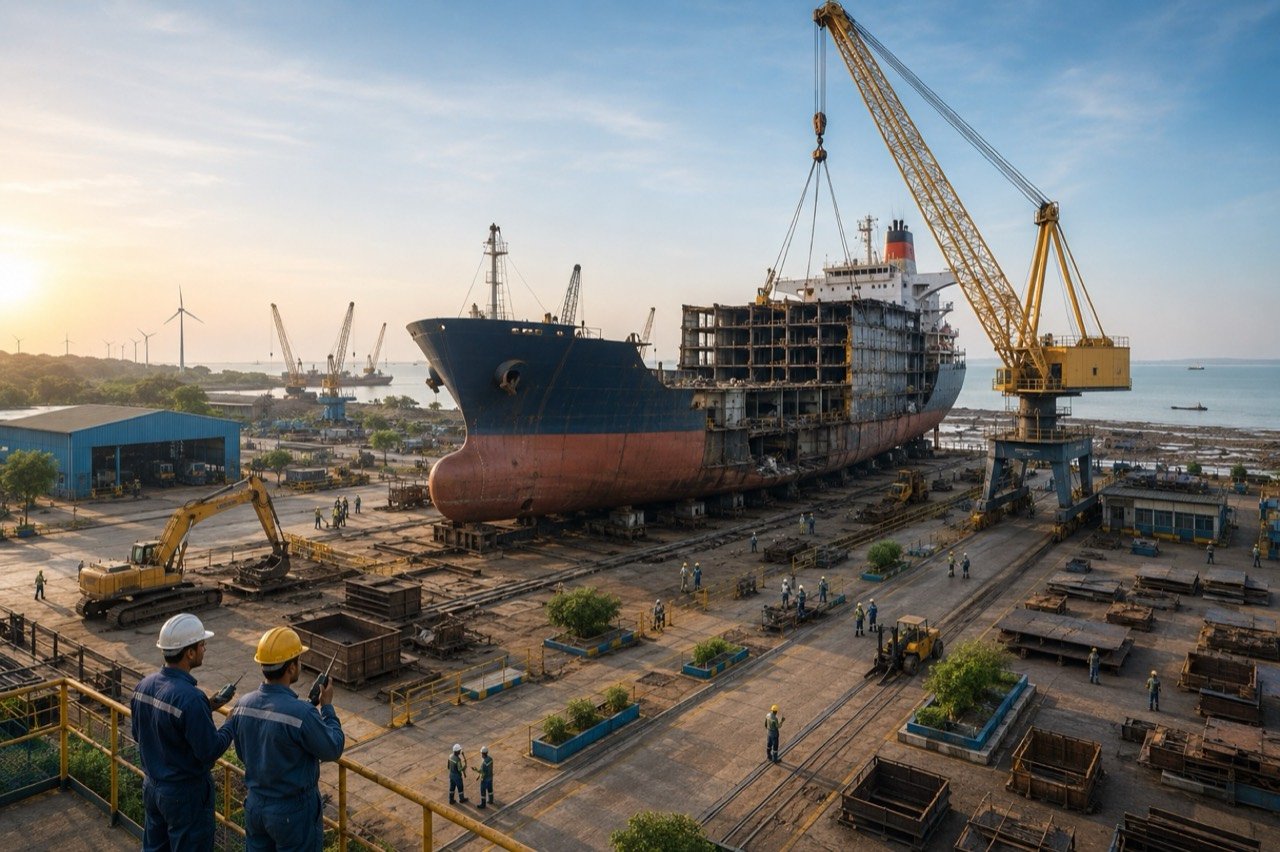
India's Ship Recycling Share Rises to 35.4 Percent, Leading the World in 2025
India became the world's leading ship recycling nation in 2025 with a 35.4 percent global share, a gain the shipping ministry credits to policy reform, Hong Kong Convention compliance and the Alang expansion.

World Bank Approves $1.5 Billion to Back India's Reforms and Jobs
The World Bank's $1.5 billion development policy loan aims to support structural reforms, private-sector growth and job creation as millions of young Indians enter the labour market each year.

India Retail Inflation Rises to 4.38% in June 2026 as Food Prices Push CPI Above RBI’s Target
The first breach of the central bank’s 4% midpoint in 17 months puts household budgets, monsoon conditions and the interest-rate outlook back in focus.

India’s New IIP Base Year 2022-23: Why the Industrial Production Index Has Been Rebuilt
The revised index aims to capture today’s manufacturing structure more accurately, but users must understand what changed before comparing new and old growth numbers.
More from this section
More
Adani Case: US DOJ Pushes for Permanent Dismissal of Charges
The US Department of Justice has urged a judge to permanently dismiss charges against Gautam Adani, calling the case legally flawed — a reversal with consequences for markets, diplomacy and cross-border enforcement.

Akasa Air Inducts 40th Aircraft in Indian Aviation Scale-Up
Akasa Air's 40th aircraft, ferried to Bengaluru via Seattle, Reykjavik and Cairo, marks a fleet milestone for the young carrier and a fresh signal that India's aviation market remains firmly in expansion mode.
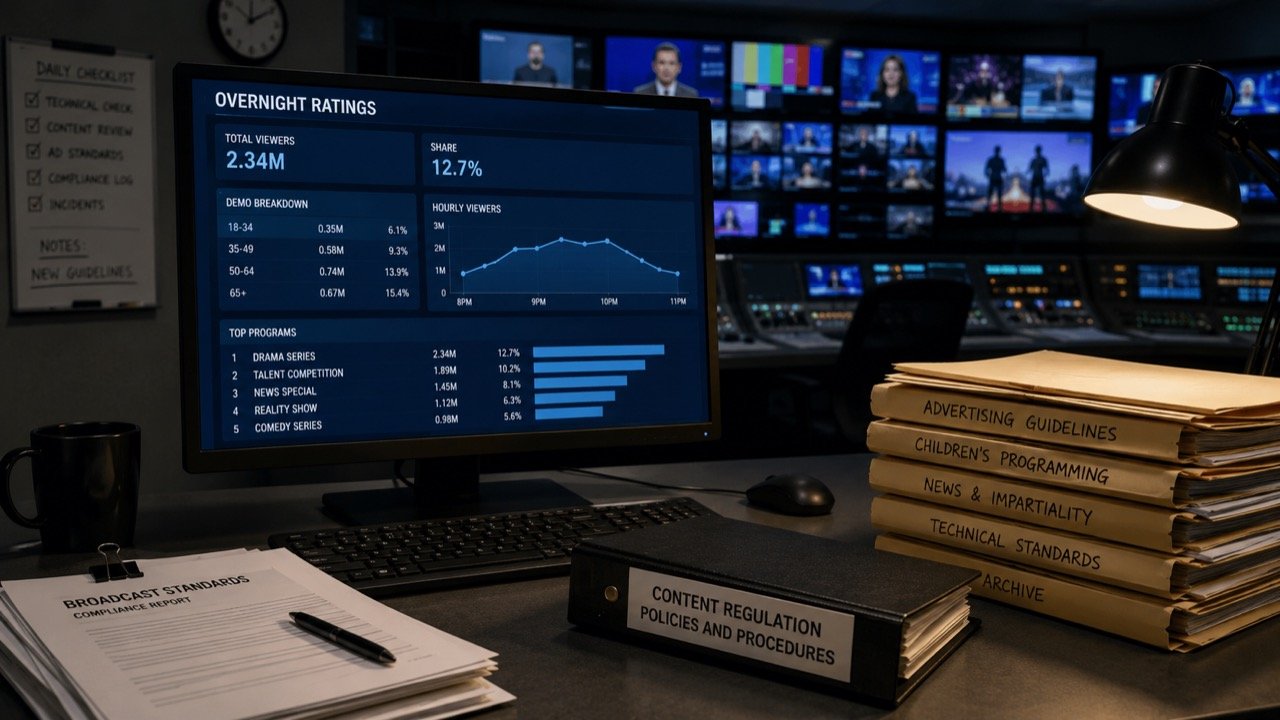
BARC Ratings Suspension Leaves Indian TV Industry Flying Blind
BARC's pause on television ratings has put India's broadcast measurement system under fresh scrutiny, leaving broadcasters, advertisers and media planners without the weekly audience data that anchors the TV economy.