India Tops International Physics Olympiad 2026 as All Five Students Win Gold Medals
The clean sweep in Bucaramanga places India jointly at the top of the global table and highlights the depth of its science Olympiad training pipeline.
Commentary & Analysis ·
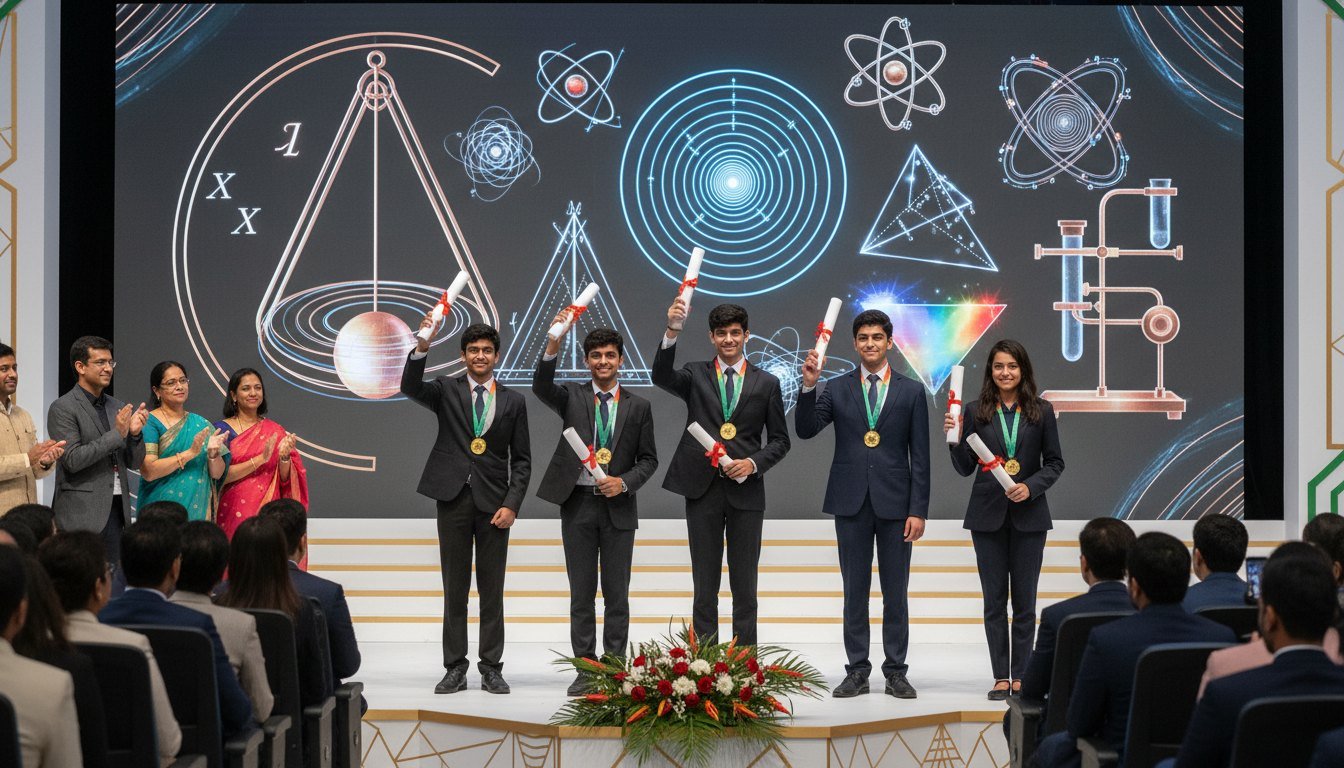
India has achieved a clean sweep at the 56th International Physics Olympiad, with all five members of the national team winning gold medals in Bucaramanga, Colombia. The result placed India jointly at World No. 1 alongside other leading teams at the competition, which was held from 4 to 12 July 2026. The gold medallists are Kanishk Jain, Riddhesh Anant Bendale, Rishit Garg, Shresth Suraiya and Svarit Joshi. Prime Minister Narendra Modi congratulated the students, and the achievement drew wide attention across India’s education community.
India Physics Olympiad 2026 is significant because the International Physics Olympiad is not a conventional school examination. Contestants face advanced theoretical and experimental problems that require mathematical fluency, physical intuition, careful measurement and the ability to work for hours under pressure. The questions are designed to test whether students can apply fundamental principles in unfamiliar situations. A team in which every participant reaches the gold-medal threshold reflects both individual excellence and a strong selection and training process.
The five gold medals IPhO result follows years of preparation. India’s Olympiad programme in physics is coordinated through the Homi Bhabha Centre for Science Education, part of the Tata Institute of Fundamental Research. Students typically progress through national screening examinations, higher-level tests and an Orientation-cum-Selection Camp before the final team is chosen. The process narrows a large pool of talented students to five, who then receive intensive academic and experimental training. Their medals are the visible outcome of a much larger network of teachers, mentors, laboratories and family support.
The International Physics Olympiad Colombia event brought together hundreds of students from dozens of countries. Reports said 381 contestants from 87 nations participated. At that scale, a shared first-place team result is remarkable. Medal thresholds are determined by performance rather than a fixed quota for each country, which means all five Indian students had to reach an internationally competitive standard. The result cannot be explained by one exceptionally strong participant carrying the team; every student delivered.
HBCSE physics students train differently from candidates preparing only for speed-based entrance tests. Olympiad problems often require a long chain of reasoning and tolerate no shortcut that is not physically justified. Experimental tasks demand uncertainty analysis, graph interpretation and disciplined observation. Students must learn to recover when an initial model fails. That mindset is valuable far beyond competitions because real science rarely presents a familiar multiple-choice answer. Research begins with incomplete information and requires the patience to test assumptions.
The India world number one physics headline should inspire celebration, but it should not be used to claim that every part of science education India is equally strong. Olympiad teams represent a small group of highly selected students with access to specialised training. Many schools still lack functioning laboratories, trained physics teachers or time for inquiry-based learning. The best tribute to the medal winners would be to extend more of the Olympiad culture—experiments, conceptual questions and intellectual curiosity—to ordinary classrooms without turning every child’s education into another high-pressure contest.
Recognition matters. India celebrates athletes, actors and cricket stars with enormous enthusiasm, while academic champions often remain unknown outside specialist circles. Public attention to Kanishk Jain, Riddhesh Anant Bendale, Rishit Garg, Shresth Suraiya and Svarit Joshi can help younger students see science as a field of aspiration and national pride. Yet recognition should respect their privacy and avoid imposing immediate career expectations. A teenager who wins an Olympiad medal should be free to explore research, engineering, mathematics or another path without being treated as a public asset.
The success also raises questions about talent development. Olympiad preparation can be concentrated in cities and specialised institutions, giving students from affluent or informed families an advantage in discovering the pathway. Schools and state education boards can broaden access by identifying talent early, translating resources, supporting travel and offering free training. Online problem sets and lectures can help, but laboratory experience requires physical equipment and mentorship. A national science system becomes stronger when opportunity is distributed more widely.
Universities and research institutes should build bridges for Olympiad alumni and other high-potential students. Scholarships, summer research programmes and flexible undergraduate curricula can retain talent in fundamental science. India’s long-term scientific capacity depends not only on winning medals but on creating environments where gifted students can ask ambitious questions, work with excellent researchers and pursue uncertain ideas. Some medal winners may study abroad; international education need not be a loss if India maintains research collaborations and attractive opportunities for return.
Teachers deserve a central place in the story. Students rarely develop deep problem-solving ability from coaching material alone. A teacher who encourages a child to derive a result, repeat an experiment or challenge a textbook assumption can change a career. The Olympiad programme can share training materials with school teachers and organise regional workshops. This would convert elite competition knowledge into wider classroom improvement. It could also reduce the misconception that physics is mainly a collection of formulas to memorise.
India Physics Olympiad 2026 will be remembered for a perfect team medal record and a joint first-place finish. Its deeper legacy can be broader: greater respect for intellectual achievement, stronger laboratories, better teacher development and wider access to advanced science. The five students have already done their part on the global stage. The next responsibility belongs to institutions that must ensure their success becomes a foundation for thousands of future scientists, not an isolated moment of national applause.
You may also like to read
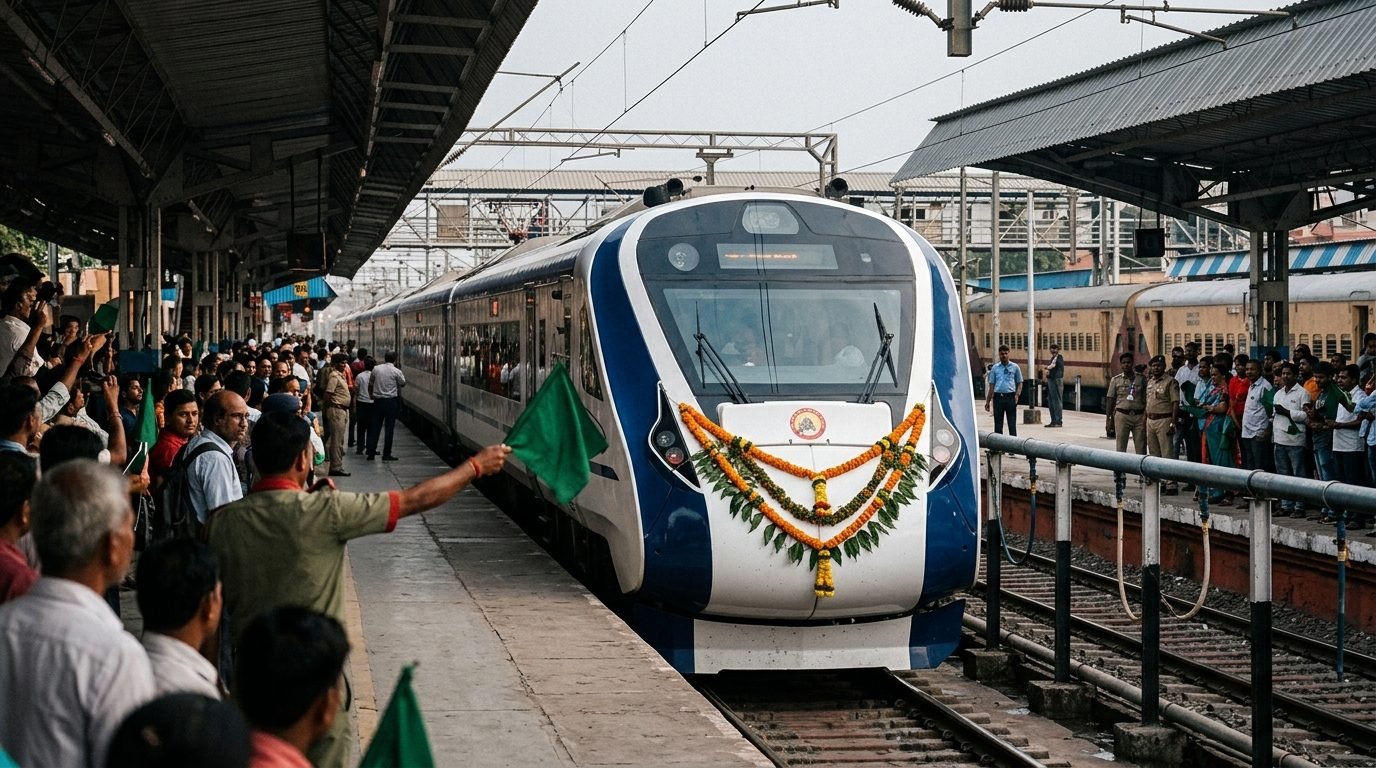
Railways To Flag Off Five New Vande Bharat Trains As Fleet Crosses 160 Services
Indian Railways is set to add five Vande Bharat Express services on June 26, extending semi-high-speed connectivity to more districts as the fleet pushes past 160 services nationwide.
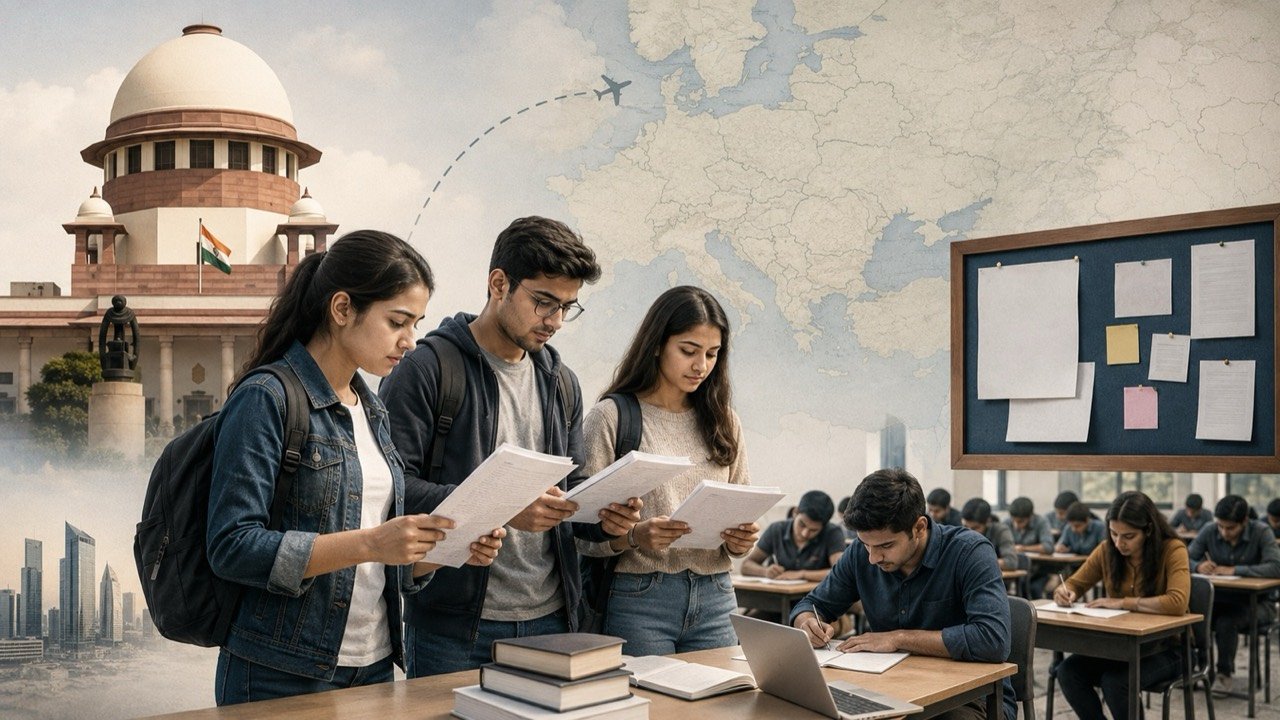
Supreme Court Notes CBSE Policy for West Asia Class 12 Students, Disposes Plea
The Supreme Court closed a Saudi Arabia-based candidate's petition after the Centre cited a fresh CBSE policy to declare Class 12 results for West Asian students whose board exams were cancelled amid regional conflict.
Supreme Court Strength Rises To 37 As Five New Judges Take Oath
The Centre has notified the appointment of five new judges to the Supreme Court, lifting its working strength to 37 and including a rare direct elevation from the Bar.
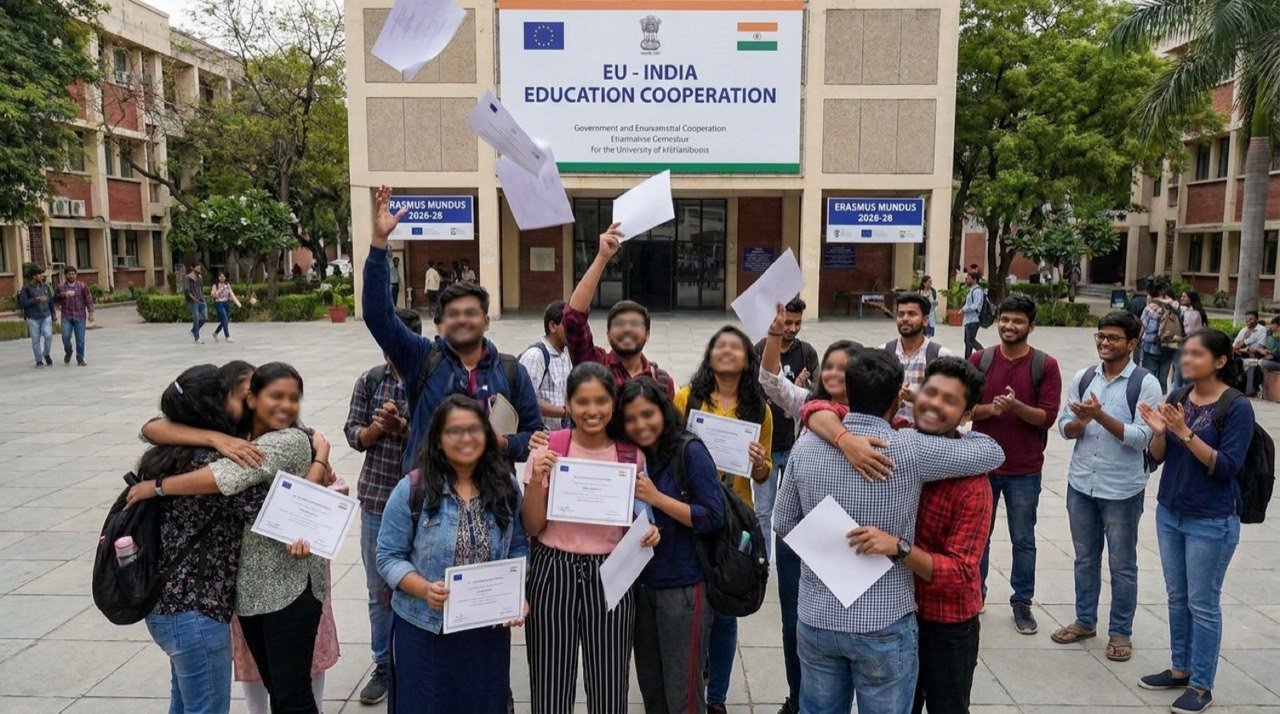
EU Awards 75 Erasmus Mundus Scholarships to Indian Students for 2026-28
The European Union has granted 75 Indian students fully funded Erasmus Mundus master's scholarships and launched a 40-member EU-India Student Ambassadors Network to deepen academic ties.