India Ordered GitHub to Delete Jack Dorsey's Bitchat in Three Hours. The Code Is Still Up
India's I4C ordered a Bitchat GitHub takedown on 23 July 2026, giving three hours to disable Jack Dorsey's offline mesh app. Two days on, the repositories are still live.
Commentary & Analysis ·
Key facts
- The I4C, under the Ministry of Home Affairs, ordered GitHub on 23 July 2026 to disable three Bitchat repositories within three hours
- The order cited Section 79(3)(b) of the IT Act 2000 and Rule 3(1)(d) of the IT Rules 2021, not the Section 69A blocking route
- Bitchat relays end-to-end encrypted messages phone-to-phone over Bluetooth mesh, needing no internet, SIM card or servers
- Jack Dorsey published the government notice on X on 24 July, saying India wants the technology taken down
- The Week reported on 25 July 2026 that the repositories, which had over 3,000 public forks, remained accessible
A Three-Hour Deadline That Came and Went
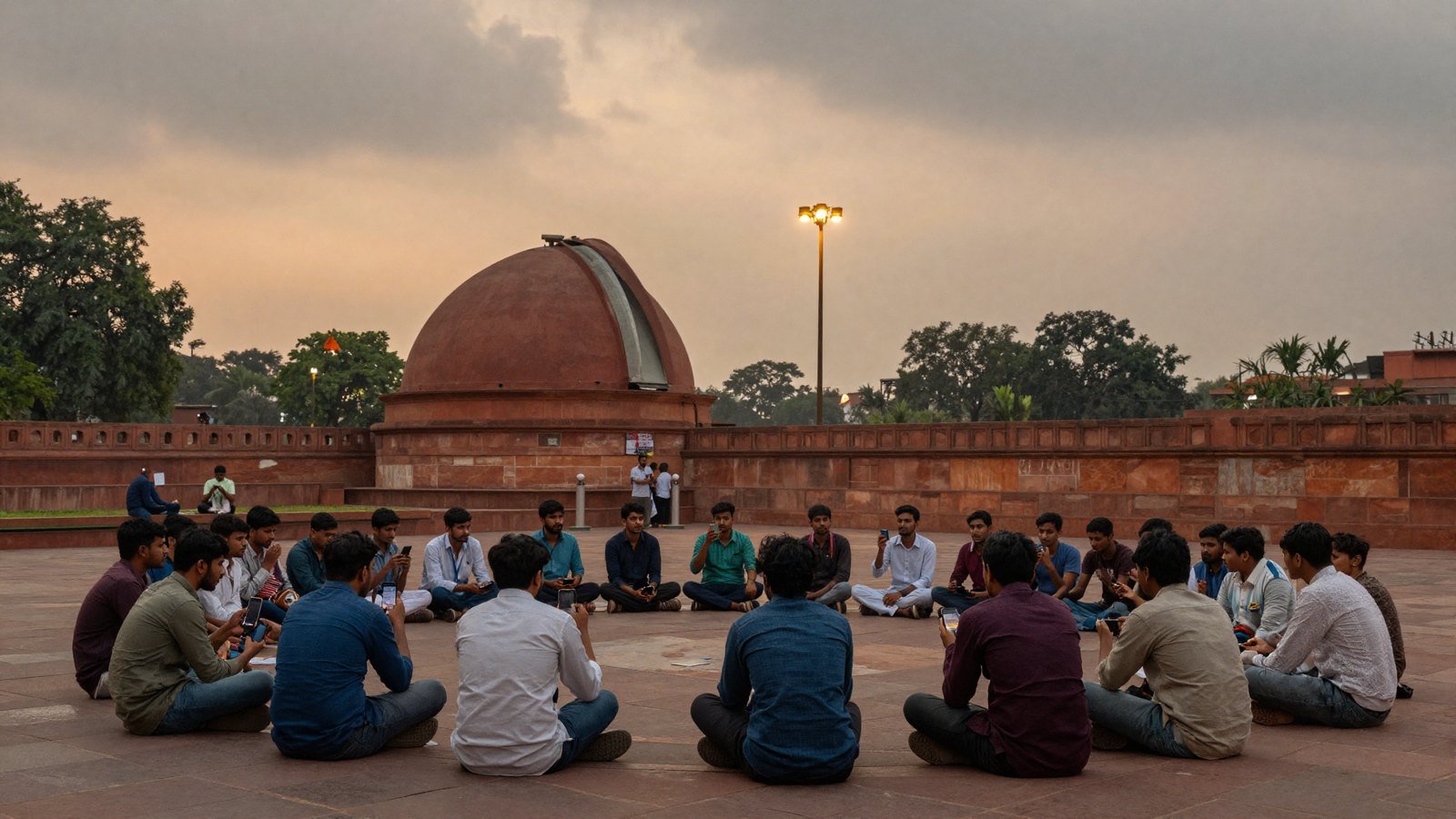
On 23 July, the Indian Cyber Crime Coordination Centre, the Home Ministry wing better known as I4C, sent Microsoft-owned GitHub an unusually blunt demand: disable access to three repositories hosting Bitchat, the offline messaging app built by former Twitter chief executive Jack Dorsey, within three hours. The trigger, according to reports in BusinessToday and India TV News, was the app's use by protesters at Jantar Mantar in Delhi during suspensions of mobile internet.
Two days later, the order has visibly failed on its own terms. The Week reported on 25 July that the repositories remained live and accessible from India, and at the time of writing they still are. GitHub and its parent Microsoft have made no public comment, and reports said the platform had not even confirmed receiving the notice. What was framed as a swift act of digital enforcement has instead become a live demonstration of the limits of India's takedown machinery.
What the Order Actually Demanded
The notice targeted three repositories under the permissionlesstech account on GitHub: the main Bitchat codebase, its Android build and the page hosting Android release files, according to TechCrunch. It cited Section 79(3)(b) of the Information Technology Act, 2000, read with Rule 3(1)(d) of the IT (Intermediary Guidelines and Digital Media Ethics Code) Rules, 2021 — the provisions under which an intermediary that fails to remove flagged material risks losing its legal immunity for user content.
The government's reasoning was architectural rather than content-specific. Bitchat, the notice argued, enables anonymous communication without registration, phone-number verification or centralised logging, which impedes lawful interception and investigation and could be misused to coordinate unlawful assemblies or threaten public order. Dorsey published the notice on X, writing that the Government of India 'does not like technologies like bitchat and wants it taken down'.
How a Messaging App Works Without the Internet
Bitchat, released in July 2025, needs no mobile network, no wifi and no SIM card. Each phone running the app becomes a node in a Bluetooth mesh: it broadcasts short encrypted packets to any Bitchat device within roughly 30 metres, and those devices relay the packets onwards, hop by hop, up to seven hops deep. In a dense crowd, hundreds of handsets knit themselves into an ad-hoc network with no tower, router or server anywhere in the chain.
Messages are end-to-end encrypted using the Noise Protocol framework, and a store-and-forward design lets nearby phones hold a message for a recipient who is temporarily out of range. There is no account to create, no number to verify and no central log to subpoena. That is precisely what makes the app useful in an internet blackout — and precisely what alarmed the Home Ministry.
Why Deleting a Repository Deletes Very Little
The deeper problem with the order is that it treats source code like a social media post. Git, the system underlying GitHub, is distributed by design: every developer who clones a repository holds a complete copy of the code and its history. The main Bitchat repository had more than 3,000 public forks when the notice was issued, reports said, any one of which could be renamed, mirrored elsewhere or used to rebuild the project within minutes.
Nor would deletion touch the phones that matter. The app is already installed on handsets at Jantar Mantar and well beyond; removing its source from GitHub uninstalls nothing. Android users can pass the installation file from phone to phone, much as the app itself passes messages. Even full and instant compliance by GitHub would therefore have been largely symbolic — a fact the three-hour deadline suggests the order's drafters had not fully absorbed.
A Shortcut Around India's Blocking Law
The legal route chosen is telling. India's formal mechanism for blocking online content is Section 69A of the IT Act, which the Supreme Court upheld in 2015 partly because it carries procedural safeguards: recorded reasons, a review committee and defined grounds. The I4C instead invoked Section 79(3)(b), which strips an intermediary of safe-harbour protection if it fails to act on a government notification — a pressure mechanism rather than a blocking power.
Digital rights groups seized on the distinction. The Internet Freedom Foundation called the order unconstitutional, arguing that it targets an application's architecture rather than any specific unlawful content and bypasses the safeguards Section 69A requires. Legal observers quoted by TechCrunch noted a further wrinkle: Rule 3(1)(d) itself gives intermediaries thirty-six hours to comply with such notices, while the I4C demanded action in three.
The Protest That Prompted It
The order did not arrive in a vacuum. A youth-led movement calling itself the Cockroach Janta Party has been camped at Jantar Mantar since early June over alleged irregularities in national examinations, and the administration has repeatedly suspended mobile internet within a 1.5-kilometre radius of the site — suspensions this publication has examined separately. Cut off from mobile data, protesters turned to offline tools: Bitchat, and reportedly the older mesh app Bridgefy, spread through the crowd, while volunteers set up free wifi at the venue. The takedown notice followed within days.
What This Reveals About the Control Toolkit
India's internet-control instruments — localised shutdowns, app bans such as the 2020 action against Chinese apps, and Section 69A blocking orders — all rely on choke points: telecom operators, app stores and large platforms that can be compelled because they are identifiable, commercial and present in India. Bitchat is engineered to have none of these. It bypasses the telecom network entirely, its Android build sidesteps the app store, and its code lives on a platform whose removal tools barely dent a distributed project.
The order to GitHub was an attempt to reach one layer deeper than usual, down to the source code itself, and its failure is instructive. Each layer down, the state's leverage weakens while the publicity cost rises. Dorsey's post turned a niche app into front-page news, and arguably left far more Indians aware of mesh messaging on 25 July than on 22 July.
What to Watch Next
Several threads remain open. GitHub's formal response is the first: the company's usual practice is to log government takedown demands in a public transparency repository and, where it complies, to restrict content only within the requesting country — a geo-block that forks would undo within hours. The second is escalation: a Section 69A order aimed at app stores, or network-level blocking of GitHub addresses, would raise the stakes considerably given how much of India's software industry depends on the platform.
The third is the courts, where the Internet Freedom Foundation's intervention suggests a constitutional challenge is plausible if the order is pressed. The last is behavioural: Hong Kong's 2019 protests made mesh apps a standard part of protest kits worldwide. If Delhi's demonstrations do the same for India, the ministry may find that the technology it tried to erase in three hours has instead been advertised to a nation.
Sources
- BusinessToday - Indian government orders GitHub to block access to Jack Dorsey's Bitchat amid CJP protest (24 July 2026)
- The Week - Indian government's Bitchat 'ban' and why it did not work; repositories still live (25 July 2026)
- TechCrunch - India's move against Jack Dorsey's Bitchat sparks legal debate (24 July 2026)
- ETV Bharat - Government orders GitHub to take down Bitchat over security fears, says Jack Dorsey (25 July 2026)
- Republic World - Mobile internet suspended within 1.5-km radius of Jantar Mantar amid CJP protest (23 July 2026)
This article is original news analysis and commentary by The NE Times, based on reporting from the sources listed above.
You may also like to read

India Launches Its First Hydrogen-Powered Train on the Jind-Sonipat Route in a Major Green Rail Pilot
India's first hydrogen-powered passenger train is important less as a single service than as a test of an entire operating system.

OnePlus Returns to Budget Phones With the N6, Landing in India on 30 June
The revived N series targets the crowded sub-Rs 25,000 segment, with OnePlus teasing a giant 8,000mAh battery and a seven-year battery-health promise.
WhatsApp begins its shift from phone numbers to usernames, with India in the firing line
The messaging giant is rolling out optional handles that let people connect without sharing their number, a change that quietly rewrites how its largest market communicates.

Fact-Check Toolkit: How to Read Past the Viral Noise Around the NEET and Ladakh Protests
As misinformation spreads around the NEET-UG 2026 leak protests and Sonam Wangchuk's fast, here are the recurring fake-post patterns and a practical verification toolkit for readers.
More from this section
More
From Meme Page to Mass Movement: The Complete Cockroach Janta Party Timeline
The CJP timeline shows how a deliberately absurd online identity became an organising brand capable of setting deadlines, negotiating with ministers

How Social Media Made Sonam Wangchuk’s Hunger Strike a National Story - and Why Misinformation Is Growing
Social media turned the hunger strike into a national issue, but viral health claims, recycled images and personality-driven coverage can distort the movement’s demands

India-US AI Chips Roundtable Puts Critical Minerals in the Spotlight
Discussions between India and the United States on AI, semiconductors and critical minerals underline how technology cooperation is fast becoming a supply-chain and resource-security story, not just a software one.