India Launches Its First Hydrogen-Powered Train on the Jind-Sonipat Route in a Major Green Rail Pilot
India's first hydrogen-powered passenger train is important less as a single service than as a test of an entire operating system.
Commentary & Analysis ·
Key facts
- Prime Minister Narendra Modi launched the domestically built hydrogen-powered train at Jind in Haryana on July 17.
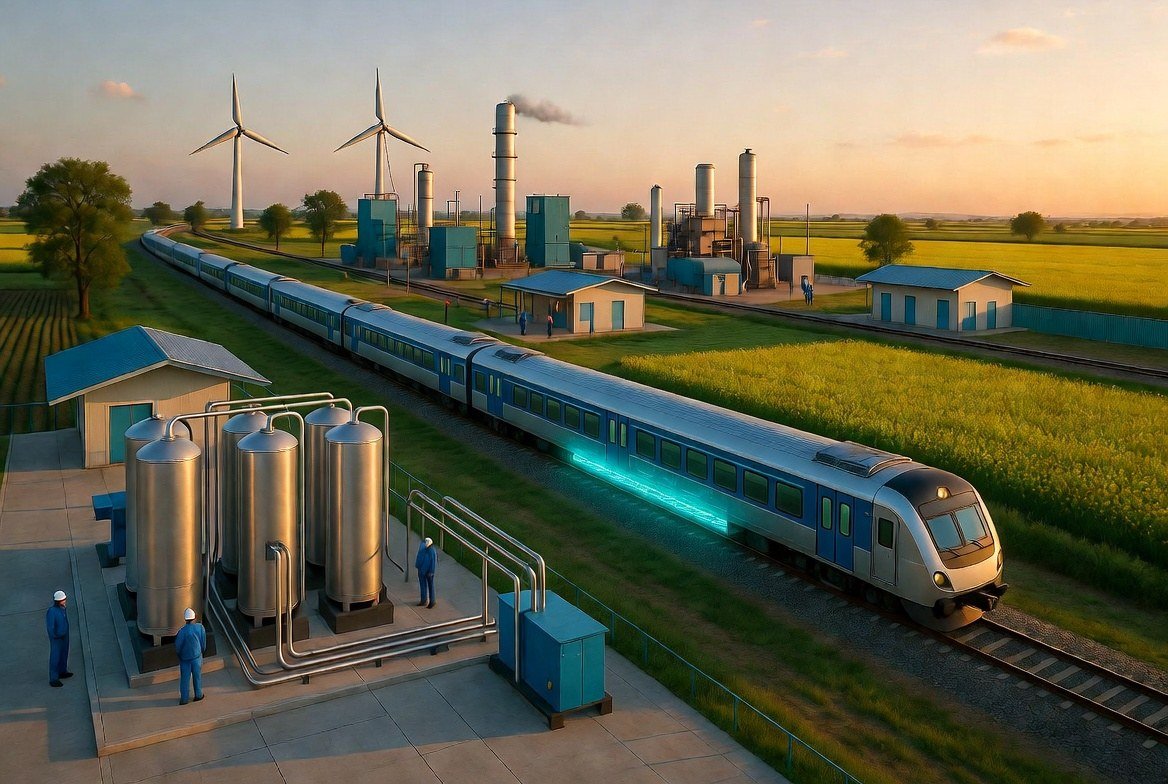
- The pilot service is planned for the Jind-Sonipat route and includes hydrogen storage and refuelling infrastructure, not only the train itself.
- Reports describe a formation with two powered driving cars and eight passenger coaches, capacity of roughly 2,600 passengers and a top operating speed around 75 kilometres per hour.
- Hydrogen fuel cells produce electricity by combining hydrogen and oxygen, with water vapour as the direct onboard emission; the full climate impact still depends on how the hydrogen is produced.
Why the launch matters for Indian Railways
India's first hydrogen-powered passenger train is important less as a single service than as a test of an entire operating system. Indian Railways runs one of the world's largest networks, so even a small technology shift can have large implications when scaled. The Jind-Sonipat pilot will help engineers assess fuel use, maintenance, reliability, passenger operations and safety under Indian weather and traffic conditions. A launch ceremony can demonstrate that the train moves, but the more meaningful evidence will come from months of regular service. Data on uptime, refuelling time and cost per kilometre will determine whether hydrogen is suitable for wider deployment, especially on routes where full electrification is difficult or expensive.
How a hydrogen train works
A hydrogen train uses fuel cells to convert hydrogen and oxygen into electricity. That electricity powers traction motors, while batteries can store energy and support acceleration or regenerative braking. The direct reaction produces water and heat rather than diesel exhaust. This makes the technology attractive for local air quality and quieter operation. However, hydrogen is an energy carrier, not an automatically clean fuel. If it is produced from fossil fuels without carbon capture, total emissions can remain substantial. Green hydrogen produced using renewable electricity offers the strongest climate case, but it is currently more expensive. The pilot's environmental value will therefore depend on the source of the hydrogen as well as the efficiency of the train.
The Jind-Sonipat route as a test bed
Choosing a specific corridor allows the railway to control variables and build supporting infrastructure in one area. The route must accommodate the train's speed, timetable and refuelling needs without disrupting existing services. Staff need training in hydrogen handling, emergency response and fuel-cell diagnostics. Stations and depots need new procedures because hydrogen behaves differently from diesel and high-voltage electric equipment. Haryana also offers proximity to industrial and research networks interested in the emerging hydrogen economy. If the service performs well, the corridor could become a demonstration site for domestic and international visitors. If problems arise, a contained pilot makes them easier to study before further investment.
Capacity and passenger experience
Reports indicate that the train can carry around 2,600 passengers across eight coaches, with powered driving cars at either end. That makes it a practical passenger formation rather than a small laboratory demonstrator. For travellers, the ideal transition should feel uneventful: dependable schedules, safe boarding, acceptable comfort and affordable fares matter more than the propulsion label. Hydrogen technology may reduce engine noise and eliminate diesel fumes near stations, but it will not solve overcrowding, punctuality or last-mile connectivity by itself. Public communication should therefore avoid presenting one train as a complete transformation. It is an engineering pilot inside a much larger transport system, and its success will be measured by service quality as well as environmental performance.
Safety and storage questions
Hydrogen has been used safely in industrial settings for decades, but it requires strict controls because it is light, highly flammable and able to escape through small gaps. Storage tanks, pressure systems, sensors and ventilation must be designed for collision and fire scenarios. Railway workers and local emergency services need clear protocols, while independent inspection should remain continuous rather than ceremonial. The public may associate hydrogen with danger, so transparent publication of safety standards can build confidence. Conversely, dismissing concerns as uninformed would be counterproductive. Every transport fuel carries risk; the relevant question is whether those risks are identified, engineered and managed to a standard suitable for mass passenger use.
Where hydrogen fits beside electrification
India has made rapid progress in railway electrification, which is generally an efficient way to decarbonise busy routes when the power grid becomes cleaner. Hydrogen is unlikely to replace overhead electric traction across the entire network. Its potential role is more selective: lower-density lines, heritage-sensitive corridors or routes where installing continuous wires is technically difficult. Battery trains may compete for some of the same use cases, especially over shorter distances. The Jind-Sonipat results should therefore be compared with realistic alternatives, not only with diesel. Cost, energy efficiency, infrastructure and lifecycle emissions all matter. Technology neutrality will help the railway choose the best solution for each corridor rather than pursuing hydrogen as a prestige project.
Domestic manufacturing and industrial policy
The train is being presented as domestically built, linking the launch to India's broader manufacturing and clean-technology goals. A successful platform could create demand for fuel cells, power electronics, storage systems, control software and specialised maintenance. It may also generate export opportunities for countries with similar route conditions. Yet domestic assembly alone does not guarantee deep technological capability. Policymakers should track how much intellectual property, component production and engineering expertise remain in India. Stable procurement and open performance data can encourage suppliers to invest. Without a clear deployment pathway, firms may hesitate to build capacity for a one-off pilot.
What to watch after the inauguration
The next phase should be judged through operating evidence. Key questions include how often the train runs, whether it meets timetable targets, how much hydrogen it consumes, what the fuel costs, how frequently components require replacement and whether the supply is genuinely low-carbon. Passenger feedback and incident reporting should also be published. India's 2070 net-zero goal requires many technologies, and rail already has an emissions advantage over road and air travel. A hydrogen train can strengthen that advantage in the right niche, but only if the pilot produces credible lessons. The inauguration is the beginning of the experiment, not the conclusion.
Sources
- Associated Press, report on India's hydrogen-powered train launch, July 17, 2026.
- The Indian Express live coverage of the Jind launch and Jind-Sonipat service plan, July 17, 2026.
- Indian Railways and government releases should be consulted for final technical specifications and operating schedules.
This article is original news analysis and commentary by The NE Times, based on reporting from the sources listed above.
You may also like to read
IRCTC Launches Redesigned Beta Website With Fewer Steps, Cleaner Screens and Faster Booking Goals
The beta launch of a redesigned IRCTC website affects far more people than an ordinary commercial website update.
Chandrayaan-3 Data Tied to Earth's First Lunar Meteorite
New science coverage says findings from ISRO's Chandrayaan-3 mission reveal a link to Earth's first lunar meteorite, showing the landmark landing is still generating research long after touchdown.
Noise Launches ALT Ecosystem In India With Red Dot-Winning Smartwatch And Open-Ear Buds
Homegrown brand Noise has opened sales of its new design-led ALT range in India, leading with a rotating-crown smartwatch and open-ear earbuds that both carry Red Dot Design Awards.
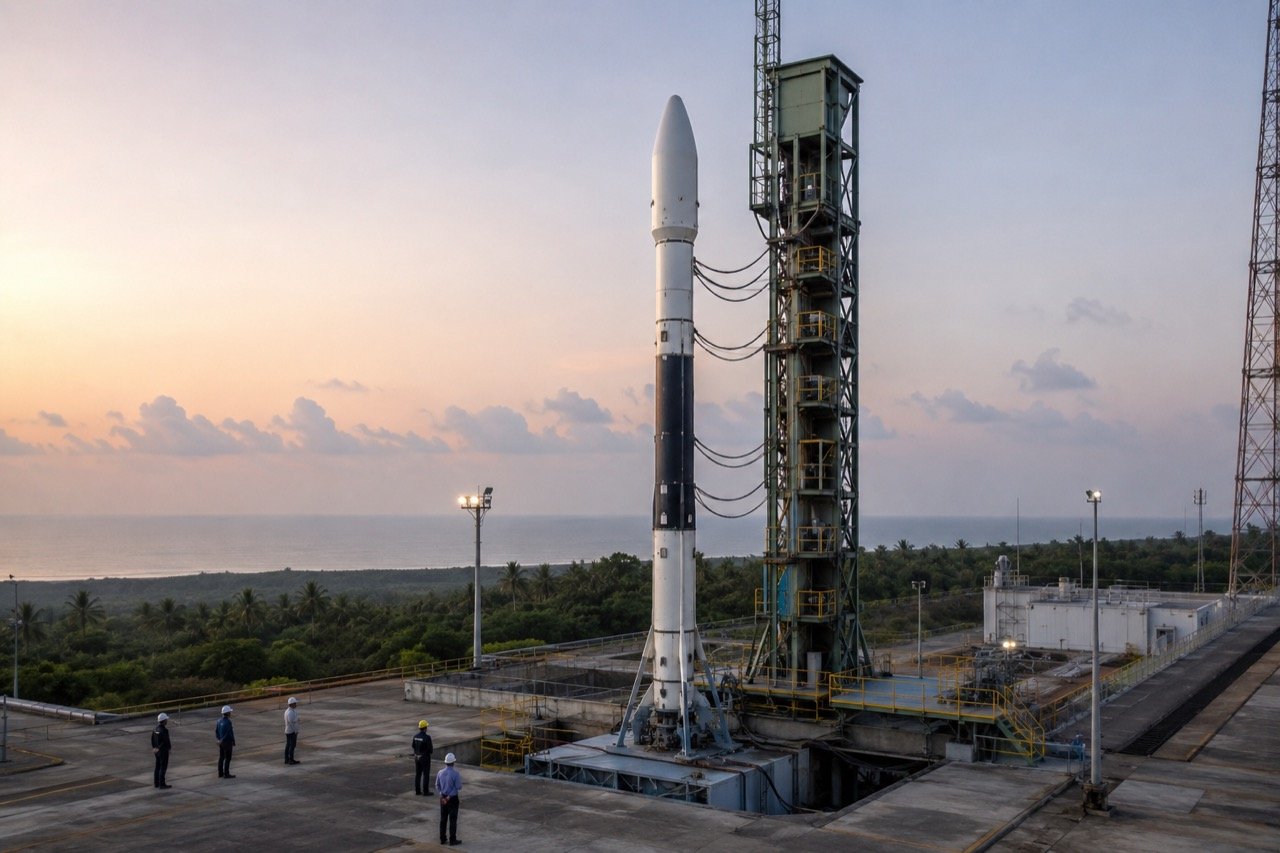
Vikram-1 Countdown: India's First Private Orbital Rocket Nears Lift-Off
Skyroot Aerospace has stacked its Vikram-1 rocket at Sriharikota with a launch window from July 12 to August 4, putting India's private space ambitions on the pad for the first time.
More from this section
More
ISRO Tightens Exit Rules for Critical Missions as Scientist Departures Raise a Talent-Retention Question
The Department of Space has tightened the process for accepting resignations and voluntary retirement requests from senior scientific and technical personnel working on critical programmes, including...

Kudankulam-Linked Files Appear on Dark Web, but NPCIL Says Nuclear Safety Systems Were Not Breached
Reports that files linked to the Kudankulam Nuclear Power Project appeared on the dark web have understandably generated alarm.
India AI Law: Regulation Debate Weighs Innovation Against User Safety
India's debate over artificial-intelligence regulation is shifting from broad principles to hard questions of liability, deepfake labelling and high-risk system obligations, as the government weighs how to protect users without stifling innovation.