IRCTC Launches Redesigned Beta Website With Fewer Steps, Cleaner Screens and Faster Booking Goals
The beta launch of a redesigned IRCTC website affects far more people than an ordinary commercial website update.
Commentary & Analysis ·
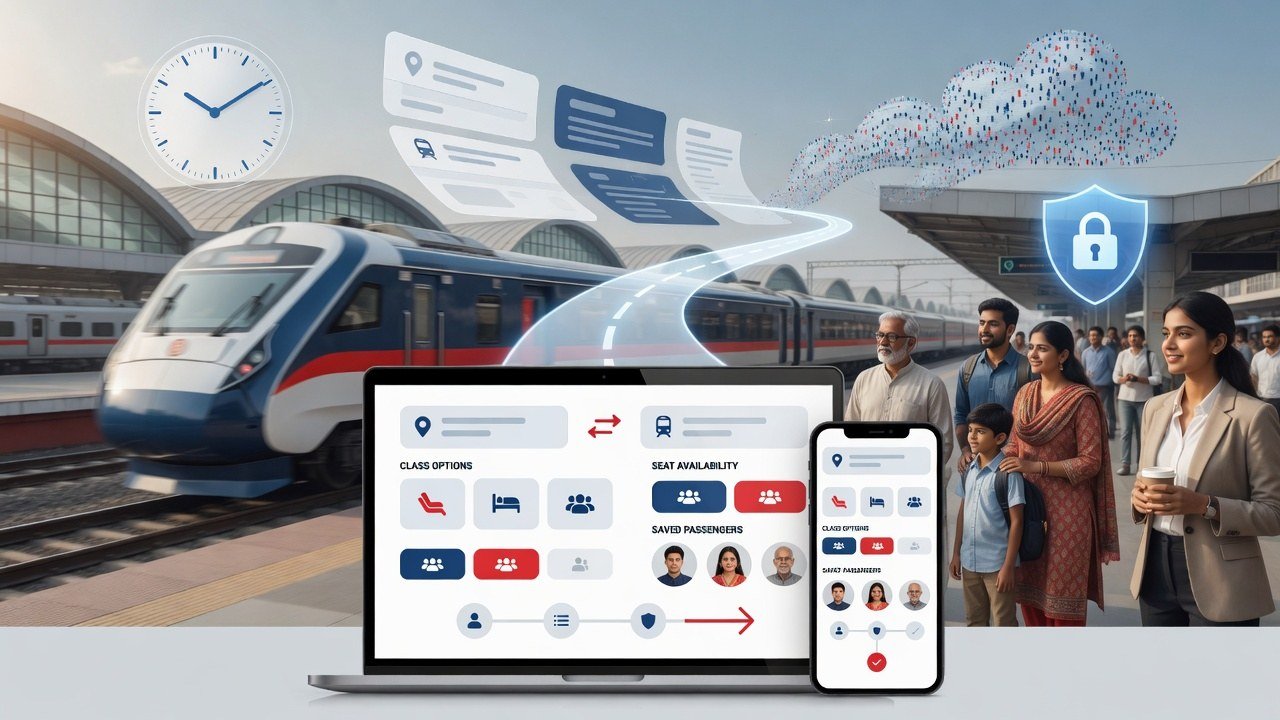
Key facts
- The beta version went live on July 15 and is available through the existing IRCTC platform for user testing and feedback.
- Reported features include fewer captchas and pop-ups, class-wise seat availability on one screen, saved passenger details and a simplified checkout.
- IRCTC's online system handles about 14.5 lakh ticket bookings on an average day, making reliability and peak-load performance central tests.
A redesign of one of India's busiest public platforms
The beta launch of a redesigned IRCTC website affects far more people than an ordinary commercial website update. Rail booking is a routine public service used by millions, and the existing platform has long been criticised for clutter, repeated captchas and difficulty during high-demand windows. The new beta promises a cleaner interface, fewer steps and faster movement from search to payment. Users can reportedly view availability across classes more easily and save passenger details for repeat bookings. The launch is a test rather than a finished replacement, so early performance should be judged with that status in mind. A modern appearance is welcome, but the real measure will be successful bookings under heavy load.
Why fewer clicks matter
Every additional screen creates a chance for a session to expire, a passenger detail to be entered incorrectly or a payment to fail. That is especially frustrating during Tatkal booking, when seats may disappear in minutes. Simplifying the flow can reduce cognitive load for older users, occasional travellers and people booking on slower connections. Showing multiple classes on one screen may help passengers compare options without restarting a search. Saved passenger information can shorten repeat transactions, though it also increases the importance of account security. Good design is not merely cosmetic. It can reduce errors, improve accessibility and lower demand on customer support.
The peak-load test will decide credibility
IRCTC reportedly processes about 14.5 lakh bookings on an average day, with much sharper demand at particular times. A beta that feels fast in the afternoon may still fail during Tatkal opening or a festival rush. The Railways should publish performance indicators such as page response time, payment completion, failed transactions and concurrent user capacity. Independent load testing would help identify bottlenecks before the platform becomes the default. Users are likely to forgive minor visual bugs during beta testing; they will not forgive losing a scarce ticket because the site froze after payment. Reliability must therefore remain the first design priority.
Captchas, bots and the fairness problem
Reducing captchas can improve usability, but IRCTC still needs protection against automated booking abuse. The challenge is to block bots without punishing legitimate users with repeated puzzles. Modern risk-based systems can examine behaviour, device signals and transaction patterns rather than presenting every customer with the same obstacle. The rules should be tested for bias and false positives, especially for shared devices, cybercafes and users with accessibility needs. A cleaner booking path must not make it easier for touts to capture inventory. Security and usability are often treated as opposites, but intelligent design can improve both.
Saved data requires stronger privacy controls
Allowing users to retain passenger details can save time, yet names, ages, travel patterns and identification information are sensitive. Accounts should support strong authentication, clear device management and easy deletion of stored passengers. The system should explain what is saved, for how long and for which purpose. Notifications for suspicious login or profile changes can help users respond quickly. The beta period is an opportunity to conduct privacy and security testing before wider adoption. Public trust will be damaged if convenience features create new exposure. The safest design minimises data and gives users control rather than assuming that every traveller wants permanent storage.
Feedback should be visible, not symbolic
The Railways has invited users to test the beta, reportedly following suggestions from students at MNIT Jaipur. That origin story is encouraging because it shows that practical criticism can influence a national service. The next step is to show how feedback changes the product. A public changelog could list major fixes, accessibility improvements and unresolved issues. Testing should include people using screen readers, regional-language users, older phones and low-bandwidth connections. A platform serving the whole country cannot be designed only for fast urban broadband and technically confident customers.
A public digital-service benchmark
The new IRCTC beta will be watched as a test of whether a high-volume government-linked platform can become simpler without becoming less secure. Success would save time for millions of passengers and reduce the everyday frustration associated with railway booking. Failure would reinforce the belief that redesigns change colours while leaving infrastructure untouched. Users should explore the beta cautiously, verify that they are on the official site and avoid links circulated through messages. The Railways should treat the launch as the beginning of continuous improvement. The strongest outcome would be a platform that is not only faster on launch day but demonstrably more reliable, accessible and transparent during the journeys that matter most.
Sources
- A booking is not complete until the payment and reservation systems agree. Users frequently complain about money being debited while a ticket is not issued, followed by a wait for refund. The redesigned site should provide clearer status messages and transaction IDs, and it should avoid prompting users to pay twice when confirmation is delayed. Integration with banks, cards and instant-payment systems needs monitoring across peak periods. A faster interface cannot compensate for an unreliable payment handshake. Publishing average refund timelines and giving customers a single place to track failed transactions would make the redesign more meaningful.
- Business Standard - IRCTC beta website launch and features (16 July 2026)
- NDTV - New IRCTC booking website key features and usage scale (16 July 2026)
- The Economic Times - IRCTC redesign and Tatkal performance goals (15-16 July 2026)
This article is original news analysis and commentary by The NE Times, based on reporting from the sources listed above.
You may also like to read
India Launches Its First Hydrogen-Powered Train on the Jind-Sonipat Route in a Major Green Rail Pilot
India's first hydrogen-powered passenger train is important less as a single service than as a test of an entire operating system.
Noise Launches ALT Ecosystem In India With Red Dot-Winning Smartwatch And Open-Ear Buds
Homegrown brand Noise has opened sales of its new design-led ALT range in India, leading with a rotating-crown smartwatch and open-ear earbuds that both carry Red Dot Design Awards.
India Steps Up Telegram Monitoring Over Cybercrime And Fraud Concerns
India's cybercrime agencies are proactively monitoring Telegram groups and channels linked to fraud and illegal content, as the government balances citizen safety against lawful digital communication.

ISRO Successfully Launches Next-Generation Navigation Satellite
The mission strengthens India's homegrown positioning system, with applications spanning aviation, disaster response and everyday navigation.
More from this section
More
ISRO Tightens Exit Rules for Critical Missions as Scientist Departures Raise a Talent-Retention Question
The Department of Space has tightened the process for accepting resignations and voluntary retirement requests from senior scientific and technical personnel working on critical programmes, including...
Kudankulam-Linked Files Appear on Dark Web, but NPCIL Says Nuclear Safety Systems Were Not Breached
Reports that files linked to the Kudankulam Nuclear Power Project appeared on the dark web have understandably generated alarm.
India AI Law: Regulation Debate Weighs Innovation Against User Safety
India's debate over artificial-intelligence regulation is shifting from broad principles to hard questions of liability, deepfake labelling and high-risk system obligations, as the government weighs how to protect users without stifling innovation.