ISRO Tightens Exit Rules for Critical Missions as Scientist Departures Raise a Talent-Retention Question
The Department of Space has tightened the process for accepting resignations and voluntary retirement requests from senior scientific and technical personnel working on critical programmes, including...
Commentary & Analysis ·

Key facts
- Reports cite roughly 100 recent departures from ISRO centres, although the exact period and categories vary across accounts.
- A Department of Space memorandum dated July 14 directs stricter review of exit requests involving critical national missions.
- ISRO leadership has said programmes will continue, while acknowledging the need to protect mission-specific expertise.
A staffing story becomes a strategic mission issue
The Department of Space has tightened the process for accepting resignations and voluntary retirement requests from senior scientific and technical personnel working on critical programmes, including Gaganyaan. Reports connect the change to roughly 100 departures across ISRO centres. The number requires context, because a large organisation will always experience some retirement and movement, and published accounts may cover different periods. The important development is the policy response. By requiring higher-level review rather than routine acceptance, the government is signalling that certain skills are considered difficult to replace during a sensitive mission phase. That creates an immediate operational question and a longer-term debate about how a public scientific institution retains experienced staff.
Why mission-specific knowledge is hard to replace
Space programmes depend on formal documentation, but they also rely on tacit knowledge accumulated through testing, failure analysis and repeated collaboration. An engineer who has followed a subsystem from design to qualification may recognise risks that are not obvious in a manual. Human spaceflight increases the value of that continuity because safety decisions cross multiple teams. Losing several experienced employees at once can slow reviews and increase the burden on those who remain. Recruitment alone cannot immediately restore that capability. New staff require clearance, training and exposure to the programme. The stricter policy therefore reflects a genuine concern, even if the public does not yet have enough data to judge the scale of the staffing problem.
Retention cannot rely only on delayed permission
Restricting exits may protect a project in the short term, but it does not explain why employees want to leave. Scientists may seek better pay, research freedom, location flexibility, private-sector opportunities or a different work-life balance. Some departures will be personal and unavoidable. A sustainable response requires confidential exit analysis, workload review and career planning. Employees who feel trapped are unlikely to become more engaged simply because approval is harder. The organisation needs a retention strategy that makes staying attractive. That can include recognition for technical leadership, clearer promotion pathways, opportunities for publication and movement between centres, and support for families affected by long postings or intense mission schedules.
Gaganyaan raises the stakes
India's human-spaceflight programme carries political prestige, technical complexity and direct safety implications. It involves launch vehicles, crew systems, life support, recovery, training, tracking and medical preparation. A delay or design concern in one area can affect the entire schedule. That is why the government may classify particular positions as essential. The policy should still be implemented transparently. Staff need to know which roles are covered, how long a decision may take and whether an appeal exists. Without clear rules, exceptional retention powers can become unpredictable. Mission urgency is real, but public institutions also have an obligation to treat employees fairly and consistently.
The private space economy changes the labour market
India's expanding private space sector creates opportunities for engineers who previously had few alternatives outside ISRO. Start-ups and established companies need expertise in launch systems, satellites, software, manufacturing and regulation. This movement can benefit the wider national ecosystem because knowledge spreads into new firms. At the same time, it can expose pay and flexibility gaps in government organisations. ISRO cannot and should not match every private offer, but it can identify what employees value beyond salary. The policy challenge is to preserve critical public capability without treating the private sector as an enemy. Partnerships, secondments and structured mobility could allow expertise to circulate while protecting national missions.
What data should be published
Public debate would improve with basic workforce information: total scientific strength, annual resignation and retirement numbers, vacancy rates, average time to fill specialised roles and the distribution of departures by grade. Sensitive mission details need not be disclosed. Aggregate data would allow Parliament, researchers and the public to distinguish a temporary cluster from a structural retention problem. It would also protect ISRO from exaggerated claims. If attrition remains within manageable levels, evidence can reassure employees and citizens. If specific centres or disciplines are losing people rapidly, targeted intervention becomes possible. Transparency is especially important because human-spaceflight schedules and budgets attract intense national attention.
Protecting morale during a high-pressure phase
When departures become a public controversy, remaining employees may feel their commitment is being questioned or their workload overlooked. Leaders should communicate directly with teams and avoid framing those who leave as disloyal. Scientists can serve the country in universities, companies and other agencies as well as within ISRO. The immediate priority is safe mission execution, but institutional culture will determine long-term resilience. Mentoring, succession planning and cross-training can reduce dependence on a small number of individuals. A strong organisation assumes that people will eventually move and prepares knowledge transfer before a crisis.
The rule is only the beginning
The July 14 memorandum may slow the loss of critical personnel at a delicate moment, but it is not a complete workforce policy. ISRO's success has been built on deep technical competence, institutional memory and a public-service mission that attracts talented people. Preserving those strengths requires more than administrative control. The government should pair stricter review with evidence-based retention measures and transparent workforce planning. Gaganyaan is the immediate reason the issue has become urgent. The larger question is whether India's space institutions can compete for talent as the national space economy grows. The answer will shape not only one mission but the country's capacity to sustain ambitious programmes for decades.
Sources
- The New Indian Express - Department of Space tightens exit rules (16 July 2026)
- India Today - ISRO departures and Gaganyaan staffing report (16 July 2026)
- The Economic Times - Critical-mission resignation review policy (16 July 2026)
This article is original news analysis and commentary by The NE Times, based on reporting from the sources listed above.
You may also like to read
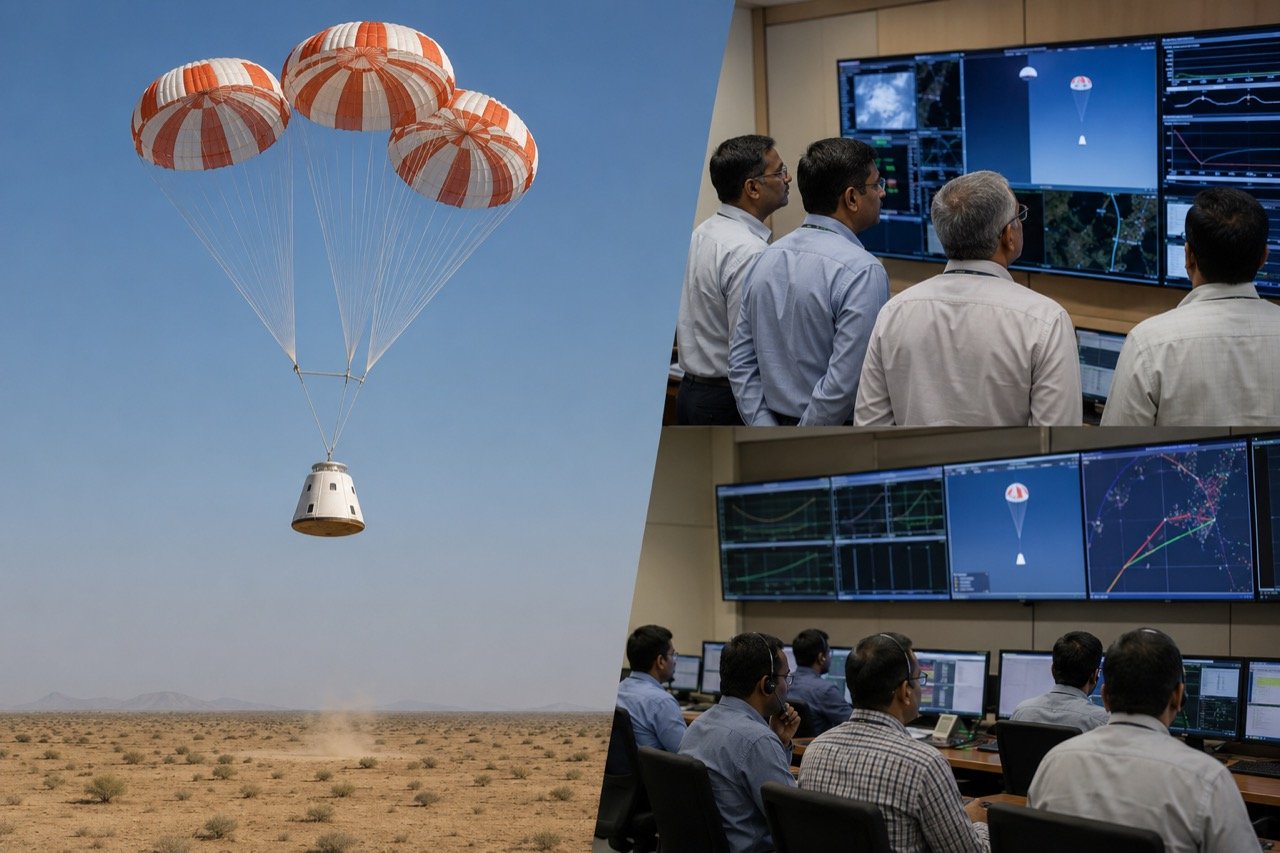
Gaganyaan Parachute Test Success Moves ISRO Closer to Crewed Flight
ISRO has completed successful integrated parachute tests for the Gaganyaan crew capsule, validating a critical part of the descent and recovery system as India's human spaceflight programme advances through key engineering milestones.
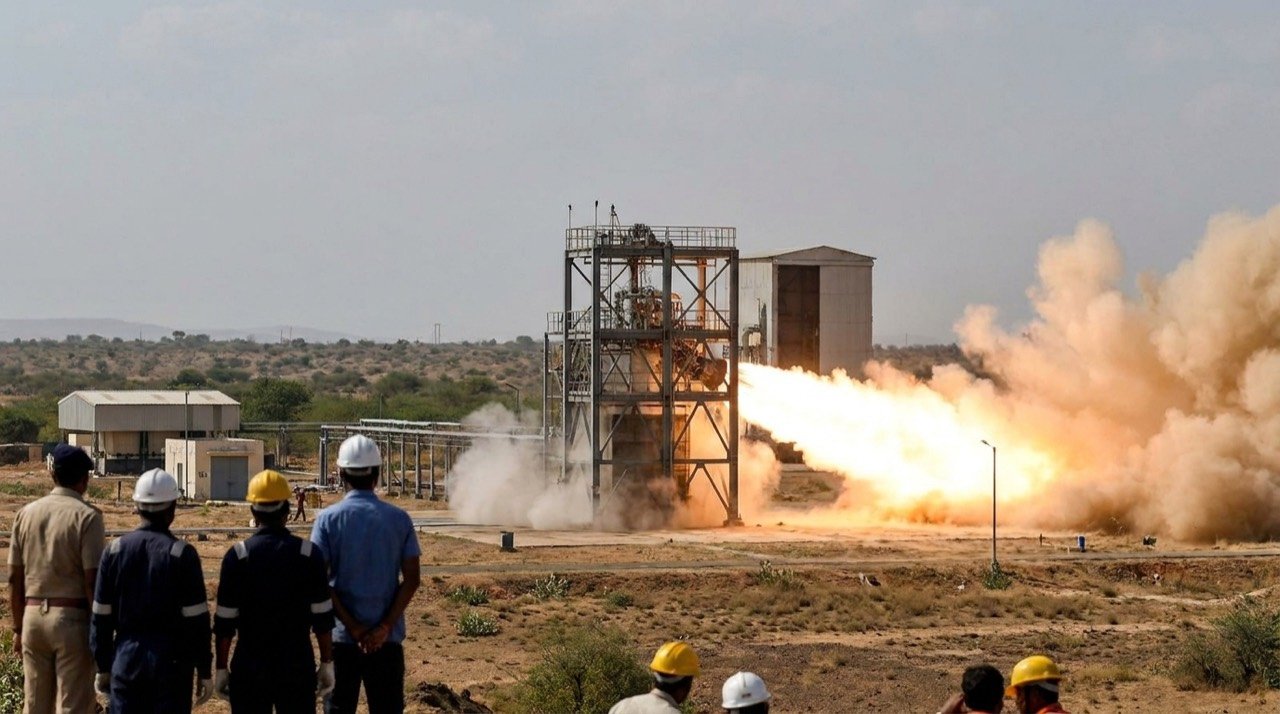
ISRO Fires Semi-Cryogenic Engine Power Head at 175 Tonnes in Landmark Hot Test
ISRO successfully ran its indigenous semi-cryogenic engine power head at 175 tonnes of thrust, clearing a key hurdle toward powering the LVM3 upgrade and the Next Generation Launch Vehicle.

ISRO Pushes Toward First Uncrewed Gaganyaan Flight With Humanoid Vyommitra Aboard
ISRO has confirmed that flight integration for its first uncrewed Gaganyaan mission is underway, with the humanoid robot Vyommitra set to ride an LVM3 rocket ahead of a crewed launch in 2027.

ISRO Successfully Launches Next-Generation Navigation Satellite
The mission strengthens India's homegrown positioning system, with applications spanning aviation, disaster response and everyday navigation.
More from this section
More
India Launches Its First Hydrogen-Powered Train on the Jind-Sonipat Route in a Major Green Rail Pilot
India's first hydrogen-powered passenger train is important less as a single service than as a test of an entire operating system.

IRCTC Launches Redesigned Beta Website With Fewer Steps, Cleaner Screens and Faster Booking Goals
The beta launch of a redesigned IRCTC website affects far more people than an ordinary commercial website update.

Kudankulam-Linked Files Appear on Dark Web, but NPCIL Says Nuclear Safety Systems Were Not Breached
Reports that files linked to the Kudankulam Nuclear Power Project appeared on the dark web have understandably generated alarm.