India Advances Rs 19,700 Crore Carbon Capture Scheme for Hard-to-Abate Sectors
India is moving ahead with a proposed Rs 19,700 crore carbon capture, utilisation and storage support scheme aimed at cutting emissions from steel, cement, power and refining.
Commentary & Analysis ·
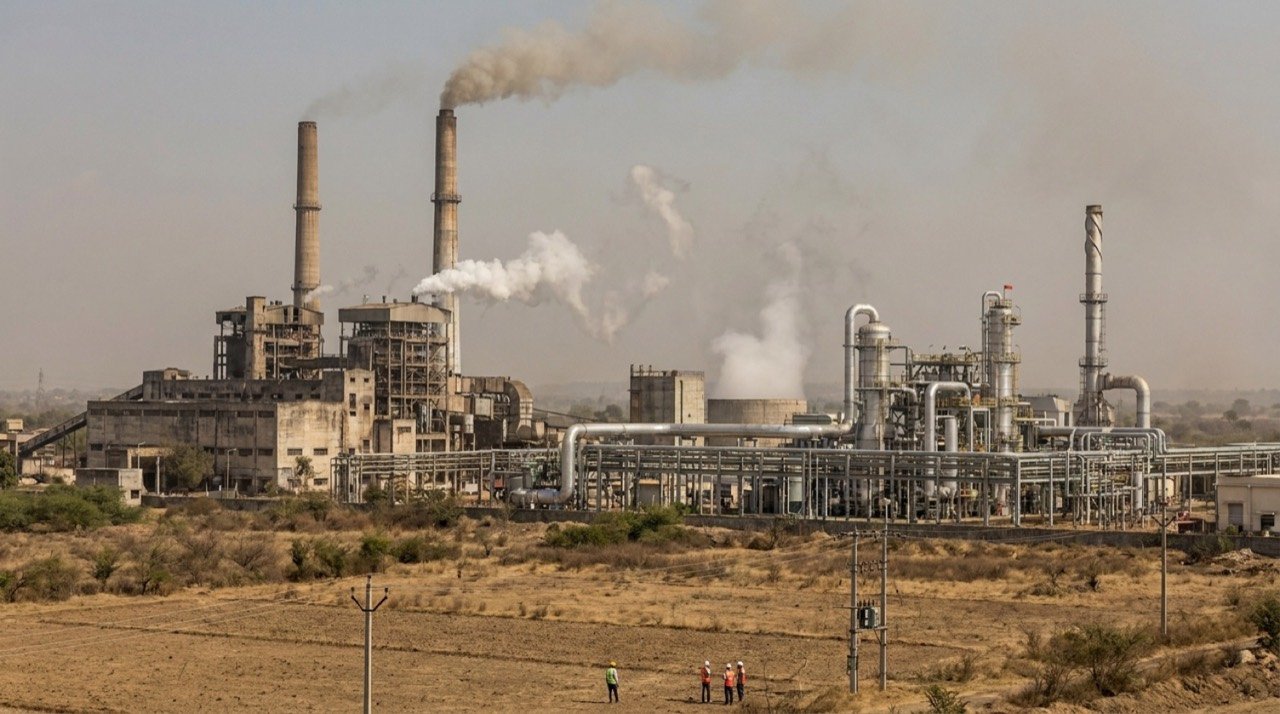
India is advancing one of its most significant industrial decarbonisation efforts yet, with a proposed carbon capture, utilisation and storage (CCUS) support scheme valued at around Rs 19,700 crore. According to sustainability-sector reporting, the plan is designed to tackle emissions in industries where conventional cuts are hardest to achieve. The sheer scale of the proposed outlay signals that policymakers now view carbon capture not as a peripheral experiment but as a central pillar of India's industrial climate strategy, one that acknowledges the limits of renewable substitution in certain corners of the economy.
Targeting hard-to-abate industries
The scheme focuses on so-called hard-to-abate sectors, including steel, cement, power generation and refining. These industries are essential to India's growth but are also among the most carbon-intensive, relying on high-temperature processes and fossil inputs that cannot be easily electrified or replaced with renewables. Steel and cement production, in particular, involve chemical reactions that release carbon dioxide as an inherent part of the manufacturing process, not merely as a by-product of energy use. This distinction matters: even a hypothetical shift to entirely clean electricity would not eliminate these emissions, because the carbon dioxide is released from the raw materials themselves, such as limestone in cement kilns. For such sectors, capturing carbon dioxide at the source and either storing it underground or converting it into usable products offers one of the few viable routes to deep emissions reductions without halting production. This is precisely why these industries have historically lagged behind power generation and transport in decarbonisation timelines worldwide, and why a dedicated policy instrument is now deemed necessary rather than optional.
Why incentives matter
Carbon capture remains expensive and commercially unproven at scale in India, which is why a dedicated support mechanism is seen as pivotal. Unlike solar or wind power, which have benefited from over a decade of falling costs and mature global supply chains, CCUS technology is still capital-intensive, technically complex and largely unproven in Indian industrial conditions. A funding push of this size could help de-risk early projects, attract private investment and build the supply chains, infrastructure and technical expertise the technology requires. Without such support, individual companies face steep upfront costs with uncertain returns, since captured carbon dioxide currently has limited commercial value in India compared to markets where carbon pricing or mandated utilisation creates demand. The proposal aligns with India's broader climate commitments, including its long-term net-zero ambitions, by giving heavy industry a practical pathway to lower its footprint while remaining globally competitive. This competitiveness angle deserves emphasis: as trading partners in Europe and elsewhere move towards carbon border taxes on imported steel, cement and other emissions-intensive goods, Indian exporters without a credible decarbonisation pathway risk being priced out of key markets regardless of domestic policy preferences.
What the funding could unlock
Beyond the headline figure, the real test of a scheme like this lies in what it enables on the ground. Large-scale carbon capture requires far more than a single company installing capture equipment at a plant. It demands pipeline networks to transport captured carbon dioxide, suitable underground geological formations for permanent storage, monitoring systems to verify that stored carbon remains sequestered over decades, and a trained workforce capable of operating and maintaining this new class of infrastructure. A support scheme of this magnitude could, in principle, catalyse the first wave of such infrastructure, creating shared facilities that individual firms could not justify building alone. This is the logic behind similar support mechanisms already operating in the United States, the European Union and parts of the Middle East, where governments have recognised that early-stage CCUS projects need public backing to reach the point where costs fall and private capital flows more freely.
Challenges ahead
Significant hurdles remain. CCUS deployment depends on suitable geology for storage, robust monitoring, and clear policy and pricing signals to make captured carbon economically worthwhile. India's geological suitability for large-scale carbon storage has not been mapped and tested to the same extent as in some Western nations, and identifying safe, verified storage sites will itself require considerable investment and time. Equally important is the question of monitoring and verification: without rigorous, independently audited tracking of how much carbon dioxide is actually captured and permanently stored, there is a real risk that funds are disbursed for projects that underperform or fail to deliver genuine emissions reductions. The scheme's eventual design, including how incentives are structured and disbursed, will determine whether it can move from proposal to working projects. Should subsidies be tied strictly to tonnes of carbon dioxide verifiably captured and stored, or will they be extended more loosely on the basis of capital investment or intent? This design choice will likely determine whether the scheme succeeds or becomes another underutilised allocation.
Stakeholder perspectives and the road ahead
Sustainability-sector analysts have noted that hard-to-abate sectors need targeted support to make carbon capture commercially viable at scale, a view that reflects a broader international consensus on industrial decarbonisation. Industry players in steel, cement and refining are likely to welcome the scheme as an acknowledgment of the unique constraints they face, while environmental observers will be watching closely to see whether the funds translate into measurable emissions reductions rather than simply subsidising continued fossil-fuel-based production. If implemented effectively, the scheme could position India as an emerging player in industrial carbon management, potentially attracting international technology partners and financing alongside domestic capital. The coming months will reveal how the proposal is finalised and whether it can translate ambition into the first generation of large-scale capture projects on Indian soil.
The NE Times View
Subsidising carbon capture for steel, cement and refining is a pragmatic admission that these sectors cannot decarbonise on renewables alone. The risk is that Rs 19,700 crore becomes a lifeline for polluters rather than a bridge to genuine cuts; the scheme must reward captured tonnes, not promises. India should insist on transparent monitoring before scaling a technology that has disappointed elsewhere. Given the scale of public money involved, the government would do well to build in independent verification from the outset, rather than retrofitting accountability measures after projects are already underway. The credibility of India's broader net-zero commitments may well rest on getting this balance right.
Key takeaways
- India is advancing a proposed CCUS support scheme worth around Rs 19,700 crore aimed at hard-to-abate sectors: steel, cement, power and refining.
- These industries face high-temperature, chemically intensive processes that cannot be easily electrified, making carbon capture one of the few viable decarbonisation routes available to them.
- The funding is intended to de-risk early projects, attract private investment, and build the supply chains and infrastructure the technology requires.
- Success will hinge on suitable storage geology, rigorous monitoring and verification, and clear policy and pricing signals.
- The scheme's ultimate design, particularly whether incentives are tied to verified captured tonnes, will determine whether it delivers genuine emissions cuts or merely subsidises existing polluters.
You may also like to read
Ambuja Cements Partners UK's Leilac for Low-Carbon Cement Project in Gujarat
Ambuja Cements has tied up with British clean-tech firm Leilac to build a commercial-scale low-carbon cement pathway at its Sanghipuram plant in Kutch, targeting one of India's hardest-to-abate industries.

India Steel Emission Targets: Draft Rules Push Decarbonisation
The Centre's draft emission cut targets for the iron and steel sector move India's climate policy from broad pledges to sector-specific rules, placing one of its hardest-to-abate industries under a defined framework.

India Inc's Dealmaking Heats Up As Cement And Tech M&A Drives Fresh Consolidation
From a multi-thousand-crore cement asset sale to a sharp jump in technology-sector deal value, India's mergers-and-acquisitions market showed renewed vigour heading into late June 2026.
India's Core Sector Growth Slows to a Seven-Month Low in May
India's eight core infrastructure industries grew just 0.5 percent in May, the weakest in seven months, as contractions in coal, crude oil and gas dragged on the index despite support from cement and steel.
More from this section
More
Adani Case: US DOJ Pushes for Permanent Dismissal of Charges
The US Department of Justice has urged a judge to permanently dismiss charges against Gautam Adani, calling the case legally flawed — a reversal with consequences for markets, diplomacy and cross-border enforcement.

Akasa Air Inducts 40th Aircraft in Indian Aviation Scale-Up
Akasa Air's 40th aircraft, ferried to Bengaluru via Seattle, Reykjavik and Cairo, marks a fleet milestone for the young carrier and a fresh signal that India's aviation market remains firmly in expansion mode.

BARC Ratings Suspension Leaves Indian TV Industry Flying Blind
BARC's pause on television ratings has put India's broadcast measurement system under fresh scrutiny, leaving broadcasters, advertisers and media planners without the weekly audience data that anchors the TV economy.