FSSAI Notices Put Packaged-Food Health Claims Under Sharper Scrutiny
Food regulator FSSAI has reportedly issued notices over health and nutrition claims on packaged foods, sharpening scrutiny of labels like 'no added sugar', 'high protein' and 'immunity support'.
Commentary & Analysis ·
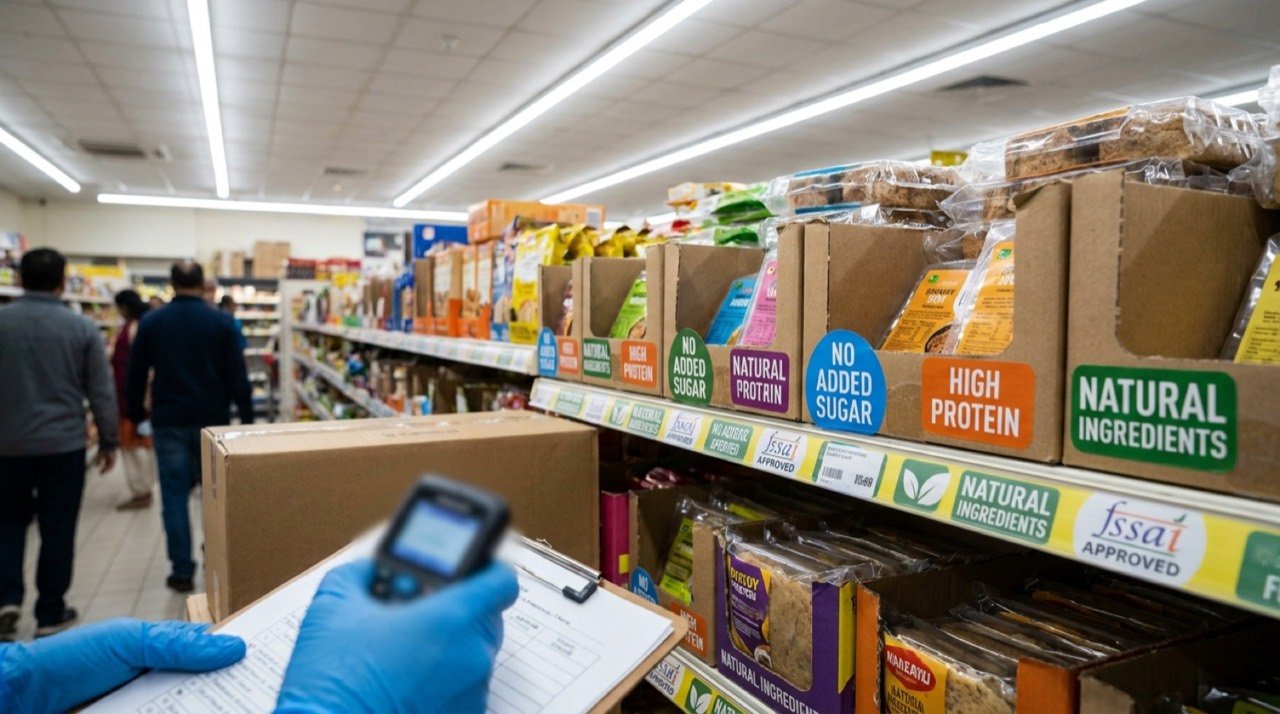
Food-safety scrutiny of packaged-food claims has returned to the spotlight after reports that the regulator targeted companies over health and nutrition statements. The move sharpens a long-running debate over how far marketing language on a label can travel ahead of the evidence inside the pack. It is not a new tension, but the fact that it is surfacing again, with notices reportedly reaching packaged-food companies, suggests the regulator is at least willing to test whether the wording on the front of a box matches what a laboratory would find inside it.
Why labels carry so much weight
Phrases such as 'no added sugar', 'high protein' or 'immunity support' can strongly influence what consumers buy, particularly parents shopping for children and health-conscious buyers scanning shelves for better choices. A claim printed prominently on the front of a pack often shapes a decision before the buyer ever turns the product over. In a crowded aisle, where dozens of similar products compete for a few seconds of attention, a single reassuring phrase can be the difference between a product going into the basket or staying on the shelf. That persuasive power is precisely why regulators treat such wording as more than marketing, holding it to standards of accuracy and proof rather than treating it as harmless salesmanship. The underlying logic is straightforward: if a phrase is powerful enough to change buying behaviour, it must also be accurate enough to survive scrutiny.
This is particularly true in India, where rising incomes and greater health awareness have pushed more shoppers towards processed and packaged foods marketed on the promise of being a better-for-you option. Words like 'immunity support' or 'no added sugar' tap directly into anxieties that have only grown sharper in recent years, around chronic disease, weight gain and children's diets. The more emotionally resonant the claim, the greater the potential for it to be used loosely, and the greater the public interest in ensuring it is not.
What the regulator actually checks
Authorities must verify whether claims are backed by a product's actual composition, serving size, laboratory testing and the use of permitted wording. A 'high protein' line, for instance, has to hold up against the protein content per realistic serving, not a flattering technicality that only looks impressive when calculated against an unrealistically small or large portion size. This distinction matters enormously in practice. A snack that technically qualifies as 'high protein' only when measured against a serving size far smaller than what people actually consume is, in effect, making a claim that misleads even if it is not technically false. For brands, the message is blunt: marketing language cannot outrun the evidence. Claims that fail this test risk notices, corrective action and reputational damage, and in a market where trust is hard-won and easily lost, the reputational cost can outweigh the commercial benefit of an aggressive claim.
The process of verification itself is not trivial. It requires the regulator to compare label wording against permitted terminology, request testing data or conduct its own laboratory analysis, and assess whether serving-size assumptions are realistic rather than convenient. This is resource-intensive work, which is part of why enforcement in this area has historically lagged behind the proliferation of bold claims on Indian shelves.
What it means for shoppers
For consumers, the development is a reminder to read the nutrition panel, ingredient list and serving size rather than relying on front-of-pack phrases alone. The detail on the back of a pack frequently tells a more complete story than the slogan on the front. A product boasting 'no added sugar' may still carry high levels of naturally occurring or free sugars from other ingredients, and a 'high protein' snack may deliver that protein alongside a serving size so small that few people would actually eat just that amount. The gap between the promise and the fine print is where much of the confusion, and potentially the harm, lives.
This puts an uncomfortable burden on ordinary shoppers, who cannot reasonably be expected to parse nutrition tables with the rigour of a dietitian every time they fill a trolley. That is precisely the argument for firm regulatory oversight: the average consumer relies on labels being honest by default, not on their own vigilance catching every inflated claim.
Why this moment matters
Stronger enforcement can improve consumer trust, provided it remains transparent and consistent across companies large and small. If large, well-resourced companies face scrutiny while smaller manufacturers escape notice simply because they attract less attention, the exercise risks becoming selective rather than systemic, undermining its credibility. Consistency across the industry, not just visibility for a handful of high-profile cases, is what will determine whether this becomes a genuine turning point or a passing news cycle.
If the scrutiny holds, it could nudge the packaged-food industry toward clearer labelling, where what a pack promises and what it delivers move closer together, to the benefit of the buyers who depend on those words. Industry bodies and manufacturers, for their part, have an interest in getting ahead of this rather than waiting to be named. Voluntary tightening of claims, clearer serving-size disclosures and independent verification of nutrition statements would all reduce the risk of future notices while also rebuilding consumer confidence in an industry that has, in places, leaned too heavily on health halos.
The NE Times View
If FSSAI is finally challenging 'no added sugar' and 'immunity support' labels, it is overdue. Indian shelves are thick with health halos that survive precisely because enforcement has been thin. Notices are a start, but the test is whether they end in penalties and corrected packs or fade into paperwork. With diabetes and obesity rising, honest labelling is a public-health instrument, not a marketing nicety, and the regulator must treat it that way. The credibility of this effort will be judged not by how many notices are issued, but by how many labels actually change as a result, and whether the standard applied to a large multinational brand is the same standard applied to a small regional manufacturer. Anything less risks turning a meaningful public-health intervention into a symbolic gesture.
Key takeaways
- The regulator reportedly issued notices over health and nutrition claims, including phrases like 'no added sugar' and 'high protein', which are now under closer review.
- Compliance is checked against a product's actual composition, realistic serving size and laboratory testing, not just the wording on the label.
- Brands are on notice that marketing language must match the underlying evidence, with non-compliance risking corrective action and reputational damage.
- Shoppers are urged to read nutrition panels and ingredient lists rather than relying solely on front-of-pack claims.
- The real test of this enforcement push is whether it results in penalties and corrected packaging applied consistently across the industry, rather than fading into procedural notices.
You may also like to read
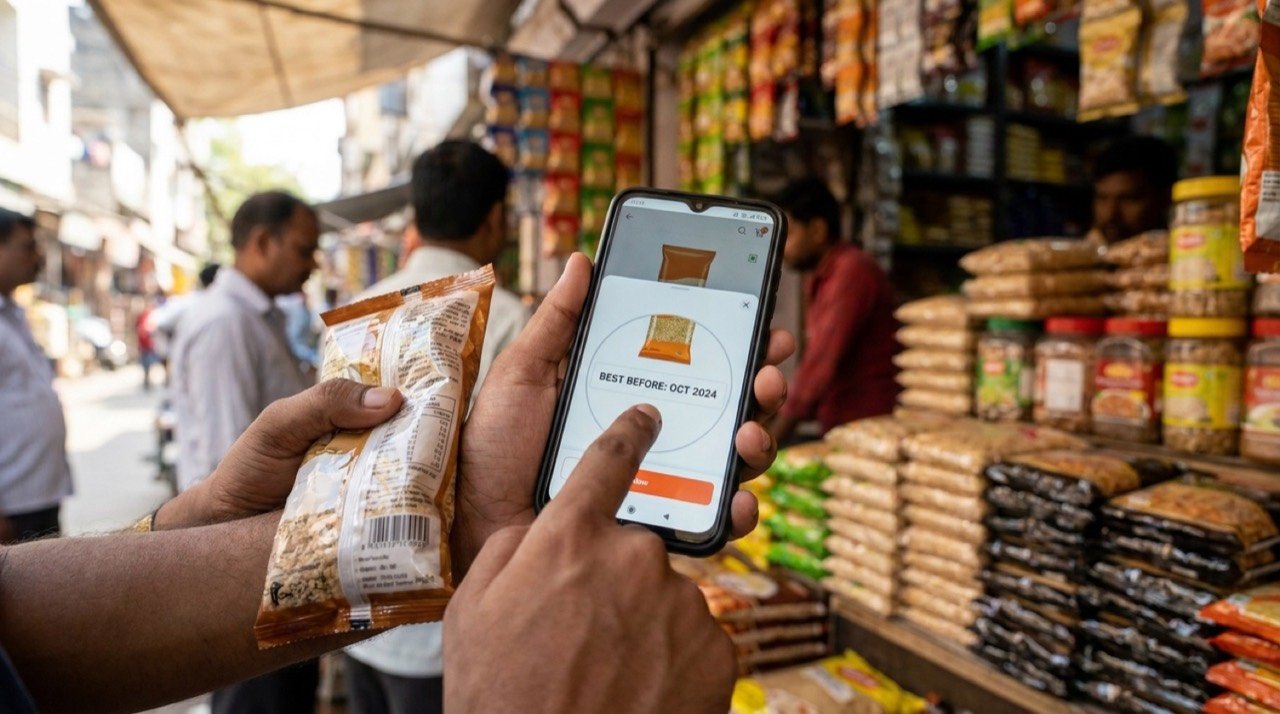
FSSAI Says Expiry-Date Display on E-Commerce Food Listings Falls Under Legal Metrology Rules
India's food regulator has clarified that online food listings must carry expiry and shelf-life declarations under Legal Metrology rules, tightening transparency for quick-commerce and online grocery shoppers.

India Bets on AI to Catch the Next Outbreak Under One Health Mission in 2026
Drawing on the hard lessons of COVID-19, the ICMR is inviting proposals for AI systems to detect emerging pathogens across people, animals and the environment, in a bid to predict outbreaks rather than react to them.
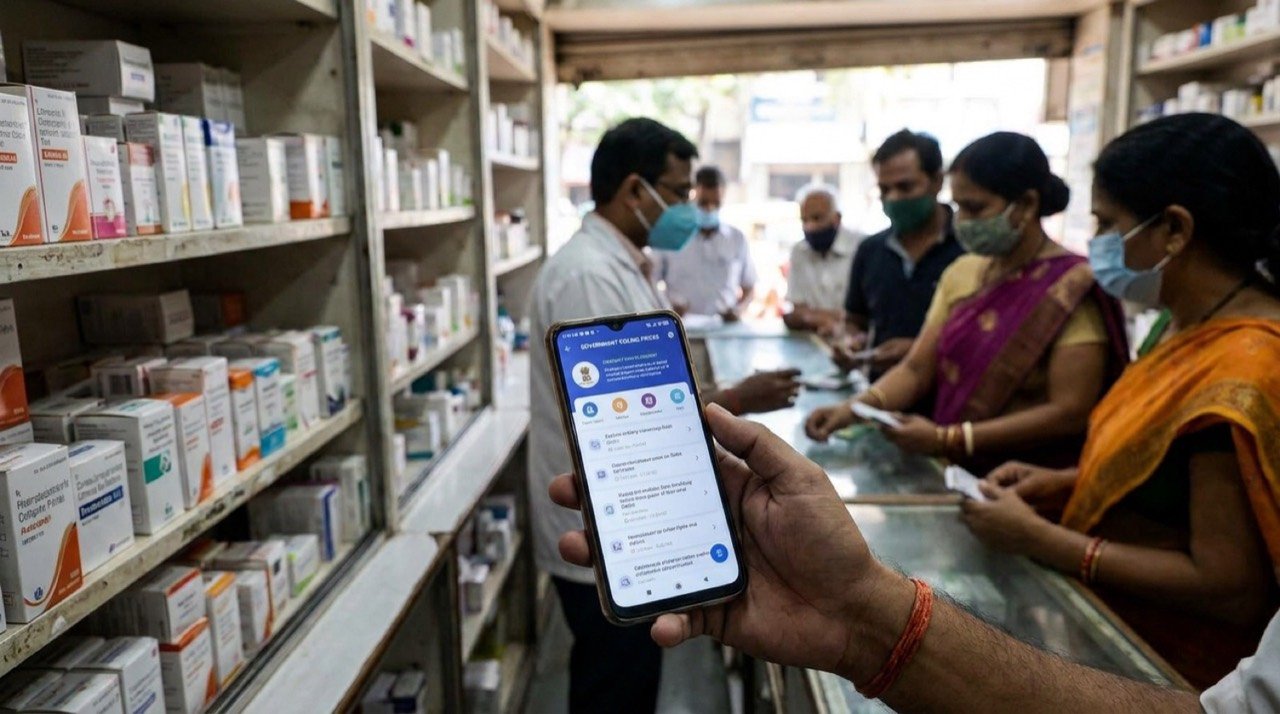
Medicine Price Checks and Complaints Move to a Single Citizen Platform
India's drug pricing regulator has merged its grievance portal with its price-checking tool, letting citizens verify medicine prices and file complaints from one place.

Aarogya Setu 2.0 Returns as India's Personal Health Record App
The pandemic-era contact tracing app has been relaunched as a personal health record platform, betting that portable medical data can find a place in India's growing digital health ecosystem.
More from this section
More
Health Insurance: Why Hospital Cashless Status Matters Before You Buy
Whether a hospital sits inside an insurer's cashless network can decide if a family pays lakhs upfront during an emergency or walks in with paperwork alone, making it a first-order question for policy buyers.

Jharkhand Teen Dies During Fracture Treatment; CM Orders Probe
The death of a Jharkhand teenager during treatment for a reported fracture has led to family allegations of medical negligence and an official probe ordered by the Chief Minister into what went wrong.
Aarogya Setu 2.0 Returns as India's Personal Health Record App
The pandemic-era contact tracing app has been relaunched as a personal health record platform, betting that portable medical data can find a place in India's growing digital health ecosystem.