Banking Liquidity Slips Into Deficit as Tax Outflows Drain System Funds
India's banking system liquidity turned negative for the first time in three months after advance-tax payments and rising cash demand, prompting the RBI to inject Rs 1.41 trillion through a variable-rate repo auction.
Commentary & Analysis ·
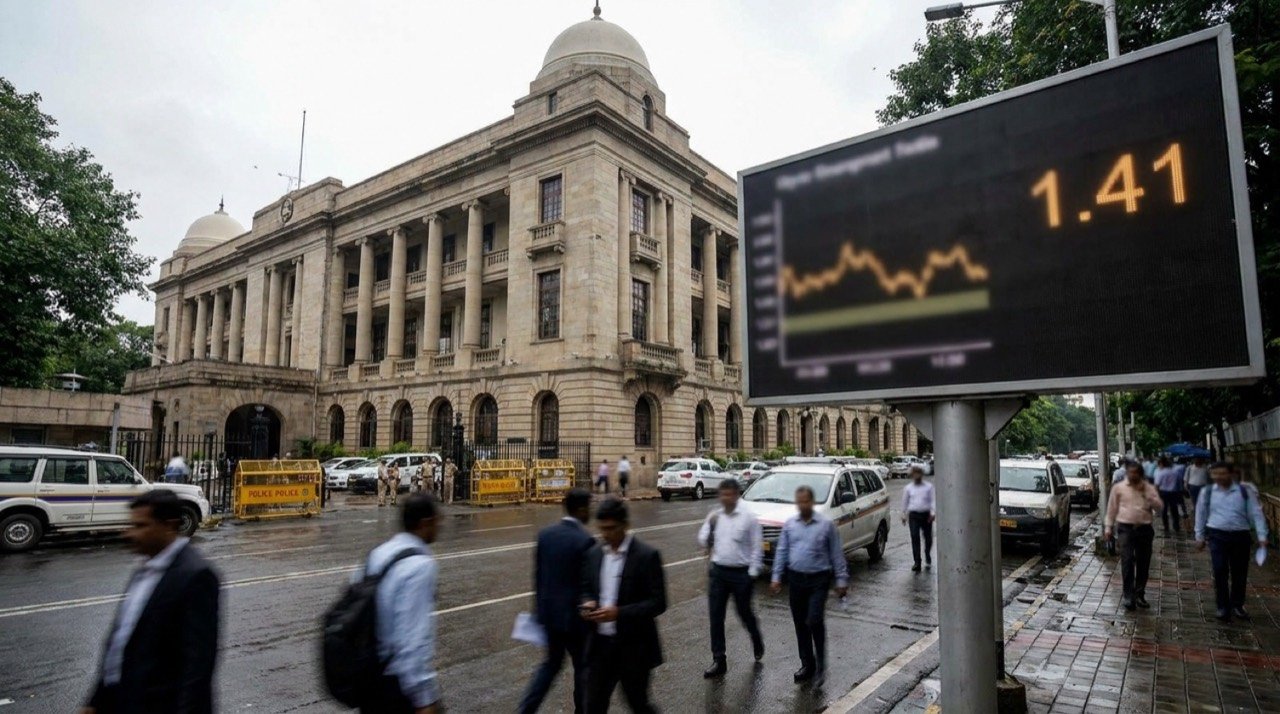
India's banking system liquidity has slipped into deficit for the first time in roughly three months, as a wave of advance-tax payments and a seasonal rise in currency in circulation drained surplus funds from lenders. The shift, while not unusual for this point in the financial calendar, prompted the Reserve Bank of India to step in with a variable-rate repo (VRR) auction of Rs 1.41 trillion, underscoring that active liquidity management remains a central feature of its day-to-day operations.
Why liquidity turned negative
Two forces converged to tighten the system. First, companies made large advance-tax payments, transferring money out of the banking system and into government accounts. Second, currency leakage rose as households and businesses drew more cash, reducing the pool of reserves banks hold with the central bank. Together these flows tipped the system from surplus into deficit.
When liquidity tightens, banks compete more aggressively for short-term funds, and rates in the overnight and money markets can harden. That dynamic is precisely what the RBI's repo auction was designed to soften.
The RBI's response
By offering Rs 1.41 trillion through a variable-rate repo auction, the central bank supplied banks with short-term funds against collateral, easing the immediate squeeze. The variable-rate format lets market demand determine the cost, giving the RBI a flexible tool to fine-tune conditions without signalling any change in its broader policy stance.
What it means for markets and borrowers
The development matters for banks, companies and money-market investors alike. Tighter liquidity can lift short-term borrowing costs, affecting everything from corporate working-capital lines to the yields on treasury bills and commercial paper. Analysts will watch closely whether the deficit proves a passing, tax-driven blip or the start of a more persistent tightening.
- System liquidity turned to deficit after about three months of surplus.
- Advance-tax payments shifted funds from banks to the government.
- Rising currency in circulation added to the drain on reserves.
- The RBI conducted a Rs 1.41 trillion variable-rate repo auction.
- Short-term money-market rates can harden when liquidity tightens.
“Tax calendars and cash demand routinely move the daily cost of funds; the question is always whether the squeeze fades once outflows settle.”
— Money-market strategist
The outlook hinges on the pace at which tax outflows reverse as government spending flows back into the system, and on whether elevated cash demand continues to pull reserves out of banks. If the deficit is temporary, conditions should normalise within weeks; if government balances and currency demand stay high, the money market could remain tighter for longer, keeping the RBI's liquidity tools in frequent use.
The NE Times View
A liquidity dip after advance-tax outflows is seasonal plumbing, not a crisis, and the RBI's Rs 1.41 trillion repo injection shows it is managing the system as designed. What matters is that short-term rates stay anchored so that policy easing actually reaches borrowers. Watch whether the central bank keeps fine-tuning or signals a more durable shift; the smoothness here reflects competent liquidity management worth acknowledging.
This article is original commentary and analysis by The NE Times. Background facts were referenced from Business Standard and Reserve Bank of India disclosures.
You may also like to read
RBI Calls Rate-Hike Talk Premature, Rolls Out Liquidity Support As Rupee Steadies
The Reserve Bank moved to calm nerves in late June 2026, signalling that interest-rate hikes were premature and unveiling liquidity measures even as the rupee drew comfort from a softer crude outlook.
Foreign Currency Inflows Could Cushion Domestic Liquidity, Says RBI MPC Member
An RBI Monetary Policy Committee member says foreign currency inflows may support domestic liquidity, a signal that matters for banks, bond markets and India's borrowers.
Sensex Holds Above 77,000 As Crude Pullback And RBI Liquidity Push Lift Indian Markets
Indian benchmarks extended gains around 24 June 2026 as easing crude prices, calmer West Asia tensions and fresh RBI liquidity support kept financial and auto stocks firmly in demand.

RBI Warns AI-Driven Cyberattacks Are Top Risk for Banks, NBFCs
The Reserve Bank of India has flagged AI-powered cyberattacks as a leading threat to banks and NBFCs, pushing cybersecurity to the centre of India's increasingly digital financial system.
More from this section
More
Adani Case: US DOJ Pushes for Permanent Dismissal of Charges
The US Department of Justice has urged a judge to permanently dismiss charges against Gautam Adani, calling the case legally flawed — a reversal with consequences for markets, diplomacy and cross-border enforcement.

Akasa Air Inducts 40th Aircraft in Indian Aviation Scale-Up
Akasa Air's 40th aircraft, ferried to Bengaluru via Seattle, Reykjavik and Cairo, marks a fleet milestone for the young carrier and a fresh signal that India's aviation market remains firmly in expansion mode.
BARC Ratings Suspension Leaves Indian TV Industry Flying Blind
BARC's pause on television ratings has put India's broadcast measurement system under fresh scrutiny, leaving broadcasters, advertisers and media planners without the weekly audience data that anchors the TV economy.