Assam Floods Worsen As Barak Valley Reels And Lakhs Take Shelter
Nearly seven lakh people across more than twenty districts are battling rising waters as the Brahmaputra and Barak rivers swell, with Chief Minister Himanta Biswa Sarma touring the worst-hit south of the state.
Commentary & Analysis ·
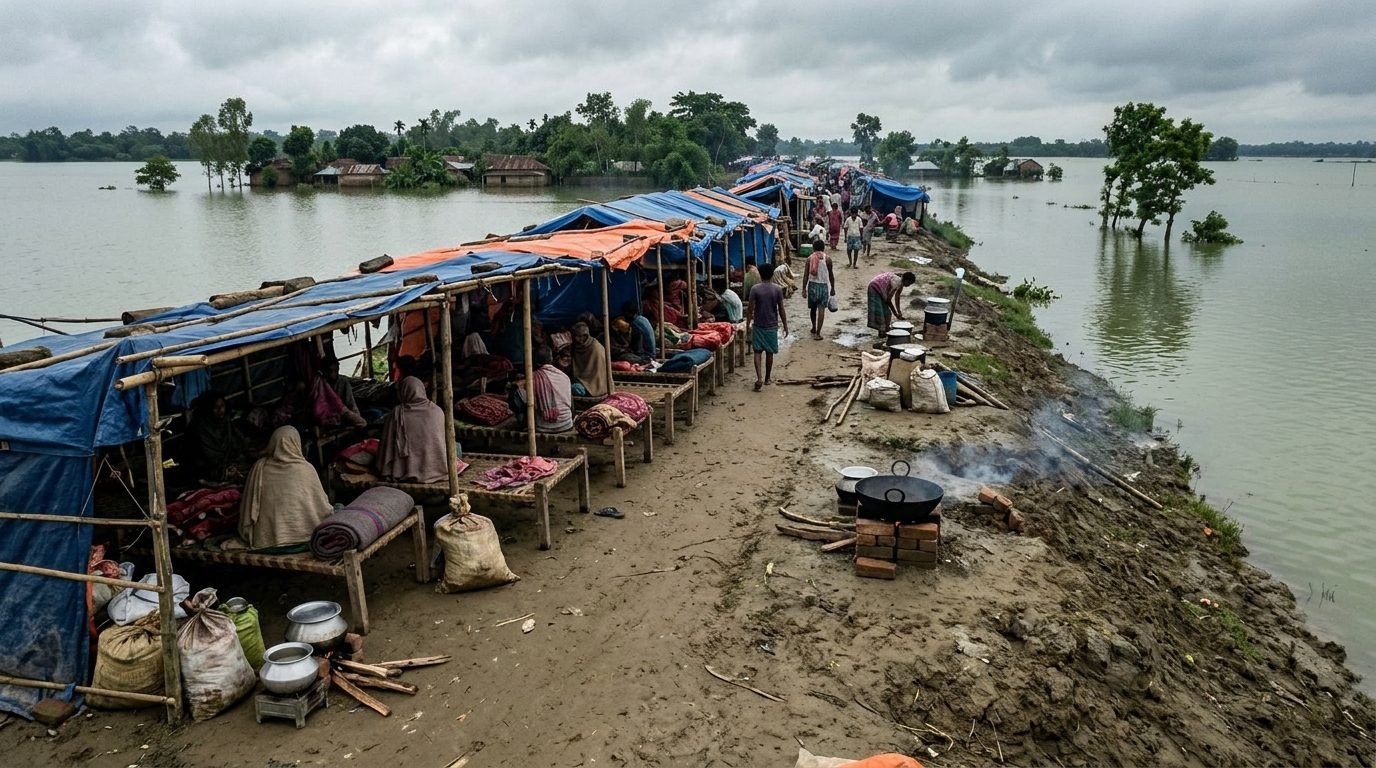
Assam is once again under water. The state's annual monsoon ordeal has turned severe, with the flood toll rising and nearly seven lakh people affected across more than twenty districts as the Brahmaputra and its tributaries breach embankments. The southern Barak Valley has emerged as the epicentre, three of its districts among the hardest hit, prompting Chief Minister Himanta Biswa Sarma to travel there to take stock of relief operations.
The scale of the deluge
Hundreds of villages across more than a dozen districts are submerged, with floodwaters spreading through dozens of revenue circles. More than 41,000 displaced people are sheltering in around 175 relief camps, while another 210 relief distribution centres have been pressed into service. The toll from this year's floods and landslides has climbed past twenty, with fresh casualties reported in recent days.
The Regional Meteorological Centre in Guwahati has forecast further thunderstorms and lightning at isolated places across most districts, raising fears that rivers already running high will rise again before any sustained respite.
Wildlife and the recurring crisis
The floods have spilled into the state's protected areas, with a large share of the Pobitora Wildlife Sanctuary in Morigaon district inundated, threatening rhinos and other animals that must flee to higher ground. The recurring devastation has reopened the long-running debate over upstream water management, embankment maintenance and the structural causes that make Assam's geography so vulnerable year after year.
- Nearly seven lakh people affected across more than 20 districts.
- Barak Valley among the worst-hit regions, with the CM visiting in person.
- Over 41,000 displaced sheltering in roughly 175 relief camps.
- Death toll from floods and landslides has crossed twenty.
- Pobitora Wildlife Sanctuary heavily inundated, endangering wildlife.
What comes next
The immediate priority is evacuation, clean drinking water and disease prevention in crowded camps, where waterborne illness can follow quickly once floodwaters recede. The state administration has put rescue teams on standby and is coordinating with central agencies, but officials acknowledge that without long-term flood management the same districts will be back under water next monsoon.
“Our first duty is to get people to safety and keep the relief camps stocked; the rebuilding will come once the water falls.”
— A senior Assam disaster management official
For families who have lost homes, crops and livestock, the season's arithmetic is brutally familiar. The waters will eventually recede, but the question of how Assam breaks its annual cycle of flooding remains as unanswered as ever.
The NE Times View
Assam's floods have become a grimly annual catastrophe, yet each year the response is treated as an emergency rather than a predictable certainty. Seven lakh displaced is not a freak event; it is the Brahmaputra doing what it does, made worse by embankment failures, silting and unplanned construction. A chief minister's tour of the south is necessary optics, but the Centre and state owe the valley durable flood management, not just relief camps and condolences.
This article is original commentary and analysis by The NE Times. Background facts were referenced from Deccan Herald and PTI.
You may also like to read
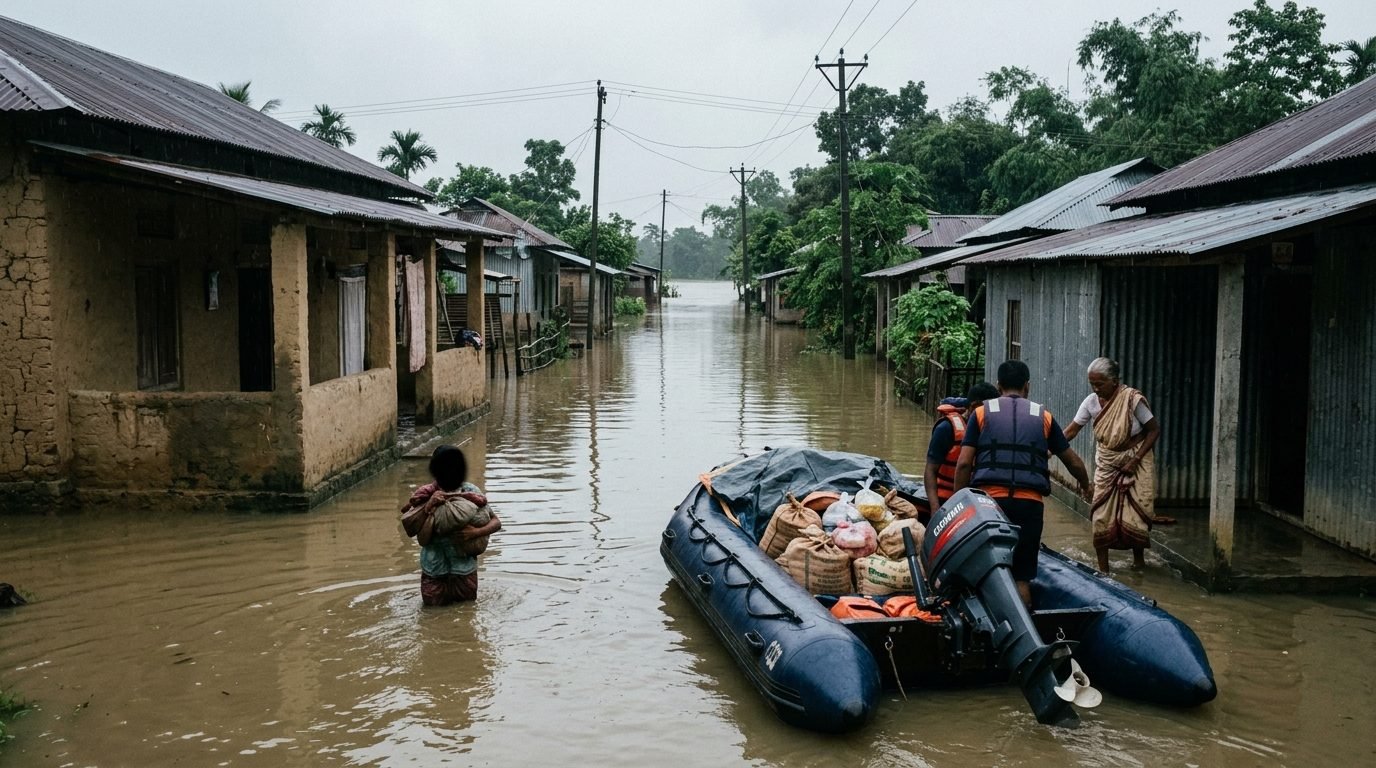
Assam Floods Worsen as Brahmaputra Swells, Lakhs Displaced Across Northeast
Early-monsoon deluge has inundated villages across multiple Assam districts, with rivers flowing above danger levels and relief camps filling as the wider Northeast battles landslides.

Assam Case Shows PAN and Voter Cards Are Not Citizenship Proof
A man declared a foreigner in Assam despite holding multiple identity documents has highlighted a crucial legal distinction: everyday IDs establish identity, not citizenship, when a person's legal status is challenged.
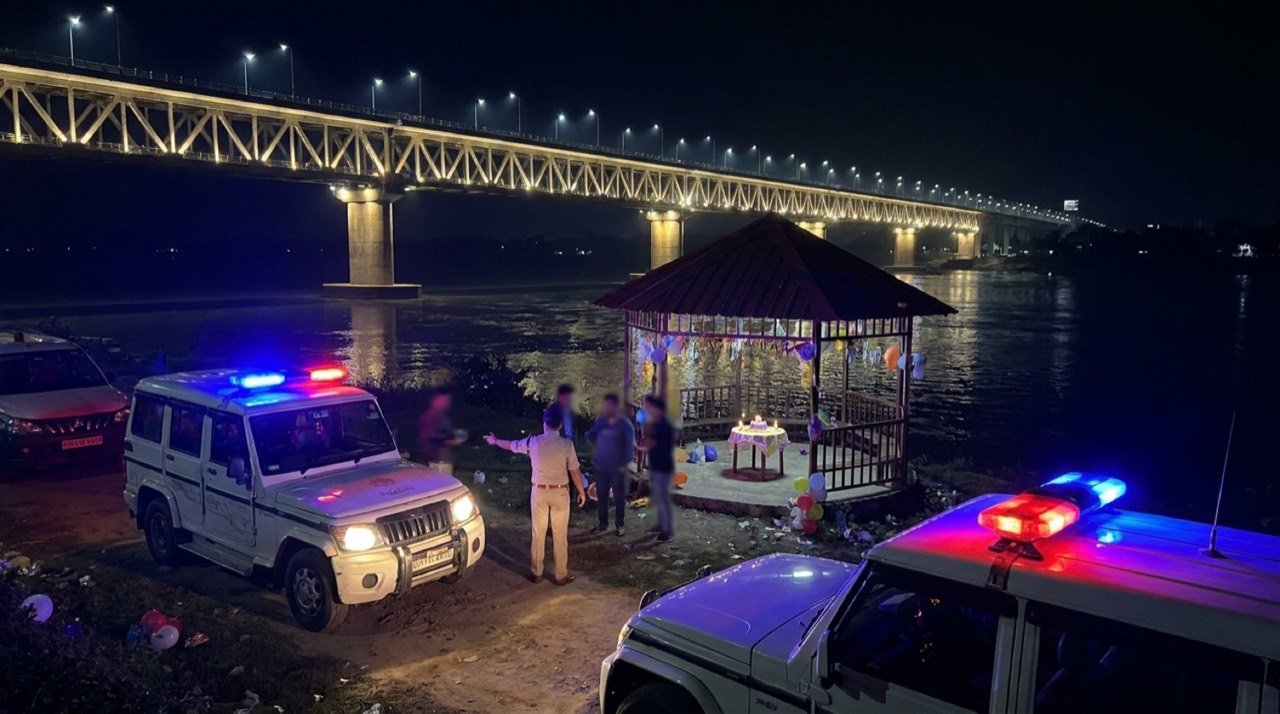
Guwahati Bridge Birthday Party Lands 14 in Legal Trouble as Assam Cracks Down
Assam authorities have booked 14 people after a late-night birthday party with luxury cars on Guwahati's Kumar Bhaskar Varma Bridge, framing the viral stunt as a public-safety and traffic hazard.
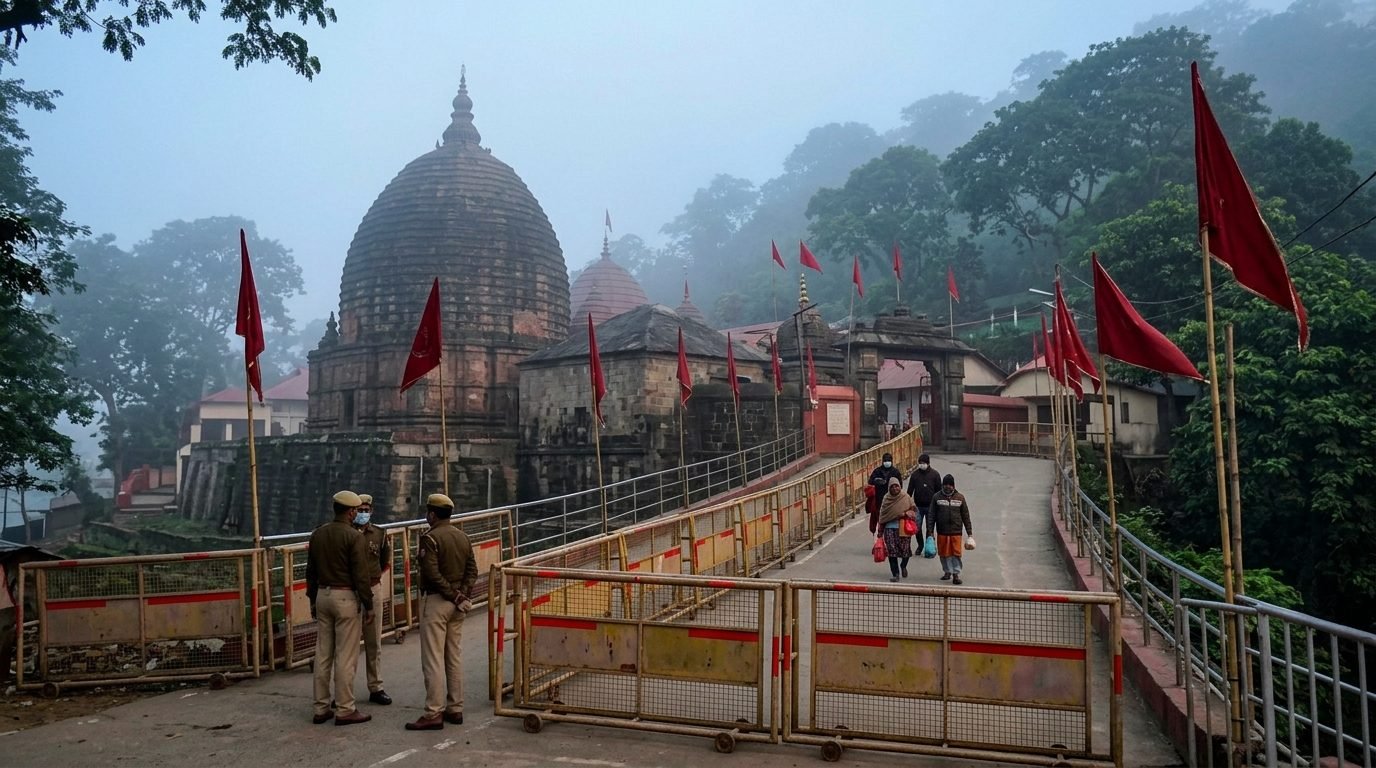
Kamakhya gears up for Ambubachi Mela 2026 with new entry route and tighter security
The four-day festival on Guwahati's Nilachal Hills, often called the 'Mahakumbh of the East', opens late on 22 June, with authorities adding a fresh access road from the Pandu side to ease the crush of lakhs of pilgrims, sadhus and tantriks.
More from this section
More
AICTE Industry Fellowship 2026: Rs 1.5 Lakh Scheme Closes July 5
The AICTE Industry Fellowship Programme 2026, which places technical-education faculty inside leading companies on a Rs 1.5 lakh monthly stipend, reached its application deadline on July 5.
Bay of Bengal Low Pressure System Revives Monsoon Over Western India
A low-pressure system over the Bay of Bengal has pushed the monsoon back into an active phase, bringing steady heavy rain to Kerala, coastal Karnataka and Maharashtra, and putting Mumbai and Pune on preparedness watch.
Bishnoi Gang Suspects Injured in Haryana Encounter as Police Tighten Net
A joint Haryana-Delhi Police operation in Bahadurgarh left two suspected Lawrence Bishnoi gang members injured, spotlighting the multi-state coordination now central to India's fight against organised crime networks.