When the Signal Died at Jantar Mantar: The Law Behind a Brief Internet Blackout
As authorities briefly cut mobile internet near Jantar Mantar during the NEET-UG protests, here is the law on proportionality, transparency and the costs of a shutdown.
Commentary & Analysis ·
Key facts
- Authorities briefly suspended mobile internet near Jantar Mantar in Delhi during the CJP protests and Sonam Wangchuk's fast, which ended on 24 July 2026, citing public order.
- The Supreme Court in Anuradha Bhasin v Union of India (2020) held that indefinite shutdowns are impermissible and that any suspension must be necessary, proportionate and the least restrictive option.
- Suspension orders are now governed by the Telecommunications (Temporary Suspension of Services) Rules, 2024, notified under the Telecommunications Act, 2023, replacing the 2017 rules.
- Access Now recorded 84 internet shutdowns in India in 2024, among the highest of any country, with a documented economic cost running into hundreds of millions of dollars.
A Blackout in the Heart of Protest
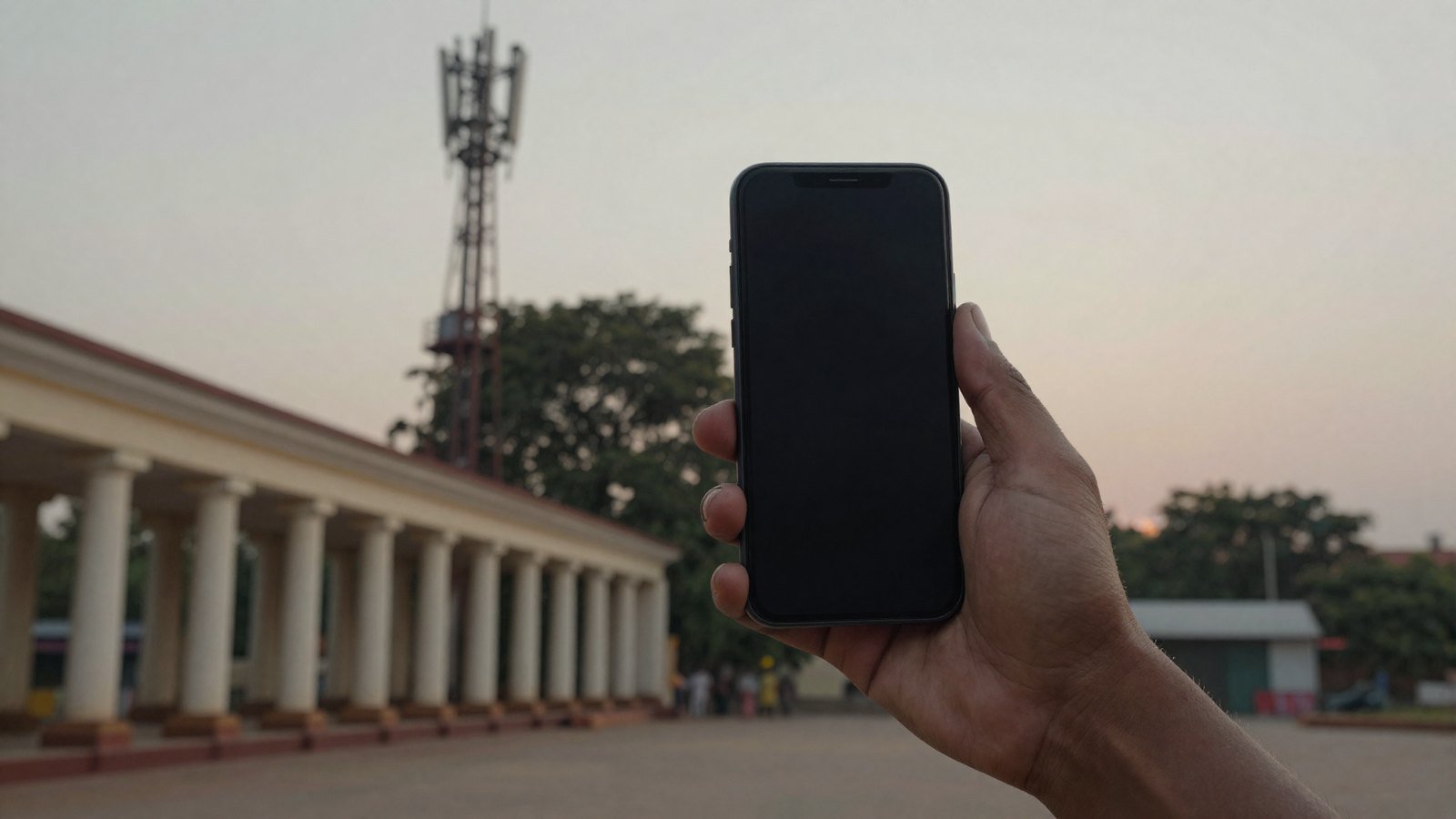
For a few hours around Jantar Mantar this week, phones went quiet. As students under the CJP banner pressed their demand for a clean re-examination after the NEET-UG 2026 paper leak, and as the climate activist Sonam Wangchuk brought his hunger strike to a close on 24 July, mobile internet in the immediate vicinity was briefly suspended in the name of public order. The suspension was short. The legal questions it raises are not.
An internet shutdown is one of the bluntest instruments a modern state possesses. It does not target a rumour, a video, or an individual; it silences everyone within its reach, protester and passer-by alike. That is precisely why Indian law now surrounds the power with conditions that a brief, localised suspension does not switch off. Understanding those conditions is the difference between a lawful public-order measure and one that a court could later strike down.
What the Supreme Court Actually Held
The governing authority is Anuradha Bhasin v Union of India, decided by the Supreme Court in January 2020 out of the prolonged communications blockade in Jammu and Kashmir. The Court did not declare shutdowns illegal. It did something more durable: it fixed the test by which every shutdown must be judged.
The freedom of speech and expression and the freedom to carry on trade over the internet, the Court held, enjoy constitutional protection under Articles 19(1)(a) and 19(1)(g). Any restriction must therefore satisfy the proportionality standard drawn from the Puttaswamy privacy judgment: the measure must pursue a legitimate aim, be a suitable and necessary means to that aim, and be the least restrictive option available. An indefinite suspension, the Court said flatly, is impermissible. Orders must be temporary, limited in scope, and reasoned.
Crucially, the Court also demanded transparency. Suspension orders must be published so that they can be tested in court, and a Review Committee must periodically examine whether the restriction remains necessary. A power exercised in secret, the reasoning ran, is a power that cannot be held to account.
The Rules That Govern the Switch
For years the operative framework was the Temporary Suspension of Telecom Services (Public Emergency or Public Safety) Rules, 2017, made under the old Indian Telegraph Act. Those rules have since been replaced. Under the Telecommunications Act, 2023, the government notified the Telecommunications (Temporary Suspension of Services) Rules, 2024, in November 2024.
The new rules retain the core architecture. A suspension order must be issued by a senior official, the Union Home Secretary at the Centre or the Secretary in charge of the Home Department in a state, and must state its reasons. A copy must reach a Review Committee within 24 hours, and that committee can set the order aside if it finds non-compliance. In an emergency a lower-ranked officer may issue an order, but it must be confirmed by the competent authority shortly afterwards.
Digital-rights groups such as the Internet Freedom Foundation and SFLC.in have argued that the 2024 rules are, in their words, new language for the same shutdowns, leaving intact the wide discretion and thin publication practice that made the 2017 regime so easy to invoke. A brief, hyper-local suspension of the kind seen near Jantar Mantar sits squarely inside that grey zone.
Where a Legal Challenge Would Land
Were the Jantar Mantar suspension to be challenged, petitioners would likely build on Bhasin along familiar lines. They could argue that public order at a single protest site is a legitimate aim, but that a total mobile-internet blackout is not the least restrictive means of achieving it when narrower tools, targeted content blocking or crowd management, exist. They could ask whether the written order was published and made available, as the Court requires, and whether the Review Committee recorded reasons.
The state, for its part, could contend that a short, geographically confined suspension during a volatile gathering is the very model of a proportionate response, precisely because it was limited in time and space. The judicial answer usually turns on the paperwork: a reasoned, published, time-bound order tends to survive scrutiny, while an unwritten or unpublished one rarely does. That is the practical legacy of Bhasin, transparency as the price of the power.
The Costs That Do Not Show on a Bill
India has led the world in shutdown frequency for years. Access Now recorded 84 suspensions across the country in 2024, among the highest of any nation, with a documented economic cost running into hundreds of millions of dollars as commerce, gig work and digital payments stall. Those figures capture only the measurable losses.
The free-expression cost is harder to price. A shutdown during a protest does not merely inconvenience; it degrades the ability to document, to coordinate legal aid, to counter rumour with verified information, and to let families know their children are safe. When the medium of assembly goes dark, so does a slice of the public record. That is why rights groups treat protest-time shutdowns as a distinct category of concern rather than a routine law-and-order tool.
The Forward Look
The Jantar Mantar suspension was brief, and brevity may keep it below the threshold of sustained litigation. But the episode is a reminder that the legal machinery around shutdowns is now mature enough to be tested. A single well-documented petition, backed by the Review Committee record and the published order, could clarify how Bhasin applies to short, targeted suspensions at protest sites, a scenario the 2020 judgment did not squarely address.
For now, the questions remain open in the way tech-rights questions often are: not whether the state may act, but whether it acted in the narrowest, most transparent way the Constitution allows. The answer will be found, if anywhere, in the orders that were, or were not, written down.
The NE Times View
A shutdown that cannot be read cannot be justified. Whatever the merits of the public-order case near Jantar Mantar, the test the Supreme Court set is simple and worth insisting on: publish the order, state the reasons, keep it narrow, and let the Review Committee do its work in the open. Proportionality is not a slogan; it is the difference between policing a protest and silencing one.
Sources
- Anuradha Bhasin v Union of India (2020), Supreme Court of India
- Telecommunications (Temporary Suspension of Services) Rules, 2024, under the Telecommunications Act, 2023
- Internet Freedom Foundation and SFLC.in analyses of the Telecom Suspension Rules
- Access Now / #KeepItOn internet shutdown data, 2024
This article is original news analysis and commentary by The NE Times, based on reporting from the sources listed above.
You may also like to read

Mobile Internet Suspension Near Jantar Mantar: Security Measure or Disproportionate Restriction?
Temporary internet restrictions can disrupt coordination and misinformation alike, but they must be examined for legal authority, geographic scope,
Police Videography and Protest Surveillance: Evidence, Deterrence and Privacy at Jantar Mantar
Police recording can preserve evidence and protect against false claims, but broad identification of peaceful participants can also chill lawful dissent

India Launches Its First Hydrogen-Powered Train on the Jind-Sonipat Route in a Major Green Rail Pilot
India's first hydrogen-powered passenger train is important less as a single service than as a test of an entire operating system.

Fact-Check Toolkit: How to Read Past the Viral Noise Around the NEET and Ladakh Protests
As misinformation spreads around the NEET-UG 2026 leak protests and Sonam Wangchuk's fast, here are the recurring fake-post patterns and a practical verification toolkit for readers.
More from this section
More
CBSE On-Screen Marking Controversy: Why It Became Part of the Student Protest
Concerns about digital marking widened the movement beyond a single leaked paper to the reliability and transparency of assessment technology
From Meme Page to Mass Movement: The Complete Cockroach Janta Party Timeline
The CJP timeline shows how a deliberately absurd online identity became an organising brand capable of setting deadlines, negotiating with ministers

Misinformation Around the Protests: Foreign Accounts, Old Videos and Claims That Need Verification
The volume of viral content made verification a central public-safety issue, but official claims about coordinated misinformation also require evidence