West Bengal joins NEP and PM-SHRI as Chief Minister Suvendu Adhikari unveils sweeping school reforms
India's Supreme Court imposed Rs 3 lakh costs on Samay Raina, Ranveer Allahbadia and Ashish Chanchlani after finding non-compliance with directions in a disability-related case.
Commentary & Analysis ·

Verified key facts
- West Bengal has joined the National Education Policy and the PM-SHRI scheme, Chief Minister Suvendu Adhikari announced on 14 July, per ANI.
- The move clears the way for release of central education funds to the state in the current financial year.
- Primary-level PM POSHAN cooking cost will rise from Rs 6.78 to Rs 10 per student per day from 1 August.
- The state plans 6,000 teacher appointments already promised plus 6,000 more, with a Chief Secretary-rank administrator overseeing recruitment.
- The government will withdraw its pending OBC reservation case from the Supreme Court to speed up appointments.
Bengal ends its long holdout on the National Education Policy
West Bengal has formally joined the National Education Policy and the PM-SHRI schools scheme, Chief Minister Suvendu Adhikari announced on 14 July. The decision, reported by ANI, ends years of resistance from Kolkata to the Centre's flagship education framework. It also clears the way for central funds withheld from the state to flow in the current financial year.
The previous Trinamool Congress government had refused to sign the PM-SHRI memorandum, arguing the scheme imposed central branding on state-funded schools. The new BJP government has reversed that position outright. The Week reported that the shift is part of a broader remaking of Bengal's classrooms, from curriculum alignment to infrastructure and school management.
A direct upgrade to the mid-day meal
The most immediate change for students is nutritional. The primary-level cooking cost under PM POSHAN will rise from Rs 6.78 to Rs 10 per student per day with effect from 1 August, according to Republic World. The state is also moving mid-day meal kitchens to gas-based cooking, replacing wood and coal fires that persist in many rural schools.
Two further commitments target school infrastructure. Solar panels will be installed on school buildings in phases, cutting electricity costs that many institutions struggle to pay. Girls' schools will receive sanitary napkin vending machines, Republic World reported. Both measures echo templates already running in other states, now being imported wholesale into Bengal's system.
Teacher recruitment: rebuilding a broken pipeline
No issue in Bengal's education politics is more radioactive than teacher hiring. Recruitment scandals under the previous government led to court-ordered mass cancellations and years of stalled appointments. Adhikari promised that hiring will now be strictly merit-based, with reservation norms followed and politicians kept out of the process, according to ANI's report of his remarks.
An official of Chief Secretary rank has been appointed as administrator to guarantee that transparency, and the school service commission is being run on bureaucrat-led lines. The state intends to complete viva examinations for about 6,000 candidates already in the pipeline. Another 6,000 appointments are planned beyond those, The Week reported.
The commission itself is being rebuilt. Reports in early July described the move to a bureaucrat-led school service commission, replacing arrangements that had lost public credibility through successive scandals. The sequencing is deliberate: fix the referee first, then restart the match. Candidates who spent years in litigation-blocked queues will judge the reform by appointment letters, not press conferences.
The government also said it will withdraw the state's pending OBC reservation case from the Supreme Court. The litigation had frozen parts of the recruitment roster. Withdrawing it, the Chief Minister argued, removes the legal cloud and lets appointments proceed. The move trades a constitutional fight for administrative speed, a bargain the courts will still need to bless.
Handing school management to parents
A quieter structural change may prove the most consequential. The government plans to amend education laws so that the chairperson or vice-chairperson of a School Management Committee can be a parent, Republic World reported. Adhikari noted the rule already operates in BJP-ruled states. The change would dilute the grip of politically appointed committee heads on local schools.
Supporters frame this as democratisation. Sceptics will note that management committees control appointments, funds and discipline at school level, and that changing their composition also changes political patronage networks. Either way, the amendment signals that the new government intends to rewire school governance from the ground up, not merely repaint it.
The politics of the pivot
Adopting the NEP and PM-SHRI delivers the new government a double dividend. It unlocks central money for a state with strained finances. It also visibly aligns Bengal with the national policy architecture the previous government spent years opposing. Education, which fuelled some of the worst corruption headlines of the last decade in the state, becomes the showcase for a governance reset.
The risks are equally clear. Bengal's teacher shortage is immediate, and 12,000 promised appointments will be measured against classroom vacancies that are far larger. Fund flows under PM-SHRI depend on meeting central benchmarks. If the money or the hiring stalls, the reform story inverts quickly.
There is a fiscal subtext as well. PM-SHRI participation involves co-funding upgrades in designated schools, and NEP alignment brings reporting obligations the state's education bureaucracy has never operated under. Central funds arrive with central benchmarks attached. The department will need administrative capacity, not just political will, to absorb both the money and the compliance.
What to watch next
- 1 August: the PM POSHAN cooking cost increase takes effect in primary schools.
- The formal withdrawal of the OBC reservation case after the Supreme Court reopens.
- Completion of viva examinations for the first 6,000 teaching candidates.
- The legislative amendment enabling parents to chair School Management Committees.
Bengal's classrooms have been a political battlefield for a generation. The new government has chosen them as the stage for its first big domestic reform. Whether students see better meals, working solar panels and teachers at the blackboard within a year will say more than any policy document about how real the change is.
Sources
- ANI - West Bengal to implement NEP, PM-SHRI scheme: CM Suvendu Adhikari (14 July 2026)
- The Week - A change is coming to West Bengal's classrooms (14 July 2026)
- Republic World - Solar panels, sanitary napkin machines, NEP and better mid-day meals: what's changing in West Bengal schools (14 July 2026)
- Free Press Journal - West Bengal govt to introduce new recruitment policy in next Assembly session (July 2026)
You may also like to read

Indian Railways Unveils 8 Freight Reforms Under Reform Express
Ashwini Vaishnaw unveils eight freight reforms under Reform Express, spanning fly ash containers, a single CTO licence, wagon design and simpler tariffs.
India Monsoon Outlook 2026: Heavy Rain Risk Persists in the Northeast, West Bengal and Bihar
The latest IMD outlook shows a sharply divided monsoon pattern, with intense rainfall risks in eastern and northeastern India while activity is expected to ease across several other regions.
Supreme Court Points West Bengal Ration-Linked SIR Plea Toward Calcutta High Court
The Supreme Court declined urgent listing of a plea alleging ration denial to people dropped from West Bengal voter lists after the SIR exercise, indicating the petitioner should approach the High Court.
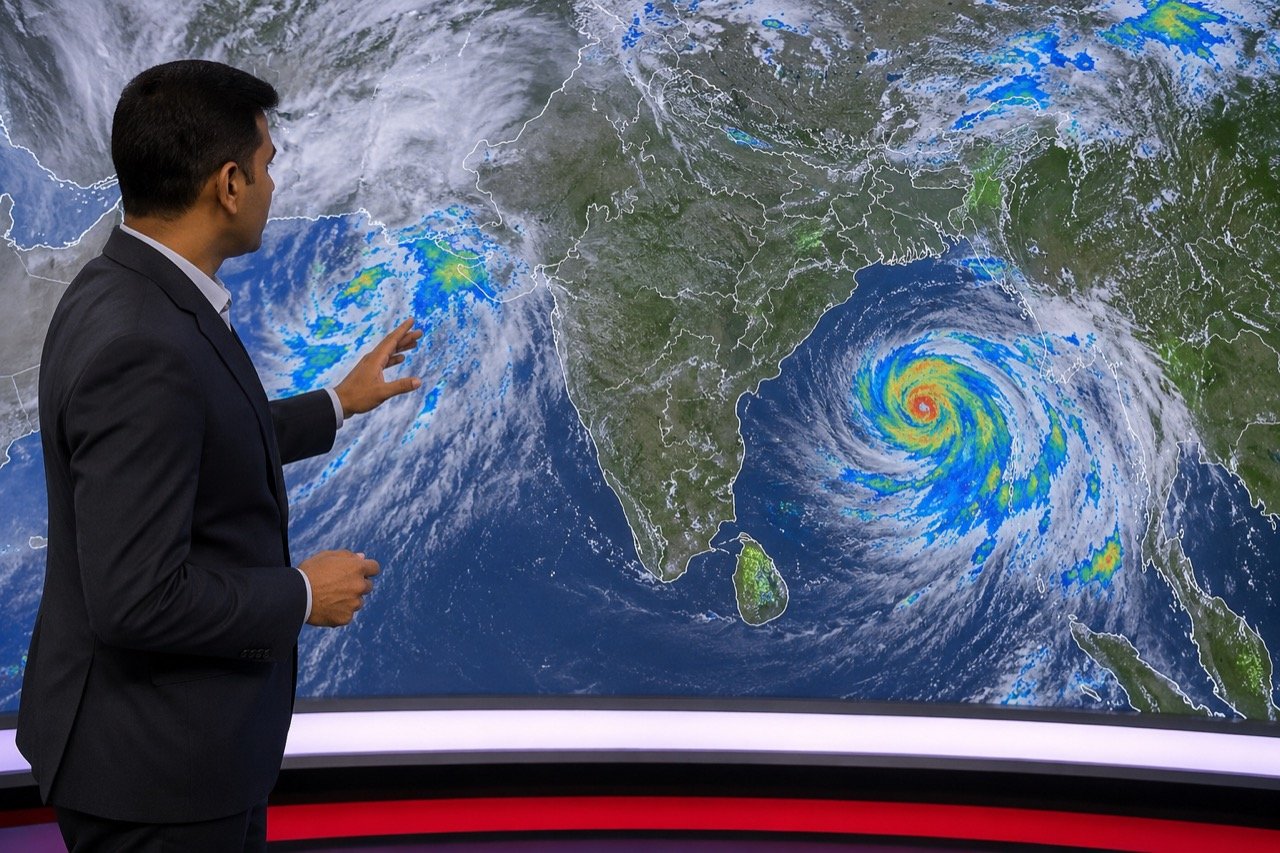
Bay of Bengal Low Pressure System Revives Monsoon Over Western India
A low-pressure system over the Bay of Bengal has pushed the monsoon back into an active phase, bringing steady heavy rain to Kerala, coastal Karnataka and Maharashtra, and putting Mumbai and Pune on preparedness watch.