Twenty Seasons of Roadies: How India’s Toughest Youth Show Refused to Grow Old
Most television shows are lucky to survive a decade.
Commentary & Analysis ·
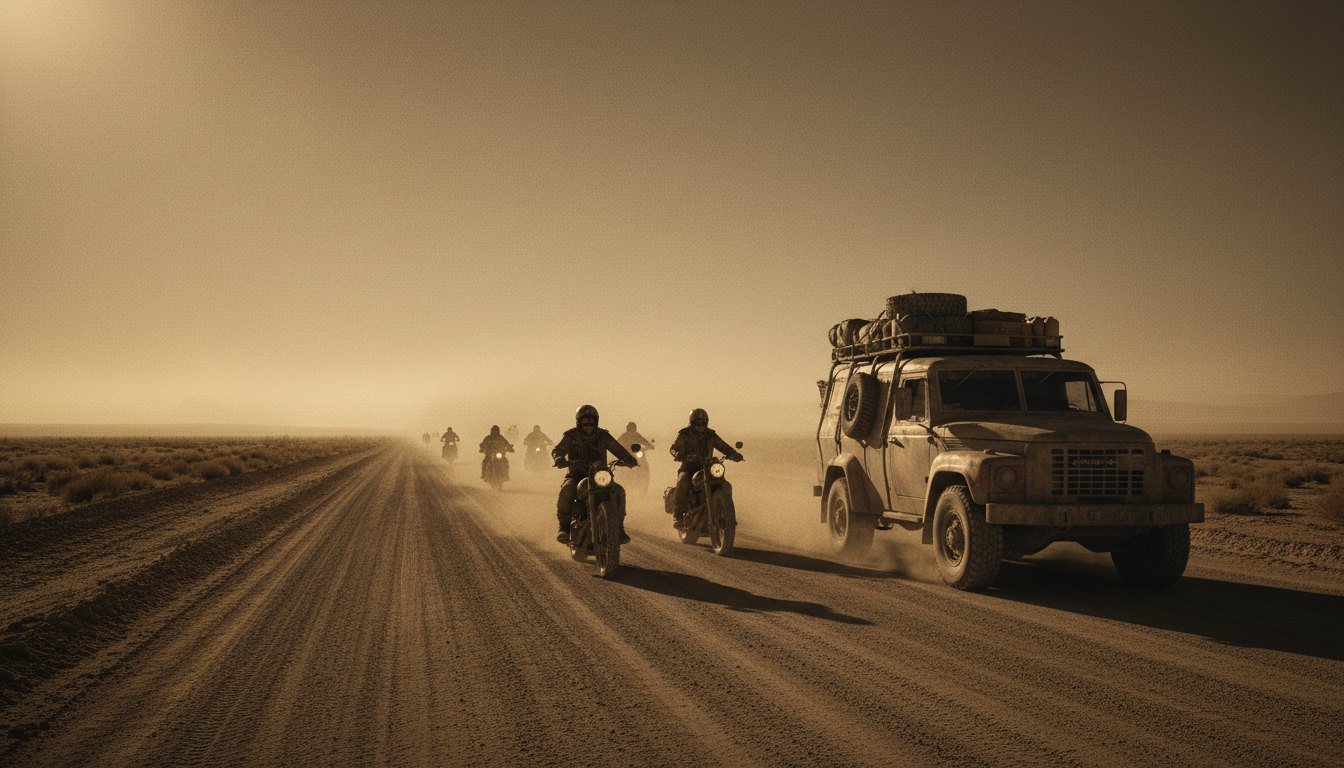
Most television shows are lucky to survive a decade. MTV Roadies has just rolled into its twentieth season — now streaming as Roadies: Double Cross on JioHotstar — which makes it one of the longest-running reality properties India has ever produced. More than twenty years after it first sent a group of young people on a brutal road journey, the show is still finding an audience. The question worth asking is how.
The show that built a genre
When Roadies began, Indian reality television as we now understand it barely existed. There was no Bigg Boss juggernaut, no stunt spectacular filmed in Cape Town, no strategy formats built on betrayal. Roadies arrived with a proposition that felt genuinely dangerous at the time: put young people on a gruelling journey, subject them to physical tasks and psychological pressure, and let them turn on each other.
In doing so, it effectively wrote the grammar that much of Indian reality TV still uses. The confrontational audition interview, the alliance-and-betrayal vote, the task that pushes a contestant past their limit, the confessional-to-camera — Roadies did these things before they were conventions. An entire generation of viewers had their first taste of unscripted conflict here.
The audition room as the real show
Ask most long-time viewers what they remember about Roadies, and they will not describe a task. They will describe an audition. The show’s interview rounds — where hopefuls are grilled, provoked, mocked and dissected by the judging panel in front of a live audience — became legendary, generating some of Indian television’s most-replayed confrontations.
That segment was, in retrospect, the show’s masterstroke. It gave Roadies something no task could: the spectacle of a young person’s self-image being taken apart in real time. It was uncomfortable, frequently cruel, and impossible to look away from. It also defined the show’s cultural identity as television that refused to be nice.
Reinvention, repeatedly
Twenty seasons is not a straight line. Roadies has survived by changing — new hosts, new judges, new formats, new gang structures, a shift in emphasis from pure road journey to a more gamified competition, and now a full migration into streaming on JioHotstar. The Double Cross branding of the twentieth season signals exactly where it has landed: leaning into betrayal and strategy, the currency that reality TV now trades in most heavily.
That willingness to mutate is the core of its longevity. The show has repeatedly asked what its audience wants now, rather than assuming the answer that worked a decade ago still applies.
The streaming migration
The move to a streaming home is more consequential than it sounds. A youth-facing show belongs where young people actually are, and in 2026 that is not appointment television. Streaming lets Roadies run at a rhythm suited to its audience, live permanently in a catalogue, and — crucially — feed the clip economy that its confrontational format is perfectly built for. A blistering audition exchange or a savage vote-out is exactly the kind of self-contained moment that travels on social feeds.
In a sense, Roadies was always designed for the internet. It just took the internet a while to catch up.
The gang wars era
One of the show’s smartest structural evolutions was the introduction of gang-based competition, where contestants align under rival leaders who draft, defend and sacrifice them. It was a masterclass in format design: it gave the audience factions to support, gave the judges skin in the game rather than mere authority, and converted individual contestants into representatives of something larger than themselves.
That change also solved a problem endemic to long-running reality shows — the difficulty of making viewers care about a rotating cast of unknowns each season. By anchoring newcomers to established gang leaders, the show borrowed credibility and continuity from familiar faces, letting each new crop inherit an existing rivalry rather than build one from scratch. Twenty seasons in, that architecture remains central to why the format still coheres.
The criticism it carries
It would be incomplete to celebrate the show’s endurance without acknowledging the persistent critique that has trailed it: that its appeal has often rested on humiliation, aggression and the deliberate provocation of young contestants. The confrontational audition style that made the show famous has, over the years, drawn sustained questioning about where entertainment ends and cruelty begins.
That debate has never been resolved, and the show’s continued success is itself part of the argument — evidence that audiences have consistently chosen to keep watching.
Why it still works
Strip everything away and Roadies endures because it offers something reality TV rarely does honestly: a test. Contestants are not asked to sing, cook or charm. They are asked to endure, to strategise and to survive people who want them gone. For a young audience navigating its own competitive pressures, there is something bracing about that, and something aspirational about the contestants who make it through.
The takeaway
Twenty seasons on, Roadies: Double Cross is a survivor’s story about a show about survival. It invented much of the vocabulary Indian reality TV still speaks, moved to streaming when its audience did, and has kept the confrontational edge that made it notorious. Whether you regard it as a proving ground or a spectacle of cruelty, its persistence is undeniable. Two decades in, the road still goes on.
You may also like to read

Pati Patni Aur Panga: The Show That Turned Celebrity Marriages Into a Sport
Reality television has mined almost every human relationship for content. Pati Patni Aur Panga goes after the most exposed one of all — the celebrity marriage — and turns it into a competition.
Inside ‘Alliance’: How Prime Video’s New Mind-Games Reality Show Actually Works
Indian reality television has stunts, it has cooking, it has houses full of shouting.
How ‘India’s Got Latent’ Season 2 Became the Internet’s Loudest Show
Some shows premiere. India’s Got Latent detonates.
Reality TV in 2026: A Viewer’s Guide to Every Major Show on Air
The Indian reality landscape has become genuinely difficult to navigate.