How ‘India’s Got Latent’ Season 2 Became the Internet’s Loudest Show
Some shows premiere. India’s Got Latent detonates.
Commentary & Analysis ·
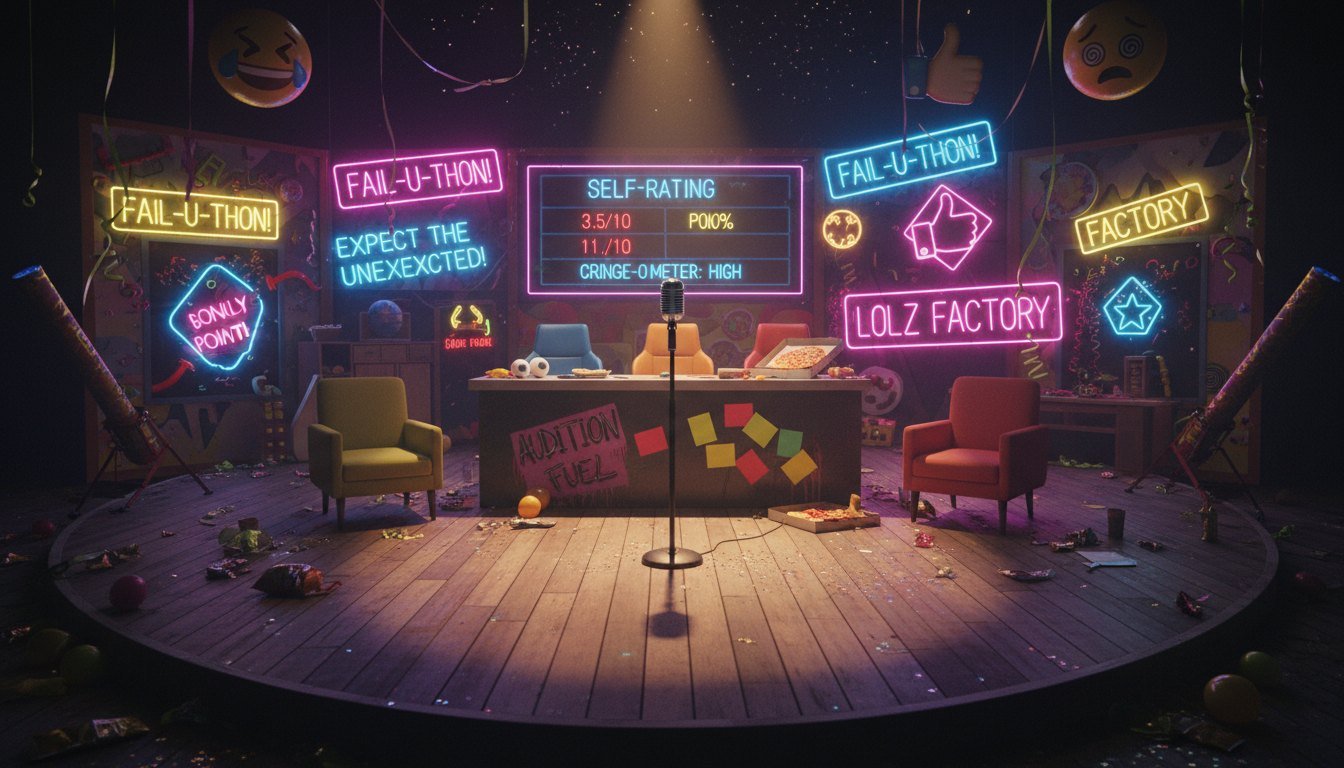
Some shows premiere. India’s Got Latent detonates. Samay Raina’s irreverent talent-and-comedy format returned for a second season in June 2026 and immediately reasserted itself as one of the most-watched, most-discussed unscripted properties in the country — a genuine internet event dressed up as a talent show.
The scale was clear from the first episode. Launched via an unusual dual-platform simulcast on both Netflix and YouTube, with new episodes dropping every two weeks, the season opener reportedly racked up around 45 million views on YouTube within four days and recorded roughly 2.2 million views on Netflix. Those are numbers that most scripted originals would envy, achieved by a show whose entire premise is watching ordinary people do strange things while comedians roast them. The simulcast itself is worth pausing on: releasing simultaneously on a subscription streamer and a free video platform is a rare, almost contradictory strategy, and it let the show capture both the prestige and discoverability of Netflix and the sheer viral reach of YouTube at once.
The format, briefly
For the uninitiated, the mechanics are simple and gleefully chaotic. Aspiring performers showcase eccentric, bizarre and unfiltered “latent” talents. Before performing, each contestant rates themselves; if the average score the judging panel gives afterward matches that self-rating, the contestant wins. The comedy comes not from polish but from bluntness — the deadpan critiques, the banter, and the collision between a performer’s self-belief and the panel’s verdict. Raina anchors it all alongside a rotating cast of prominent comedians, internet creators and Bollywood guests. It is, in structure, closer to a podcast-panel roast than a traditional talent contest, and that hybrid quality is exactly why it travels so well online.
Season 2’s guest strategy is a big part of its reach. The premiere featured Alia Bhatt and Sharvari Wagh, instantly guaranteeing mainstream headlines, and subsequent episodes leaned into Raina’s self-described “comedy heroes” as panellists. The format’s genius is that every guest becomes both a draw and a target — a star turns up, gets pulled into the roast, and the resulting clips travel far beyond the original episode. A single sharp exchange can outrun the show itself, surfacing on feeds of people who have never watched a full episode.
The show also produces its own folk heroes from the contestant pool. One widely shared moment involved Kapil Dinkar, a Uttar Pradesh police officer who won a one-lakh-rupee prize and, by several accounts, rattled Raina himself — exactly the kind of underdog story that fuels the show’s shareability and keeps it from feeling like a pure celebrity vehicle.
- ~45 million YouTube views on the premiere within four days
- ~2.2 million Netflix views for the same episode
- New episodes every two weeks
- Dual Netflix + YouTube simulcast — a rare distribution model
What makes the Season 2 success notable is the context it emerged from. The franchise first went viral in 2024, but its journey has not been without turbulence; an earlier controversy tied to remarks made on the show generated significant public backlash and scrutiny. That the second season returned bigger — with a wider distribution net, larger production scale and A-list guests — suggests the format’s core appeal proved durable enough to survive the noise around it, and that its audience was willing to come back in force.
There’s a broader industry signal here too. India’s Got Latent sits at the intersection of stand-up comedy, creator culture and streaming, and its performance underlines how thoroughly that hybrid has moved to the centre of Indian entertainment. It doesn’t look like traditional television, it isn’t structured like a conventional talent contest, and it thrives precisely because it’s built for clips, comment sections and group chats rather than living-room appointment viewing. For a generation that consumes entertainment in fragments on a phone screen, that design is a feature, not a compromise. It also blurs the old boundary between “television talent” and “internet talent” entirely: the performers, the panellists and the audience all come from the same digital-native world, and the show simply gives that world a stage. That coherence — a format, a host, a guest pool and a fanbase all speaking the same online language — is a large part of why the season has felt less like a programme and more like a running cultural conversation.
For editors, the season offers a steady stream of angles every fortnight: the guest lineups, the standout contestant moments, the inevitable viral roasts, and the running question of how far the format can scale before the shock value wears thin. For now, the answer from the view counts is unambiguous — the audience can’t look away.
Whether you see it as the future of unscripted entertainment or a symptom of an attention economy running hot, India’s Got Latent Season 2 has done the one thing every show is chasing: it made people watch, and then it made them talk. In an era when reach is the hardest currency to earn, that combination has made Samay Raina’s chaotic experiment one of the defining unscripted stories of the year.
You may also like to read

6 Things That Made ‘Indian Idol 16’ the Longest Season in the Show’s History
Indian Idol has been a fixture of Indian television since 2004, but its sixteenth season did something none of its predecessors managed: it became the longest-running edition in the franchise’s

Pati Patni Aur Panga: The Show That Turned Celebrity Marriages Into a Sport
Reality television has mined almost every human relationship for content. Pati Patni Aur Panga goes after the most exposed one of all — the celebrity marriage — and turns it into a competition.
Bigg Boss 20: Salman Khan Set to Return as Milestone Season Eyes a September Launch
India’s biggest reality television franchise is gearing up for a landmark.
Inside ‘Alliance’: How Prime Video’s New Mind-Games Reality Show Actually Works
Indian reality television has stunts, it has cooking, it has houses full of shouting.