Tata Steel Plans Rs 20,000 Crore FY27 Capex for India Growth
Tata Steel's roughly Rs 20,000 crore capital spending plan for FY27 signals sustained confidence in Indian steel demand, even as execution risks, raw-material costs and emissions pressures loom over the sector.
The NE Times Business Desk
Commentary & Analysis ·
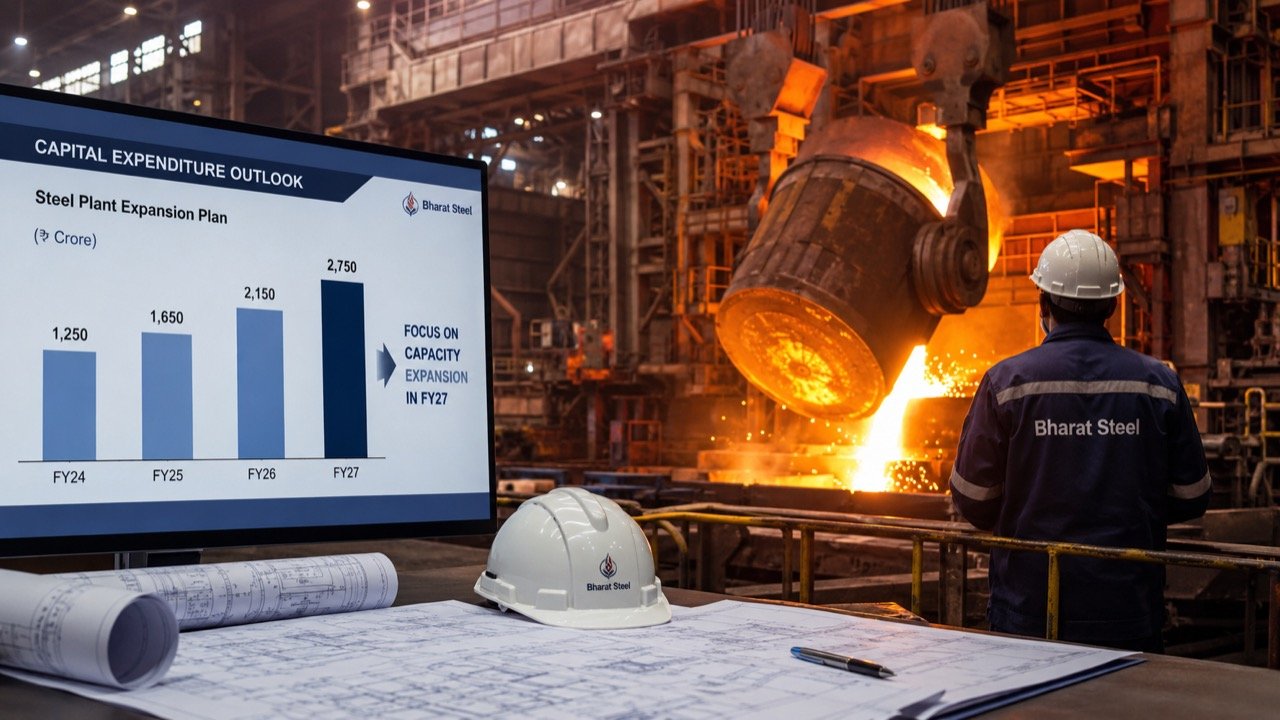
Tata Steel intends to spend around Rs 20,000 crore in FY27, a capital-expenditure plan that ranks among the year's bigger industrial investment stories. Business Standard reported the outlay in the context of expansion and modernisation, with the company keeping India firmly at the centre of its growth strategy.
The number matters beyond one balance sheet. Steel capacity feeds directly into infrastructure, construction, automobiles, railways and manufacturing, so a commitment of this scale is read as a proxy for how one of India's oldest industrial houses views domestic demand over the next decade.
Confidence with caveats
A large capex programme signals confidence, but it also demands disciplined execution. Raw-material costs remain volatile, global steel markets are crowded with low-priced supply, and environmental compliance is becoming more expensive rather than less. How efficiently Tata Steel converts spending into commissioned capacity will determine whether the plan strengthens or strains its finances.
The decarbonisation balancing act
For investors and policymakers alike, the central question is how the outlay translates into capacity, efficiency and long-term competitiveness. India's steel sector is being asked to do two things at once: grow output to meet infrastructure ambitions while cutting emissions intensity and lifting productivity. Capex plans of this size are where that dual mandate either gets funded or deferred. The measured takeaway is that the plan reflects continued investment momentum, with final outcomes resting on project delivery and market conditions.
The NE Times View
Tata Steel's willingness to keep writing Rs 20,000 crore cheques for India is a vote of confidence the economy should not take for granted — private industrial capex of this scale is exactly what the infrastructure push needs alongside government spending. But the composition of the spend matters as much as the headline. If a meaningful share goes into greener steelmaking routes and efficiency, the company future-proofs itself against carbon border taxes and tightening domestic norms; if it is capacity alone, the bet is riskier. Readers should watch commissioning timelines, not announcements: in Indian steel, the gap between the two is where value is made or lost.
This article is original commentary and analysis by The NE Times. Background facts were referenced from Business Standard.
You may also like to read
India's Core Sector Growth Slows to a Seven-Month Low in May
India's eight core infrastructure industries grew just 0.5 percent in May, the weakest in seven months, as contractions in coal, crude oil and gas dragged on the index despite support from cement and steel.

India Steel Emission Targets: Draft Rules Push Decarbonisation
The Centre's draft emission cut targets for the iron and steel sector move India's climate policy from broad pledges to sector-specific rules, placing one of its hardest-to-abate industries under a defined framework.

Odisha Launches Rs 500 Crore Push To Revive Riverfronts And Urban Water Bodies
Odisha has approved a Rs 500 crore, five-year waterfront development programme to restore riverfronts and urban water bodies, improve public access and boost eco-tourism across selected cities.

Adani Green Seeks $1 Billion Offshore Loan As Capex Cycle Accelerates
Adani Green Energy is tapping international markets for up to $1 billion, its first overseas borrowing since the group settled US legal matters, as the renewables arm pushes past 12,000 MW of capacity.
More from this section
More
Adani Case: US DOJ Pushes for Permanent Dismissal of Charges
The US Department of Justice has urged a judge to permanently dismiss charges against Gautam Adani, calling the case legally flawed — a reversal with consequences for markets, diplomacy and cross-border enforcement.

Akasa Air Inducts 40th Aircraft in Indian Aviation Scale-Up
Akasa Air's 40th aircraft, ferried to Bengaluru via Seattle, Reykjavik and Cairo, marks a fleet milestone for the young carrier and a fresh signal that India's aviation market remains firmly in expansion mode.
BARC Ratings Suspension Leaves Indian TV Industry Flying Blind
BARC's pause on television ratings has put India's broadcast measurement system under fresh scrutiny, leaving broadcasters, advertisers and media planners without the weekly audience data that anchors the TV economy.