Supreme Court Fines Samay Raina, Ranveer Allahbadia and Ashish Chanchlani for Non-Compliance
India's Supreme Court imposed Rs 3 lakh costs on Samay Raina, Ranveer Allahbadia and Ashish Chanchlani after finding non-compliance with directions in a disability-related case.
Commentary & Analysis ·
Verified key facts
- The court imposed Rs 3 lakh in costs on each of the three creators.
- The bench was led by Chief Justice of India Surya Kant with Justices Joymalya Bagchi and V Mohana.
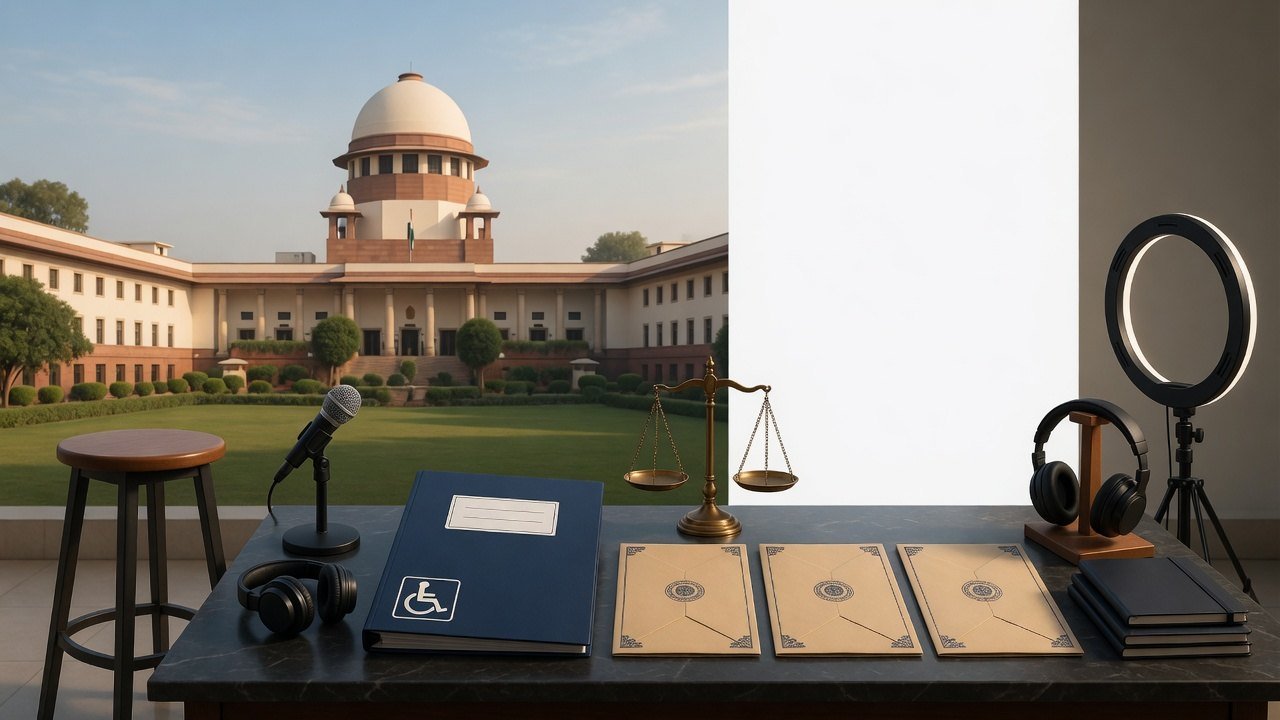
- The proceeding arose from a petition concerning alleged insensitive remarks about persons with disabilities on India's Got Latent.
A warning about court undertakings, not only online speech
The Supreme Court’s decision to impose costs of Rs 3 lakh each on comedian Samay Raina and YouTubers Ranveer Allahbadia and Ashish Chanchlani is being widely discussed as an influencer controversy, but the immediate legal issue was non-compliance with the court’s directions. A three-judge bench led by Chief Justice of India Surya Kant said Raina had taken the court for a ride and was in brazen violation of statements or undertakings previously given. The judges also questioned the delay surrounding a compliance affidavit. That focus matters. The hearing did not simply ask whether online humour was offensive. It asked whether individuals who had made commitments before the country’s highest court had actually honoured them. The distinction turns a culture-war story into a basic rule-of-law story: undertakings to a court are not public-relations statements that can be postponed when inconvenient.
How the dispute reached the Supreme Court
The proceeding arose from a petition by Cure SMA India Foundation concerning alleged insensitive jokes about persons with disabilities and rare genetic conditions on India’s Got Latent. Earlier judicial directions had reportedly required apologies or other forms of compliance from creators involved in the programme. Disability-rights advocates have argued that content turning medical conditions into entertainment reinforces stigma and can cause direct harm to people already facing exclusion. The creators and their supporters may raise questions about comedy, context and free expression, but once the court issued directions and recorded undertakings, the procedural obligation became separate from the original debate. A party may challenge an order through lawful means; it cannot simply treat the order as optional.
Why the court used strong language
Courts rely on representations from lawyers and parties to manage cases efficiently. When a person promises to file an affidavit, publish a statement or complete another action, judges may avoid a harsher order on the assumption that the promise will be kept. A failure therefore affects more than one deadline. It damages the trust that allows the judicial process to function. According to the reported order, the bench initially considered costs of Rs 10 lakh before reducing the amount to Rs 3 lakh and warning that continuing defiance could produce a much larger penalty. Such language signals that the court viewed the lapse as serious and potentially repeated, not as a minor clerical mistake.
The influencer economy meets institutional accountability
Digital creators often operate through informal production structures: a small team, rapid upload cycles and a direct relationship with followers. That model can produce the mistaken belief that legal obligations are as flexible as platform schedules. In reality, a creator with millions of viewers is also a publisher, advertiser and commercial actor. Statements can trigger defamation claims, consumer rules, criminal complaints or constitutional litigation. The Supreme Court episode demonstrates that online fame does not create a separate category of accountability. If anything, the scale of distribution can increase the consequences because a remark reaches vulnerable groups instantly and remains searchable long after the original upload.
Free speech and disability dignity are not mutually exclusive
Debate around the case is likely to polarise into two absolute positions: that all offensive comedy should be legally punished, or that any judicial intervention is censorship. A more careful approach recognises competing interests. Freedom of expression protects satire, provocation and bad taste, especially when directed at power. It is not a guarantee that every commercial performance will be free from civil, criminal or regulatory consequence. Disability rights are also not a demand that public discussion become humourless. They require people with disabilities to be treated as rights-bearing citizens rather than convenient punchlines. Creators can defend edgy comedy while still acknowledging factual harm, correcting material and complying with court orders.
What brands and platforms should learn
The case has implications beyond the named creators. Platforms need escalation procedures for content that attracts legal scrutiny, including preserved records, clear responsibility and timely compliance. Talent managers should ensure that court deadlines are tracked with the same seriousness as sponsorship deliverables. Brands should conduct risk assessments before associating with programmes built around shock value. None of these measures requires pre-censoring every joke. They recognise that the modern creator business is an industry and should have governance proportionate to its reach. Informality may be part of the aesthetic; it cannot be the compliance system.
What comes next
The creators must meet the court’s directions and deposit the costs within the stated period. Further consequences will depend on whether the bench is satisfied with compliance and how the underlying disability-related petition develops. The strongest lesson is procedural. Public figures can debate an order, seek modification or pursue an appeal, but they must engage with the judicial process in good faith. The Supreme Court’s rebuke shows that viral influence does not outweigh institutional authority. It also gives the entertainment and creator sectors a chance to move beyond reactive apologies toward better editorial judgment, accessibility awareness and legal discipline. The headline is about a fine; the durable issue is whether India’s rapidly expanding digital-media economy is prepared to accept the responsibilities of being a mass publisher.
Sources
- The Indian Express - Supreme Court imposes Rs 3 lakh costs (15 July 2026)
- The Indian Express - earlier directions in disability remarks matter
You may also like to read
Supreme Court Fines Chhattisgarh Rs 2 Lakh in Decades-Old Land Compensation Case
The Supreme Court has fined the Chhattisgarh government Rs 2 lakh and upheld compensation with interest for landowners whose plot was taken for a road in 1986 without payment.

CBSE Three-Language Policy Reaches Supreme Court as Schools, Parents and Teachers Raise Practical Concerns
The Supreme Court is hearing challenges to CBSE's Class 9 three-language policy, balancing multilingual education with concerns over teachers, books, choice and implementation timelines.
Bhojshala Dispute: Supreme Court Orders Nearby Space for Friday Namaz as Appeals Continue
The Supreme Court directed authorities to provide an adjacent space for Friday namaz near Bhojshala, barred structural changes without permission and prepared to hear appeals quickly.
Ayodhya Ram Mandir Donation Case Reaches Supreme Court as Judges Seek SIT Status Report and Trust Response
The court’s intervention intensifies scrutiny of an alleged donation embezzlement case that has already led to arrests, leadership exits and demands for stronger safeguards.