Bhojshala Dispute: Supreme Court Orders Nearby Space for Friday Namaz as Appeals Continue
The Supreme Court directed authorities to provide an adjacent space for Friday namaz near Bhojshala, barred structural changes without permission and prepared to hear appeals quickly.
Commentary & Analysis ·
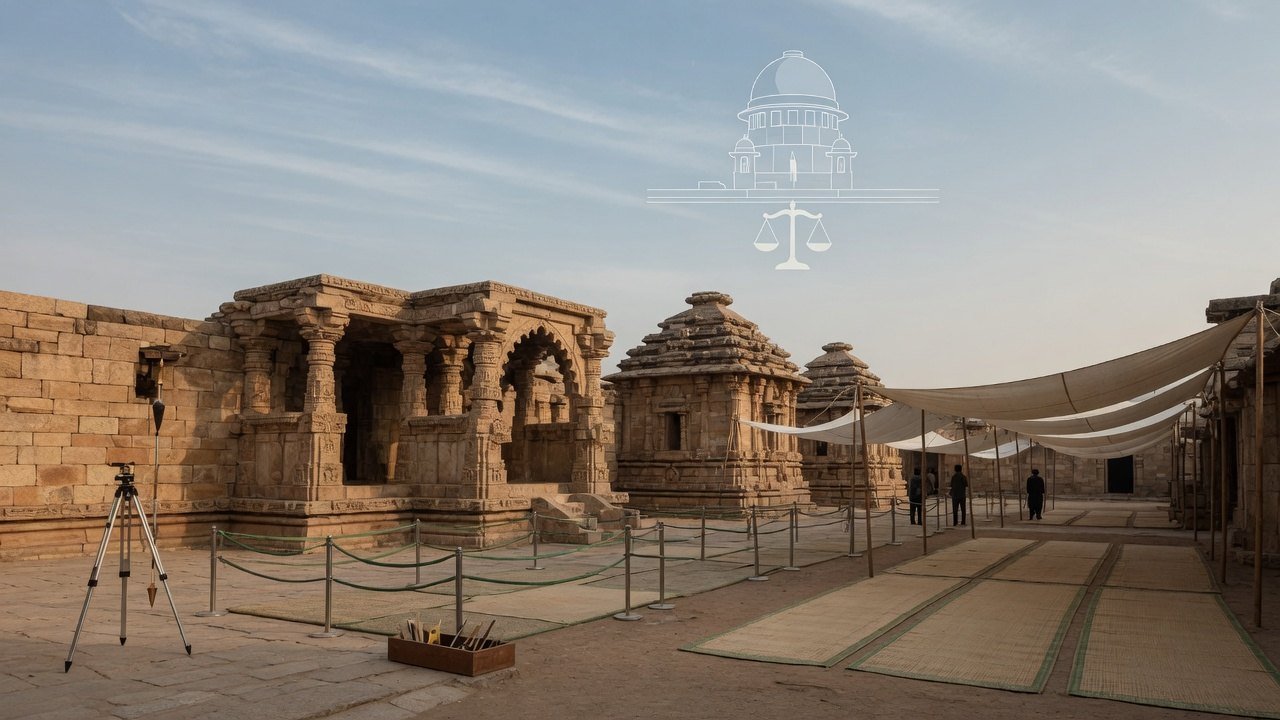
Verified key facts
- Muslims are to be provided a separate open space adjacent to the disputed site for Friday prayers between 1 pm and 3 pm.
- The arrangement is ad hoc and subject to the final outcome of the appeals.
- The Archaeological Survey of India was directed not to make structural changes without Supreme Court permission.
An interim arrangement in a highly sensitive dispute
The Supreme Court has created a temporary arrangement for Friday prayers near the Bhojshala-Kamal Maula complex in Dhar, Madhya Pradesh, while appeals over the site continue. The court directed that Muslims be provided a separate open space adjacent to the disputed complex for namaz between 1 pm and 3 pm on Fridays. It made clear that the arrangement is ad hoc and does not decide the final rights of either community. The bench also restrained the Archaeological Survey of India from making structural changes without permission and indicated a willingness to hear the matter expeditiously. The order is significant because it attempts to preserve public order and religious access without prejudging a historical and legal dispute that has the potential to generate intense political mobilisation.
What the appeals are about
The Supreme Court is considering challenges to a Madhya Pradesh High Court judgment concerning the character and use of the monument. The Bhojshala complex has been associated with competing Hindu and Muslim claims. Hindu groups identify it with Goddess Saraswati and historical learning, while Muslim petitioners point to the Kamal Maula mosque tradition and records of Friday prayer. For years, administrative arrangements attempted to manage access on different days. The High Court’s decision altered that position, prompting urgent appeals. The Supreme Court has not stayed every part of the judgment, but its interim prayer arrangement recognises that a sudden end to an established religious practice can create immediate hardship and law-and-order risk before the legal issues are fully heard.
Why the court stressed careful language
The bench reportedly cautioned lawyers and parties that every expression used in court could generate controversy or a misleading public impression. That warning is especially important in disputes involving sacred space. A legal submission about title, archaeology or administrative power can be converted outside the courtroom into a claim of civilisational victory or religious dispossession. Courts must decide evidence and law; they cannot control every slogan built around a hearing. By emphasising restraint, the bench signalled that interim measures should not be represented as final recognition of one side’s historical narrative. Accurate reporting should follow the same discipline.
The function of an ad hoc prayer space
An adjacent space is a practical compromise, not a solution to the underlying dispute. It allows worship to continue in a defined window while reducing the immediate possibility of competing gatherings inside the monument. It may also give local authorities a clearer security plan. The arrangement’s legitimacy depends on implementation: the space must be genuinely usable, accessible and protected, not merely identified on paper. Authorities should consult representatives of the worshippers, establish entry routes and ensure that policing is neutral. Any attempt to use the temporary location as evidence that a community has surrendered its legal claim would contradict the court’s express statement that the measure is without prejudice.
Why the ASI restriction matters
The direction preventing structural changes is a standard but essential preservation measure. When a monument is central to litigation, physical alteration can change evidence, religious practice or the practical balance between parties. The Archaeological Survey of India has responsibilities for conservation, but major work during an active title or character dispute can be interpreted politically. Requiring permission does not prevent emergency protection or routine safety action if the court approves it. It creates oversight and a record. That safeguard benefits all sides because the final judgment should concern the site as it existed during the litigation, not after irreversible modification.
The limits of archaeology in resolving living faith
Historical structures often carry layers of use, rebuilding and memory. Archaeological evidence can illuminate dates, materials and prior construction, but it does not automatically answer every question about contemporary worship or legal entitlement. Courts may need to examine administrative orders, constitutional protections, property principles and the consequences of long practice alongside physical evidence. Public debate tends to demand a single, emotionally satisfying origin story. Legal adjudication is usually more complex. The Bhojshala matter will therefore test whether institutions can hold historical uncertainty and present-day rights in the same frame.
What responsible politics and reporting require
Political leaders should avoid treating the interim order as a campaign instrument. Local authorities must focus on safety and equal treatment, while national media should distinguish the High Court judgment, the pending appeals and the Supreme Court’s temporary directions. Terms such as temple, mosque, disputed monument and protected site carry legal implications and should be attributed carefully. The court’s offer of a speedy hearing is important because prolonged interim management can itself become a source of conflict. Until a fuller decision is delivered, the 1 pm to 3 pm prayer arrangement and the bar on structural change provide a narrow but workable pause. The success of that pause will depend on restraint outside the courtroom as much as reasoning inside it.
Why this story matters beyond the headline
The interim arrangement also illustrates how courts sometimes manage immediate public-order concerns without deciding the underlying historical and legal dispute. Such orders are narrow by design: they address a particular date, location or practice while preserving the claims of all sides for fuller hearings. That distinction is important because temporary permission or restriction should not be presented as a final ruling on ownership, religious character or future access. Local authorities will have to enforce the arrangement neutrally, communicate routes and timings clearly and prevent speeches or online posts that could inflame tensions. The ASI's role is equally sensitive because conservation duties continue regardless of competing religious claims. Any alteration, crowd pressure or damage could complicate both preservation and litigation. For readers following the case, the most reliable approach is to separate verified court directions from political interpretation. The appeals process may take time, and each interim order should be understood within its exact terms rather than used to predict the eventual judgment.
Sources
- Telangana Today / PTI - Supreme Court ad hoc namaz arrangement
- India Today - Bhojshala appeal and nearby prayer space
You may also like to read
Supreme Court Fines Samay Raina, Ranveer Allahbadia and Ashish Chanchlani for Non-Compliance
India's Supreme Court imposed Rs 3 lakh costs on Samay Raina, Ranveer Allahbadia and Ashish Chanchlani after finding non-compliance with directions in a disability-related case.

CBSE Three-Language Policy Reaches Supreme Court as Schools, Parents and Teachers Raise Practical Concerns
The Supreme Court is hearing challenges to CBSE's Class 9 three-language policy, balancing multilingual education with concerns over teachers, books, choice and implementation timelines.
Ayodhya Ram Mandir Donation Case Reaches Supreme Court as Judges Seek SIT Status Report and Trust Response
The court’s intervention intensifies scrutiny of an alleged donation embezzlement case that has already led to arrests, leadership exits and demands for stronger safeguards.

Supreme Court Notes CBSE Policy for West Asia Class 12 Students, Disposes Plea
The Supreme Court closed a Saudi Arabia-based candidate's petition after the Centre cited a fresh CBSE policy to declare Class 12 results for West Asian students whose board exams were cancelled amid regional conflict.