South Korea's Ex-President Yoon Handed 30 Years Over Drone Plot
A Seoul court convicted former president Yoon Suk Yeol of sending military drones over Pyongyang to manufacture a pretext for his failed 2024 martial law bid.
Commentary & Analysis ·
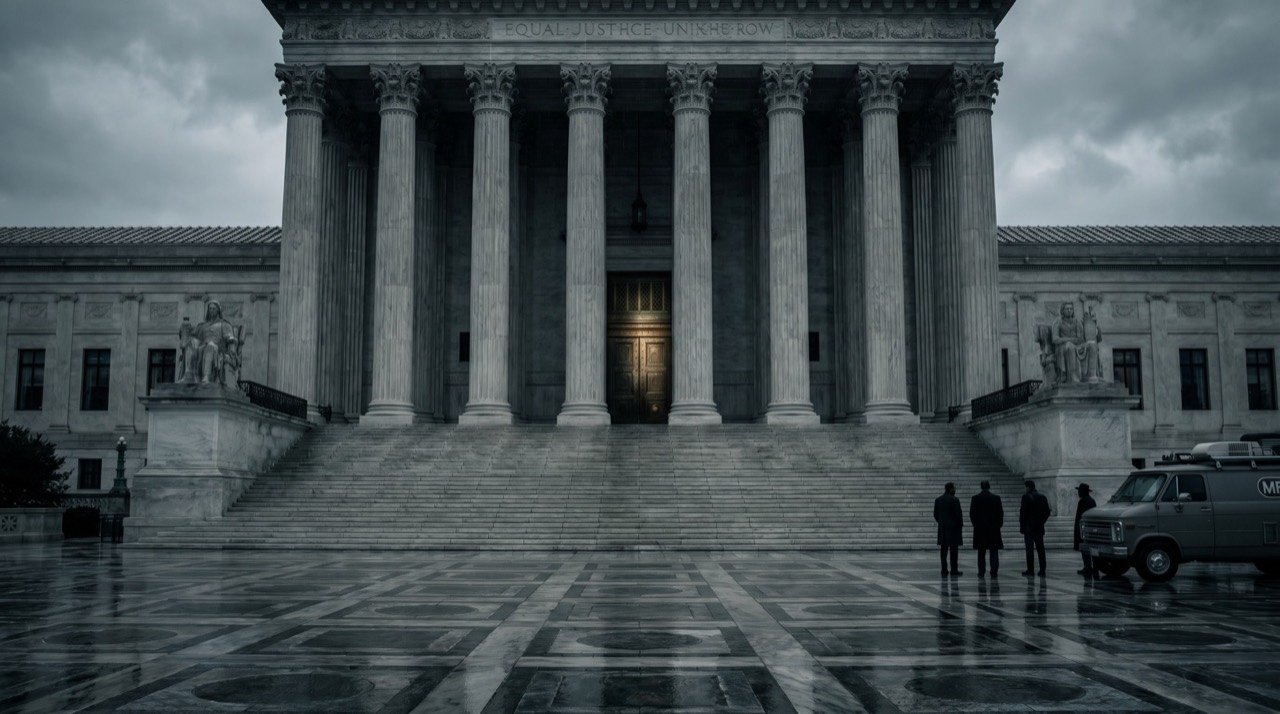
The Seoul Central District Court sentenced former South Korean president Yoon Suk Yeol to 30 years in prison on 11 June, finding him guilty of charges that included abuse of power and acting to benefit the enemy in connection with a covert military drone operation flown over North Korea. The verdict marks one of the most severe judicial reckonings a former South Korean head of state has faced, and it draws a stark legal line under a political crisis that has consumed the country since late 2024.
At the heart of the case is the allegation that Yoon weaponised the machinery of national security for domestic political ends. Prosecutors argued, and the court accepted, that he sought to engineer a confrontation with Pyongyang in order to create the appearance of a national emergency, which in turn could be used to justify extraordinary executive powers. The ruling reframes what had initially been described as a reckless gamble as a deliberate, criminal scheme directed from the top of the state.
A manufactured crisis
Judges concluded that Yoon had ordered military drones flown over Pyongyang in an attempt to provoke an armed North Korean response, deliberately heightening inter-Korean tensions to help justify the short-lived martial law he declared in December 2024. In the court's account, the operation was not a defensive or intelligence-gathering exercise but a provocation designed to manufacture the very threat the government would then claim to be responding to.
The reasoning matters because it speaks to intent. South Korean law treats actions that benefit a hostile power with particular severity, and the finding that a sitting president knowingly courted an armed clash with the North to serve his own political survival is what pushed the sentence toward the upper end of the scale. The court framed the conduct as a betrayal of the office's core duty to protect national security rather than exploit it.
“He intended to heighten inter-Korean military tensions and manufacture a national crisis.”
— Seoul Central District Court ruling
A second conviction stacked on the first
The ruling is separate from an earlier case in which a court had already handed Yoon a life sentence for leading an insurrection tied to the martial law attempt. He remains in custody. The two judgments together paint a picture of a coordinated effort: the alleged drone provocation as the pretext, and the martial law declaration as the intended payoff, with the insurrection charge capturing the attempt to seize and hold power through force.
Layering a 30-year term on top of an existing life sentence is, in practical terms, more about the gravity and breadth of the findings than about additional time served. It signals that the courts have treated each strand of the affair as a distinct and serious offence rather than folding everything into a single charge, which strengthens the legal record should appeals follow.
Why it matters
South Korea is a democracy that has repeatedly held its most powerful figures to legal account, but a case turning on the alleged manipulation of the inter-Korean security relationship is unusually grave. The verdict reinforces the principle that the armed forces and the standoff with the North cannot be turned into instruments of domestic politics, and it offers a measure of institutional reassurance after a period in which the constitutional order itself appeared to be at risk.
- Yoon was found guilty of abuse of power and acting to benefit the enemy over the drone operation.
- The court ruled he sought to provoke North Korea to justify his December 2024 martial law bid.
- The 30-year term is separate from an earlier life sentence for insurrection.
- He remains in custody.
Looking ahead, the most likely next phase is an appeals process that could stretch on for months or longer, and the political fallout for Yoon's former allies is far from settled. But the immediate effect is to close a chapter of acute uncertainty with a clear judicial verdict, and to set a precedent that future leaders will weigh carefully before treating national security as a tool of political convenience.
The NE Times View
A 30-year sentence for a former president who tried to manufacture a crisis for power is a striking assertion that institutions outrank office. Seoul's courts have drawn a hard line against weaponising the military for domestic ends. The verdict is a useful global signal: democratic resilience depends on accountability reaching the very top, however senior the offender.
This article is original commentary and analysis by The NE Times. Background facts were referenced from CNN and France 24.
You may also like to read
South Korea's Ruling Party Sweeps Local Polls But Loses Seoul
President Lee Jae-myung's Democratic Party won most governorships and metropolitan mayoralties on a high turnout, yet the opposition held the symbolically vital Seoul mayoralty.
Sakurajima Eruption Blankets Southern Japan in Volcanic Ash
A powerful eruption at one of Japan's most active volcanoes coated the city of Kagoshima in ash, grounding flights, halting trains and disrupting the summer tourist season.
China's LineShine Dethrones US as World's Fastest Supercomputer, Sharpening India's AI Resolve
China has reclaimed the top spot on the global supercomputing rankings with an all-domestic machine running at over two exaflops, a milestone in the US-China tech contest that underscores why India is racing to build its own sovereign computing power.
Iran-IAEA Inspection Standoff Tests Fragile Truce, With India Watching Its Energy Stakes
The UN nuclear watchdog insists inspectors will return to Iran's enrichment sites under an interim US-Iran deal, but Tehran says access waits for a final agreement, leaving Indian importers eyeing both oil flows and the Strait of Hormuz.
More from this section
More
India-New Zealand Ties: Visit Plans Put FTA and Diplomacy in Focus
Reports of a planned high-level India-New Zealand engagement have revived attention on free trade talks, professional mobility and Indo-Pacific cooperation between two partners with clear room to grow.
Modi Greets Trump on US 250th Independence Day, Hails Partnership
Prime Minister Narendra Modi marked America's 250th Independence Day with a message to President Trump, saying the next 250 years should lift the India-US partnership to new heights.
India Watches Dhaka's China-Backed Teesta Plan as Stakes Rise
New Delhi is closely tracking Bangladesh's proposal to develop the Teesta river with Chinese assistance, a move that revives one of South Asia's most sensitive water-sharing disputes and tests regional strategic trust.