SEBI Proposes Simpler Rulebook for Stock Exchanges, Clearing Firms and Brokers
India's market regulator SEBI has proposed a sweeping ease-of-business overhaul of technology, compliance and reporting rules for exchanges and intermediaries, promising clearer obligations without diluting investor protection.
Commentary & Analysis ·

The Securities and Exchange Board of India (SEBI) has proposed an ease-of-business overhaul aimed at simplifying the rules that govern stock exchanges, clearing corporations and market intermediaries. The consultation seeks to streamline technology, compliance and reporting obligations across the country's market infrastructure, in a bid to cut operational friction while keeping investor protections intact. On the face of it, this is a housekeeping exercise: pruning old circulars, tidying overlapping mandates, and making the rulebook easier to read. But in a market as large and fast-growing as India's, even housekeeping carries consequence, because the rules in question underpin how trades are executed, cleared and safeguarded for millions of participants.
What SEBI is proposing
At the heart of the proposal is a clean-up of the regulatory rulebook. SEBI wants to remove obsolete provisions that have accumulated over years, consolidate scattered circulars into coherent frameworks, and clarify the obligations placed on exchanges and brokers. The goal is a leaner, more navigable set of rules that reduces ambiguity and compliance overhead. This is not a trivial undertaking. Regulatory frameworks for market infrastructure institutions tend to grow incrementally, with new circulars layered atop older ones in response to specific episodes, technological shifts or market stresses. Over time, this can produce a patchwork in which obligations sit in multiple places, sometimes worded slightly differently, leaving compliance teams to reconcile inconsistencies rather than focus on substantive risk management. A consolidation exercise, done well, addresses precisely this kind of accumulated complexity.
A significant strand of the review focuses on technology rules. As trading systems, surveillance tools and data-reporting requirements have grown more complex, SEBI is examining how to modernise and rationalise these mandates without weakening the safeguards that protect markets. This is arguably the most consequential part of the exercise. Technology obligations were often written for an earlier generation of trading infrastructure, and as exchanges, clearing corporations and brokers have adopted more sophisticated systems, the compliance architecture around them needs to keep pace. Rationalising these rules is not simply about deleting outdated clauses; it requires SEBI to judge which technology safeguards remain essential and which have been superseded by newer practices or systems.
Benefits for exchanges and brokers
For market infrastructure institutions and intermediaries, the potential gains are tangible: clearer responsibilities, faster and less duplicative compliance, and lower costs of meeting regulatory expectations. A consolidated rulebook also reduces the risk of inadvertent breaches arising from contradictory or outdated instructions. This matters because compliance costs at exchanges, clearing corporations and brokerages are ultimately passed through the system, whether in transaction costs, in the resources diverted from market development to regulatory administration, or in the caution with which intermediaries approach innovation for fear of falling foul of ambiguous rules. A simpler, more internally consistent rulebook lowers the cost of doing business without necessarily lowering the standard that business must meet.
There is also an efficiency argument that extends beyond the regulated entities themselves. When compliance obligations are scattered and unclear, regulatory staff at SEBI must also spend more time interpreting and adjudicating disputes over what a given circular actually requires. A cleaner framework should, in principle, free up supervisory bandwidth for substantive oversight rather than definitional disputes, which is itself a form of regulatory dividend.
The investor-protection test
The crucial question for investors is whether simplification strengthens, rather than erodes, the resilience of the system. SEBI has framed the exercise as one that preserves investor protection, but the real measure will be whether cyber resilience, market surveillance and accountability remain robust as obligations are trimmed. This is where the exercise moves from administrative tidying to a matter of genuine public interest. Rules that appear duplicative or obsolete to a compliance officer may, in some cases, exist precisely because they close a loophole that was exploited in the past, or because they provide a backstop for a risk that has not yet materialised at scale. Distinguishing genuinely obsolete provisions from those that quietly do useful work is a delicate exercise, and it is one that regulators do not always get right on the first attempt.
In a market expanding rapidly in both retail participation and trading volumes, the stakes are high. India has seen a marked increase in first-time retail investors in recent years, many of whom have limited experience navigating market infrastructure risk and rely heavily on the assumption that the regulatory architecture behind exchanges and brokers is sound. Any perception, let alone reality, that simplification has come at the cost of weakened surveillance or diminished accountability would carry an outsized reputational cost, given how central trust is to sustaining retail participation.
Stakeholder perspectives and the road ahead
The outlook depends on the consultation's outcome and how prescriptively SEBI translates principle into rule. If the regulator can deliver a cleaner framework that simultaneously sharpens oversight, India's capital markets could become more efficient and more trusted. The coming feedback from exchanges, intermediaries and investor groups will shape how far the reform goes. Exchanges and clearing corporations are likely to welcome the reduction in duplicative reporting and the clarity that consolidation brings, since these directly affect their operating costs and the predictability of their compliance calendars. Brokers, too, stand to benefit from clearer, less contradictory guidance, particularly smaller intermediaries who may lack the compliance resources of larger firms to interpret ambiguous or overlapping circulars.
Investor advocacy groups, meanwhile, are likely to focus less on the administrative convenience of the reform and more on whether specific safeguards, particularly those relating to cyber resilience and market surveillance, survive the process intact. As with any consultation of this kind, the final outcome will depend heavily on the granular detail of which provisions are deemed obsolete and which are retained or strengthened. A consultation process by its nature invites this scrutiny, and the quality of submissions from all sides, exchanges, brokers and investor representatives, will materially influence where SEBI ultimately draws the line.
The NE Times View
Simplifying a rulebook that has accreted complexity for years is overdue, and SEBI deserves credit for tackling compliance bloat that ultimately raises costs for ordinary investors. Regulatory clutter is rarely cost-free: it burdens compliant firms disproportionately, while sophisticated bad actors often find ways around ambiguous rules regardless. The promise of ease without diluting protection is the right framing; the danger is that "ease of business" becomes code for lighter oversight in a market with a flood of new retail entrants who are least equipped to absorb the consequences of any weakening in surveillance or accountability.
As a markets governance expert put it, simplification only succeeds if it makes the market both easier to operate in and harder to abuse. That is the correct standard by which this consultation should be judged, and it is a higher bar than simply reducing the page count of the rulebook. The test will be in the fine print, and enforcement. SEBI's own conduct during and after this consultation, how it weighs stakeholder feedback, how transparently it explains which provisions are removed and why, and how rigorously it enforces what remains, will determine whether this reform is remembered as a genuine modernisation of India's market infrastructure or merely a cosmetic exercise that happened to coincide with a period of rapid retail market growth.
Key takeaways
- SEBI has proposed consolidating and simplifying rules governing exchanges, clearing corporations and brokers, aiming to remove obsolete provisions and merge scattered circulars into coherent frameworks.
- Technology, compliance and reporting requirements are central to the review, with SEBI seeking to modernise mandates without weakening existing safeguards.
- Exchanges and brokers stand to gain from clearer obligations, reduced duplication and lower compliance costs, while facing less risk of inadvertent breaches from contradictory rules.
- The central test for investors is whether cyber resilience, surveillance and accountability remain intact as the rulebook is trimmed, particularly given rapid growth in retail participation.
- The reform's ultimate impact will depend on the consultation process, stakeholder feedback, and how rigorously SEBI enforces the simplified framework once finalised.
You may also like to read
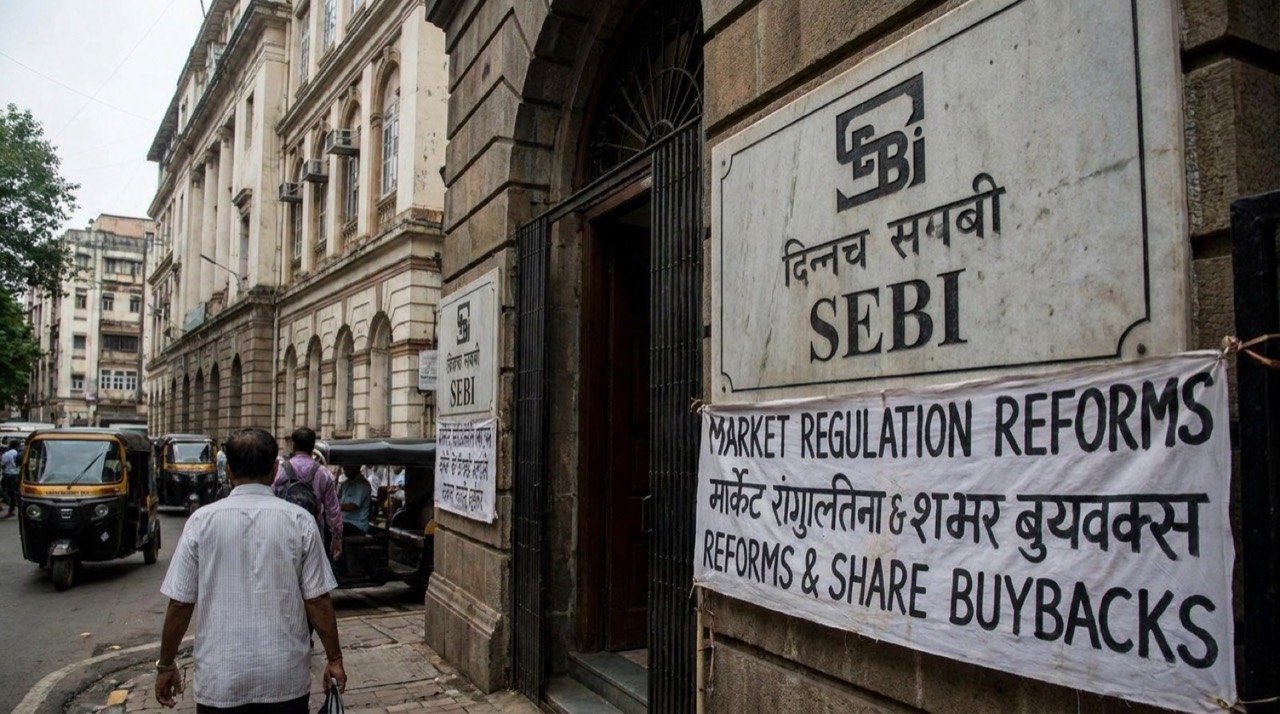
SEBI Reform Push Aims to Simplify Market Plumbing and Revive Open-Market Buybacks
SEBI has proposed a simpler rulebook for stock exchanges and clearing corporations and cleared the return of open-market share buybacks from August 1, signalling a lighter-touch yet sturdier market framework.

SEBI's Technology-Rule Review Could Reshape Access to India's Markets
SEBI has proposed a sweeping review of technology and compliance rules for exchanges, depositories and market participants, with a key question being whether Direct Market Access should be opened more widely to retail investors.

India's IPO Machine Keeps Humming With SME Listings and a Kuku FM Filing
A cluster of small and mid-cap offers hit the market in June even as audio platform Kuku FM confidentially filed for a Rs 3,500 crore issue.

NSE IPO Filing With SEBI Moves India's Top Exchange Closer to Listing
The National Stock Exchange has filed draft IPO papers with SEBI for an offer estimated near Rs 30,000 crore, a long-delayed move that could rank among India's biggest-ever public issues if cleared.
More from this section
More
Adani Case: US DOJ Pushes for Permanent Dismissal of Charges
The US Department of Justice has urged a judge to permanently dismiss charges against Gautam Adani, calling the case legally flawed — a reversal with consequences for markets, diplomacy and cross-border enforcement.

Akasa Air Inducts 40th Aircraft in Indian Aviation Scale-Up
Akasa Air's 40th aircraft, ferried to Bengaluru via Seattle, Reykjavik and Cairo, marks a fleet milestone for the young carrier and a fresh signal that India's aviation market remains firmly in expansion mode.

BARC Ratings Suspension Leaves Indian TV Industry Flying Blind
BARC's pause on television ratings has put India's broadcast measurement system under fresh scrutiny, leaving broadcasters, advertisers and media planners without the weekly audience data that anchors the TV economy.