How a $750,000 horror film became the biggest festival acquisition in box-office history
Curry Barker's 'Obsession', bought by Focus Features out of a Toronto midnight screening, has grossed roughly $286 million worldwide, eclipsing 'The Blair Witch Project' and rewriting the economics of festival dealmaking.
Commentary & Analysis ·

A horror picture made for around $750,000 and acquired at a festival midnight slot has become the highest-grossing festival pickup of all time, an outcome that few in the business would have predicted and one that is already reshaping how distributors think about the acquisitions marketplace. 'Obsession', the debut feature directed by Curry Barker, has reached roughly $286.5 million at the worldwide box office.
In doing so it has overtaken 'The Blair Witch Project', the 1999 found-footage phenomenon long regarded as the benchmark for a festival acquisition turned global hit, and surpassed other landmark titles bought off the festival circuit. For Focus Features, the studio that snapped it up, the film is now the single biggest earner in the label's roughly quarter-century existence.
From a midnight slot to a global sensation
Focus paid in the region of $14 million to $15 million to acquire the Capstone-financed film out of its festival premiere. On the face of it that was a substantial sum for an untested microbudget horror title from a first-time director. With hindsight it looks like one of the shrewdest acquisition bets in years.
What has made 'Obsession' so unusual is not merely the scale of its gross but the shape of its run. The film has displayed extraordinary staying power, reportedly earning more in its second and third weekends than in its opening frame, the kind of upward trajectory that distributors almost never see and that recalls the word-of-mouth legs of titles from a very different era of moviegoing.
The economics behind the headline
The profit picture is striking. Industry reporting suggests Focus Features stands to make in the order of $125 million from the title, while financier Capstone and the film's creative team are set to share a sum that could reach $50 million. For a project mounted on a budget smaller than the marketing spend of a typical studio release, those are returns on a scale that change careers and, potentially, a label's strategy.
- Production budget of roughly $750,000
- Acquired by Focus Features for around $14 million to $15 million
- Worldwide gross of approximately $286.5 million
- Now Focus Features' highest-grossing release ever
- Estimated studio profit near $125 million, with up to $50 million shared by financiers and crew
Why genre is winning the acquisitions game
The success of 'Obsession' underlines a lesson distributors have been relearning for some time: genre films, and horror in particular, can deliver the best return on investment of anything in the festival marketplace. The combination of low production costs, a built-in audience and the potential for communal, repeat-viewing experiences makes the category uniquely attractive to buyers willing to take a calculated gamble.
Part of the film's cultural traction has come from the way audiences have engaged with it. Reports describe screenings taking on a participatory, call-and-response atmosphere reminiscent of cult theatrical phenomena, with viewers returning to shout lines back at the screen. That kind of social ritual is precisely what cannot be replicated at home, and it has helped sustain ticket sales well beyond the typical horror window.
A signal to the festival market
For the festival acquisitions business, which in recent years has often felt squeezed by cautious buyers and the gravitational pull of streaming, 'Obsession' is a tonic. It demonstrates that a theatrical-first strategy can still produce outsized hits, and that the festival circuit remains a genuine source of breakout titles rather than merely a prestige showcase. The film's run has been strong enough that the studio reportedly delayed its home-viewing release to protect the box office.
It also offers a measure of validation for first-time filmmakers and the financiers willing to back them. Curry Barker's debut has become a reference point precisely because it came from outside the usual pipeline of established names and franchise IP.
Outlook
Whether 'Obsession' proves a one-off or the start of a renewed appetite for festival-acquired genre fare will depend on how buyers behave at the next round of markets. Distributors burned by overpaying for festival darlings that fizzled may stay disciplined; others, eyeing the returns Focus has banked, may bid more aggressively for the next promising horror title.
Either way, the film has already secured its place in the record books and given a struggling corner of the industry a reason for optimism. In a year defined by consolidation and caution, a tiny horror movie has shown that the old-fashioned hit, built on word of mouth and a night out at the cinema, is far from extinct.
The NE Times View
A $750,000 film grossing $286 million is the kind of arithmetic that should make every risk-averse studio executive uncomfortable. It revives the old truth that horror, made cheaply and sold smartly, remains cinema's surest bet. Indian producers chasing inflated budgets and star fees should take note: festival buzz and word of mouth still beat money. The danger is that one freak success spawns a hundred imitators.
This article is original commentary and analysis by The NE Times. Background facts were referenced from Deadline and The Hollywood Reporter.
You may also like to read

Alpha Box Office Day 1: Alia Bhatt Spy Film Opens at Rs 9 Crore
Alpha, the Alia Bhatt and Sharvari-led entry in the YRF spy universe, has opened to roughly Rs 9 crore net in India, a modest start that puts the spotlight on weekend growth and word of mouth.

Cocktail 2 Box Office: Shahid-Kriti-Rashmika Film Crosses Rs 50 Crore
Cocktail 2, starring Shahid Kapoor, Kriti Sanon and Rashmika Mandanna, has crossed the Rs 50 crore domestic net benchmark, keeping the ensemble romantic drama firmly in the 2026 box office conversation.

Maa Inti Bangaaram Box Office: Samantha Film Nears Rs 90 Cr Worldwide
Samantha Ruth Prabhu's action drama has slowed with a 34.8 percent day-15 dip, yet its Rs 54.70 crore India net and near-Rs 90 crore worldwide gross keep it among the season's durable Telugu releases.
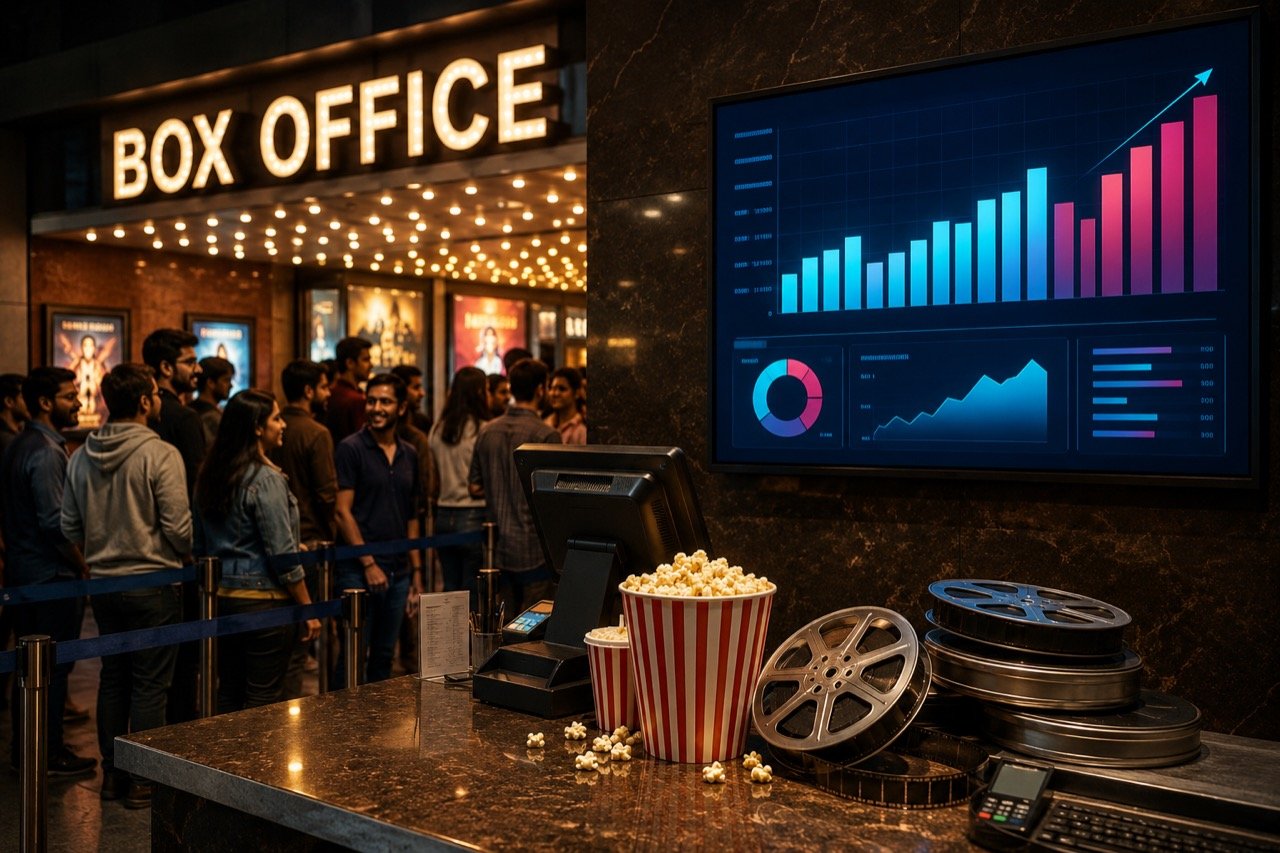
Main Vaapas Aaunga Box Office: Diljit Film Crosses Rs 40 Crore
Diljit Dosanjh's Main Vaapas Aaunga has reportedly crossed Rs 40 crore worldwide after a weekend jump, keeping the Hindi release alive in trade conversation well beyond its opening frame.
More from this section
More
72nd National Film Awards: Fans Back Mammootty, Allu Arjun, Sai Pallavi
Speculation around the 72nd National Film Awards is intensifying as fan communities across India's language film industries champion favourites including Mammootty, Allu Arjun and Sai Pallavi ahead of any official announcement.

Aamir Khan Marries Gauri Spratt in Private Pali Hill Ceremony
Aamir Khan and Gauri Spratt tied the knot at the actor's Pali Hill home in Mumbai on July 5, turning a deliberately small family ceremony into Bollywood's biggest story of the day.
Akanksha Chamola's Lock Upp 2 Confession Sets Reality TV Abuzz
A personal revelation by Akanksha Chamola ahead of Lock Upp 2 has handed the reality show a viral talking point, underlining how confession-driven formats continue to dominate Indian television conversation.