Moody's Flags India's Fragmented Water Management as a Growing Fiscal and Credit Risk
Moody's warns that India's dispersed water governance, subsidised pricing and unclear investment pathways could turn rising water stress into a fiscal and credit liability as demand surges.
Commentary & Analysis ·
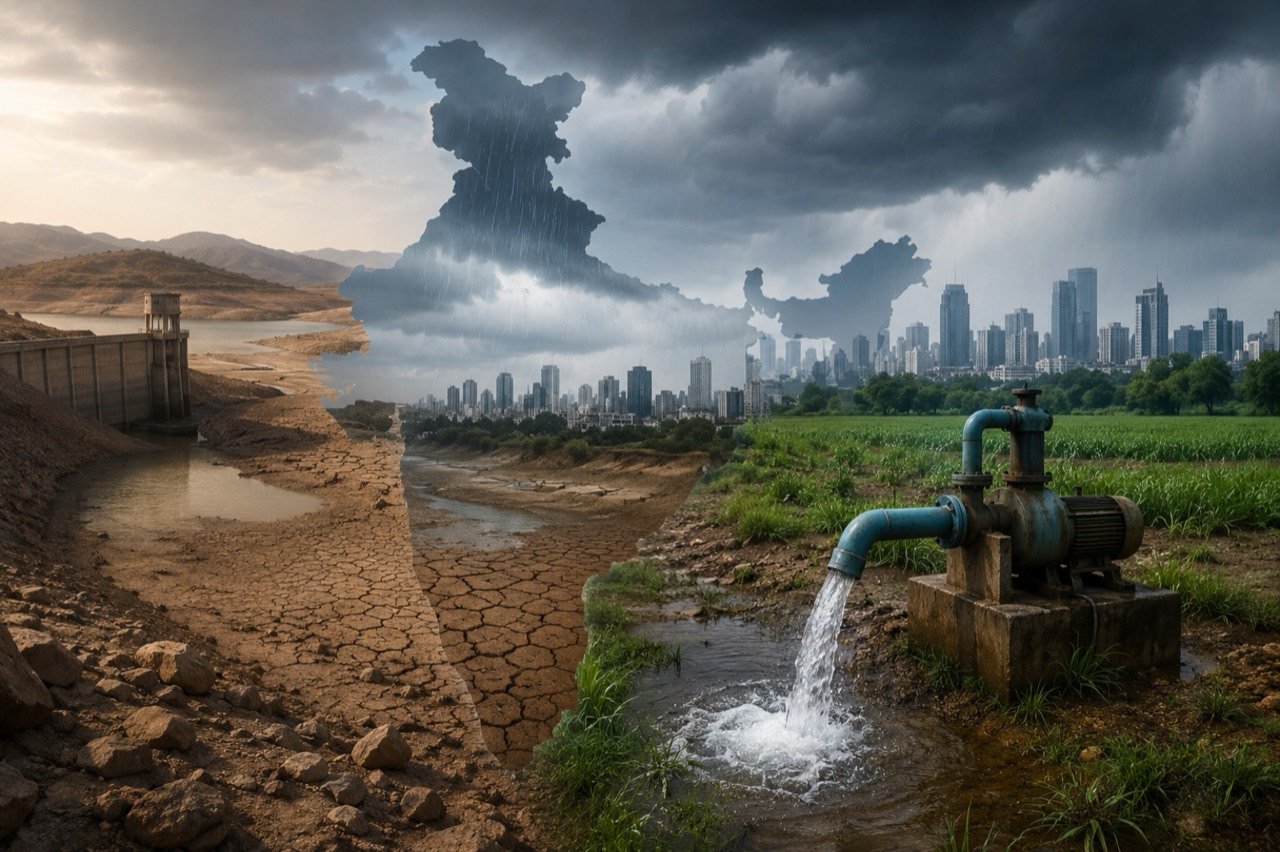
Moody's has warned that India's fragmented approach to managing water could harden into a fiscal and credit risk as demand climbs from households, agriculture, industry and a fast-growing data-centre sector. The message is pointed: water is no longer only an environmental concern but an economic one, increasingly entangled with public finance and the health of water-intensive industries. It is a warning that asks India to look past monsoon cycles and reservoir levels and to consider water instead as a balance-sheet variable, one that can quietly shape the creditworthiness of states, utilities and the industries that depend on a steady supply.
What Moody's Actually Flagged
According to reports, the agency pointed to dispersed governance, subsidised water prices, slow reallocation of water across competing users and unclear pathways for the investment needed to modernise the system. Each of these, on its own, is a familiar constraint; together they form a structural weakness. Governance of water in India is split across multiple layers of authority, state and central, agricultural and municipal, with no single body carrying full accountability for how the resource is priced, allocated or renewed. That diffusion of responsibility is precisely what makes the risk difficult to see coming: no one actor is positioned to fail outright, yet the system as a whole can still drift towards strain.
Crucially, the warning is not a forecast of imminent crisis. It is an assessment of vulnerability, a signal that the way India prices, governs and finances water leaves its public balance sheet and key sectors more exposed than they need to be. That distinction matters. Rating agencies routinely separate the probability of a near-term shock from the underlying fragility that would determine how badly a shock, when it eventually arrives, gets absorbed. Moody's assessment sits in the second category: a structural exposure rather than a prediction of collapse.
Why Water Is Now an Economic Variable
Reliable water supply underpins urban expansion, manufacturing and energy systems. When that supply is uncertain, the costs ripple outward: utilities can come under financial strain, water-dependent industries face disruption, and governments may have to step in, with implications for public finances. This is the mechanism by which an environmental constraint becomes a credit one. A municipal water utility that cannot recover its costs because tariffs are held artificially low will eventually need support from state coffers to keep functioning, and that support shows up on the state's own books. An industrial cluster that faces unplanned curtailment of water supply during a dry spell absorbs a production shock that eventually shows up in tax revenue, employment and, in aggregate, sovereign fiscal indicators.
The arrival of large data centres sharpens the issue. These facilities are both power- and water-hungry, adding a new and concentrated source of demand to a system already balancing the needs of farms, factories and cities. Unlike agricultural or municipal demand, which is dispersed and somewhat seasonal, data-centre demand is geographically concentrated and continuous, often sited near urban centres that are themselves already water-stressed. As India positions itself as a hub for digital infrastructure and artificial intelligence workloads, this new demand layer arrives at precisely the moment the underlying allocation system is least equipped to absorb it without friction.
The Reform Gaps Behind the Warning
Subsidised pricing, while politically sensitive, can blunt incentives to conserve and starve the system of revenue for upkeep and expansion. When water is priced far below its cost of delivery, treatment and maintenance, there is little financial signal pushing users, whether farmers, factories or households, toward more efficient use. At the same time, the utilities and irrigation departments responsible for delivering that water are left without the revenue base needed to invest in leak reduction, network modernisation or expanded capacity. The result is a slow accumulation of deferred maintenance that eventually requires either a painful tariff correction or a fiscal bailout.
Slow reallocation means water cannot move easily to its most productive uses, and fragmented governance leaves accountability diffuse and investment hard to plan. Moody's assessment can be distilled into five linked constraints: dispersed governance spread across multiple authorities; subsidised water pricing that weakens conservation incentives; slow reallocation of water between agriculture, industry and households; unclear investment pathways for modernising infrastructure; and new, concentrated demand from water-intensive data centres. None of these constraints is new to observers of Indian water policy, but Moody's contribution is to draw a direct line from them to sovereign and corporate credit exposure, a framing that tends to focus policymaker attention in a way that purely environmental warnings do not.
How the Risk Could Materialise in Practice
It is worth setting out, in plain terms, how a structural vulnerability like this could eventually convert into a tangible credit event. A state-run water utility running persistent losses because tariffs do not cover costs may need periodic recapitalisation from the state government, adding to that government's contingent liabilities. A water-intensive industrial project, whether in textiles, chemicals or now data infrastructure, that faces an unplanned restriction on its water allocation during a drought year could see revenue and debt-servicing capacity affected, with consequences for lenders and, in aggregate, for banking-sector asset quality. None of this requires a dramatic drought or an acute shortage to begin showing up in the numbers; it can accumulate gradually through repeated smaller disruptions, each one manageable in isolation but cumulatively eroding the margin for error.
This is precisely why credit agencies frame such issues in terms of structural exposure rather than event risk. The warning is less about a single point of failure and more about a system with progressively less slack, one where each additional layer of demand, such as the data-centre sector, reduces the buffer available to absorb the next shock, climatic or otherwise.
The NE Times View
Moody's is flagging a slow-burn risk India has long preferred to ignore. Underpriced water and a tangle of overlapping state and central authorities have produced waste and underinvestment that climate stress will only sharpen. The fix is politically thankless: rational pricing and consolidated governance both invite backlash, since any move to raise tariffs or centralise control over a resource as politically charged as water risks resistance from farmers, state governments and industrial users alike. But the alternative is letting a resource crisis quietly become a balance-sheet one, absorbed piecemeal through utility bailouts, industrial disruption and eventually sovereign credit metrics, rather than confronted directly through reform.
The warning deserves a serious policy response, not a defensive one. Clearer governance, more rational pricing, faster reallocation and defined investment routes would not only ease environmental stress but also reduce the fiscal and credit risks Moody's has identified, before they become a more pressing constraint on India's growth. The credit agency's framing puts water reform squarely on the economic agenda, and that reframing may prove to be the more lasting contribution of this assessment: it converts a familiar governance complaint into a measurable exposure that finance ministries, rating committees and infrastructure investors are now obliged to track.
Key takeaways
- Moody's warns that India's fragmented water governance, subsidised pricing, slow reallocation and unclear investment pathways together form a structural fiscal and credit vulnerability, not a forecast of imminent crisis.
- The fast-growing data-centre sector adds a new, concentrated source of water demand on top of existing pressure from agriculture, industry and households.
- Underpriced water weakens conservation incentives and starves utilities of the revenue needed for maintenance and expansion, risking eventual government bailouts.
- Reform, rational pricing and consolidated governance, is politically difficult but would reduce the fiscal and credit exposure Moody's has identified.
- The NE Times View: the risk is structural and slow-moving, and warrants a proactive policy response rather than continued deferral.
You may also like to read
El Nino Risk Flags 111 Districts for Monsoon Deficit Worry
A fresh assessment has identified 111 districts as highly vulnerable to an El Nino-linked monsoon deficit, with Maharashtra and Madhya Pradesh accounting for a large share and farm incomes at stake.
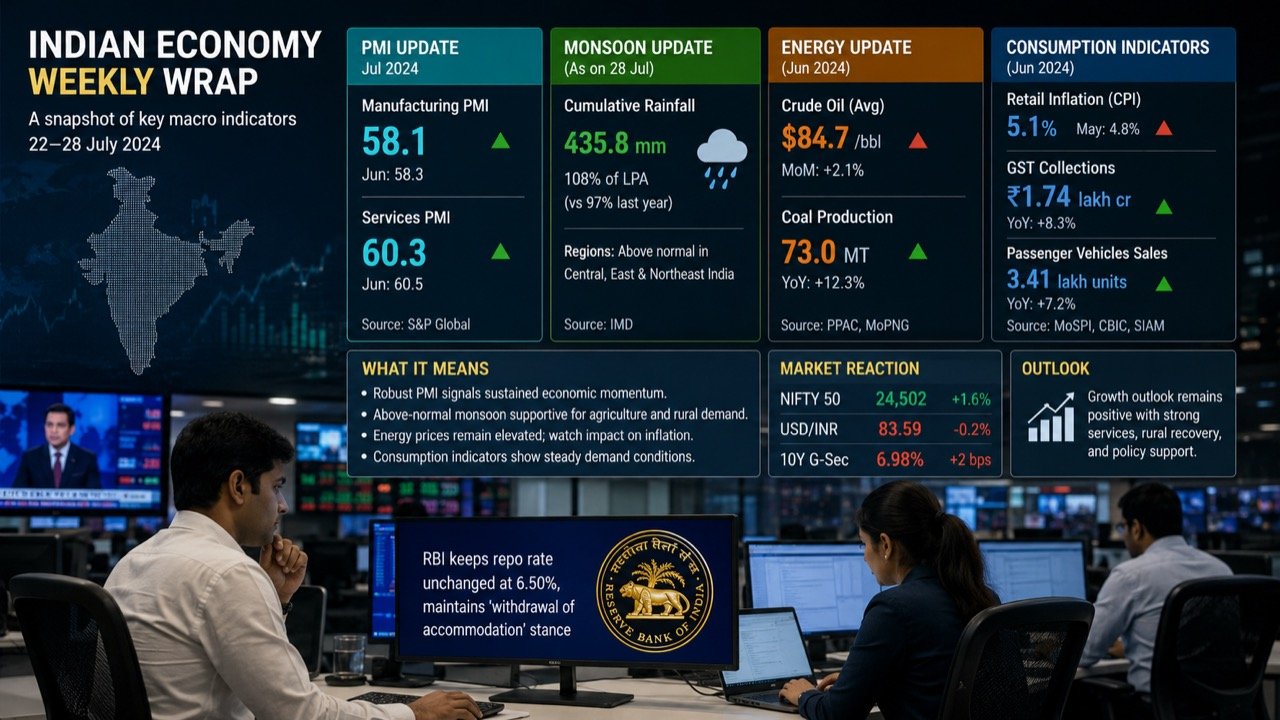
India Economy This Week: Energy Relief, PMI and Monsoon Demand
India's near-term growth picture is being read through a dashboard of indicators this week, with energy costs, PMI activity readings and monsoon-linked rural demand each pulling the conversation in different directions.
OPEC+ Agrees Bigger August Output Hike: What It Means for Oil Prices
OPEC Plus members have signed off on a larger production increase for August, a supply-side shift that puts crude benchmarks, India's import bill and fuel-linked costs firmly back in the market spotlight.

GST Collections Hit Rs 1.95 Lakh Crore in June as Imports Surge
India's gross GST revenue climbed 13.9 percent year on year in June 2026, but a 34.6 percent jump in import-linked collections did most of the heavy lifting while domestic growth stayed modest.
More from this section
More
Adani Case: US DOJ Pushes for Permanent Dismissal of Charges
The US Department of Justice has urged a judge to permanently dismiss charges against Gautam Adani, calling the case legally flawed — a reversal with consequences for markets, diplomacy and cross-border enforcement.

Akasa Air Inducts 40th Aircraft in Indian Aviation Scale-Up
Akasa Air's 40th aircraft, ferried to Bengaluru via Seattle, Reykjavik and Cairo, marks a fleet milestone for the young carrier and a fresh signal that India's aviation market remains firmly in expansion mode.
BARC Ratings Suspension Leaves Indian TV Industry Flying Blind
BARC's pause on television ratings has put India's broadcast measurement system under fresh scrutiny, leaving broadcasters, advertisers and media planners without the weekly audience data that anchors the TV economy.