Kalshi Bars India Users as Prediction-Market Crackdown Widens
US event-contract platform Kalshi has added India to its restricted jurisdictions, barring Indian users from trading as MeitY tightens its squeeze on offshore betting and prediction-market platforms.
The NE Times Technology Desk
Commentary & Analysis ·
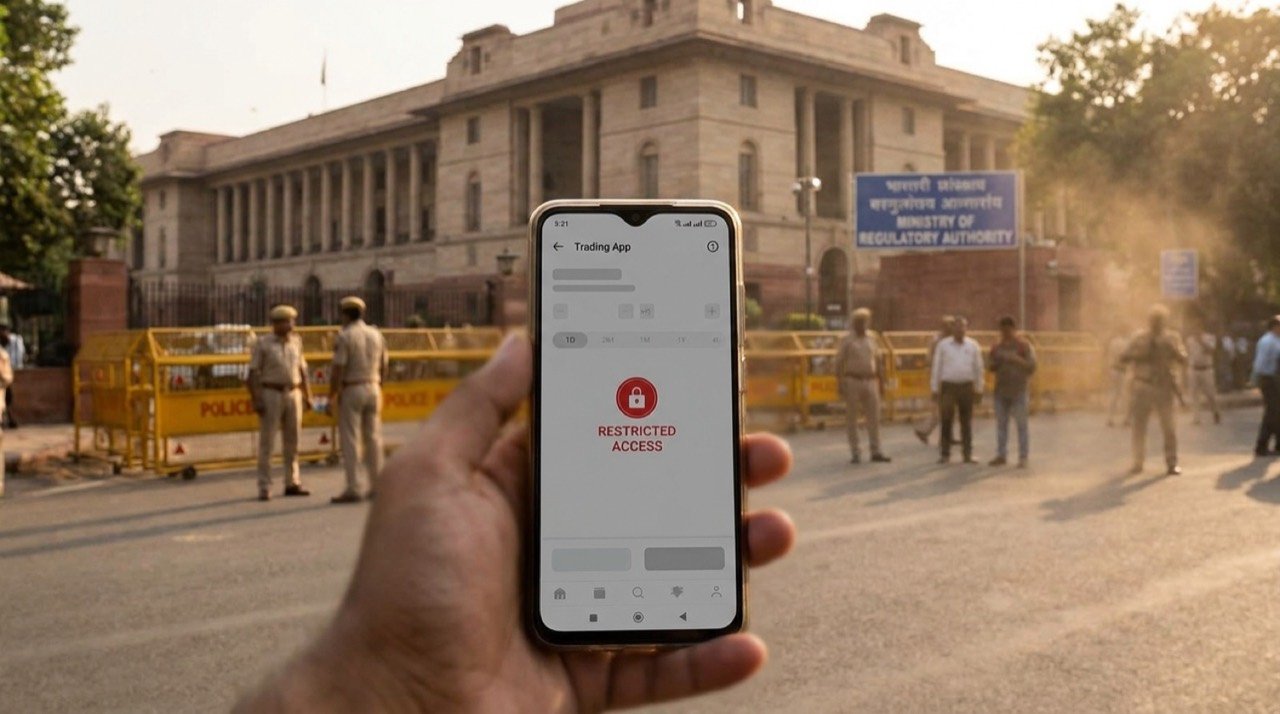
Kalshi, the United States-based prediction-market platform that lets users buy and sell contracts tied to the outcome of real-world events, has quietly closed its doors to Indian traders. The company has added India to its list of restricted jurisdictions, with an updated user agreement stating that anyone located, domiciled or organised in the country may no longer trade its event contracts. The change lands at a moment when Indian regulators are sharpening their response to a fast-growing class of online platforms that blur the line between financial speculation and prohibited money gaming.
What Kalshi Has Changed
Kalshi operates by listing binary, yes-or-no contracts on questions ranging from economic data and elections to weather and entertainment. Participants effectively wager on whether an event will happen, with payouts settling at a fixed value once the outcome is known. In its home market the platform is regulated by the US Commodity Futures Trading Commission as a designated contract market, a framing that treats its products as financial instruments rather than bets.
The revised terms now place India alongside other excluded territories, meaning Indian residents and entities are formally barred from opening positions. The restriction was first flagged in reporting by Business Standard, which noted that the user agreement was updated to draw a clear geographic boundary around access.
Why India Is Cracking Down
The move follows a sustained push by the Ministry of Electronics and Information Technology (MeitY) against platforms it considers illegal under India's online gaming and betting framework. Over the past year the ministry has issued advisories, warned intermediaries against facilitating real-money gaming, and pursued blocking action against websites and apps deemed to be operating outside the law. Prediction markets have drawn particular scrutiny because they sit in a grey zone between regulated finance and games of chance.
For Kalshi, withdrawing access is a pragmatic step. Rather than risk being named in enforcement actions or having its services blocked outright, the company has pre-emptively walled off a market where the legal status of event contracts remains unsettled. Indian law has historically distinguished between games of skill, which enjoy some protection, and games of chance, which are widely restricted across states.
The Enforcement Challenge
The episode underscores a structural problem for Indian regulators: many of the platforms in question are based offshore, beyond the easy reach of domestic courts and licensing regimes. Even when a company formally bars Indian users, determined traders can attempt to route around geographic restrictions using virtual private networks (VPNs), shifting the burden of enforcement back onto authorities and payment intermediaries.
That cat-and-mouse dynamic is precisely why MeitY has leaned on a mix of advisories, blocking orders and pressure on payment and hosting providers rather than relying on any single tool. The Kalshi withdrawal suggests the strategy is having some effect, at least in nudging cautious operators to exit voluntarily.
- Kalshi has added India to its restricted jurisdictions, barring local users from trading event contracts.
- The change is set out in the platform's updated user agreement.
- It follows MeitY warnings and blocking efforts against betting and prediction-market platforms.
- Kalshi is regulated in the US as a financial contract market, a status India does not recognise for such products.
- VPN use complicates enforcement, keeping pressure on regulators and payment providers.
“The hardest cases for regulators are the platforms that look like finance abroad and like gambling at home, sitting just out of reach offshore.”
— Indian fintech-policy analyst
Looking ahead, the Kalshi exit is unlikely to be the last. As India works towards a more coherent national framework for online gaming and event-based trading, offshore platforms will increasingly have to decide whether the Indian market is worth the legal exposure. For now, the message from New Delhi is that products dressed up as financial contracts will not escape scrutiny simply by claiming a foreign regulatory home.
The NE Times View
Kalshi pre-emptively barring Indian users shows the regulatory squeeze is working: offshore platforms are choosing exit over confrontation with MeitY. That is a win for consumer protection, given how thin the line is between prediction markets and unregulated betting. But blocking apps is whack-a-mole; users migrate to VPNs and grey channels. The durable answer is a clear domestic framework that distinguishes legitimate hedging from gambling, rather than relying on platforms to police themselves.
This article is original commentary and analysis by The NE Times. Background facts were referenced from Business Standard and the Ministry of Electronics and Information Technology (MeitY).
You may also like to read
RBI Aligns UPI-Linked Credit Line Rules With Underlying Loan Norms
The Reserve Bank of India has clarified that credit lines delivered over UPI must follow the prudential rules of the underlying loan, closing a regulatory gap as banks and fintechs race to build payment-linked lending.

Centre Tightens FCRA Rules For NGOs Receiving Foreign Funds
India has amended its Foreign Contribution Regulation Act rules, adding disclosure and compliance demands for NGOs taking overseas donations and excluding proselytisation from permitted faith-based activity.

Kunal Shah Named WhatsApp Global CEO as Meta Leads $900 Million CRED Round
CRED founder Kunal Shah has been named global CEO of WhatsApp as Meta leads a $900 million round valuing the Indian fintech at about $4.5 billion, placing a homegrown founder atop one of the world's biggest apps.
Aadhaar App Crosses 31 Million Downloads as Digital ID Use Expands
India's Aadhaar mobile app has passed 31 million downloads, underlining how QR-based digital identity is becoming part of everyday verification across welfare, banking, telecom and travel.
More from this section
More
ISRO Fires Semi-Cryogenic Engine Power Head at 175 Tonnes in Landmark Hot Test
ISRO successfully ran its indigenous semi-cryogenic engine power head at 175 tonnes of thrust, clearing a key hurdle toward powering the LVM3 upgrade and the Next Generation Launch Vehicle.

India Tech Funding Climbs to $7.2 Billion in H1 2026 Even as Deal Count Slumps
Indian tech startups raised $7.2 billion in the first half of 2026, up 12 per cent year-on-year, but the number of funding rounds fell sharply as capital concentrated in a handful of mega-deals.
OnePlus N6 Headlines a Crowded End-June Gadget Calendar in India
The OnePlus N6, with its 8,000mAh battery and sub-Rs 25,000 price tag, leads a busy late-June run of smartphone launches in India spanning OnePlus, Oppo and Samsung.