Sensex, Nifty Week Ahead: Trade Deal Hopes and Q1 Earnings in Focus
Indian equities enter a news-heavy week with trade-deal expectations, quarterly earnings, foreign flows and global cues all converging to set the direction for the Sensex and Nifty.
The NE Times Business Desk
Commentary & Analysis ·
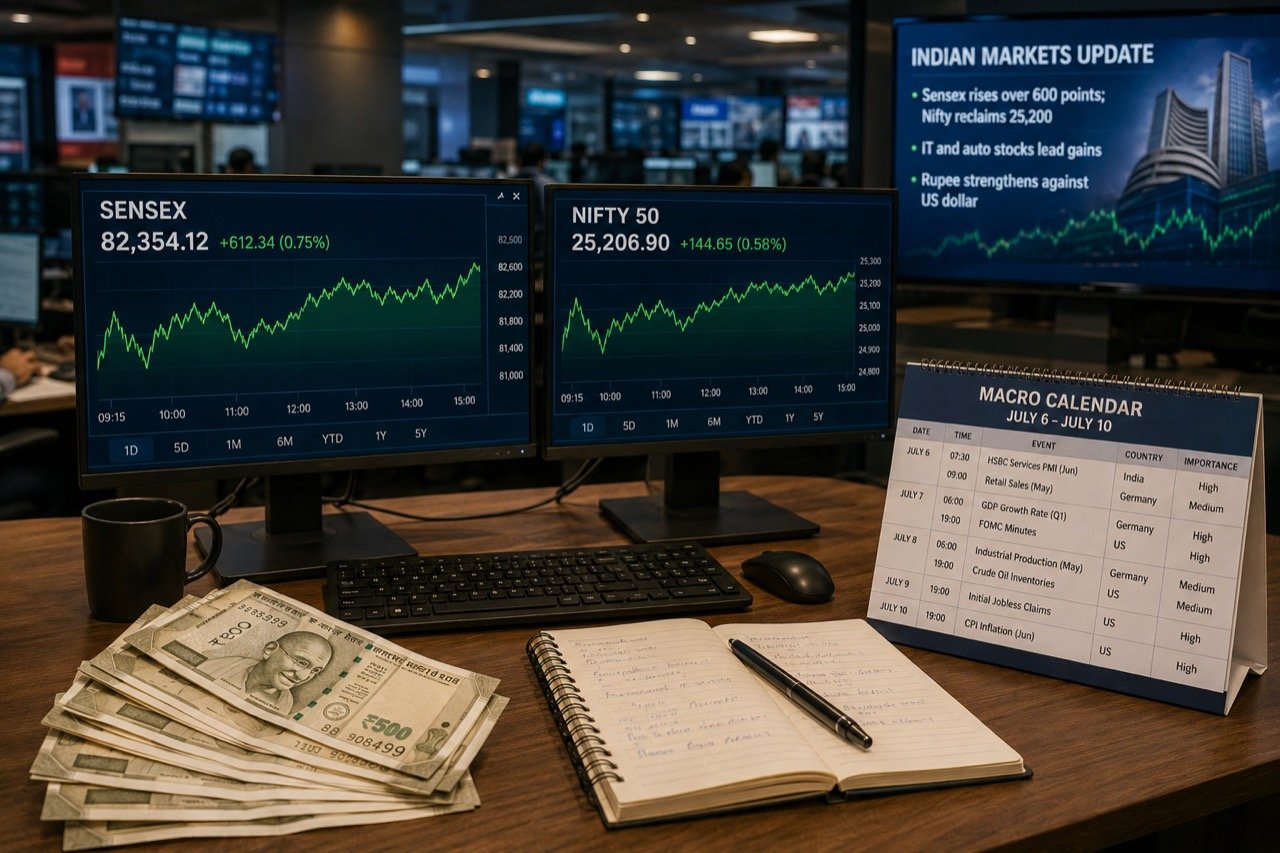
Indian equities head into the new week with an unusually crowded calendar of catalysts. Market reports point to trade-deal expectations, the start of the quarterly earnings season, global risk appetite and sector-specific momentum as the forces most likely to steer the Sensex and Nifty over the coming sessions.
What is supporting the mood
The immediate tone has been lifted by hopes of clearer external trade arrangements and by resilient domestic flows, which have repeatedly cushioned Indian markets against global wobbles. Search interest around the market's weekly outlook and trade-deal headlines suggests both retail and institutional investors are hunting for practical signals rather than broad narratives.
The variables that could change sentiment
Markets rarely move on one story alone. Earnings guidance from early reporters, foreign portfolio flows, the rupee's trajectory, crude oil prices and commentary from global central banks can each shift sentiment quickly — particularly when valuations already price in good news.
That makes confirmation the theme of the week: do results match the optimism, do global cues stay supportive, and do policy headlines harden into concrete agreements? Traders will track momentum day to day, while long-term investors will be watching whether fundamentals genuinely justify it.
The NE Times View
The setup entering this week is classic late-cycle optimism: prices moving on promises before proof. For Indian retail investors, who now anchor market flows, the discipline that matters is separating headline hope from delivered earnings — a trade deal that remains a headline is not yet cash flow. We would treat any rally built purely on expectation as fragile and watch the first wave of Q1 numbers as the real referendum on valuations. India's macro story remains strong, but strong stories bought at high expectations still need results to keep paying.
This article is original commentary and analysis by The NE Times. Background facts were referenced from Livemint Markets, Moneycontrol Markets and Business Standard Markets.
You may also like to read
Sensex and Nifty Slide as Global Tech Selloff Hits Indian Market Sentiment
Indian equities fell on Tuesday as weak global cues, including a sharp slide in South Korean technology shares, dragged the Sensex down nearly 900 points and pulled the Nifty lower.
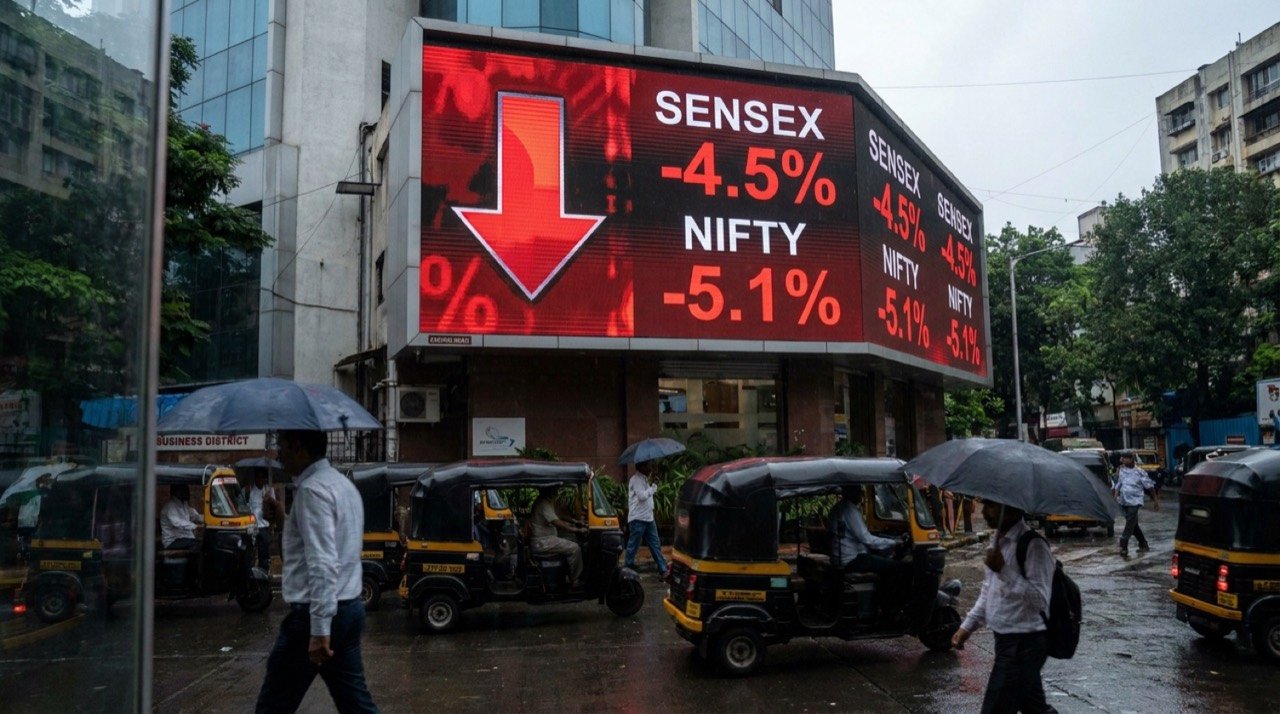
Sensex Sheds 893 Points as Global Risk and West Asia Tensions Weigh on Indian Equities
Indian benchmark indices closed sharply lower on June 23 as weak global cues and West Asian uncertainty dragged the Sensex below 76,300 and the Nifty under 23,850.

Sensex Scales Fresh Record as Foreign Inflows Return to Indian Equities
Benchmark indices closed at an all-time high, powered by banking and IT stocks as overseas investors turned net buyers after months on the sidelines.

Sensex Jumps 1,695 Points as Oil Slides on Peace-Deal Hopes
Indian equities staged one of their strongest sessions of the year after crude prices fell on reports of a possible US-Iran agreement, easing pressure on the oil-importing economy.
More from this section
More
Adani Case: US DOJ Pushes for Permanent Dismissal of Charges
The US Department of Justice has urged a judge to permanently dismiss charges against Gautam Adani, calling the case legally flawed — a reversal with consequences for markets, diplomacy and cross-border enforcement.

Akasa Air Inducts 40th Aircraft in Indian Aviation Scale-Up
Akasa Air's 40th aircraft, ferried to Bengaluru via Seattle, Reykjavik and Cairo, marks a fleet milestone for the young carrier and a fresh signal that India's aviation market remains firmly in expansion mode.
BARC Ratings Suspension Leaves Indian TV Industry Flying Blind
BARC's pause on television ratings has put India's broadcast measurement system under fresh scrutiny, leaving broadcasters, advertisers and media planners without the weekly audience data that anchors the TV economy.