India-UK trade pact kicks in: duty-free access on 99% of tariff lines, cheaper Scotch, and a Rs 4,000 crore social security saving
India's Supreme Court imposed Rs 3 lakh costs on Samay Raina, Ranveer Allahbadia and Ashish Chanchlani after finding non-compliance with directions in a disability-related case.
Commentary & Analysis ·

Verified key facts
- The India-UK Comprehensive Economic and Trade Agreement (CETA), signed on 24 July 2025, entered into force on 15 July 2026
- The UK removed duties on 99% of Indian tariff lines from day one, covering nearly 100% of India's export value to Britain
- India's import tariff on Scotch whisky dropped from 150% to 75% immediately, falling further to 40% over a decade
- UK projections estimate a £25.5 billion annual boost to bilateral trade and a £4.8 billion lift to UK GDP in the long run
- The Double Contribution Convention exempts Indian workers on short UK postings from social security payments for five years, saving firms about Rs 4,000 crore
Tariff walls come down from day one
India's most comprehensive trade agreement with a G7 economy became operational on Wednesday, 15 July 2026. The India-UK Comprehensive Economic and Trade Agreement, or CETA, entered into force nearly a year after it was signed on 24 July 2025, ThePrint reported. For Britain, it is the most significant bilateral trade deal since leaving the European Union.
From day one, the United Kingdom has removed duties on 99 per cent of Indian tariff lines. According to ThePrint, that coverage represents close to 100 per cent of the value of India's current exports to the UK. Commerce Minister Piyush Goyal said the pact would systematically dismantle long-standing tariff walls and give Indian goods immediate duty-free access.
The UK Fashion and Textile Association confirmed the 15 July entry into force to its members, flagging immediate changes to duty treatment on both sides. Freight forwarders were told to update customs documentation from Wednesday to claim preferential rates.
The Federal reported that the pact stretches beyond goods into services, investment facilitation and professional mobility, making it India's most comprehensive agreement with any developed economy. Officials in New Delhi have framed it as proof that India can close large, balanced trade deals on its own terms.
What Indian exporters gain
The immediate winners are labour-intensive export sectors that previously faced steep entry costs into Britain. ThePrint listed the duties that disappeared overnight:
- Processed foods: tariffs of up to 70 per cent cut to zero
- Marine products: 21.5 per cent to zero
- Engineering goods and auto components: up to 18 per cent to zero
- Leather and footwear: up to 16 per cent to zero
- Textiles and clothing: up to 12 per cent to zero
- Chemicals and pharmaceuticals: up to 8 per cent to zero
Exporters in Tirupur's knitwear cluster, the leather hubs of Kanpur and Chennai, and seafood processors on both coasts are immediate gainers. They now compete in the UK on equal tariff terms with Bangladesh and Vietnam. Steel producers also gained protection: ThePrint reported that 85 per cent of Indian steel exports are excluded from new UK trade-defence measures.
What gets cheaper in India
The most visible change for Indian consumers involves Scotch whisky. India's 150 per cent import duty on UK spirits fell to 75 per cent at entry into force, according to the House of Commons Library briefing on the agreement. The rate declines in stages to 40 per cent over the following decade.
British-built cars gain a quota-based route into India at a 10 per cent tariff, down from rates that ran above 100 per cent. The concession is phased and capped by volume, limiting the near-term impact on domestic carmakers. Over ten years, India will lower duties on 90 per cent of its tariff lines for UK goods, The Federal reported.
The numbers behind the deal
The UK government projects the agreement will add £4.8 billion to British GDP and £2.2 billion to real wages annually in the long run. Bilateral trade is expected to rise by £25.5 billion a year once tariff cuts and services commitments are fully phased in, per the House of Commons Library analysis.
For Indian services firms, the headline win sits outside the tariff schedule. The Double Contribution Convention, which accompanies the trade pact, exempts Indian employees on short-term UK postings from British social security contributions for five years. ThePrint reported the exemption will save Indian companies and workers about Rs 4,000 crore a year.
Who is affected, and how quickly
Impact will be uneven across sectors. Apparel, footwear, gems, engineering and marine exporters see immediate price competitiveness in a market where India's share has lagged. UK distillers, carmakers and professional services firms gain staged access to a market of 1.4 billion consumers.
Domestic alcohol beverage makers face gradual, not sudden, competition, since the whisky duty cut to 40 per cent stretches over ten years. Dairy, and other politically sensitive farm sectors, stayed out of India's concession list, The Federal noted. Compliance is the near-term hurdle: exporters must meet rules-of-origin tests to claim the new preferential rates.
UKFT cautioned its members on exactly that point. Preferential rates apply only where goods satisfy the agreement's origin requirements, and the association advised exporters to review supply chains before making claims. Trade advisers expect early friction as customs systems on both sides adjust to the new schedules. The first hard evidence of uptake will arrive with the August bilateral trade data.
A trade push with a deadline elsewhere
The pact's start lands in a crowded fortnight for Indian trade policy. Negotiators are racing to close the first tranche of a bilateral deal with the United States before a 22 July tariff deadline. June's merchandise trade deficit, meanwhile, widened to $30.43 billion on costlier energy imports.
Equity markets treated the milestone as a modest positive. Share.Market noted the FTA's entry into force among the drivers of Wednesday's firm opening, when the Sensex briefly rose more than 590 points. Analysts tracking trade flows say the real test is execution: how fast Indian exporters convert zero tariffs into shipments, and whether UK demand holds up.
Sources
- ThePrint - India-UK FTA to kick in on 15 July: what gets cheaper and how Indian exporters stand to benefit (13 July 2026)
- House of Commons Library - UK-India Free Trade Agreement research briefing
- The Federal - India-UK FTA to come into force from July 15: what it means for businesses and consumers (July 2026)
- UKFT - UK-India FTA to enter into force on 15 July 2026
You may also like to read
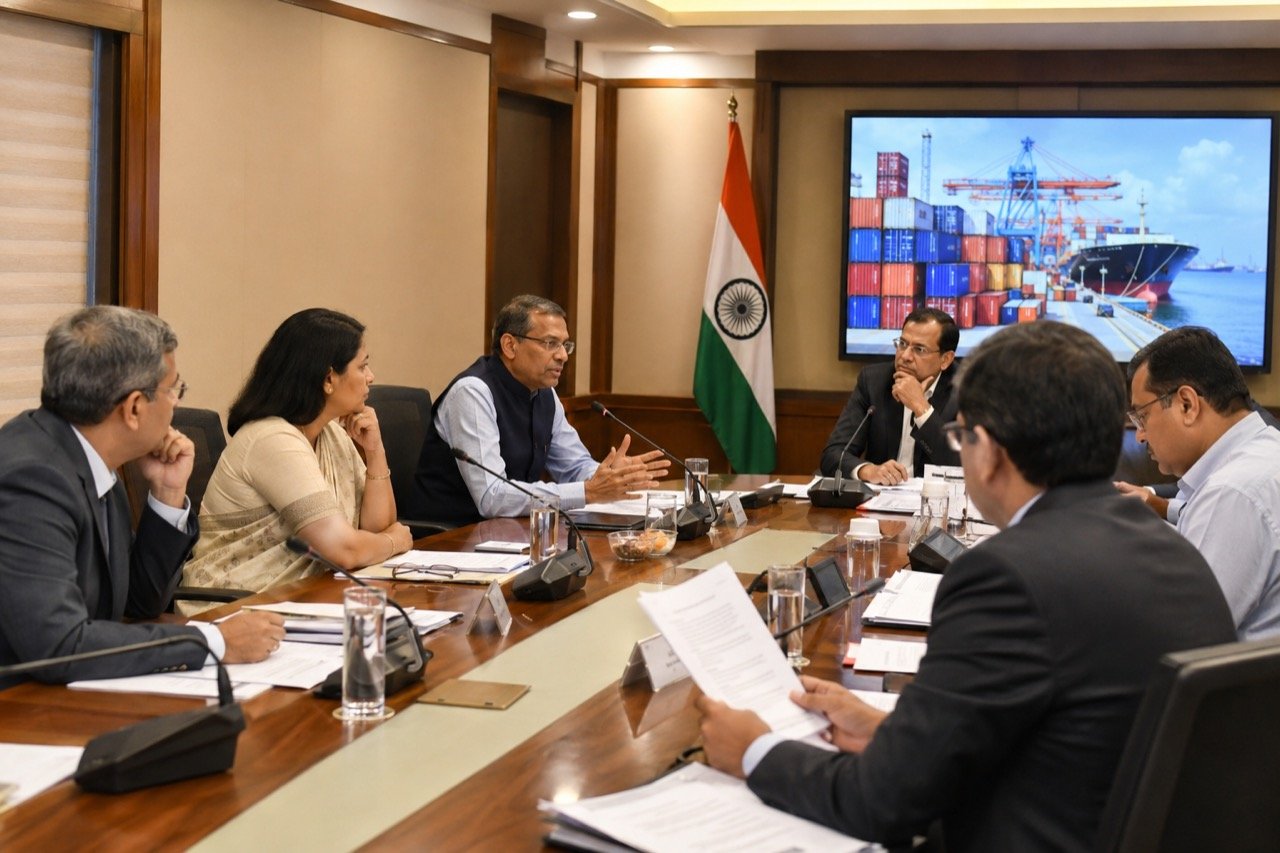
Board of Trade Meets as Exporters Press on FTAs and GST Refunds
Commerce Minister Piyush Goyal chaired a Board of Trade meeting where exporters pushed for faster GST refunds, lower logistics costs and workable free trade agreements amid global demand uncertainty.
India Pushes for Tariff Advantage Over Rivals in US Trade Deal, Says Goyal
India is seeking a US trade agreement that gives its exporters a comparative tariff edge over rival economies, Commerce Minister Piyush Goyal said, even as talks run long over the central question of tariff treatment.
India-US Interim Trade Deal Enters Final Stretch Ahead of July Tariff Deadline
With a July tariff deadline looming, New Delhi and Washington are racing to seal an interim trade pact that shields sensitive sectors while securing predictable access to India's largest export market.
India-US Trade Talks Resume in Delhi as Exporters Seek a Competitive Edge
Piyush Goyal and US Trade Representative Jamieson Greer have begun a fresh round of negotiations on an interim deal, with India pressing for terms that hand its exporters a clear advantage over rivals.