Seven Defence Manufacturing Clusters Put India's Self-Reliance Push in Focus
India is reportedly planning seven defence manufacturing clusters to deepen domestic capability, cut import dependence and strengthen supply chains across aerospace, electronics and land systems.
Commentary & Analysis ·
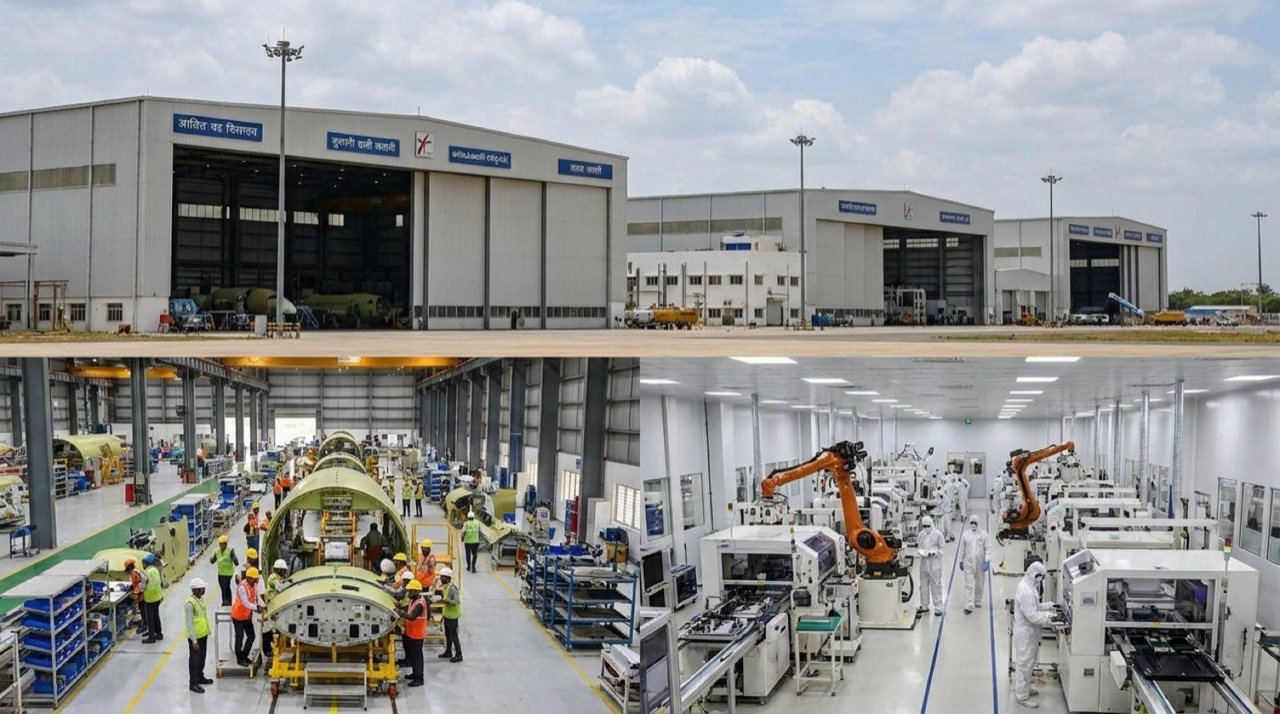
India's defence industrial policy has drawn fresh attention after reports that the government is planning seven manufacturing clusters aimed at deepening domestic capability. The proposal sits squarely within New Delhi's broader push to reduce dependence on imported military hardware and to build a more self-reliant defence ecosystem. Coming after years of incremental reform in the sector, the announcement is being read as another marker of how central defence manufacturing has become to India's economic and strategic planning, even as questions remain about how the plan will be carried through.
The logic of clustering
The plan is designed to support private-sector suppliers and strengthen supply chains across aerospace, electronics, land systems and components. By concentrating capacity geographically, clusters allow firms to locate near shared infrastructure, testing facilities and a common pool of skilled labour. This is a familiar industrial-policy instrument, one that has worked in other sectors precisely because it solves a coordination problem that individual firms cannot solve on their own: no single mid-sized supplier can justify building its own testing range or certification laboratory, but a cluster of firms sharing such facilities can.
For smaller manufacturers in particular, the model promises a way out of working in isolation. Shared access to testing, tooling and certification support can lower the cost and time of bringing products to qualification, a perennial hurdle for new entrants in defence. Defence procurement is notoriously unforgiving of small suppliers who lack the capital to absorb long qualification cycles, and it is this segment of the industrial base, the smaller component-makers and specialist manufacturers, that clustering is most obviously intended to help. If the model works as intended, it could widen the base of firms capable of competing for defence contracts, rather than leaving the field to a handful of large integrators.
Aligning security and industry
Defence manufacturing has increasingly become both a security priority and an industrial-growth strategy. A stronger domestic base reduces strategic vulnerability while also creating high-value jobs and export potential, making the sector central to India's economic ambitions. This dual framing matters: it means the clusters will be judged not only on whether they reduce import dependence but also on whether they generate the kind of manufacturing employment and export earnings that policymakers have long sought from the sector.
The cluster approach also dovetails with policies encouraging indigenisation and private participation, signalling continuity in the direction of defence-industrial reform. For private firms that have invested in defence manufacturing over the past decade, often against a backdrop of uncertain order flows, the announcement is likely to be read as a signal that the policy direction remains stable. Continuity of this kind matters more than any single scheme, because private capital in a capital-intensive, long-gestation sector such as defence manufacturing will only commit at scale if it believes the rules of the game will hold for years, not just for a budget cycle.
Execution will decide outcomes
The harder part, as with most industrial policy, is execution. Land acquisition, skilled labour, procurement certainty, quality assurance and export permissions all need to move in step for the clusters to deliver on their promise. Any one of these can stall a project: land disputes and delayed approvals have slowed industrial corridors before, and defence manufacturing adds the further complication of security clearances and export-control compliance that ordinary industrial parks do not face.
Without predictable orders and clear certification pathways, even well-located clusters risk underutilisation. This is the crux of the challenge. Physical infrastructure, however well planned, cannot by itself generate demand. Firms will only invest in cluster capacity if they can see a credible pipeline of orders from the armed forces and from export markets, and if the certification process for new products is transparent and time-bound rather than open-ended. The credibility of the plan will rest on how these enabling conditions are sequenced and sustained over time, which is to say that the announcement of seven clusters is only the starting point of a much longer administrative and industrial process.
What stakeholders will be watching
For the armed forces, the test will be whether clustered production actually shortens the time between requirement and delivery, and whether quality holds up under the pressure of faster timelines. For private industry, the test is more commercial: will the clusters bring genuine cost advantages and easier access to qualification, or will they simply relocate existing bottlenecks to a new address. For state governments competing to host these clusters, there is an additional incentive, since defence manufacturing hubs carry the promise of long-term industrial employment and ancillary investment, making the site-selection process itself a matter of considerable political and economic interest.
Exporters and firms with an eye on overseas markets will be watching export-permission processes closely, since a domestic cluster that cannot easily service export orders loses much of its economic rationale. India's defence exports have grown from a low base in recent years, and policymakers have made clear they see this growth as an important complement to import substitution. Whether the new clusters are designed with export competitiveness in mind, not merely domestic supply, will be an important signal of how ambitious the underlying strategy really is.
The NE Times View
Seven defence clusters fit the self-reliance ambition, but India has learned that announcements are the easy part. Genuine indigenisation depends on private-sector depth, technology transfer that actually transfers, and procurement that rewards domestic makers without coddling inefficiency. Clusters can build the ecosystem economies that single factories cannot, bringing together the shared testing infrastructure, skilled labour pools and supplier density that smaller manufacturers in particular have long lacked. But the physical geography of a cluster is not the same as the institutional plumbing needed to make it function.
The judgement should wait for execution: order books, exports and reduced import bills, not ribbon-cuttings, will tell us whether the strategy is working. If land, labour, procurement and certification move together, the clusters could mark a genuine step change in India's defence-industrial capacity. If they move at the usual, uneven pace of Indian infrastructure delivery, the seven clusters risk becoming another well-intentioned announcement whose promise outpaces its delivery. The coming months and years, not the coming weeks, will be the real test.
Key takeaways
- The government is reportedly planning seven defence manufacturing clusters to cut import dependence and strengthen supply chains across aerospace, electronics, land systems and components.
- Clustering is meant to let smaller private firms share testing, tooling and certification infrastructure, lowering the cost and time of qualifying new products.
- Defence manufacturing is now framed as both a security priority and an industrial-growth strategy, tying the clusters to jobs and export ambitions as well as strategic autonomy.
- Success depends on execution factors moving in step: land acquisition, skilled labour, procurement certainty, quality assurance and export permissions.
- The real measure of the plan's success will be order books, export growth and reduced import bills over time, rather than the initial announcement itself.
You may also like to read
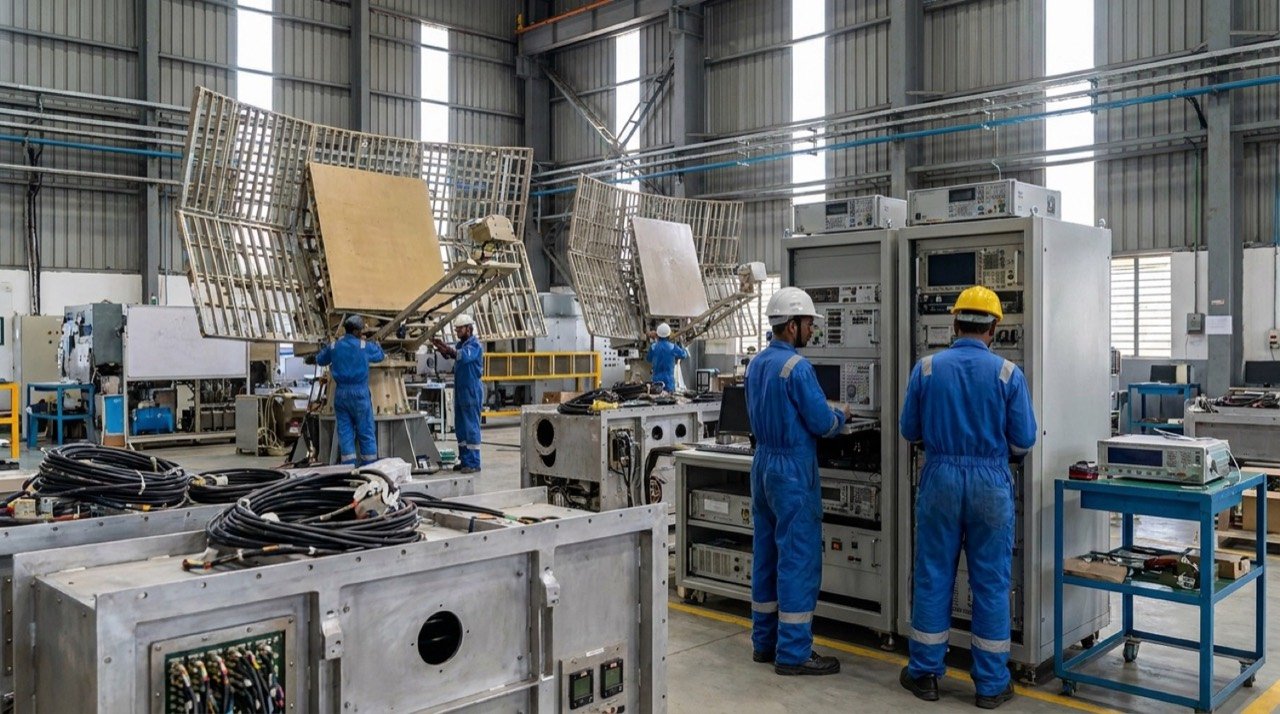
BEL Wins Rs 1,081 Crore in Fresh Defence Electronics Orders, Strengthening India's Indigenisation Push
Bharat Electronics Ltd has secured roughly Rs 1,081 crore in additional orders spanning radar, avionics, jammers and tank protection, reinforcing India's drive for self-reliant defence electronics.
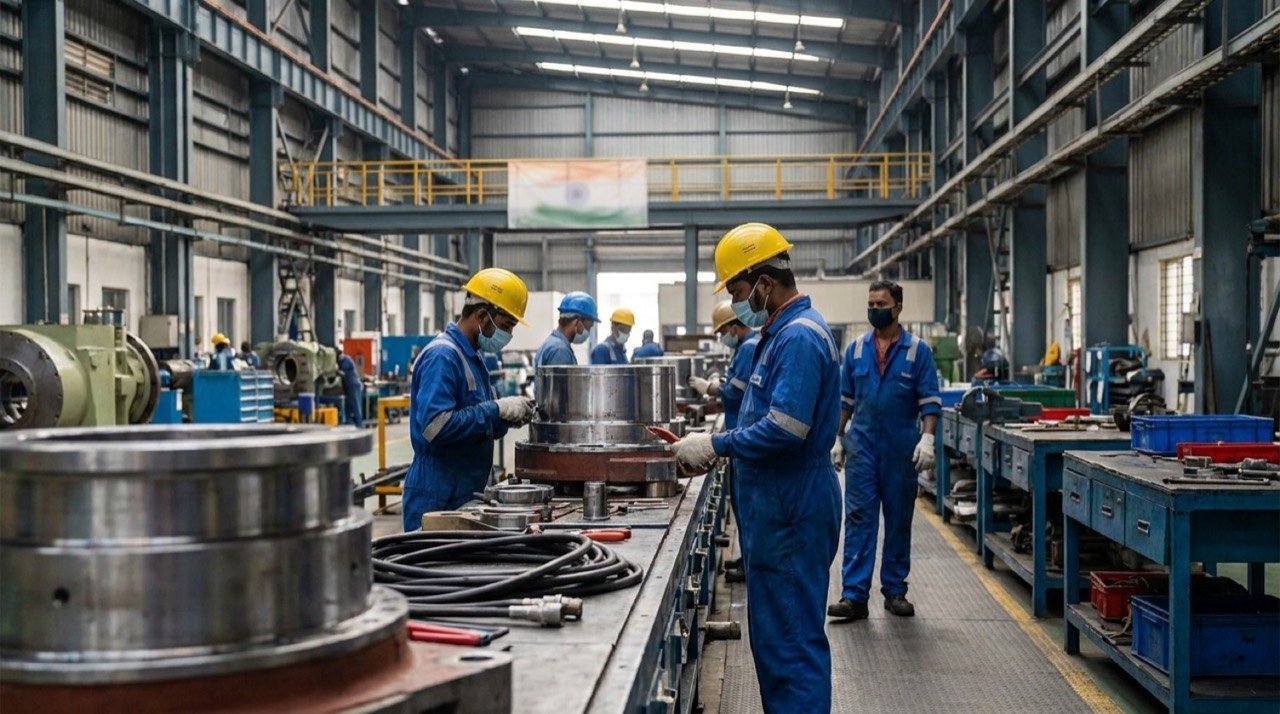
Defence Ministry Plans Seven Manufacturing Clusters to Boost Military Production
India's Ministry of Defence is reported to be planning seven manufacturing clusters to deepen supply chains, cut import dependence and draw private industry into higher-value military production.
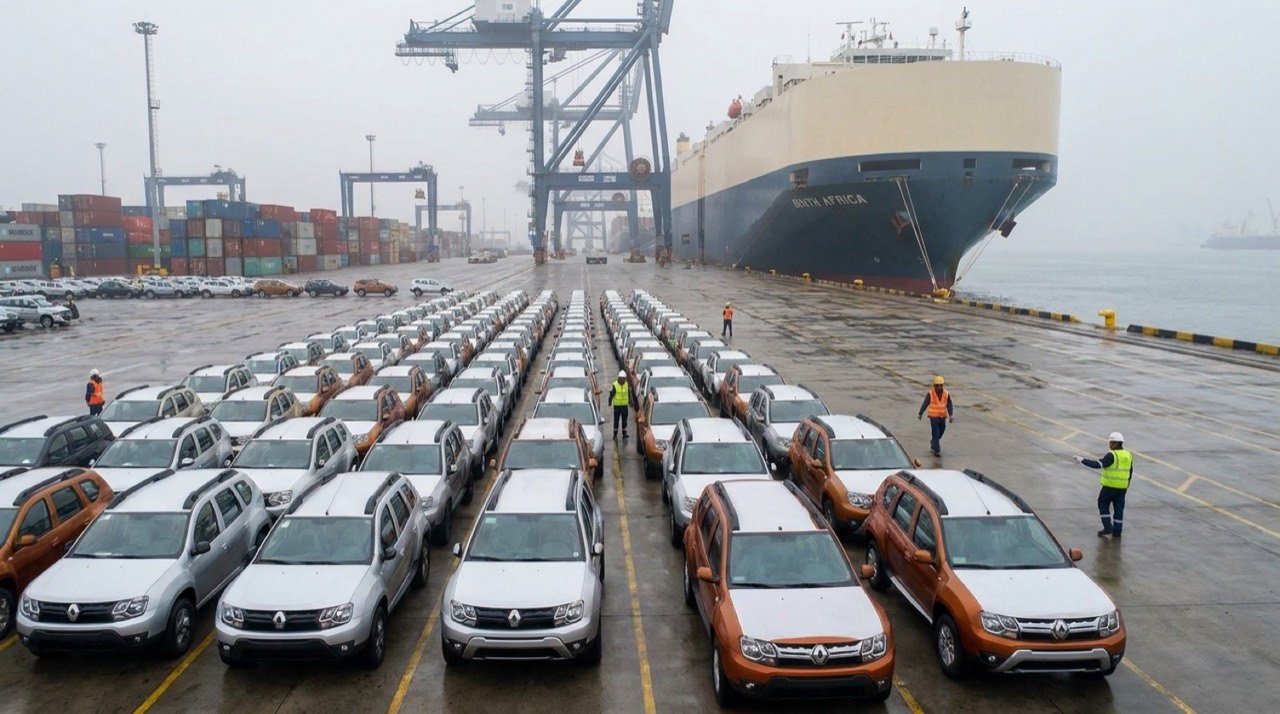
Made-in-India Renault Duster Heads to South Africa, Spotlighting India's Auto Export Strength
Renault's export of locally built Dusters to South Africa underscores India's growing role as a global manufacturing and right-hand-drive export base for the world's carmakers.

India Targets $1 Trillion in FY26 Exports as Trade Push Widens
The commerce ministry has reaffirmed a $1 trillion export goal for FY26 at a Board of Trade meeting led by Piyush Goyal, leaning on a seven-point action plan spanning merchandise, services and defence exports.
More from this section
More
Adani Case: US DOJ Pushes for Permanent Dismissal of Charges
The US Department of Justice has urged a judge to permanently dismiss charges against Gautam Adani, calling the case legally flawed — a reversal with consequences for markets, diplomacy and cross-border enforcement.

Akasa Air Inducts 40th Aircraft in Indian Aviation Scale-Up
Akasa Air's 40th aircraft, ferried to Bengaluru via Seattle, Reykjavik and Cairo, marks a fleet milestone for the young carrier and a fresh signal that India's aviation market remains firmly in expansion mode.

BARC Ratings Suspension Leaves Indian TV Industry Flying Blind
BARC's pause on television ratings has put India's broadcast measurement system under fresh scrutiny, leaving broadcasters, advertisers and media planners without the weekly audience data that anchors the TV economy.