India Orders Real-Time Tracking of Ships Carrying Indian Crews After Deadly Strait of Hormuz Attacks
India has ordered a vessel-by-vessel dashboard for ships carrying Indian crews after attacks in the Strait of Hormuz killed one Indian and injured others amid escalating West Asia conflict.
Commentary & Analysis ·
Verified key facts
- India formally protested to Iran after attacks on MT Al Bahiyah and MT Mombasa, which carried 30 Indian seafarers among 46 crew.
- One Indian died; ten Indians were reported injured across the two tankers, with two in serious condition.
- The government ordered a real-time operational dashboard; seven Indian-flagged ships with 148 Indian seafarers were reported west of the strait.
A maritime safety crisis with direct Indian consequences
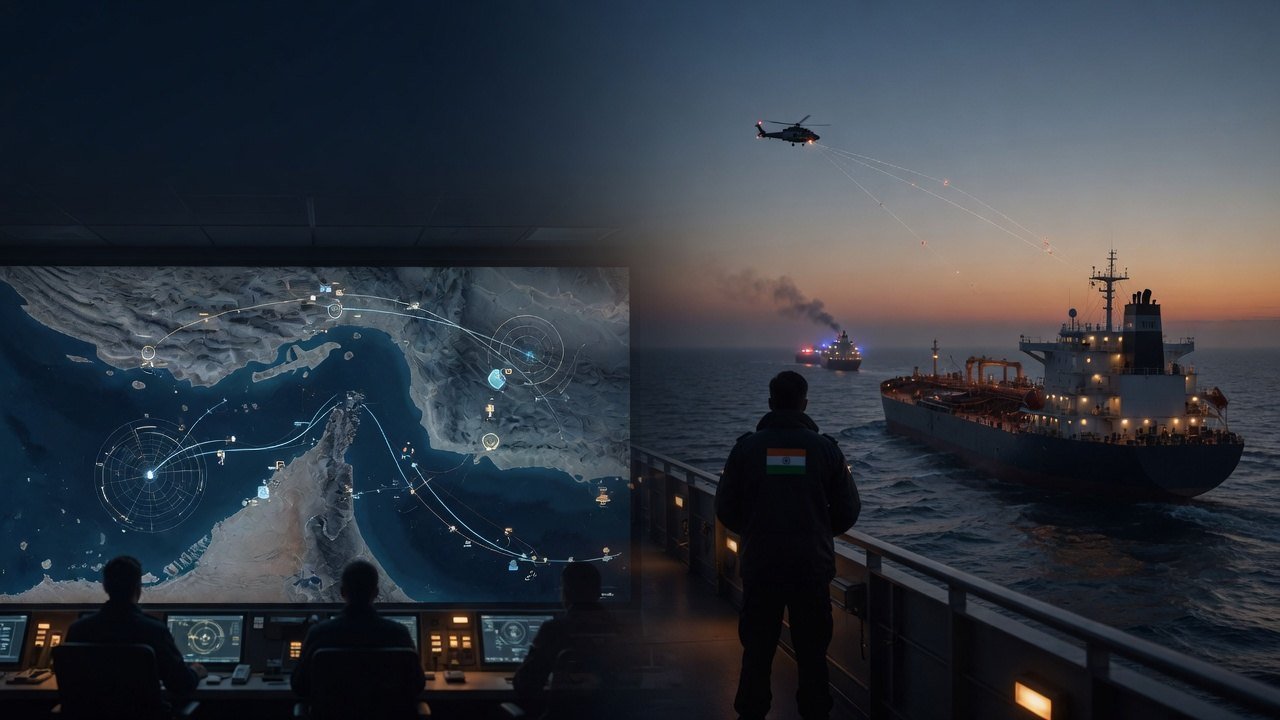
India has ordered real-time, vessel-by-vessel monitoring of ships carrying Indian seafarers in the Persian Gulf, Strait of Hormuz and Gulf of Oman after fresh attacks on commercial vessels killed one Indian and injured several others. Shipping Minister Sarbananda Sonowal directed the Directorate General of Shipping to build an operational dashboard covering every relevant ship regardless of flag. The system is expected to track position, ownership, cargo, crew strength, welfare, threat assessment, destination and the availability of food, fuel, medicine and communications. The order reflects the scale of India’s exposure to West Asian maritime conflict. Indian nationals form a large part of the global seafaring workforce, while the country depends on the region for energy and fertiliser supplies. A strike on a foreign-flagged tanker can therefore become an Indian humanitarian and economic emergency within minutes.
What happened to the two tankers
The Ministry of External Affairs lodged a formal protest with Iran after MT Al Bahiyah and MT Mombasa were attacked while transiting the Strait of Hormuz. The two vessels carried a combined crew of 46, including 30 Indian seafarers. According to the official account reported by The Indian Express, one of the twelve Indians aboard Al Bahiyah died and another was injured. Nine of eighteen Indians on Mombasa were injured, two seriously. India summoned Iran’s deputy chief of mission and condemned violence against seafarers as well as disruption of safe navigation through an international waterway. The episode demonstrates how quickly geopolitical escalation moves from naval strategy to individual families waiting for medical and casualty information.
Why the Strait of Hormuz matters to India
The Strait of Hormuz is a narrow maritime passage connecting the Persian Gulf with the Gulf of Oman and the wider Arabian Sea. A significant share of global oil and liquefied gas trade passes through or near it. India’s interest is therefore threefold. First, it must protect citizens employed on tankers, bulk carriers and support vessels. Second, it must maintain energy and commodity flows. Third, it has a diplomatic interest in freedom of navigation and de-escalation. A prolonged closure or pattern of attacks can raise insurance premiums, reroute ships, delay fertiliser cargo and increase fuel prices. Those costs eventually appear in freight rates, farm inputs, inflation and government subsidy calculations.
The dashboard and liaison-officer model
The proposed dashboard is useful only if its information is current and operational. Vessel locations can change quickly, and some ships may reduce transmissions in conflict zones for security reasons. The government therefore needs data from shipping companies, masters, Indian missions, naval authorities and coastal states. The plan to appoint liaison officers for affected seafarers is equally important. Families require a single verified contact for medical updates, travel documents, repatriation, wages, insurance, compensation and the handling of mortal remains. Without coordination, relatives can receive conflicting information from employers, agents and social media. A named liaison officer creates accountability during the most stressful period.
The scale of Indian exposure
Reports indicate that seven Indian-flagged ships carrying 148 Indian seafarers remained west of the strait, while additional foreign-flagged vessels connected to Indian cargo were also being tracked. A broader group of vessels of Indian interest had been identified for evacuation planning, including ships carrying fertiliser. Thousands of seafarers have reportedly been moved by companies during the conflict. These numbers show why an incident-by-incident response is insufficient. India needs a standing maritime crisis system capable of tracking crew nationality across foreign flags, because employment patterns do not align neatly with vessel registration. The state’s duty to its citizens continues even when the ship is owned or flagged elsewhere.
What shipping companies must do
Commercial operators retain the primary duty to evaluate routes, maintain communication, provide protective training and care for crews. No schedule or charter payment should override the master’s professional assessment of danger. Companies should ensure adequate medicine, food, fuel and emergency communication before entering the region. They must also document consent and contractual rights when voyages are materially altered by war risk. Seafarers should not face retaliation for raising legitimate safety concerns. Insurance and compensation arrangements need to be explained before a crisis, not after an injury. Government monitoring can support these obligations but cannot replace them.
Diplomacy, navigation and the need for de-escalation
India’s protest to Iran is part of a wider diplomatic challenge. New Delhi maintains relationships across the Gulf and has historically tried to avoid becoming trapped inside regional military blocs. The immediate position is clear: civilian shipping and seafarers should not be targeted, and navigation through international waterways must remain safe. Real-time monitoring can reduce response time, but it cannot neutralise missiles or guarantee an open strait. The durable protection for Indian crews is a cessation of attacks and a return to diplomacy. Until that happens, the new dashboard should be treated as critical infrastructure, with verified alerts, family communication and evacuation planning tested continuously. This is not only a shipping story. It is a national labour, energy and foreign-policy story with human lives at its centre.
Why this story matters beyond the headline
The safety challenge extends beyond knowing a vessel's position. Authorities also need updated crew lists, secure communication channels, medical evacuation plans and clarity about who can alter a route when a threat emerges. Indian seafarers work on vessels registered in multiple jurisdictions, which means coordination may involve shipowners, flag states, insurers, coastal governments and naval forces. Families require timely, verified information, particularly when social media rumours circulate faster than official statements. The new dashboard can improve situational awareness, but its effectiveness will depend on accurate reporting by companies and clear escalation rules. The episode may also revive discussion about hazard pay, insurance coverage and the responsibilities of recruitment agencies in high-risk waters. For India's trade system, protecting crews is both a humanitarian obligation and an economic priority because disruptions around the Strait of Hormuz can affect energy shipments, freight rates and supply chains far beyond the immediate conflict zone.
Sources
- Times of India - real-time monitoring order for ships with Indian crew
- The Indian Express - India protests attacks on Indian seafarers
- Hindustan Times - seven Indian vessels and 148 seafarers status check
You may also like to read
Railways Rolls Out Real-Time App to Flag Train Delays Past 15 Minutes
Indian Railways has launched its first internal app to monitor train punctuality in real time, flagging delays beyond fifteen minutes so officials can spot bottlenecks and coordinate faster responses across the network.
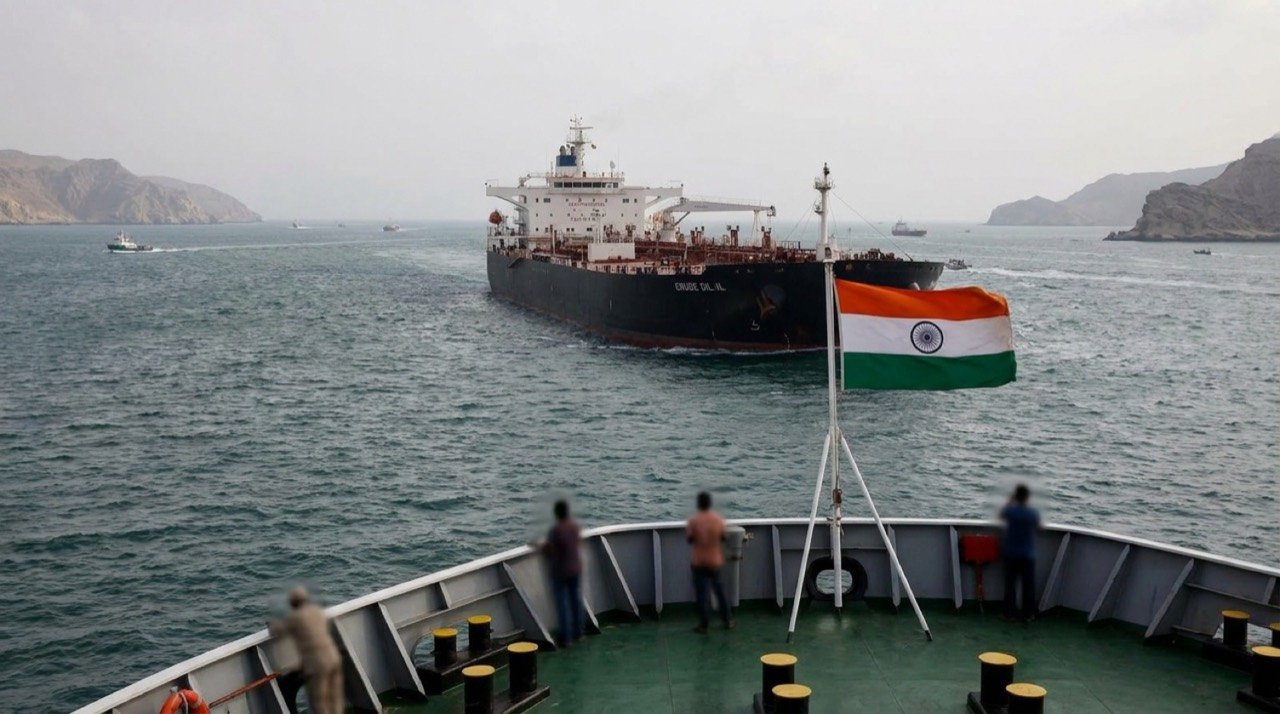
Indian Tankers and Seafarers Navigate Strait of Hormuz Amid Renewed Gulf Uncertainty
More than 90 Indian seafarers and a fleet of crude tankers and fertiliser vessels are crossing or holding near the Strait of Hormuz as fresh Gulf tensions test India's energy and supply-chain security.

Bhojshala Dispute: Supreme Court Orders Nearby Space for Friday Namaz as Appeals Continue
The Supreme Court directed authorities to provide an adjacent space for Friday namaz near Bhojshala, barred structural changes without permission and prepared to hear appeals quickly.
Indian Navy Commissions Three Indigenous Ships in Kolkata as Modi Hails Defence Self-Reliance
The Indian Navy has inducted three home-built vessels, INS Dunagiri, INS Agray and INS Sanshodhak, in Kolkata, adding surface combat, anti-submarine and survey capability in one ceremony.