India Hosts Regional Summit, Pushing Trade and Climate Cooperation
Leaders gathered for talks aimed at deepening regional trade ties and coordinating action on climate resilience.
Commentary & Analysis ·
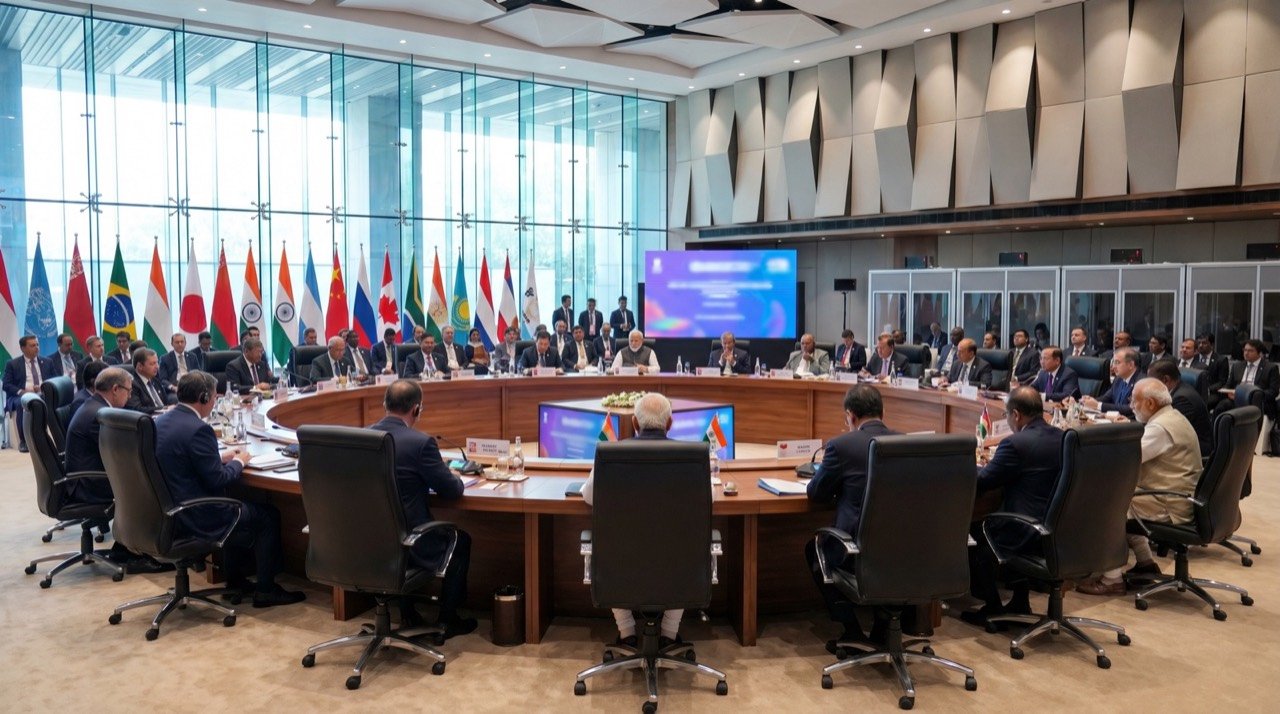
India played host to a regional summit bringing together neighbouring nations for talks centred on trade, connectivity and a shared response to climate change. The gathering offered a venue for countries with overlapping interests and challenges to coordinate their approaches and to revisit proposals that have long been on the regional agenda. It sought to advance long-discussed ideas to ease the movement of goods across borders, streamline customs procedures and invest in cross-border infrastructure. Reducing the friction that slows trade between neighbours can lower costs, deepen commercial ties and knit regional economies more closely together — goals that have proved easier to declare than to deliver.
That last point is worth dwelling on, because it frames how such gatherings ought to be judged. Regional summits of this kind are, by design, exercises in coordination rather than execution. They bring officials and leaders into the same room, put overlapping problems on a shared table, and produce statements of intent. The harder work — negotiating tariff schedules, harmonising customs codes, financing roads and ports, agreeing who pays for what — happens afterwards, in bilateral meetings and technical committees that rarely make headlines. The test of this summit, as with those before it, will be whether the momentum generated in the room survives contact with that slower, less visible process.
Trade and connectivity
Smoother customs procedures and better physical links — roads, rail and ports that connect across frontiers — are widely seen as prerequisites for fuller regional integration. By tackling the practical bottlenecks that hold up the flow of goods, the proposals aim to make cross-border commerce faster and cheaper for businesses and consumers alike. These are not glamorous fixes. They involve digitising paperwork, aligning inspection standards, and building or upgrading the physical infrastructure that lets a truck or a container move from one country's territory into another's without delay. Yet it is precisely this unglamorous groundwork that determines whether regional trade grows in practice or merely on paper.
Such efforts often founder on differences in regulations, capacity and political will, which is why the summit's emphasis on concrete steps rather than broad ambitions drew particular attention from observers. Neighbouring economies frequently differ in their administrative bandwidth: one country may be able to implement a digital customs system within months, while another lacks the technical staff or funding to do the same. Political will, too, is uneven and can shift quickly with changes in government or in the temperature of bilateral relations. A proposal that looks straightforward on a communiqué can stall for years once it meets these realities on the ground. That history is precisely why observers scrutinise the specificity of what was agreed rather than the warmth of the language used to describe it.
Climate at the table
Climate resilience featured prominently, with delegates discussing coordinated responses to extreme weather, shared early-warning systems and cooperation on clean energy. The countries of the region face many of the same climate threats, and pooling resources on forecasting, disaster preparedness and the transition to cleaner power can yield benefits that no single nation could achieve alone. Extreme weather does not respect borders, and a flood, cyclone or heatwave that originates in or crosses one country's territory often has direct consequences for its neighbours. Shared early-warning systems, in particular, are the kind of cooperative infrastructure where the returns are immediate and tangible: better forecasting can save lives regardless of which side of a border those lives are on.
Clean energy cooperation sits alongside this as a longer-term project. Regional grids, shared investment in renewable capacity, and coordinated policy on emissions reduction are all areas where neighbouring economies can achieve more collectively than individually, particularly where capital and technical expertise are unevenly distributed across the region. As one senior diplomat put it, declarations are the easy part; the real test is turning them into outcomes that people feel. That distinction between declaration and delivery runs through both the trade and climate strands of the summit, and it is the lens through which the gathering's ultimate significance will be measured.
Why it matters
Regional summits set the framework within which trade flows and joint climate action take shape, but their value ultimately rests on follow-through. Agreements that translate into working systems and visible improvements carry weight; those that remain on paper risk feeding scepticism about the usefulness of such gatherings. This is a familiar dynamic in regional diplomacy generally, and South Asia is no exception: ambitious frameworks are announced with fanfare, only for implementation to lag or stall amid competing domestic priorities, bureaucratic inertia or a shift in the political weather between neighbours.
The specific measures under discussion — easing the movement of goods across borders, streamlining customs procedures, investing in cross-border infrastructure, and coordinating climate responses through early-warning systems and clean-energy cooperation — are all, in principle, mutually reinforcing. Better connectivity supports trade; trade deepens the economic interdependence that makes climate cooperation more durable; and climate cooperation, in turn, protects the infrastructure and supply chains that trade depends on. The logic of bundling these issues together in a single summit is sound. Whether the participating governments can match that logic with sustained institutional follow-through is the open question.
The outlook
For the host, the summit was also an opportunity to underline its growing role as a convening power in the region. Beyond the specifics of trade and climate, the event offered India a stage on which to project diplomatic leadership — with the measure of success lying in whether the discussions yield outcomes that neighbours can point to in the months ahead. Hosting such a gathering carries reputational value independent of what is actually agreed: it signals a capacity to bring together countries with divergent interests and, at times, unresolved bilateral tensions, and to keep the conversation focused on shared challenges rather than points of friction.
That reputational dividend, however, is time-limited. Goodwill generated by a well-run summit tends to fade if it is not reinforced by visible progress — a customs pilot programme that actually launches, an early-warning system that goes live, a stretch of cross-border rail or road that breaks ground. Neighbouring governments, and the businesses and communities that stand to benefit from smoother trade and better climate preparedness, will be watching for exactly these markers rather than for further statements of intent.
The NE Times View
Hosting the summit is a soft-power win, but communiqués on trade and climate mean little without follow-through. India's leverage lies in turning warm declarations into concrete tariff cuts and credible climate-finance commitments its neighbours can bank on. Diplomatic convening power is a genuine asset, but it is a renewable one only if it keeps producing results; spent without delivery, it depreciates quickly. Watch whether the goodwill survives the next bilateral irritant — regional diplomacy in South Asia has a long history of grand openings and quiet stalls, and this summit will be remembered less for the ambition of its agenda than for whichever items on it are still being discussed a year from now.
Key takeaways
- The summit brought neighbouring nations together to discuss trade, connectivity and coordinated climate action, revisiting proposals long on the regional agenda.
- Concrete steps under discussion included easing cross-border movement of goods, streamlining customs procedures and investing in cross-border infrastructure.
- Climate cooperation focused on coordinated responses to extreme weather, shared early-warning systems and clean-energy collaboration.
- A senior diplomat cautioned that declarations are easy; the real test is whether they produce outcomes people can feel.
- The summit boosted India's standing as a regional convening power, but its lasting significance depends on follow-through rather than the goodwill of the gathering itself.
You may also like to read
EU Leaders Gather In Brussels For Budget, Ukraine And US Trade Showdown
European Union heads meet for a high-stakes two-day summit covering the next long-term budget, Ukraine, Middle East fallout and a fresh vote on the EU-US trade deal.
India and Canada Push to Seal the Reset, Targeting a Trade Pact by Year-End
Buoyed by personal rapport between Narendra Modi and Mark Carney, New Delhi and Ottawa are working to convert a fragile diplomatic thaw into a comprehensive trade agreement, with implications for students, professionals and the large Indo-Canadian diaspora.
India And US Close In On First Tranche Of Trade Deal As Negotiators Call It 99 Per Cent Done
After three days of talks in New Delhi, India and the United States say the first tranche of their interim trade agreement is all but complete, with signatures expected within weeks.
Modi And Trump Hold G7 Bilateral In Evian As Trade And West Asia Crisis Dominate Agenda
On the sidelines of the G7 summit in France, Prime Minister Narendra Modi and US President Donald Trump met to advance the trade deal and coordinate on a deepening crisis in West Asia.
More from this section
More
India-New Zealand Ties: Visit Plans Put FTA and Diplomacy in Focus
Reports of a planned high-level India-New Zealand engagement have revived attention on free trade talks, professional mobility and Indo-Pacific cooperation between two partners with clear room to grow.

Modi Greets Trump on US 250th Independence Day, Hails Partnership
Prime Minister Narendra Modi marked America's 250th Independence Day with a message to President Trump, saying the next 250 years should lift the India-US partnership to new heights.
India Watches Dhaka's China-Backed Teesta Plan as Stakes Rise
New Delhi is closely tracking Bangladesh's proposal to develop the Teesta river with Chinese assistance, a move that revives one of South Asia's most sensitive water-sharing disputes and tests regional strategic trust.