ICC Revamps ODI and T20 World Cup Formats, Creating Super 7, Super 10 and New Eliminators
The International Cricket Council has approved significant format changes for the men's ODI World Cup in 2027 and the T20 World Cup in 2028.
Commentary & Analysis ·
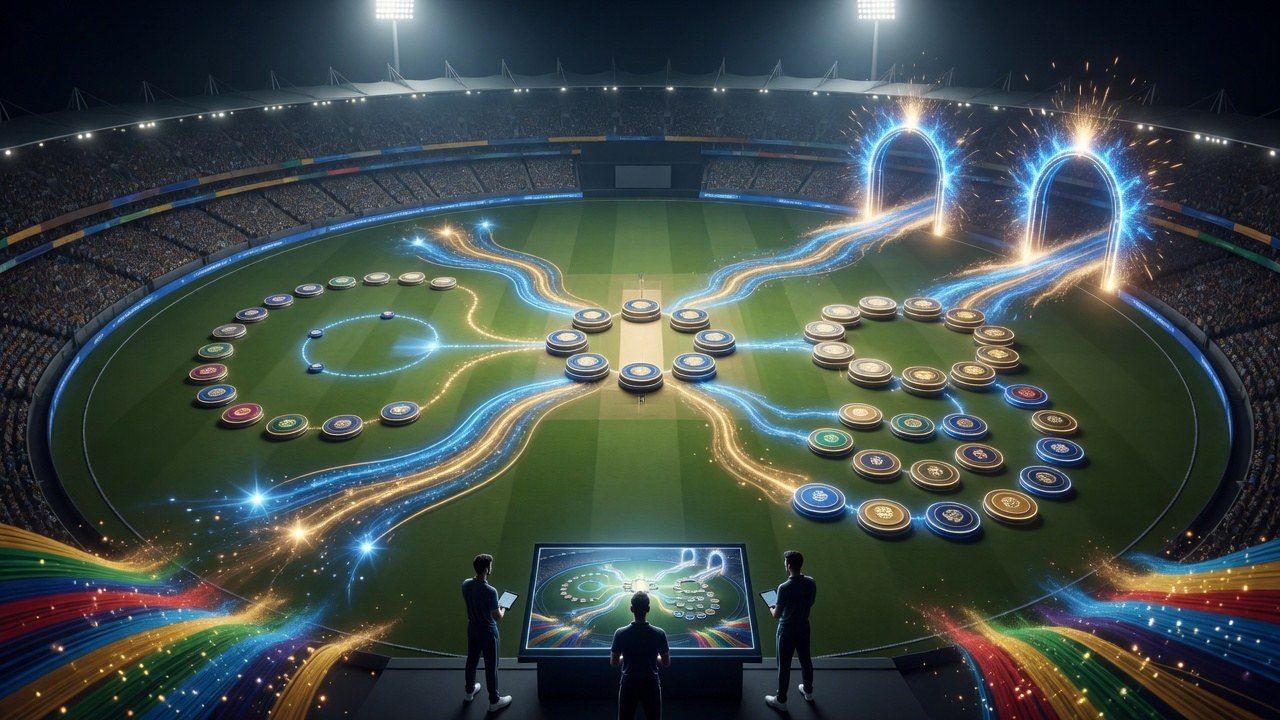
Key facts
- The 2027 Men's Cricket World Cup remains a 14-team event but adds a preliminary Super Series for the three lowest-placed qualified teams.
- The main ODI stage will have two groups of six, followed by a seven-team round robin that sends four teams to the semi-finals.
- The 2028 T20 World Cup keeps 20 teams, changes to five groups of four, then a Super 10 with two eliminators for semi-final places.
A major redesign of cricket's biggest events
The International Cricket Council has approved significant format changes for the men's ODI World Cup in 2027 and the T20 World Cup in 2028. The governing body says the aim is to make more matches meaningful and improve competitive standards. The ODI tournament will still involve 14 qualified teams, but the three lowest-placed sides will first play a round-robin Super Series for one place in the main 12-team stage. The T20 event will remain at 20 teams while replacing four groups of five with five groups of four. These are not minor scheduling adjustments. They alter qualification risk, television inventory and the path a team must navigate to become champion.
How the 2027 ODI World Cup will work
After the preliminary Super Series, 12 teams will be divided into two groups of six. Each team plays the others in its group. The top three from each group, plus the next best-placed team across both groups, advance to a Super 7 round. Those seven teams then play a full round robin, producing 21 matches. The top four reach the semi-finals, with first playing fourth and second playing third. The structure creates more matches between leading teams, but it is long. A side emerging from the preliminary stage may face an especially demanding route. Tournament regulations will need clear rules on points, net run rate and whether results carry forward.
The preliminary round raises fairness questions
The ICC describes the opening Super Series as a way to increase consequence from the first match. Critics may see it as an awkward compromise: the tournament is advertised as 14 teams, yet only one of the three lowest-ranked qualifiers reaches the main group phase. That creates a sharp hierarchy among teams that have all qualified. Supporters will argue that it protects the quality of the main event while preserving a route for emerging nations. The fairness debate will depend on how the bottom three are determined and how much notice teams receive. A qualification system should reward performance without making a global tournament feel closed before it begins.
The T20 World Cup becomes a five-group competition
In 2028, the 20 teams will be placed in five groups of four, and the top two from each group will advance to a Super 10 stage. The ten teams will then form two groups of five. Each Super 10 group winner qualifies directly for a semi-final. The teams finishing second will play the third-placed side from the opposite group in new eliminators, with the winners taking the remaining semi-final places. This design rewards finishing first while keeping more teams alive deeper into the competition. It also creates additional high-stakes matches that are attractive to broadcasters.
What the changes mean for India
India enters every global tournament under extraordinary commercial and sporting pressure. The new formats increase the chance of additional matches against major rivals if teams progress through the later stages. More high-profile games can raise revenue, but they also increase workload and injury risk. India's depth should be an advantage in extended round-robin phases, where one upset is less likely to cause immediate elimination. At the same time, a longer event tests rotation and adaptability across venues. Selection strategy may need to prioritise flexible squads rather than a fixed eleven. Fans should be cautious about claims that the format was designed solely to manufacture particular rivalries; commercial incentives are relevant, but the official structure applies to every team.
Associate nations gain and lose at the same time
The T20 format gives ten teams access to the second stage, two more than the previous Super Eight. That broadens opportunity. The ICC has also proposed a 16-team global competition linked to qualification, subject to further approval after financial review. These steps can give associate nations more meaningful fixtures. The ODI preliminary round, however, may reduce the visibility of lower-ranked teams in the main event. Development is not achieved simply by adding countries to a graphic. Teams need regular bilateral cricket, funding and competitive pathways between World Cups. A format that produces one surprise every four years cannot substitute for a stable international calendar.
More matches do not always mean more meaning
Tournament designers often try to balance competitive fairness, broadcast value and a manageable schedule. Round robins reduce the effect of one bad day, but they can create dead matches if qualification is settled early. Eliminators increase drama, but they can produce odd incentives in the final group games. The ICC says the new system adds consequence. That claim should be tested through simulations and transparent regulations. Fans need to understand the path without a complicated chart. If the format is hard to explain, casual audiences may disengage despite the quality of cricket.
A format that will shape strategy years in advance
Teams will plan qualification, squad depth and scheduling around the new structures long before the first match. The 2027 World Cup hosts South Africa, Zimbabwe and Namibia, while Australia and New Zealand will stage the 2028 T20 event. Conditions, travel and recovery will interact with the expanded later rounds. The ICC has created more opportunities for marquee contests and late-stage drama, but it has also made the route to the trophy more complex. The success of the redesign will be judged by competitive balance, clear scheduling and whether emerging teams genuinely progress. For now, fans and boards have the outline; the detailed regulations will determine whether the promised consequence feels fair.
Sources
- International Cricket Council - Men's marquee events format media release (15 July 2026)
- ICC - Detailed 2027 ODI and 2028 T20 World Cup structure (15 July 2026)
- The Guardian - Analysis of commercial and competitive implications (16 July 2026)
- End of document
This article is original news analysis and commentary by The NE Times, based on reporting from the sources listed above.
You may also like to read
ICC World Club T20: How a New Tournament Could Reshape Cricket
A reported ICC proposal for a World Club T20 competition could redraw the global cricket calendar, deepen franchise power and raise big questions for the IPL, players and smaller cricketing nations.

Gill's ODI Project: Building India Towards The 2027 World Cup
With Shubman Gill installed as India's one-day captain and veterans Rohit Sharma and Virat Kohli retained as specialist batters, the selectors are quietly engineering a generational handover before the 2027 ODI World Cup.
ICC Unveils Post-Pregnancy Return-to-Play Guidelines for Women Cricketers
The global governing body has issued a structured framework covering recovery, mental wellbeing and monitored return, a milestone for women who choose both motherhood and elite cricket careers.
India eye series clincher against Afghanistan in Lucknow as Gill rides golden run
One up after a comfortable chase in Dharamsala, India arrive at the Ekana Stadium on 17 June with the chance to seal the three-match ODI series, while a wounded Afghanistan must win to stay alive.
More from this section
More
Sports Ministry Seeks an Independent IOA Panel on Asunta Lakra's Hockey Harassment Allegations
When a complaint concerns people within a sports body, an inquiry run solely by the same organisation can face a real or perceived conflict of interest.
India Beat England by Six Wickets in First ODI as Axar Patel Delivers Match-Winning All-Round Show
India chased 259 at Edgbaston to beat England by six wickets, led by Axar Patel's 4/62 and unbeaten 57, Shubman Gill's 80 and Washington Sundar's 52 not out.
BCCI Emerging Men's Tournament to Hunt Test Prospects in Bengaluru
The BCCI's red-ball Emerging Men's Tournament, running at the Centre of Excellence in Bengaluru through July, is designed to give selectors a longer, harder look at India's next generation of Test cricketers.