Gill's ODI Project: Building India Towards The 2027 World Cup
With Shubman Gill installed as India's one-day captain and veterans Rohit Sharma and Virat Kohli retained as specialist batters, the selectors are quietly engineering a generational handover before the 2027 ODI World Cup.
Commentary & Analysis ·

Eight months into his tenure as India's one-day international captain, Shubman Gill is at the centre of a carefully managed transition. The decision to hand him the 50-over leadership in place of Rohit Sharma was framed by the selectors as a long-term bet, designed to let the young opener settle into the role well before the 2027 ODI World Cup co-hosted by South Africa, Zimbabwe and Namibia.
Veterans retained, but as batters
Crucially, the changing of the guard has not meant a clean break. Both Rohit Sharma and Virat Kohli, having stepped away from Test and T20I cricket, remain available in the 50-over format and continue to be picked purely as batters. Their presence offers Gill a reservoir of experience in the middle order while the captaincy and broader squad identity are reshaped around him.
That dual-track approach, keeping marquee names in the side while a younger leader takes charge, has been described as one of the more delicate balancing acts the selectors have attempted in recent years. The challenge is to honour the contributions of two of India's greatest one-day batters without slowing the emergence of the next generation.
A captain still learning on the job
Gill led India in both the Test and ODI series against Afghanistan earlier this month, broadening his command experience across formats. The early signs suggest a captain comfortable setting fields and trusting his bowlers, though the real examinations will come against stronger opposition and in the high-pressure knockout cricket of a World Cup.
- Gill replaced Rohit Sharma as ODI captain ahead of the new cycle
- Rohit and Kohli retained as specialist batters in the 50-over side
- Selectors targeting settled leadership before the 2027 ODI World Cup
- Gill captained India in Test and ODI series against Afghanistan in June 2026
- World Cup 2027 to be co-hosted by South Africa, Zimbabwe and Namibia
The road from here
The coming season's bilateral fixtures will give Gill the chance to lock down a preferred top order, identify a settled spin combination and resolve questions over the finishing roles lower down. How he integrates the veterans, particularly in deciding when to rest them, may define perceptions of his captaincy as much as results do.
“The brief is clear: give him time and a stable group so that by the World Cup, the leadership is the least of India's worries.”
— A national selector, paraphrased
For now the project remains a work in progress, but the architecture of India's next 50-over team is taking visible shape, with Gill as its centrepiece and the veterans as its bridge to the past.
The NE Times View
Installing Gill while keeping Rohit and Kohli as specialist batters is a tidy compromise, but generational handovers rarely stay this neat. The selectors gain experience and continuity now; the cost is clarity over when the veterans actually step aside. With 2027 looming, India must decide whether this is genuine transition or a comfortable deferral of hard calls.
This article is original commentary and analysis by The NE Times. Background facts were referenced from ESPNcricinfo and Hindustan Times.
You may also like to read
Gill Anchors India to ODI Series Lead as Gurbaz Century Goes in Vain
Shubman Gill's unbeaten 84 steered India to a seven-wicket win in a rain-shortened first ODI against Afghanistan in Dharamsala, overshadowing Rahmanullah Gurbaz's blazing hundred.
India eye series clincher against Afghanistan in Lucknow as Gill rides golden run
One up after a comfortable chase in Dharamsala, India arrive at the Ekana Stadium on 17 June with the chance to seal the three-match ODI series, while a wounded Afghanistan must win to stay alive.

BCCI Charts Structured Roadmap for India's 2027 ODI World Cup Build-Up
Secretary Devajit Saikia says the BCCI wants a clear path and adequate 50-over practice for the 2027 ODI World Cup, with selector Ajit Agarkar and coach Gautam Gambhir shaping a settled one-day core.
India vs England 2nd T20I: Bethell's 76 Powers Four-Wicket Chase
Jacob Bethell's 76 off 46 balls steered England past India's 190 at Old Trafford, spoiling Vaibhav Sooryavanshi's record-breaking debut and handing the hosts a 1-0 lead in the five-match series.
More from this section
More
Arnav Paparkar Advances at Wimbledon Boys' Singles in Boost for India
Indian junior Arnav Paparkar has moved into the second round of the Wimbledon boys' singles with a commanding serving display, handing Indian tennis a rare and encouraging grass-court result at the sport's biggest stage.
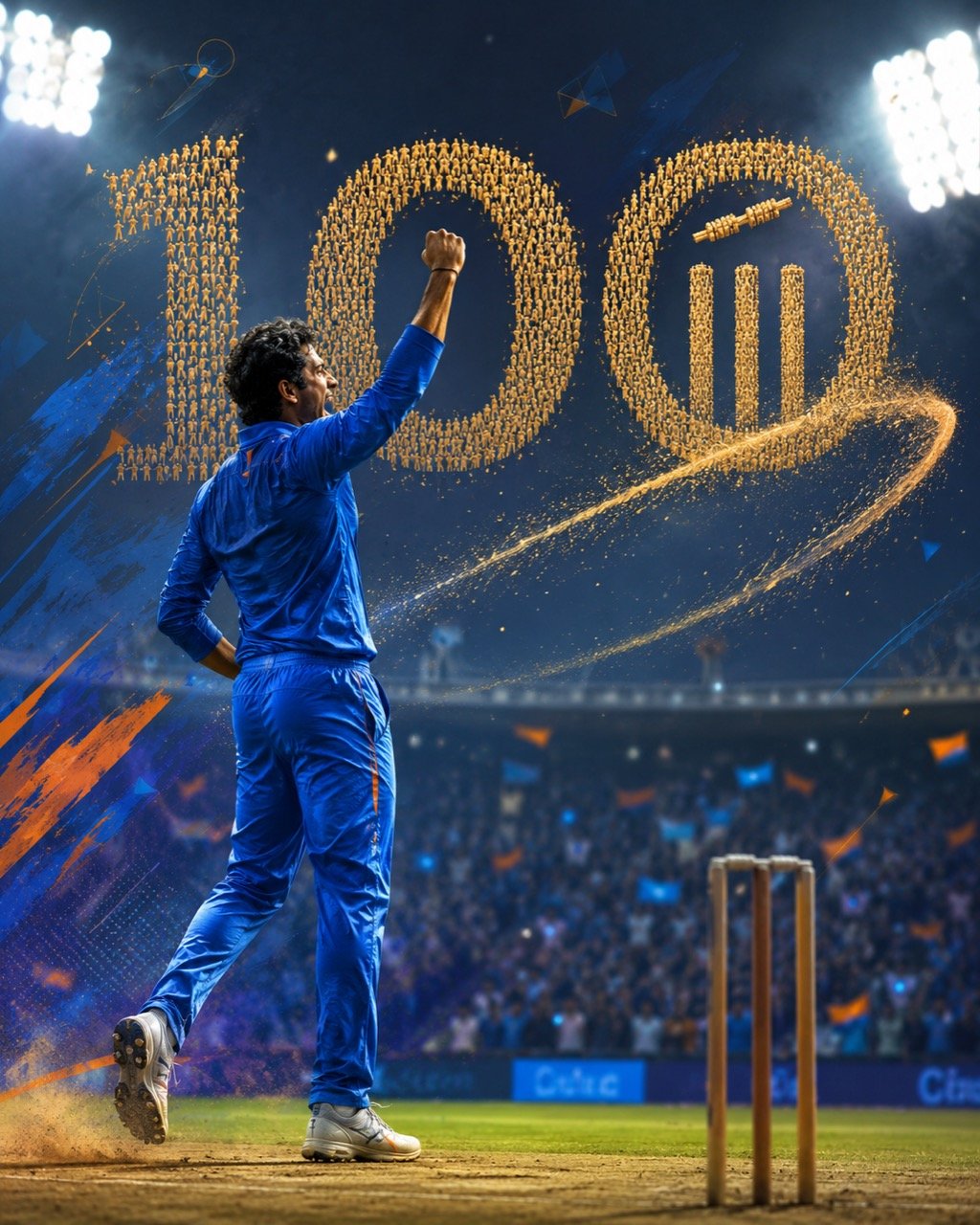
Axar Patel Becomes First Indian Spinner With 100 T20I Wickets
Axar Patel reached 100 T20 international wickets in the second T20I against England, becoming the first Indian spinner to hit the mark and cementing his standing as one of India's most durable white-ball performers.
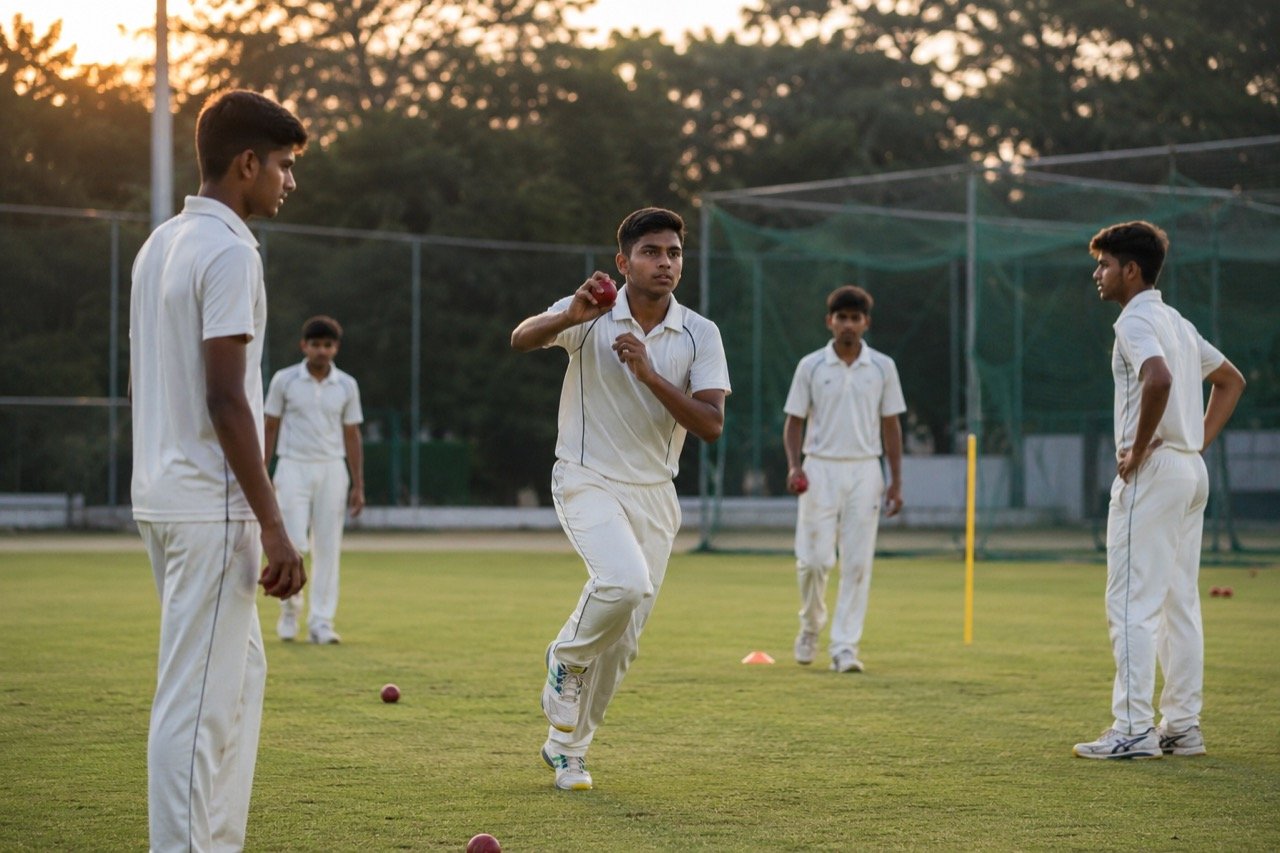
BCCI Emerging Men's Tournament to Hunt Test Prospects in Bengaluru
The BCCI's red-ball Emerging Men's Tournament, running at the Centre of Excellence in Bengaluru through July, is designed to give selectors a longer, harder look at India's next generation of Test cricketers.