Foreign Cash Floods Indian Bonds As Tax-Free G-Secs Lure Up To $50 Billion
Foreign investors poured fresh money into Indian government bonds in June 2026 after a capital-gains tax exemption on G-Secs, with economists estimating the move could draw $45-50 billion over two years.
Commentary & Analysis ·

A quiet but consequential rally is under way in India's debt market, where foreign portfolio investors have begun deploying serious capital after the government scrapped income tax on interest and capital gains from government securities. The exemption, applying to income arising on or after 1 April 2026, is being hailed as one of the most significant structural reforms to India's bond market in years.
The numbers move fast
Following the announcement, FPIs invested roughly Rs 8,795 crore into government securities under the Fully Accessible Route, lifting their FAR holdings to about Rs 3.32 trillion, up from Rs 3.23 trillion in early June, according to Clearing Corporation of India data. NSDL figures showed FPIs had ploughed more than Rs 25,000 crore into Indian bonds through June 16, including around Rs 17,000 crore via the FAR.
Axis Bank economists estimate the tax exemption could attract approximately $45-50 billion of foreign investment into government bonds over two years, a flow that would help bridge the Centre's funding gap, deepen the bond market and ease borrowing costs across the curve.
Why it matters for the rupee
Sustained debt inflows offer a counterweight to the equity outflows that have dogged Indian markets, where FIIs have at times preferred cheaper valuations and AI-themed opportunities elsewhere. A steady stream of dollars into bonds supports the rupee and lowers the cost at which the government and corporates raise money, a virtuous loop that policymakers have long sought.
- Capital-gains and interest tax exemption on G-Secs took effect for income from 1 April 2026.
- FAR holdings rose to about Rs 3.32 trillion in early June.
- FPIs invested over Rs 25,000 crore in Indian bonds through June 16.
- Economists estimate $45-50 billion in inflows over two years.
- RBI expanded FAR to include new 15-, 30- and 40-year tenors.
What's next
Analysts say the real test will be whether the inflows prove sticky once the initial enthusiasm fades, and whether India's potential inclusion and weighting in global bond indices amplifies the trend. The RBI's decision to widen the FAR to longer-dated paper is designed to give foreign buyers the duration they want, a sign authorities are leaning into the reform.
“Tax-free G-Secs change the math for a global pension fund looking at India. This is the kind of structural pull the bond market needed.”
— Fixed-income strategist at a private bank
If the flows hold, the reform could mark a turning point for a market that has historically punched below its weight relative to the size of India's economy, even as officials watch for any volatility should global rates shift abruptly.
The NE Times View
A capital-gains exemption that could pull in up to $50 billion is a powerful sweetener, lowering borrowing costs and deepening the bond market. But foreign money chasing tax breaks is fickle, and heavy reliance on it leaves yields hostage to global sentiment. The policy works only if paired with fiscal discipline. Cheap debt is a gift; treating it as licence to overspend would squander it.
This article is original commentary and analysis by The NE Times. Background facts were referenced from Business Standard and Business Today.
You may also like to read
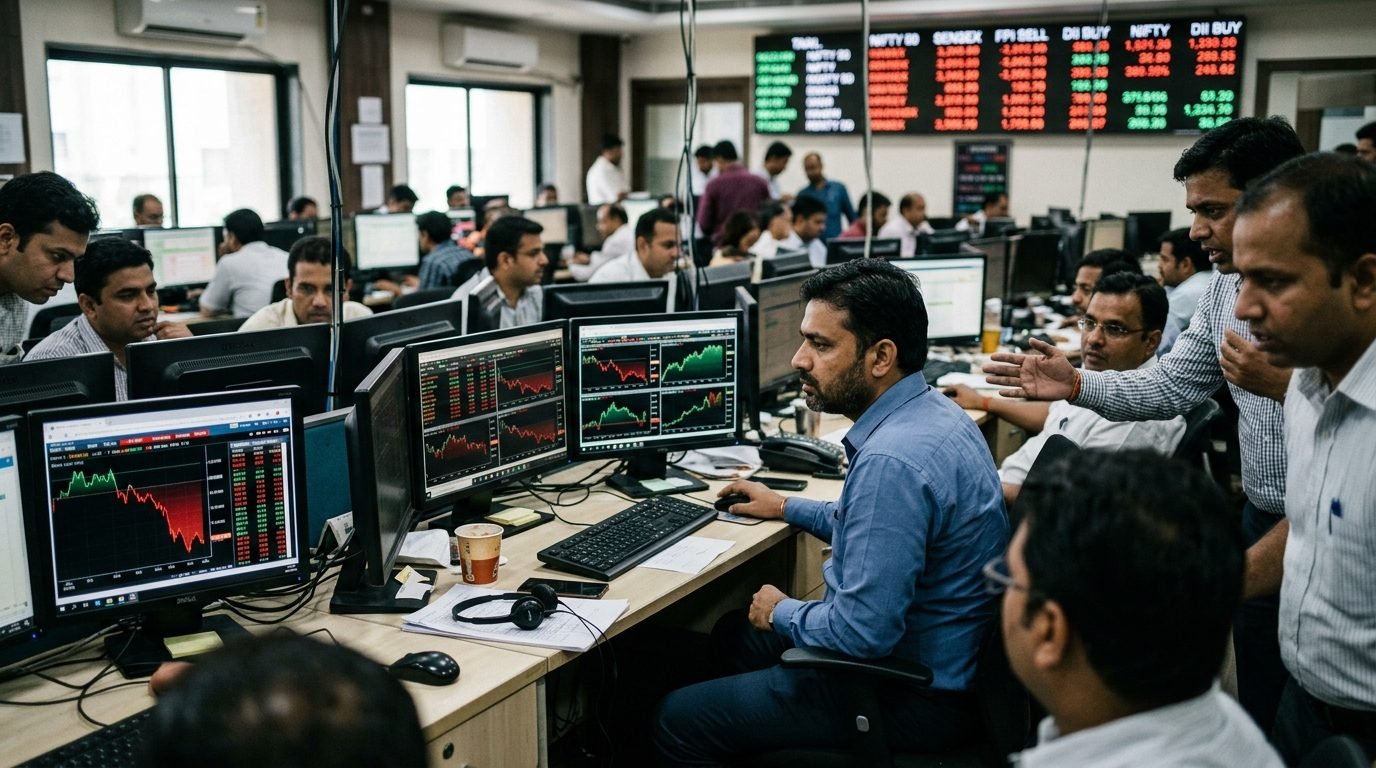
Foreign Investors Pull Rs 62,853 Crore From Indian Stocks in Early June
Overseas selling pushed 2026 outflows past Rs 2.87 lakh crore, but record domestic institutional buying of Rs 4.3 trillion has cushioned the blow.

Sensex Scales Fresh Record as Foreign Inflows Return to Indian Equities
Benchmark indices closed at an all-time high, powered by banking and IT stocks as overseas investors turned net buyers after months on the sidelines.
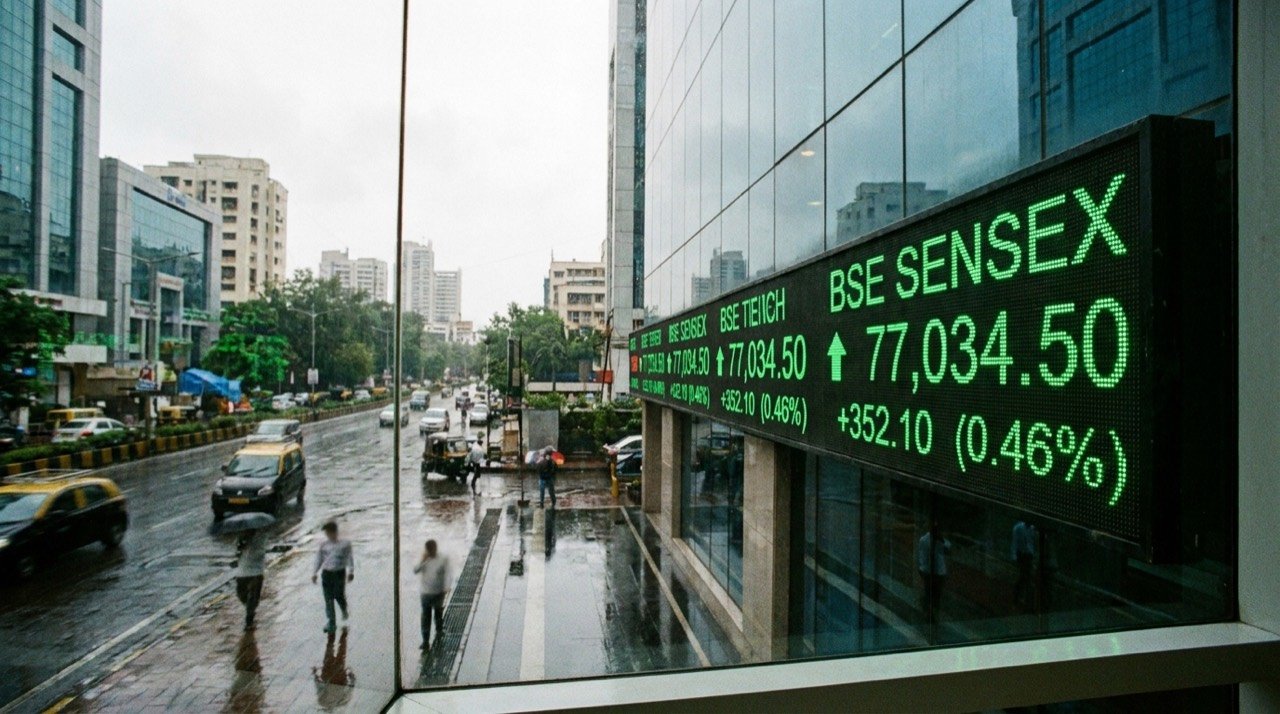
Sensex Holds Above 77,000 As Crude Pullback And RBI Liquidity Push Lift Indian Markets
Indian benchmarks extended gains around 24 June 2026 as easing crude prices, calmer West Asia tensions and fresh RBI liquidity support kept financial and auto stocks firmly in demand.

Sensex Crashes Nearly 900 Points as Global Risk-Off Mood Hits Indian Markets
Indian equities tumbled on Tuesday as the Sensex shed about 893 points and the Nifty slipped below 23,900, dragged by weak global cues, IT and metal selling and foreign outflow fears.
More from this section
More
Adani Case: US DOJ Pushes for Permanent Dismissal of Charges
The US Department of Justice has urged a judge to permanently dismiss charges against Gautam Adani, calling the case legally flawed — a reversal with consequences for markets, diplomacy and cross-border enforcement.

Akasa Air Inducts 40th Aircraft in Indian Aviation Scale-Up
Akasa Air's 40th aircraft, ferried to Bengaluru via Seattle, Reykjavik and Cairo, marks a fleet milestone for the young carrier and a fresh signal that India's aviation market remains firmly in expansion mode.

BARC Ratings Suspension Leaves Indian TV Industry Flying Blind
BARC's pause on television ratings has put India's broadcast measurement system under fresh scrutiny, leaving broadcasters, advertisers and media planners without the weekly audience data that anchors the TV economy.