Emirates NBD's $3 billion RBL Bank deal nears close, set to be India's biggest banking FDI
The Dubai lender's capital infusion would hand it control of the Indian private bank and reshape the contours of foreign ownership in the sector.
Commentary & Analysis ·
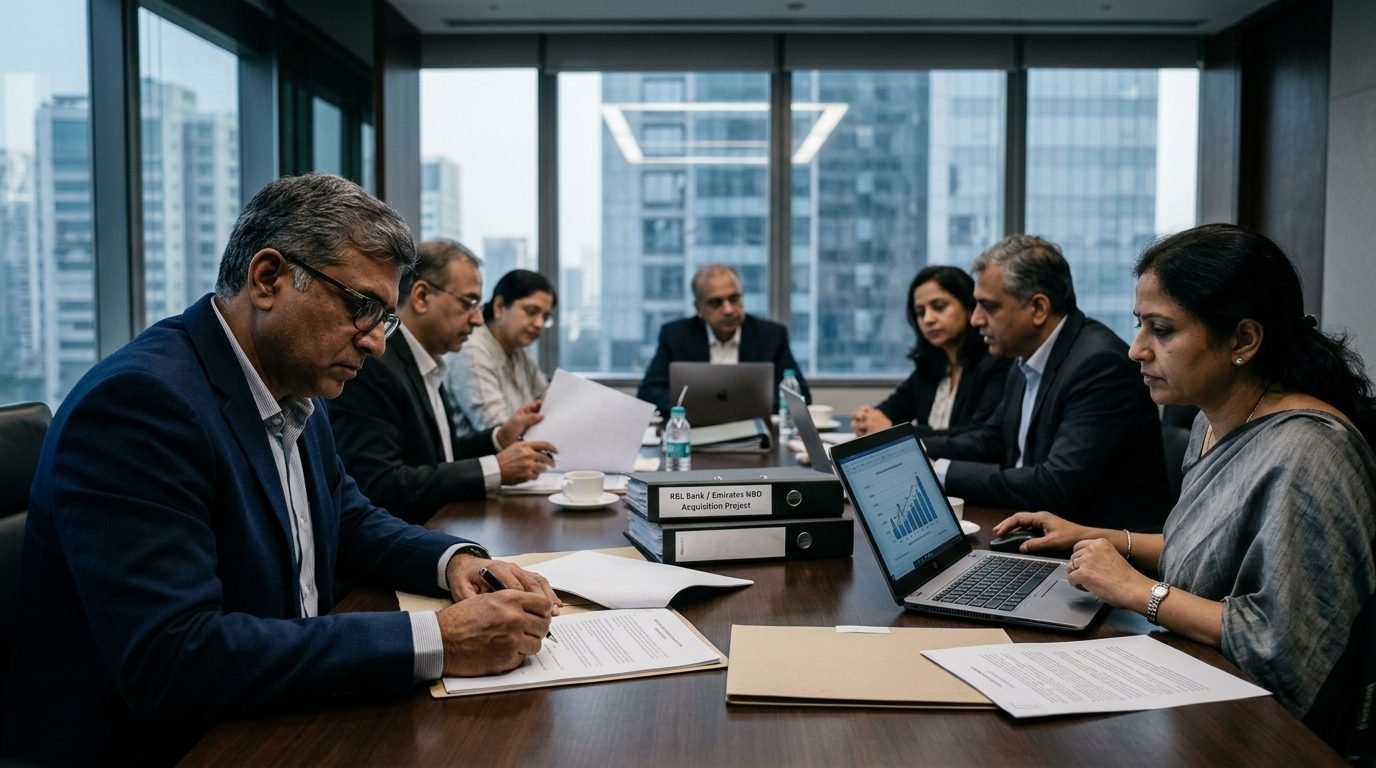
Dubai's Emirates NBD is on course to complete a roughly $3 billion investment to take control of RBL Bank, a transaction that, once finalised, would stand as the largest foreign direct investment ever made into an Indian bank. RBL has indicated it expects the capital infusion to land by the close of June 2026, after securing the regulatory and government clearances needed for a deal of this magnitude.
The arrangement would see the Gulf's largest lender acquire a controlling 60 per cent of RBL's expanded share capital, primarily through a preferential allotment of new shares, supplemented by an open offer to public shareholders. For India's banking sector, long characterised by tight limits on foreign ownership, the deal represents a watershed and a test of how far the door to overseas capital has opened.
Structure of the transaction
Under the terms disclosed to stock exchanges, Emirates NBD has committed in excess of Rs 26,000 crore to the bank. The bulk arrives as a preferential allotment of close to 96 crore shares priced at Rs 280 each, a structure that also ranks as the biggest equity capital raise via preferential issuance by a listed Indian company. Following completion, RBL is expected to merge with Emirates NBD's wholly owned Indian subsidiary, transforming into what the parties describe as a listed foreign bank subsidiary.
The Ministry of Finance earlier approved the investor acquiring a stake in a band between 49 and 74 per cent of RBL's total paid-up equity, giving the transaction the headroom to settle at the targeted controlling level. The approval cleared a path that few foreign lenders have previously navigated at this scale in the Indian market.
What it means for RBL
For RBL, the infusion is transformational. The bank has framed the capital as a springboard for multi-fold growth, providing the balance-sheet strength to expand lending, invest in technology and compete more aggressively across retail and commercial segments. Key implications include:
- A substantially strengthened capital base, lifting the bank's ability to grow its loan book
- Access to Emirates NBD's regional network, products and corporate relationships across the Gulf
- A potential rerating of the franchise as it transitions to a foreign-backed subsidiary
- Greater competitive heft against larger private-sector peers in India
A signal to global capital
The deal carries significance well beyond the two institutions. By clearing a controlling foreign acquisition of a domestic private bank, policymakers have signalled a willingness to admit large overseas strategic investors into a sector once ringfenced from such ownership. Bankers and analysts are watching whether the transaction sets a template that other foreign lenders, particularly those from West Asia and Asia-Pacific seeking exposure to India's fast-growing credit market, might seek to follow.
The move also deepens the financial ties between India and the Gulf, a corridor already thick with trade, remittances and energy flows. For Emirates NBD, control of RBL offers a substantial onshore platform in one of the world's most promising banking markets, complementing its established regional franchise.
Outlook
With approvals secured and funding expected imminently, the focus turns to integration and the open offer to minority shareholders. Should the transaction close on schedule, it will not only crown the largest banking FDI in India's history but also recalibrate expectations for how much foreign ownership the sector can accommodate. The coming weeks will determine whether a deal years in the making delivers on its billing as a landmark for Indian finance.
The NE Times View
India's largest banking FDI handing foreign control of a domestic lender is a milestone that cuts two ways: a vote of confidence in the economy, and a quiet loosening of long-standing caution about overseas ownership of banks. The capital is real and welcome. The harder question is regulatory: whether the RBI's comfort with foreign control of a full-service bank signals a durable policy shift or a one-off blessing.
This article is original commentary and analysis by The NE Times. Background facts were referenced from Business Today, Gulf News and Millennium Post.
You may also like to read

HCLTech $1.14 Billion Deal and Pharma Rally Lift Market Mood
A reported $1.14 billion HCLTech contract and renewed buying in pharmaceutical shares gave Indian markets a distinctly sectoral flavour, offering investors signals that go beyond the headline Sensex and Nifty moves.

World Bank Approves $1.5 Billion to Back India's Reforms and Jobs
The World Bank's $1.5 billion development policy loan aims to support structural reforms, private-sector growth and job creation as millions of young Indians enter the labour market each year.
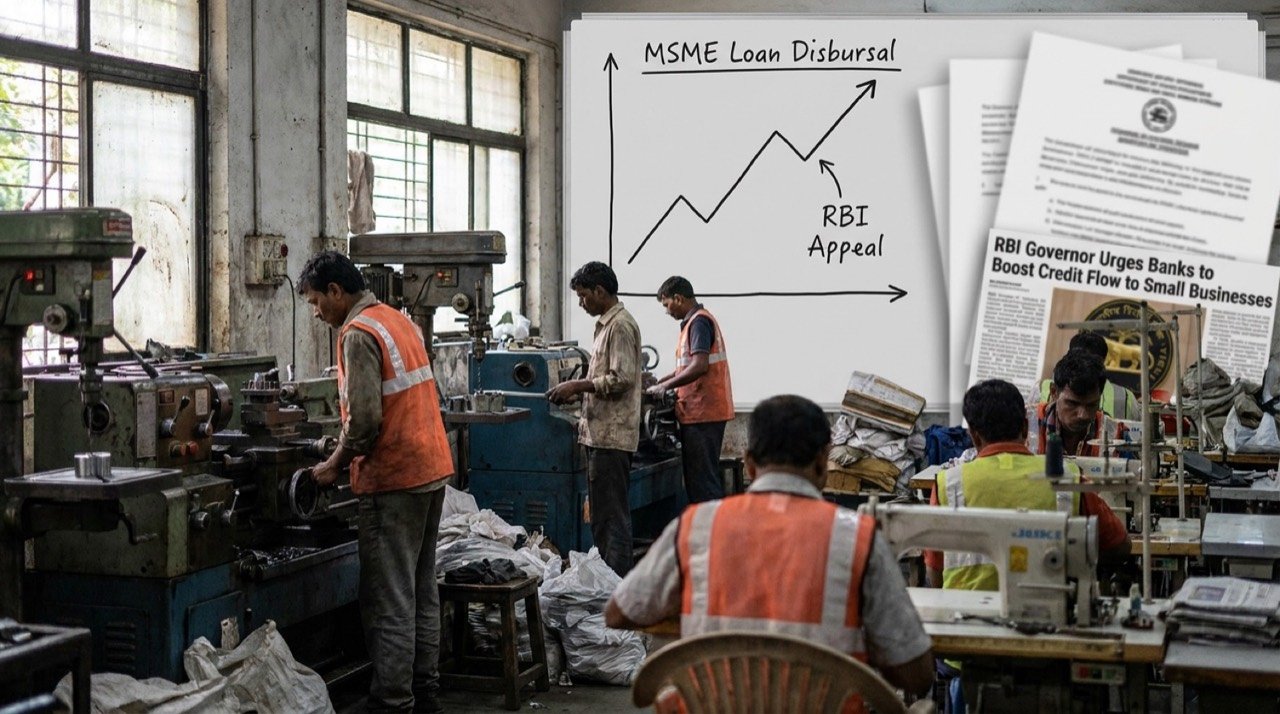
RBI Governor Urges Banks to Treat MSMEs as Growth Partners, Not Just Borrowers
RBI Governor Sanjay Malhotra has called on banks to see micro, small and medium enterprises as growth partners, reviving focus on credit access for the firms that employ millions across India.

RBI Aligns UPI-Linked Credit Line Rules With Underlying Loan Norms
The Reserve Bank of India has clarified that credit lines delivered over UPI must follow the prudential rules of the underlying loan, closing a regulatory gap as banks and fintechs race to build payment-linked lending.
More from this section
More
Adani Case: US DOJ Pushes for Permanent Dismissal of Charges
The US Department of Justice has urged a judge to permanently dismiss charges against Gautam Adani, calling the case legally flawed — a reversal with consequences for markets, diplomacy and cross-border enforcement.

Akasa Air Inducts 40th Aircraft in Indian Aviation Scale-Up
Akasa Air's 40th aircraft, ferried to Bengaluru via Seattle, Reykjavik and Cairo, marks a fleet milestone for the young carrier and a fresh signal that India's aviation market remains firmly in expansion mode.

BARC Ratings Suspension Leaves Indian TV Industry Flying Blind
BARC's pause on television ratings has put India's broadcast measurement system under fresh scrutiny, leaving broadcasters, advertisers and media planners without the weekly audience data that anchors the TV economy.