BRICS Security Talks Open in India With Non-Traditional Threats in Focus
India hosts the BRICS National Security Advisers' meeting on 22-23 June 2026, with NSA Ajit Doval chairing talks on terrorism, cyber risks, emerging technology and regional instability amid Middle East tensions.
Commentary & Analysis ·
India is hosting the BRICS National Security Advisers' meeting on 22-23 June 2026, with National Security Adviser Ajit Doval expected to chair discussions that put non-traditional security challenges at the centre of the agenda. The gathering brings together senior security officials from across the grouping's member states at a moment of heightened global uncertainty, when conflicts, technological disruption and economic coercion are increasingly intertwined. That New Delhi has chosen this moment, and this format, to widen the conversation beyond conventional military concerns says something about how India sees its own role within BRICS and within the broader multipolar order the grouping claims to represent.
Beyond the conventional security agenda
New Delhi is using its turn as host to broaden the conversation beyond purely military questions. Reports indicate the talks will weigh terrorism, emerging technology risks, cyber threats and regional instability, reflecting a recognition that today's threats often originate outside traditional battlefields. This is a deliberate framing choice. For decades, security dialogues among major groupings tended to default to hard power questions, troop deployments, border disputes, weapons capabilities. By instead centring counter-terrorism, cyber security and technology risk, India is trying to steer BRICS toward a register where it believes consensus is more achievable and where its own experience and priorities carry particular weight. India has for years argued in multilateral forums, including the United Nations, that terrorism and digital-era threats do not respect borders and cannot be tackled by any single state acting alone. Positioning these issues at the heart of a BRICS NSA meeting is consistent with that long-standing diplomatic push, and it allows India to set the terms of debate for a bloc it does not fully control but is currently positioned to shape as host.
The significance of this framing also lies in what it avoids. A security agenda built primarily around cyber threats, supply-chain resilience and counter-terrorism sidesteps some of the more contentious military and territorial questions that could otherwise dominate discussion and expose fault lines among members. In that sense, the choice of agenda is itself a piece of diplomatic engineering, an attempt to find common ground among states that do not always see security threats the same way.
A diplomatic layer amid Middle East tensions
Doval also held talks with a senior Iranian security official against the backdrop of rising Middle East tensions, adding a pointed diplomatic dimension to the security agenda. This bilateral contact, occurring alongside the multilateral proceedings, underlines how regional crises increasingly intersect with the broader discussions on the table. It is a reminder that even a forum designed to focus on non-traditional threats cannot fully insulate itself from the traditional geopolitics unfolding in real time elsewhere in the world.
For India, balancing relationships across a volatile neighbourhood while convening a major grouping is a test of its diplomatic dexterity and its claim to be a stabilising voice. New Delhi has cultivated ties with multiple parties across the Middle East, and it has consistently sought to avoid being pulled decisively into any one camp amid the region's rivalries. Holding bilateral talks with Iran on the sidelines of a BRICS gathering, at a time of heightened regional tension, illustrates the delicate balancing act India performs: engaging seriously with all sides while resisting pressure to take positions that would compromise its other relationships or its self-image as an independent actor on the world stage. It also signals that India intends to use its convening power, whenever it hosts a major multilateral gathering, to conduct parallel bilateral diplomacy of its own, extracting maximum value from the moment rather than treating the summit purely as a group exercise.
An expanding and more complex BRICS
The BRICS format has expanded considerably in recent years, drawing in new members and making coordination harder even as it grows more relevant for states seeking a multipolar security conversation. A larger membership brings more voices, more perspectives and, inevitably, more competing interests to the table. What was once a relatively compact grouping focused on economic coordination among a handful of large emerging economies has evolved into a broader coalition whose members bring differing threat perceptions, alliance structures and regional priorities. This expansion is, on one hand, a sign of BRICS's growing appeal as a venue for states seeking alternatives to Western-led security and economic frameworks. On the other hand, it raises the practical difficulty of reaching consensus on any specific issue, since more members means more potential points of disagreement.
The agenda items reported for the NSA meeting reflect the areas where BRICS members are most likely to find common cause: counter-terrorism cooperation and intelligence sharing; cyber security and the protection of critical infrastructure; risks arising from emerging and dual-use technologies; supply-chain resilience and economic security; and the management of regional crises and instability. Each of these areas touches on concerns that virtually all member states share to some degree, even if their specific vulnerabilities and priorities differ. Terrorism, for instance, has affected BRICS members in vastly different ways and contexts, yet the shared recognition that it is a transnational problem provides a basis, however imperfect, for cooperation. The same logic applies to cyber security and critical infrastructure protection, where growing digital dependence has made every state, regardless of size or alliance posture, more exposed to disruption.
What India is signalling by shaping the agenda
By steering the talks towards technology, supply chains and regional crises rather than only hard military matters, New Delhi is signalling the kind of security cooperation it wants the grouping to pursue. This is not simply a matter of agenda-setting for its own sake. It reflects India's assessment of where BRICS can realistically deliver value. Given the divergent strategic postures within the grouping, from long-standing rivalries between certain members to differing relationships with Western powers, ambitious military coordination was never a realistic prospect. Non-traditional security threats, by contrast, offer a more tractable space in which shared interest can translate into shared action, at least in principle.
The outcomes of the two-day meeting will be watched closely for any joint commitments on terrorism and cyber threats, the areas where India has pressed hardest for consensus. Whether the talks produce concrete, actionable commitments, joint statements with teeth, working groups with defined mandates, or information-sharing mechanisms, will be the real test of whether India's agenda-setting translates into substantive cooperation or remains at the level of rhetoric. Multilateral gatherings often produce declarations of intent that are heavy on aspiration and light on implementation; the credibility of this meeting will rest on whether it avoids that pattern.
The NE Times View
Hosting the BRICS NSAs lets India shape a security agenda beyond Western frameworks, focusing usefully on terrorism, cyber and emerging tech. This is a genuine opportunity for New Delhi to demonstrate leadership within a grouping it did not originally design but has increasingly sought to steer toward its own priorities. The choice to foreground non-traditional threats is sensible, both because these are areas of shared vulnerability across a diverse membership and because they play to India's own strengths and long-standing diplomatic arguments.
But the bloc's value is limited by its own fault lines, with members holding sharply divergent views on the very threats they discuss. A grouping that has expanded rapidly in size inevitably finds it harder to reach meaningful consensus, and the same technological and security questions that unite members in the abstract can divide them once specifics, definitions and enforcement mechanisms enter the conversation. India's challenge is to extract concrete cooperation on shared dangers without being drawn into anyone else's geopolitical contest, whether that involves regional rivalries within the grouping or the wider tensions playing out in the Middle East and elsewhere. Success will not be measured by the warmth of the communique but by whether tangible mechanisms, on counter-terrorism intelligence sharing or cyber incident cooperation, actually emerge and endure beyond the two days of talks.
Key takeaways
- India is hosting the BRICS National Security Advisers' meeting on 22-23 June 2026, with Ajit Doval chairing discussions centred on non-traditional security threats.
- The agenda covers terrorism, cyber security, emerging and dual-use technology risks, supply-chain resilience and regional instability, reflecting India's long-standing push for shared multilateral action on these issues.
- Doval's bilateral talks with a senior Iranian official, held amid rising Middle East tensions, highlight the diplomatic balancing act India must perform alongside the multilateral proceedings.
- BRICS's recent expansion has made the grouping more relevant to multipolar security debates but also harder to coordinate, given members' divergent threat perceptions.
- The meeting's real test will be whether it produces concrete joint commitments on terrorism and cyber threats, rather than broad statements of intent.
You may also like to read
BRICS Security Meet in Delhi Targets Terrorism, Cyber and AI Threats
India is hosting a BRICS National Security Advisers meeting in New Delhi, with cross-border terrorism, cyber threats, AI misuse and transnational crime set to dominate a fast-broadening security agenda.
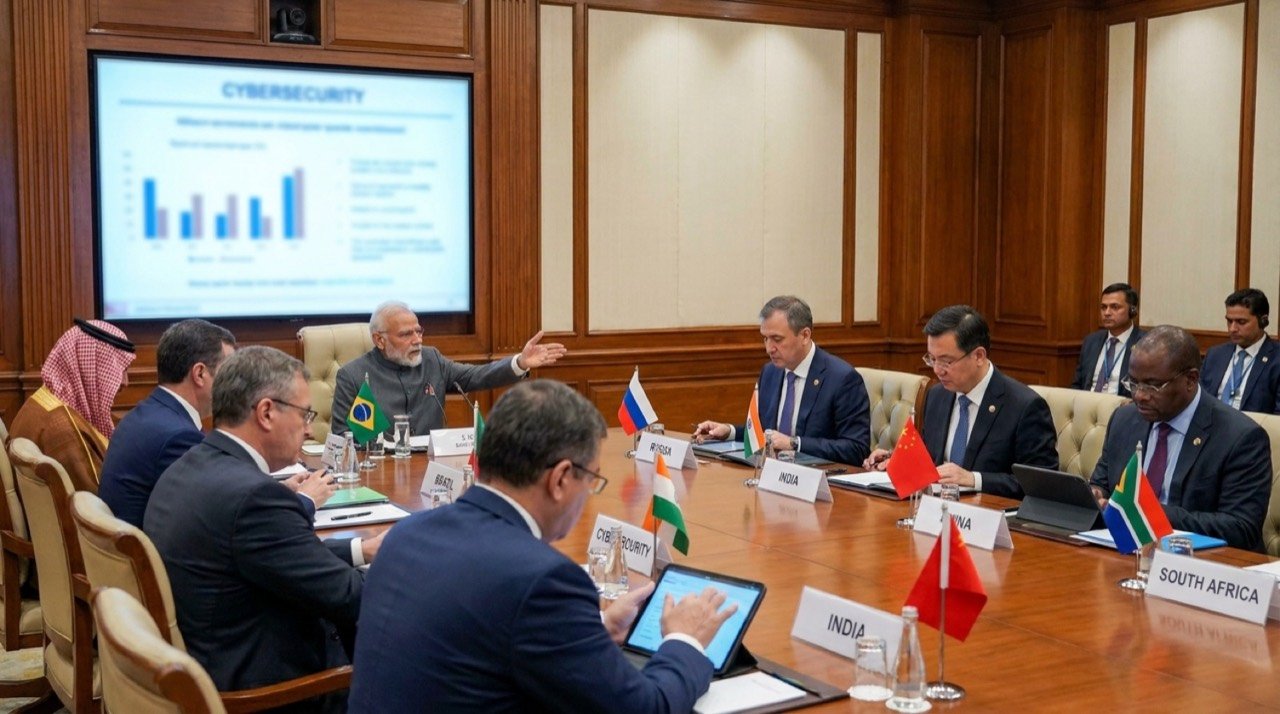
BRICS Security Advisers Meet in India With Tech Threats on Agenda
India is hosting the BRICS national security advisers' meeting chaired by Ajit Doval, placing cyber risks, counter-terrorism and ICT security at the centre of the run-up to the 2026 BRICS Summit.
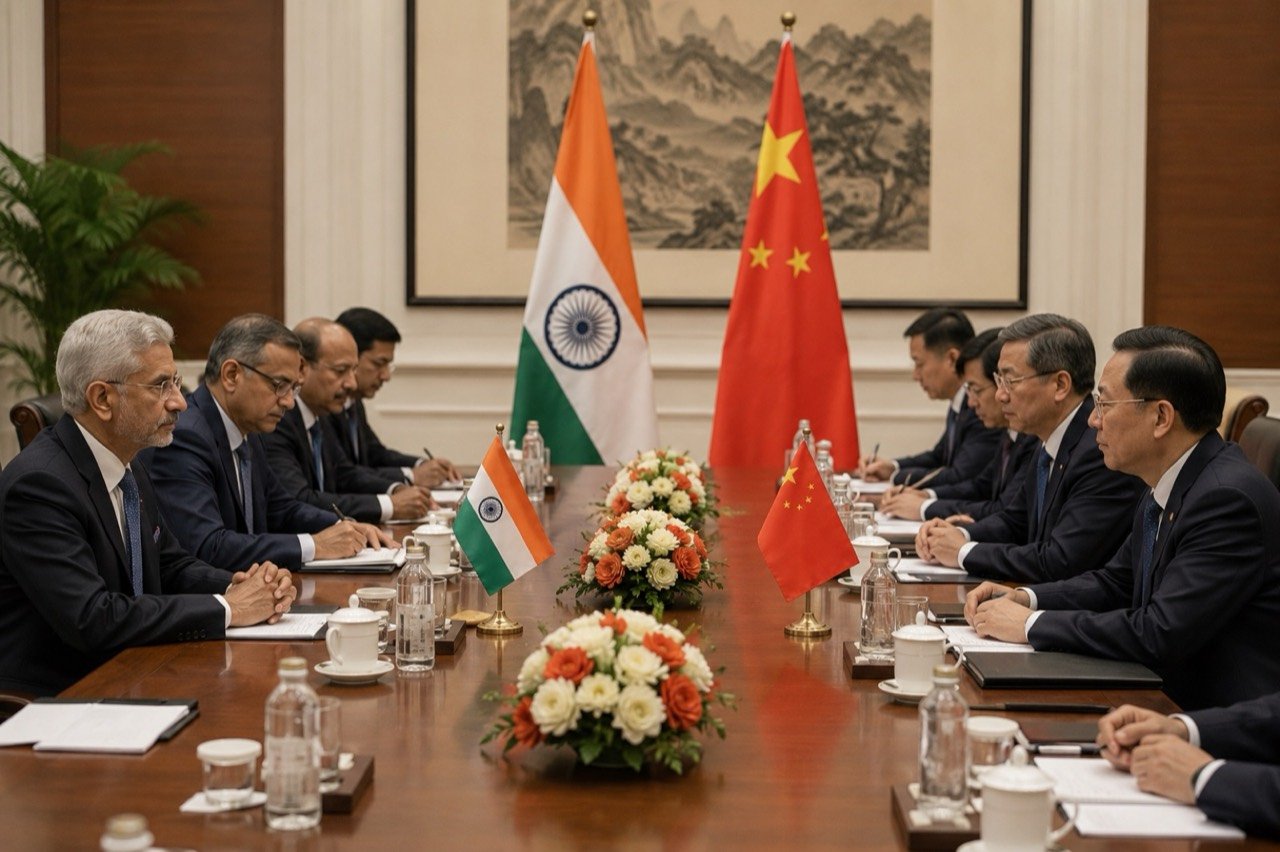
India-China Security Talks Signal Cautious Normalisation of Ties
NSA Ajit Doval and Chinese Foreign Minister Wang Yi met on the sidelines of the BRICS security advisers' meeting in New Delhi, noting progress toward a gradual, guarded normalisation of strained relations.
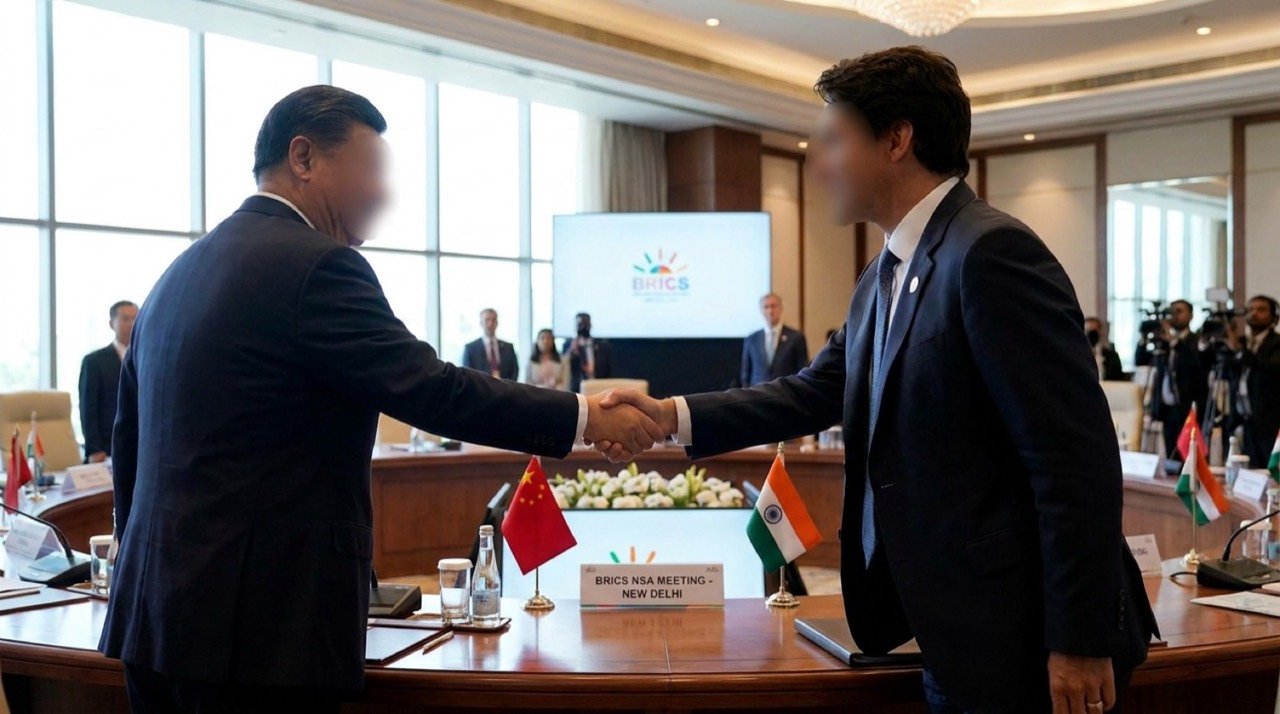
India-China Talks: Wang Yi, Doval Put Border Calm and Core Interests in Focus
Chinese Foreign Minister Wang Yi told NSA Ajit Doval in New Delhi that India and China must respect each other's core interests and keep the border issue in its proper place within the broader relationship.
More from this section
More
India-New Zealand Ties: Visit Plans Put FTA and Diplomacy in Focus
Reports of a planned high-level India-New Zealand engagement have revived attention on free trade talks, professional mobility and Indo-Pacific cooperation between two partners with clear room to grow.

Modi Greets Trump on US 250th Independence Day, Hails Partnership
Prime Minister Narendra Modi marked America's 250th Independence Day with a message to President Trump, saying the next 250 years should lift the India-US partnership to new heights.
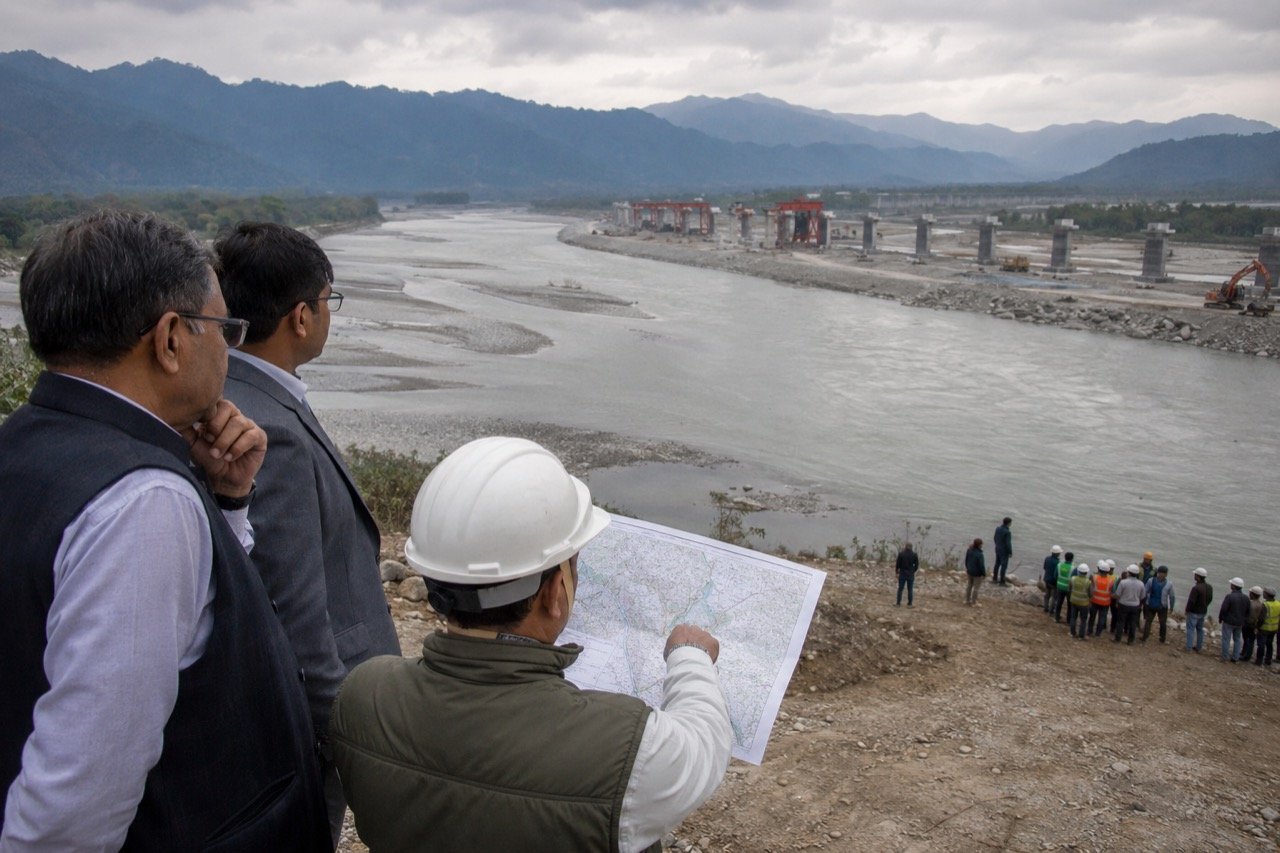
India Watches Dhaka's China-Backed Teesta Plan as Stakes Rise
New Delhi is closely tracking Bangladesh's proposal to develop the Teesta river with Chinese assistance, a move that revives one of South Asia's most sensitive water-sharing disputes and tests regional strategic trust.