Bengaluru Triple Murder Probe Focuses On Daughter And Her Live-In Partner
Police investigating the killing of an elderly couple and their 19-year-old daughter in Bengaluru are examining whether family opposition to a relationship escalated into extreme violence.
Commentary & Analysis ·
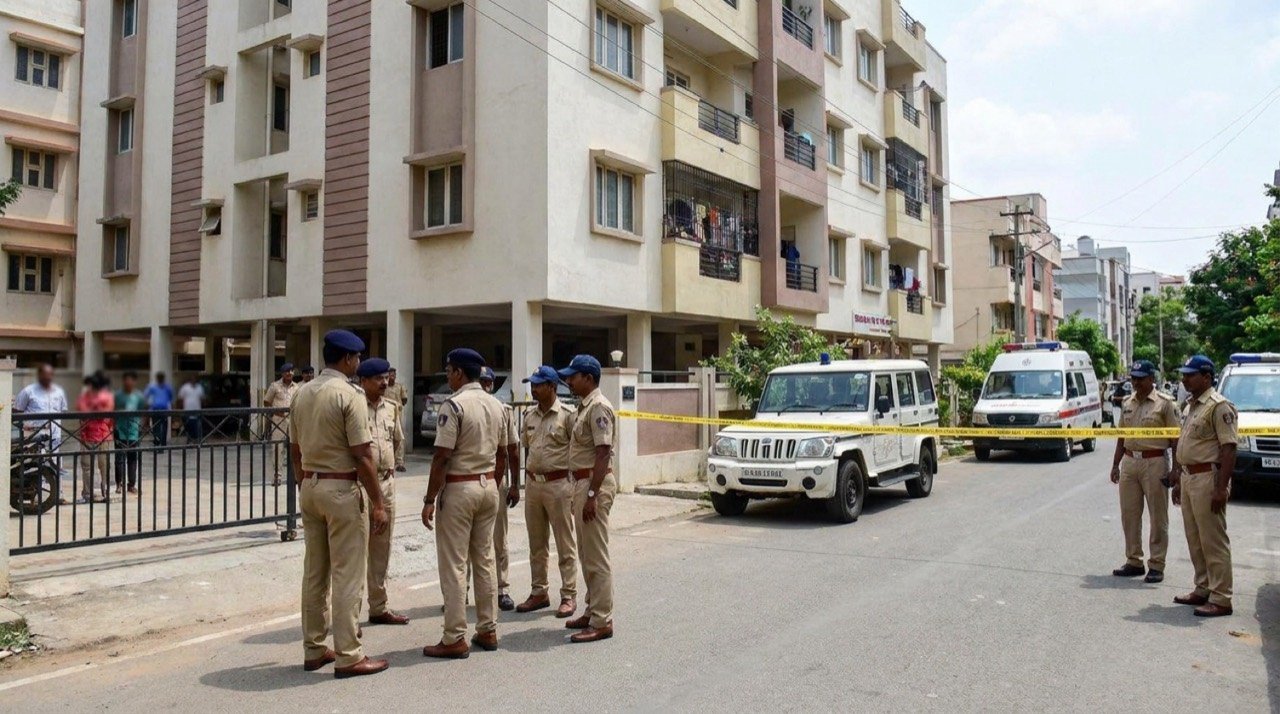
A triple murder in Bengaluru has placed the city's KR Puram police under intense scrutiny after an elderly couple and their 19-year-old daughter were found killed inside an apartment. The brutality of the crime, carried out in a private residence rather than a public space, has shaken residents of the locality and set off a fast-moving investigation into who was responsible and why. As reported by NDTV, Deccan Herald and Indian Express, police suspect the couple's elder daughter, Shwetha, and her live-in partner, Kenneth. Early findings suggest the family had opposed the relationship, and investigators are examining whether that conflict escalated into the killings.
Investigators have cautioned, in effect, against assuming motive before the evidence is tested. While family opposition is the early line of inquiry, it remains a hypothesis to be proved or disproved rather than an established fact. That distinction matters enormously in a case of this gravity, where public appetite for a tidy narrative can easily outpace what the police actually know at this stage of the investigation.
What is known about the incident
The killings were reported from Sai Green Apartment in Seegehalli. According to the reports, the victims had gone to the flat occupied by Shwetha and Kenneth, where an argument is believed to have broken out. The bodies were found with multiple injuries. The sequence, from a visit to a fatal confrontation, is among the central threads police must now reconstruct in detail, drawing on physical evidence and witness accounts from the apartment complex.
Even at this early stage, the bare facts point to a domestic setting turning lethal within the space of what appears to have been a single visit. That the couple travelled to their daughter's flat suggests some prior contact or an attempt at reconciliation, confrontation, or intervention, though the precise nature of that visit is itself something investigators will need to establish rather than presume. The presence of multiple injuries on all three victims points to a level of violence that will itself become an important piece of evidence in establishing intent, premeditation, and the roles played by those present.
Why the family-opposition theory looms so large
The suspicion that the couple's opposition to Shwetha's live-in relationship with Kenneth may have precipitated the violence follows a familiar and troubling pattern in Indian crime reporting, where relationships that cross caste, class, religious or community lines, or simply defy parental expectations, have at times been met with extreme reactions. It is important to stress that this remains, in the current case, an early working theory rather than a proven fact. Investigators will need to test it against forensic evidence, phone records, witness statements and the physical reconstruction of events inside the flat before it can be treated as anything more than a plausible starting point.
The risk in cases like this is that a plausible narrative, once reported, hardens into public certainty long before a chargesheet is filed, let alone before a trial concludes. For the two named suspects, that risk is not abstract: reputational and legal consequences can follow from media narratives regardless of what a court eventually finds. The NE Times treats Shwetha and Kenneth, at this stage, as suspects under investigation and not as persons whose guilt has been established.
The evidentiary road ahead
To build a case that can withstand judicial scrutiny, investigators will need to establish far more than suspicion. The coming days are likely to centre on forensic recovery, the movement of the suspects and the digital trail surrounding the deaths. Several strands of work will need to come together before the case can move toward formal charges:
- Establishing a clear motive beyond early assumptions
- Reconstructing the timeline before and after the deaths
- Recovering the weapon used in the attack
- Securing digital evidence and communications
- Tracing the movement of the suspects around the incident
Each of these is a substantial undertaking in its own right. A weapon recovery, for instance, can corroborate or undermine an entire theory of the case, while call records and messages can either support the idea of a long-simmering family dispute or reveal a very different sequence of events. Investigators will also need to account for the physical layout of the flat, entry and exit times logged by the apartment complex, and any statements from neighbours who may have heard the altercation described in initial reports. As one summary of police-sourced reporting put it: investigators must avoid assuming motive before evidence is tested, but the early line of inquiry points to family opposition as a possible trigger.
What this means for Bengaluru's apartment communities
Beyond the immediate probe, the case has revived broader concerns for Bengaluru residents, from apartment security and neighbour response to how domestic disputes are spotted before they turn dangerous. Gated communities and high-rise complexes across the city have, in recent years, invested heavily in security infrastructure such as CCTV coverage and visitor logs, yet incidents like this one raise the uncomfortable question of whether such measures are designed to prevent crime by outsiders rather than violence among residents and their own family members. A killing that unfolds inside a flat, between people who know one another, tends to sit outside the threat model that most residential security systems are built around.
There is also a quieter, harder question here about how domestic conflict is recognised, or missed, by those closest to it. Family disapproval of a relationship is common and rarely escalates to violence, which is precisely why cases that do escalate are so difficult to anticipate. Neighbours, building staff and even extended family may have had only fragmentary signals, if any, of the tension that reportedly existed over the relationship, underscoring how little visibility exists into private disputes until they erupt into public tragedy.
The legal and social stakes of the investigation
As the investigation proceeds, the suspects remain accused, and any finding of guilt will rest on what the evidence ultimately proves in court. This is not a formality. The Indian legal system, like any other rooted in due process, requires that suspicion, however strong the circumstantial pointers, be converted into proof that can survive cross-examination. For KR Puram police, the pressure to deliver a swift resolution in a case that has drawn national media attention will need to be balanced against the slower, more exacting work of building an evidentially sound case.
For the wider public, the case is a reminder that early reporting on high-profile crimes, however well sourced, is provisional by nature. Details can shift as forensic results return, as suspects are questioned further, and as timelines are corroborated or contradicted by phone data and witness accounts. Responsible coverage requires holding two things at once: acknowledging the gravity of what has been reported, while resisting the pull to convert an active investigation into a settled verdict.
The NE Times View
If the investigators' theory holds, this is another grim entry in India's long ledger of violence dressed up as defending family honour. The lesson is not to police whom young people love but to confront the social coercion that turns disapproval into bloodshed. We urge restraint in trial-by-leak; a teenager is dead, and the facts deserve courtroom rigour, not television verdicts. The case also deserves scrutiny of how families, communities and institutions might better identify escalating domestic tension before it turns fatal, a question that will matter long after this particular investigation concludes.
Key takeaways
- Three members of a family, an elderly couple and their 19-year-old daughter, were found killed at Sai Green Apartment in Seegehalli, Bengaluru, prompting a KR Puram police investigation.
- Police suspect the couple's elder daughter, Shwetha, and her live-in partner, Kenneth, with reports indicating the family had opposed the relationship, though this remains an unproven working theory.
- Investigators still need to establish motive conclusively, reconstruct the timeline, recover the weapon, secure digital evidence and trace the suspects' movements before the case can proceed to trial.
- The case has renewed concerns about apartment security and the difficulty of detecting escalating domestic conflict before it turns violent.
- The NE Times urges restraint in public judgement of the suspects, whose guilt or innocence must be determined by courtroom evidence rather than media speculation.
You may also like to read
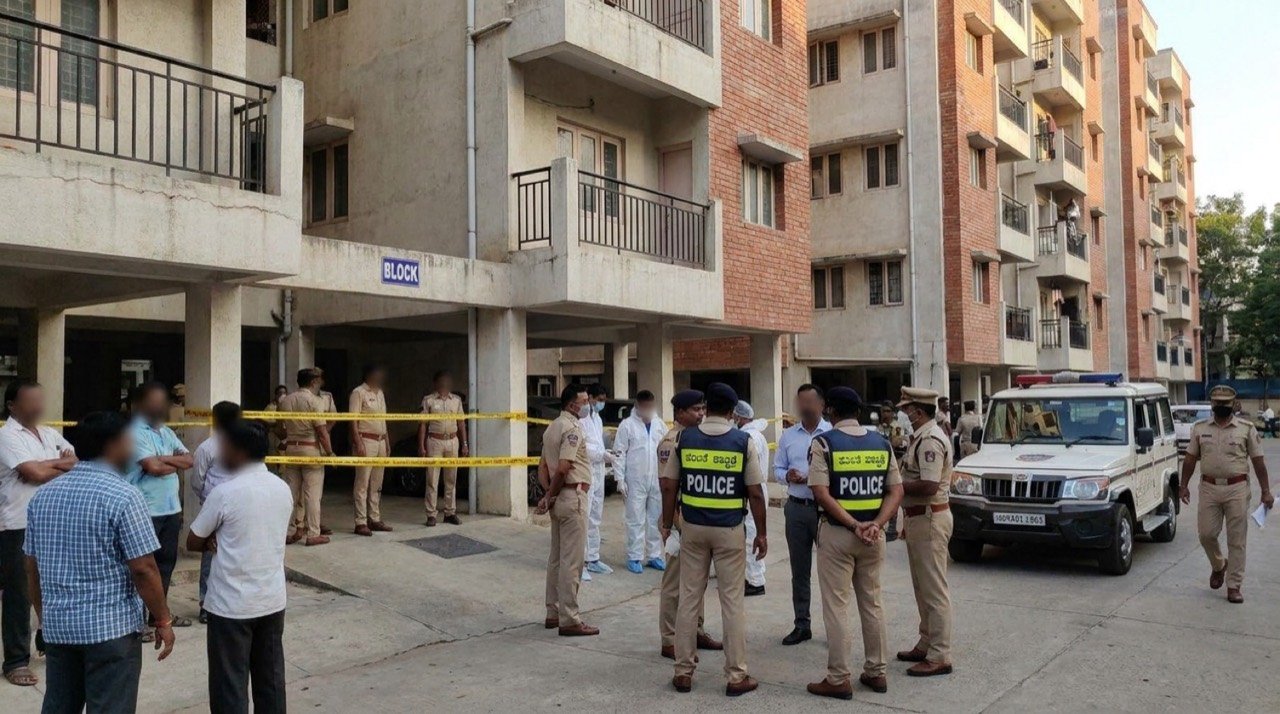
Bengaluru KR Puram Triple Murder Puts Spotlight on Domestic Safety
A triple murder in Bengaluru's KR Puram, in which a woman, her husband and their young son were found dead, has shaken the city and reopened questions about domestic-violence risks and police response.

Pune Lohagad Trek Death Turns Into Murder Probe As Fiancée, Friend Arrested
Police arrested a Pune businessman's fiancée and her friend after fresh evidence reframed his fatal fall at Lohagad Fort from an accident into a suspected murder investigation.
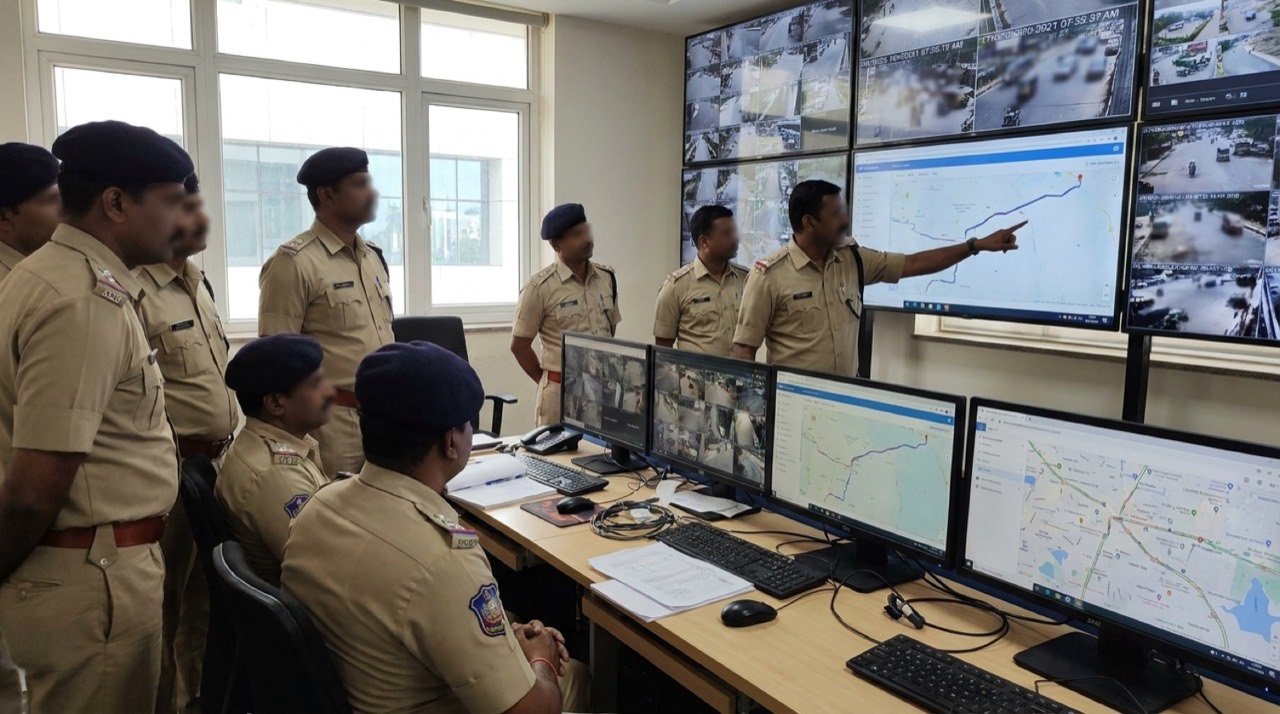
Bengaluru Police Fact-Check: NEET Aspirant's Delay Not Caused by Rally Traffic
Bengaluru police say CCTV footage and route analysis show a NEET candidate left home just 33 minutes before the cut-off, contradicting claims that a Congress rally blocked the route.
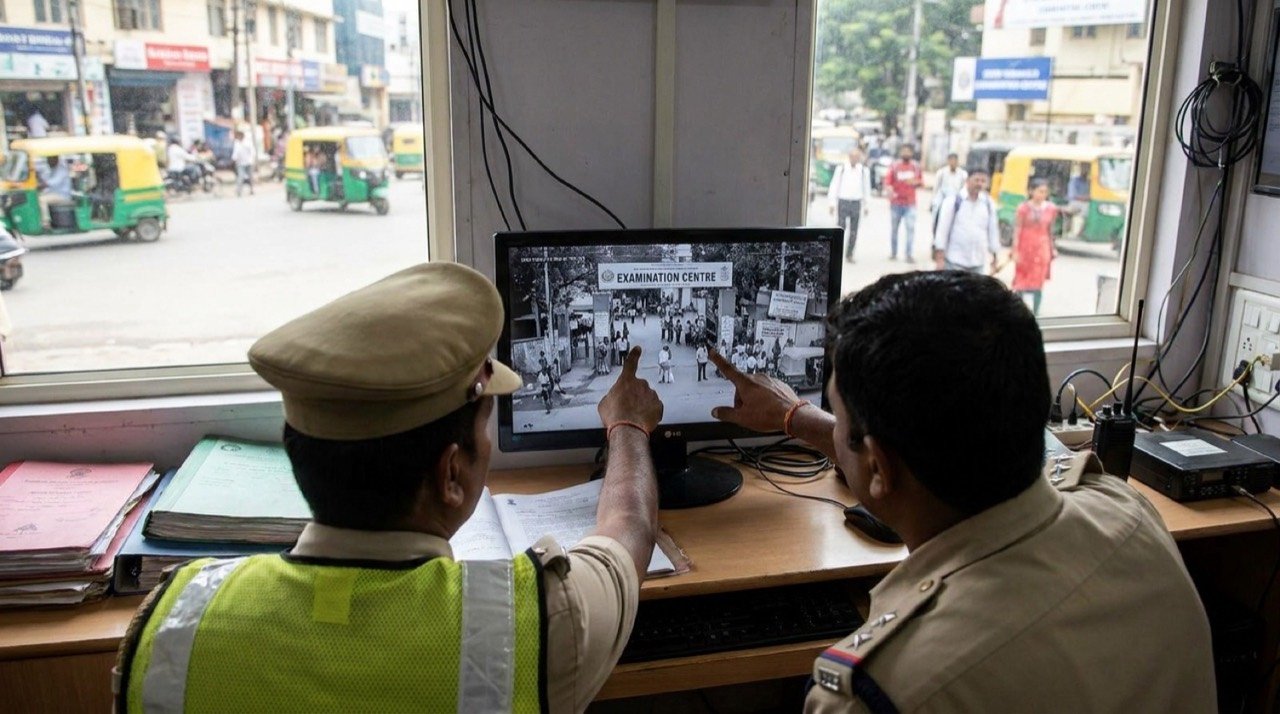
Bengaluru Police Reject Claim That Congress Rally Delayed NEET Aspirant
Bengaluru Traffic Police say CCTV footage does not support viral claims that a Congress rally caused a NEET candidate to miss her re-exam slot, citing a late departure and a longer route.
More from this section
More
AICTE Industry Fellowship 2026: Rs 1.5 Lakh Scheme Closes July 5
The AICTE Industry Fellowship Programme 2026, which places technical-education faculty inside leading companies on a Rs 1.5 lakh monthly stipend, reached its application deadline on July 5.

Bay of Bengal Low Pressure System Revives Monsoon Over Western India
A low-pressure system over the Bay of Bengal has pushed the monsoon back into an active phase, bringing steady heavy rain to Kerala, coastal Karnataka and Maharashtra, and putting Mumbai and Pune on preparedness watch.
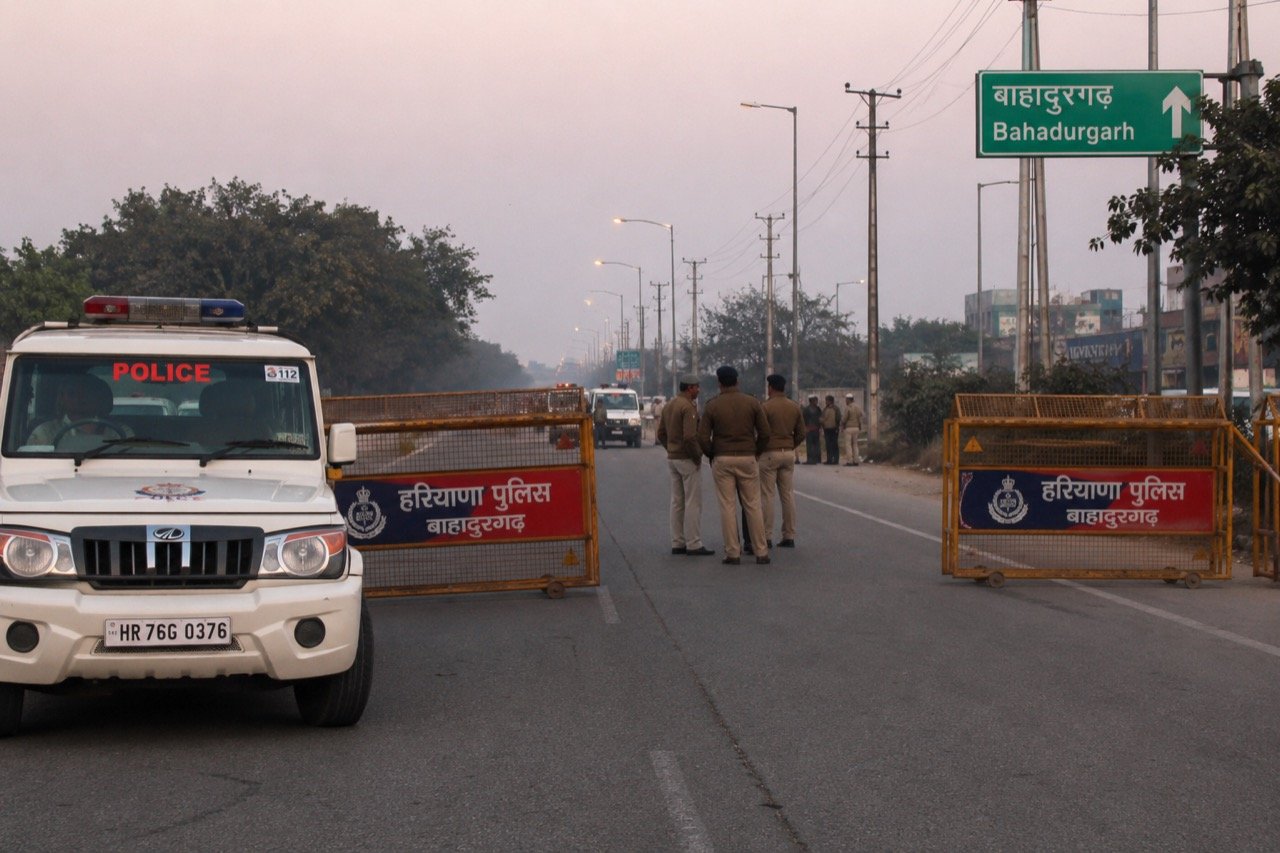
Bishnoi Gang Suspects Injured in Haryana Encounter as Police Tighten Net
A joint Haryana-Delhi Police operation in Bahadurgarh left two suspected Lawrence Bishnoi gang members injured, spotlighting the multi-state coordination now central to India's fight against organised crime networks.