Air India Names Pradeep Singh Kharola Executive Advisor Amid Leadership Transition
Former Civil Aviation Secretary Pradeep Singh Kharola joins Air India as executive advisor to chairman N Chandrasekaran, adding regulatory and operational depth as the Tata-owned carrier hunts for a new chief executive.
Commentary & Analysis ·

Air India has appointed Pradeep Singh Kharola, a former Civil Aviation Secretary, as executive advisor to chairman N Chandrasekaran, according to reports citing an internal communication. Kharola will also join the airline's management committee, giving him a direct role in strategic and operational decision-making at a delicate moment for the Tata Group-owned carrier. On the surface, this reads as a routine senior appointment. Read against the backdrop of Air India's ongoing transformation, however, it is a considered signal about what the airline's leadership believes it needs most right now: institutional memory and regulatory fluency, not just operational firepower.
A familiar hand returns to Air India
Kharola is no stranger to the airline he has now been asked to advise. He previously served as Air India's chairman and managing director before moving into senior government roles, including Secretary in the Ministry of Civil Aviation, with a stint also linked to the Airports Authority of India. Few figures in Indian aviation combine that particular mix of experience: someone who has sat inside Air India's own boardroom and also sat across the table from it as a regulator. That dual vantage point is precisely what the carrier appears to be seeking as it navigates a period when commercial ambition and regulatory obligation are pulling in close proximity.
Placing Kharola as advisor to Chandrasekaran, and folding him into the management committee rather than keeping him at arm's length, puts a seasoned administrator close to the top of the decision chain. It signals that the board wants someone in the room who understands both the airline's internal culture and the workings of India's civil aviation bureaucracy, at a time when many of the carrier's biggest decisions will need to be squared with government expectations as much as commercial logic.
Transformation after privatisation
Since Tata Group regained control of Air India in 2022, the carrier has been engaged in one of the most ambitious corporate turnarounds in recent Indian business history. That effort spans a sweeping fleet renewal programme, the merger with Vistara, an extensive cabin upgrade cycle, and a vast aircraft order book that ranks among the largest commitments made by any airline globally. Each of these strands carries its own execution risk, and together they represent a multi-year balancing act between rebuilding a legacy national carrier and competing credibly against established global rivals.
It is in this context that Kharola's appointment should be read. The move comes as the airline simultaneously prepares for a leadership transition and searches for a new chief executive, which makes continuity and depth in the senior team a priority rather than a nicety. A turnaround of this scale cannot pause simply because a CEO search is underway; if anything, the interim period demands more steady hands, not fewer. Kharola's regulatory fluency could prove particularly valuable in managing the airline's relationship with the government and with the Directorate General of Civil Aviation, both of which remain central stakeholders in decisions ranging from safety oversight to route approvals and slot allocations.
Why regulatory experience matters right now
It would be easy to view this appointment purely as a networking exercise, a former bureaucrat being given a soft landing in the private sector. That reading understates the practical utility of the role. An airline mid-transformation, juggling fleet integration, safety compliance and a demanding regulator, benefits enormously from having someone inside its senior ranks who has actually sat on the other side of that regulatory relationship. Kharola will presumably understand not just what the DGCA requires on paper, but how its processes actually move, where the friction points tend to arise, and how to pre-empt them rather than react to them.
This is especially relevant given the scale of what Air India is attempting simultaneously. Regulatory engagement is rarely glamorous, but it is foundational: safety certifications, crew licensing harmonisation as Vistara's operations are folded in, and airworthiness approvals tied to the fleet renewal all run through the same regulatory channels Kharola once oversaw from the government side. Having that expertise embedded at the advisor and management-committee level, rather than outsourced to external counsel or handled reactively, could meaningfully smooth some of the friction ahead.
Pressures the airline must navigate
The appointment lands against a backdrop of competing operational and financial demands that the management committee will need to balance carefully. Chief among these is executing one of the world's largest aircraft order books on schedule, a task that depends on manufacturer delivery timelines, financing arrangements and infrastructure readiness all lining up. Alongside that sits the more immediate and arguably more reputationally sensitive task of improving service reliability and on-time performance, the metrics by which ordinary passengers actually judge an airline day to day, regardless of how ambitious its long-term fleet strategy may be.
Integrating Vistara and harmonising fleets and crews remains an ongoing organisational challenge, one that touches everything from training standards to union relations to IT systems. Layered on top of that is the financial pressure that inevitably accompanies a heavy investment cycle of this magnitude, where capital is committed years in advance of the revenue it is meant to generate. And running through all of it is the unresolved question of steering the search for a permanent chief executive, a process whose outcome will shape how, and how quickly, all these other priorities are sequenced.
Bringing in a figure with deep government and aviation experience suggests Air India's board is prioritising governance and regulatory stability alongside its commercial transformation, rather than treating regulatory management as a secondary concern to be handled once the bigger commercial questions are settled. The next signal worth watching will be the appointment of a new chief executive, which will ultimately define the pace and direction of the airline's continuing overhaul, and against which Kharola's advisory role will either prove complementary or, potentially, a source of overlapping authority.
What stakeholders will be watching
For passengers, the appointment itself will mean little unless it translates into tangible improvements in punctuality, service consistency and safety communication. For employees navigating the Vistara integration, a figure with government-side credibility may offer some reassurance that regulatory and compliance matters are being handled with rigour rather than expedience. For the government and the DGCA, Kharola's presence inside Air India's senior structure may ease certain lines of communication, though it will also invite scrutiny over whether that familiarity remains purely functional. For Chandrasekaran and the Tata Group leadership, the calculus is simpler: a turnaround of this magnitude cannot afford governance gaps, and Kharola is being brought in to close one before a new CEO arrives to inherit the file.
The NE Times View
Bringing a former Civil Aviation Secretary in as advisor signals that Air India knows its turnaround is as much about navigating regulators as it is about fixing planes and punctuality. The risk is that regulatory familiarity blurs into coziness, a line that will need careful watching as Kharola's advisory role beds in alongside a management committee already stretched across fleet renewal, integration and financial pressure. The NE Times View is that Kharola's real value will be measured not by his Rolodex but by whether the carrier's service and safety record finally matches its restructuring rhetoric before a new CEO lands. Appointments of this kind are easy to announce and much harder to justify in hindsight; the test will come in the months ahead, in on-time performance figures, in how smoothly Vistara's integration proceeds, and in whether regulatory engagement translates into fewer public stumbles rather than merely smoother private conversations.
Key takeaways
- Pradeep Singh Kharola, a former Air India chairman and managing director and later Civil Aviation Secretary, has been named executive advisor to chairman N Chandrasekaran and added to the management committee.
- The appointment comes as Air India continues its post-privatisation transformation, including fleet renewal, the Vistara merger, cabin upgrades and a large aircraft order book, while also searching for a new chief executive.
- Kharola's blend of corporate and regulatory experience is expected to help manage relations with the government and the Directorate General of Civil Aviation during a demanding investment and integration cycle.
- The management committee faces simultaneous pressures: executing the aircraft order book, improving service reliability, integrating Vistara, managing financial strain, and steering the CEO search.
- The appointment of a permanent chief executive remains the next major signal to watch, as it will define the pace and direction of Air India's ongoing overhaul.
You may also like to read
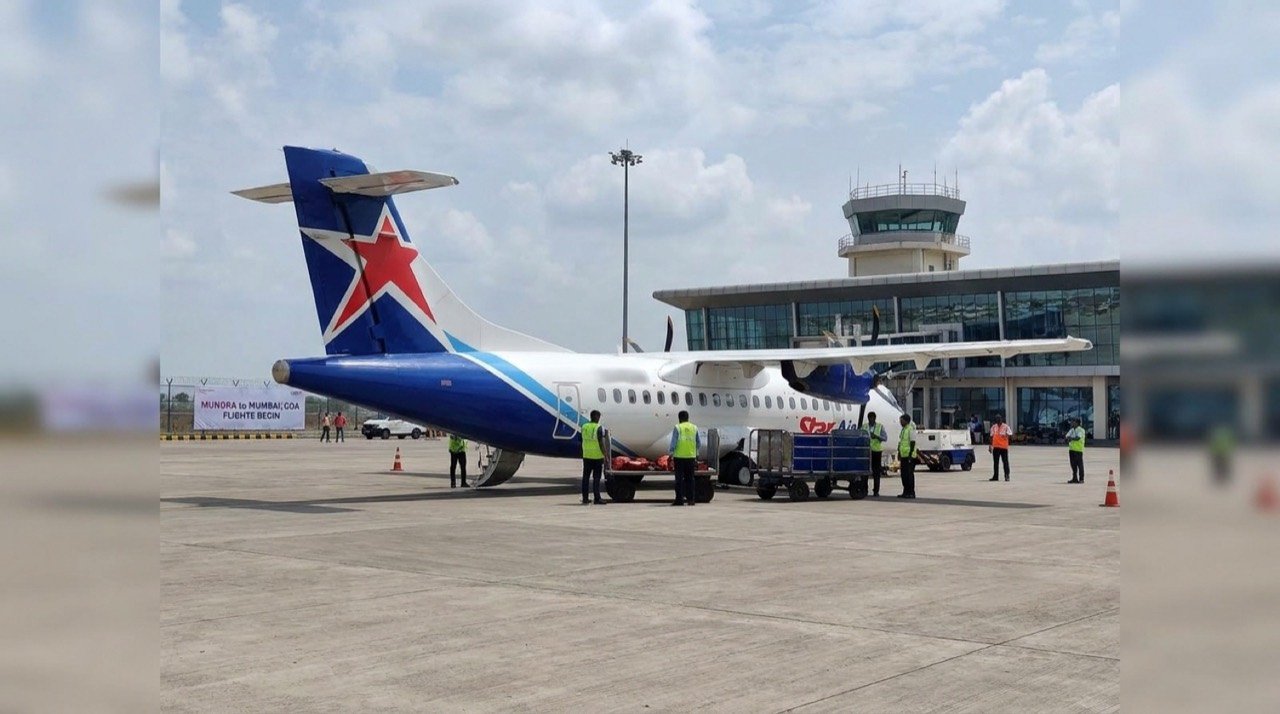
Mundra Airport Launches First Scheduled Flights, Linking Kutch to Mumbai and Goa
Adani's Mundra Airport began scheduled commercial operations on June 23, with Star Air connecting the Gujarat port town to Mumbai and Goa in a milestone for regional air connectivity in Kutch.
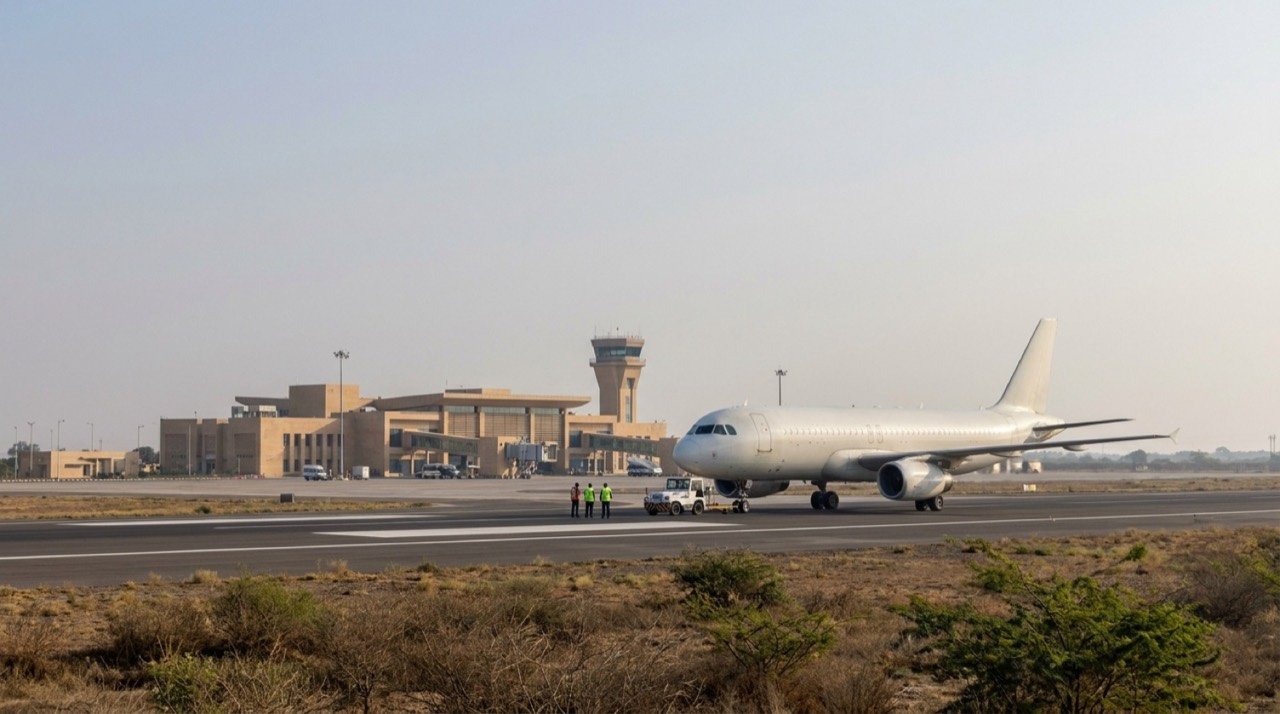
Adani's Mundra Airport Begins Commercial Flights, Opening a New Air Link for Kutch
Gujarat's Adani Mundra Airport has launched commercial operations with an inaugural flight from Goa, promising eight new air services and faster connectivity for trade, logistics and tourism around India's largest private port.
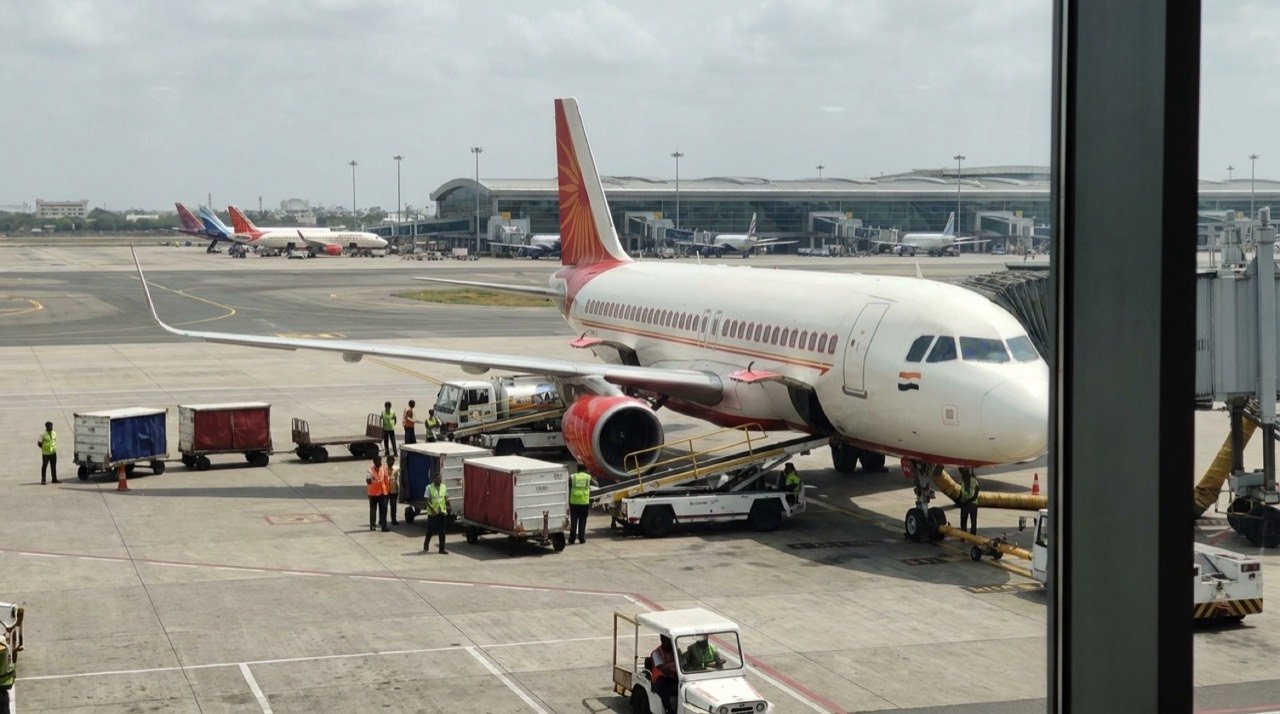
Indian Airlines May Roll Back Fuel Surcharges as Oil Prices Ease
Air travellers in India could see fare relief as carriers review fuel surcharges following a decline in aviation turbine fuel and crude oil prices, though demand and airport charges may temper any cuts.

IndiGo Charts Path To 550-Plus Aircraft And 200 Million Passengers By 2030
At its June analyst day, IndiGo laid out an audacious blueprint to grow its fleet beyond 550 aircraft and nearly double international capacity, aiming to carry 200 million passengers a year by fiscal 2030.
More from this section
More
Adani Case: US DOJ Pushes for Permanent Dismissal of Charges
The US Department of Justice has urged a judge to permanently dismiss charges against Gautam Adani, calling the case legally flawed — a reversal with consequences for markets, diplomacy and cross-border enforcement.

Akasa Air Inducts 40th Aircraft in Indian Aviation Scale-Up
Akasa Air's 40th aircraft, ferried to Bengaluru via Seattle, Reykjavik and Cairo, marks a fleet milestone for the young carrier and a fresh signal that India's aviation market remains firmly in expansion mode.
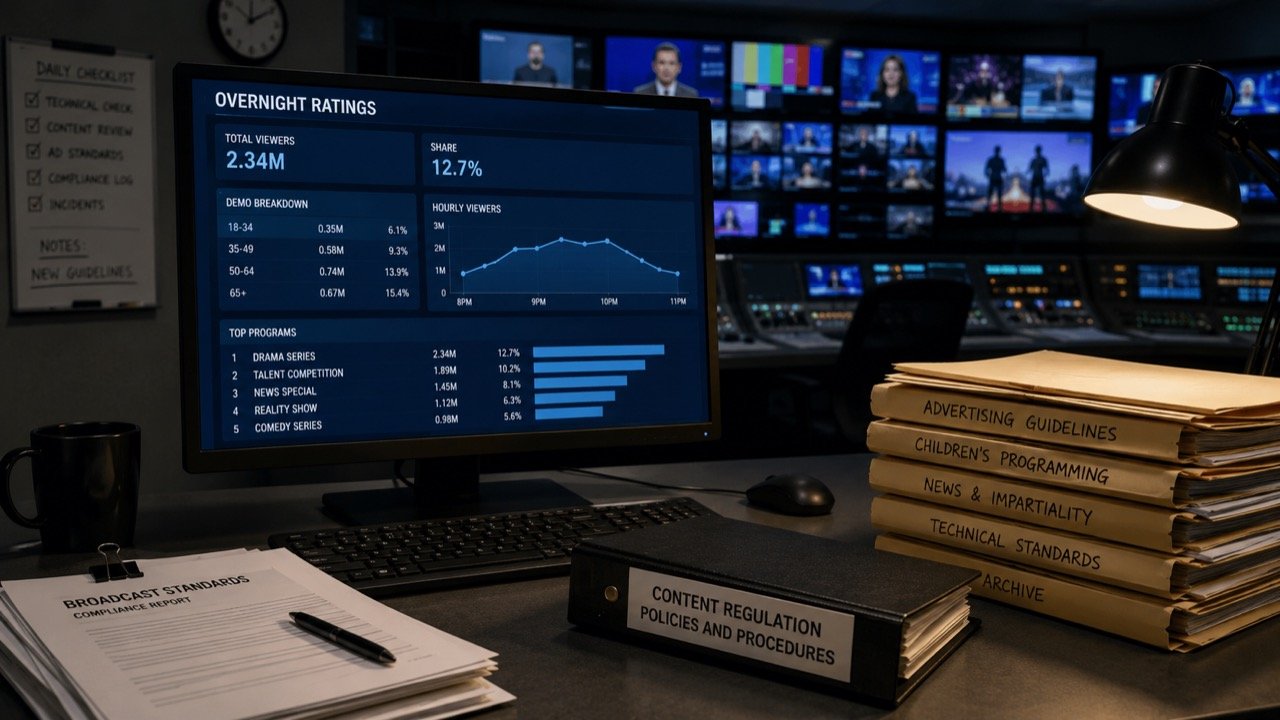
BARC Ratings Suspension Leaves Indian TV Industry Flying Blind
BARC's pause on television ratings has put India's broadcast measurement system under fresh scrutiny, leaving broadcasters, advertisers and media planners without the weekly audience data that anchors the TV economy.