Tata Motors Targets Near-Doubling of Revenue and Sales by 2031
Tata Motors Passenger Vehicles has unveiled a 2031 plan to push revenue past Rs 6 trillion and sales beyond 1.2 million units, betting on electric and CNG models to drive India's cleaner-mobility shift.
Commentary & Analysis ·
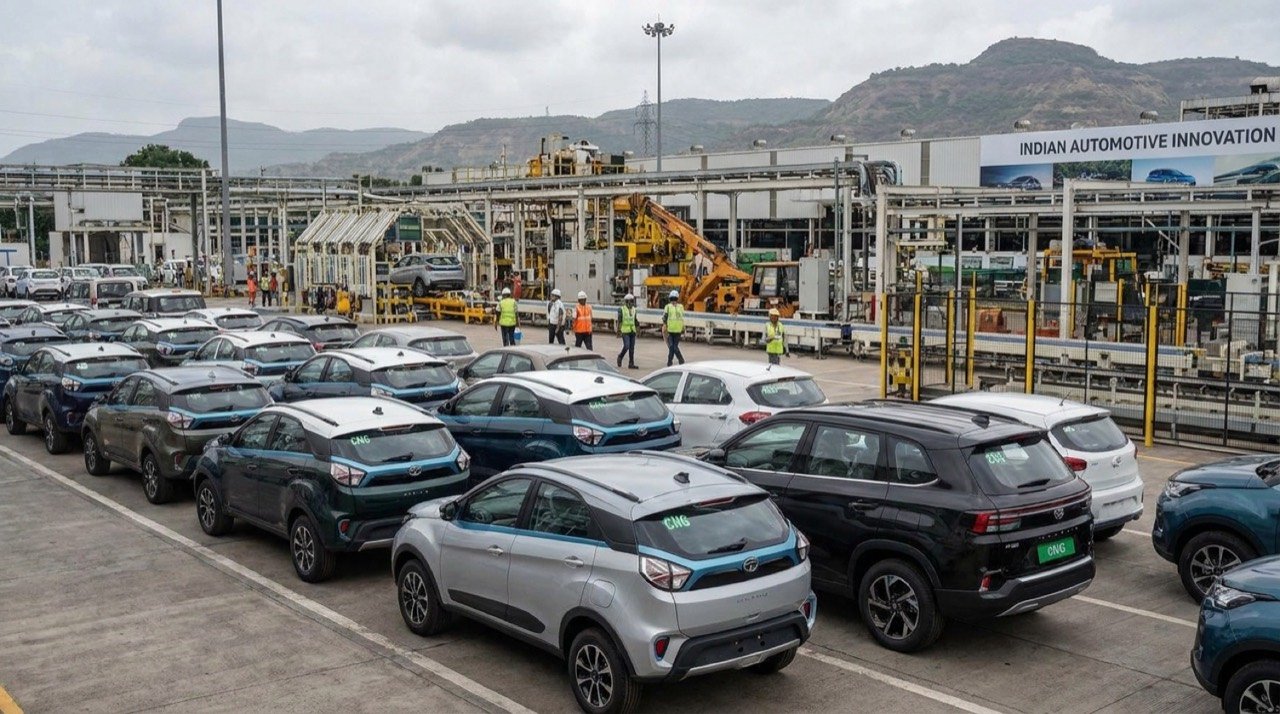
Tata Motors Passenger Vehicles has laid out an ambitious 2031 growth plan that points to a sharper push into electric, CNG and mainstream passenger mobility. The roadmap envisions revenue crossing Rs 6 trillion and sales volume exceeding 1.2 million units by fiscal 2031, a near-doubling from the Rs 3.36 trillion in revenue and roughly 640,000 units recorded in fiscal 2026. Taken at face value, this is one of the more consequential targets set by an Indian automaker in recent years, not because the numbers themselves are extraordinary in isolation, but because of what they imply about the pace and shape of change the company expects across the domestic car market over the next five years.
The headline numbers
Beyond the top-line targets, the company has set out the machinery it intends to use to get there. It aims to lift production capacity to 1.3 million units within two to three years and to invest Rs 330-350 billion in passenger and EV operations between FY26 and FY30, a commitment that signals confidence in sustained demand rather than a speculative bet on a single product cycle. The plan also targets a 20 percent market share alongside a 10 percent EBIT margin, a combination meant to demonstrate that volume growth need not come at the expense of profitability. That pairing of numbers is itself a statement of intent. Many manufacturers chasing scale in a price-sensitive market have historically had to sacrifice margin to do so, particularly in the compact and mid-size segments where competition is fiercest. By setting both a share target and a margin target simultaneously, Tata Motors appears to be signalling to investors and analysts that it does not view the two as mutually exclusive, an assertion that will only be tested once the investment cycle is underway and results begin to accumulate year on year.
Betting on cleaner fuels
Much of the incremental volume is expected to come from electric and CNG vehicles, reflecting where the company believes Indian demand is heading. As fuel costs, emissions norms and consumer preferences evolve, automakers that can offer credible cleaner-fuel options across price points stand to capture the shift. For Tata Motors, which already holds a strong position in India's nascent EV market, the strategy doubles down on an early lead while broadening the lineup toward affordability. This is a notable strategic choice. Rather than treating electric and CNG as niche or transitional categories, the company is effectively building its next phase of growth around them, which suggests an internal reading of the market that sees clean-fuel adoption accelerating rather than plateauing. CNG in particular has proven to be a pragmatic middle path for Indian buyers who are wary of the upfront cost and charging uncertainties tied to electric vehicles but still want lower running costs than petrol or diesel offers. Leaning into both fuel types at once, rather than betting solely on EVs, spreads the company's exposure across two different customer psychologies: the early adopter drawn to electric technology and the cost-conscious buyer drawn to CNG economics.
Why the plan matters
The roadmap matters because India's car market is moving on three fronts at once: toward cleaner fuels, greater affordability and larger-scale local manufacturing. A target of this size from a leading domestic player offers a barometer for how quickly the industry expects that transition to translate into sales. If Tata Motors is right about the pace of this shift, its rivals will need to respond with comparable investment and product plans of their own, or risk ceding share in exactly the segments the plan is targeting. If the company is wrong, or early, the scale of the capital commitment involved, running into hundreds of billions of rupees between FY26 and FY30, means the cost of a misjudged bet would be significant. In that sense, this plan is not just a corporate target but a proxy for how confident the broader industry should be about the timeline of India's clean-mobility transition.
What could go right, and what could go wrong
Whether the targets hold will depend on charging infrastructure, battery costs, competition and the pace at which Indian buyers embrace electric and CNG options. On the favourable side, continued government support for emissions norms and charging infrastructure, along with falling battery costs globally, would work in the company's favour and make the 2031 targets more attainable. Rising fuel prices would also nudge more buyers toward CNG and electric alternatives, reinforcing the demand assumptions embedded in the plan. On the less favourable side, the passenger vehicle market is becoming more contested, with domestic and international players alike sharpening their focus on electric and affordable segments. Any slippage in the build-out of charging infrastructure, or a stall in battery cost declines, would directly undercut the demand assumptions behind the 1.2 million unit target. Execution risk also extends to the capacity build-out itself: lifting production to 1.3 million units within two to three years is a tight timeline that leaves little room for supply chain disruption or delays in new plant commissioning.
The NE Times View
Ambition is cheap; execution is not. Tata's bet on EVs and CNG is well-aligned with India's emissions math and rural fuel economics, but doubling revenue by 2031 assumes charging infrastructure, battery costs and consumer trust all break its way. The deeper question is whether a homegrown leader can hold its EV head start as global rivals and BYD-style price wars arrive. A price war of that kind would test the 10 percent EBIT margin target far more severely than any single demand shortfall, since margin compression tends to be the first casualty of a market share battle. Watch margins, not just volumes. The revenue and unit targets will generate headlines, but the more telling number over the next several years will be whether Tata Motors can hold its promised profitability while chasing scale, because that is where the real test of this plan's credibility lies. Investors, competitors and policymakers alike would do well to track quarterly EBIT trends alongside sales figures rather than treating the volume targets as the sole measure of success.
Key takeaways
- Tata Motors is targeting revenue above Rs 6 trillion and sales volume exceeding 1.2 million units by fiscal 2031, nearly double the FY26 figures of Rs 3.36 trillion and roughly 640,000 units.
- The plan pairs an investment of Rs 330-350 billion in PV and EV operations between FY26 and FY30 with a capacity expansion to 1.3 million units within two to three years.
- Growth is targeted at a 20 percent market share alongside a 10 percent EBIT margin, signalling an intent to scale without sacrificing profitability.
- Electric and CNG vehicles are expected to drive much of the incremental volume, reflecting the company's reading of where Indian consumer demand is heading.
- Execution risk centres on charging infrastructure, battery costs and competitive pressure, meaning margin performance will be the more telling indicator to watch than headline volume growth.
You may also like to read
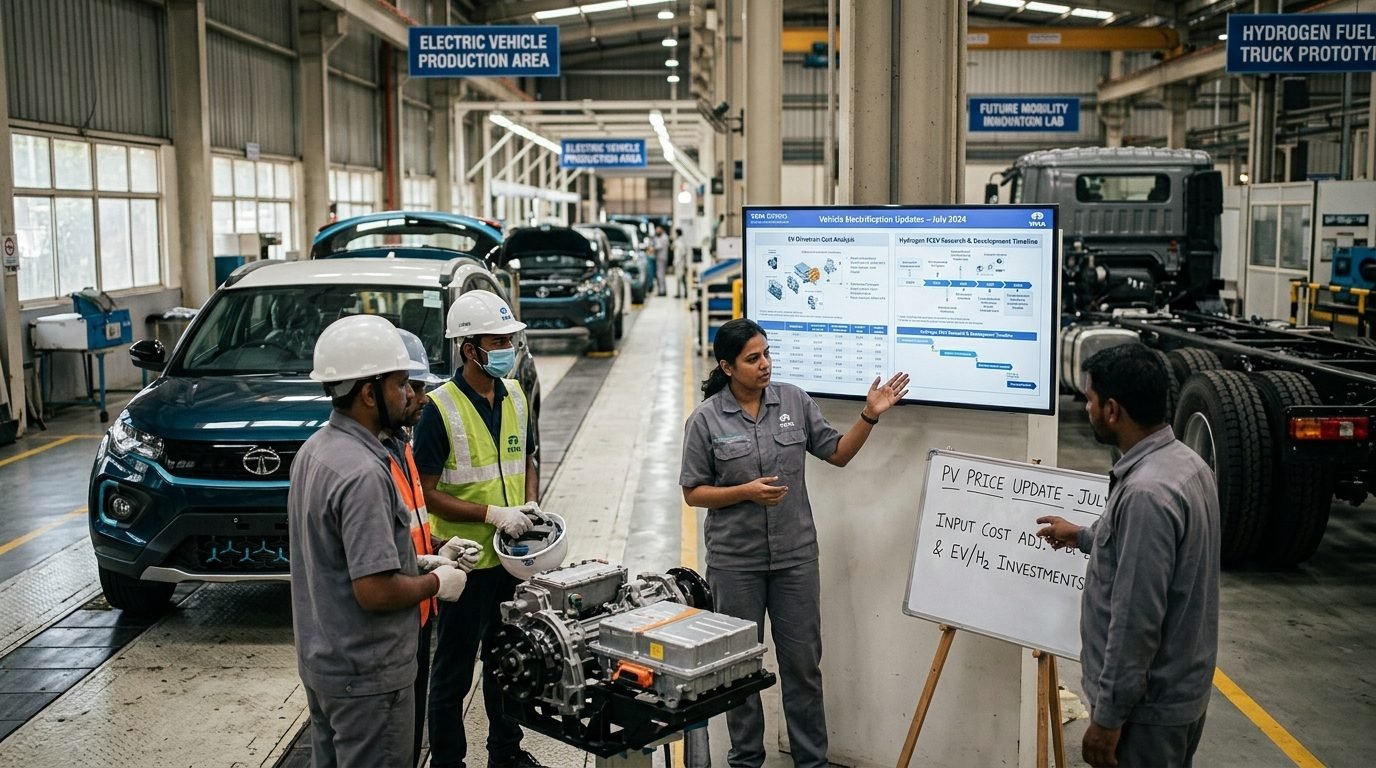
Tata Motors Lifts Prices From July, Doubles Down On EV And Hydrogen
Tata Motors will raise passenger vehicle prices by up to 1.5 percent from July 1 to offset input-cost pressure, even as chairman N. Chandrasekaran reaffirms heavy investment in electric and hydrogen mobility.

India Steel Emission Targets: Draft Rules Push Decarbonisation
The Centre's draft emission cut targets for the iron and steel sector move India's climate policy from broad pledges to sector-specific rules, placing one of its hardest-to-abate industries under a defined framework.
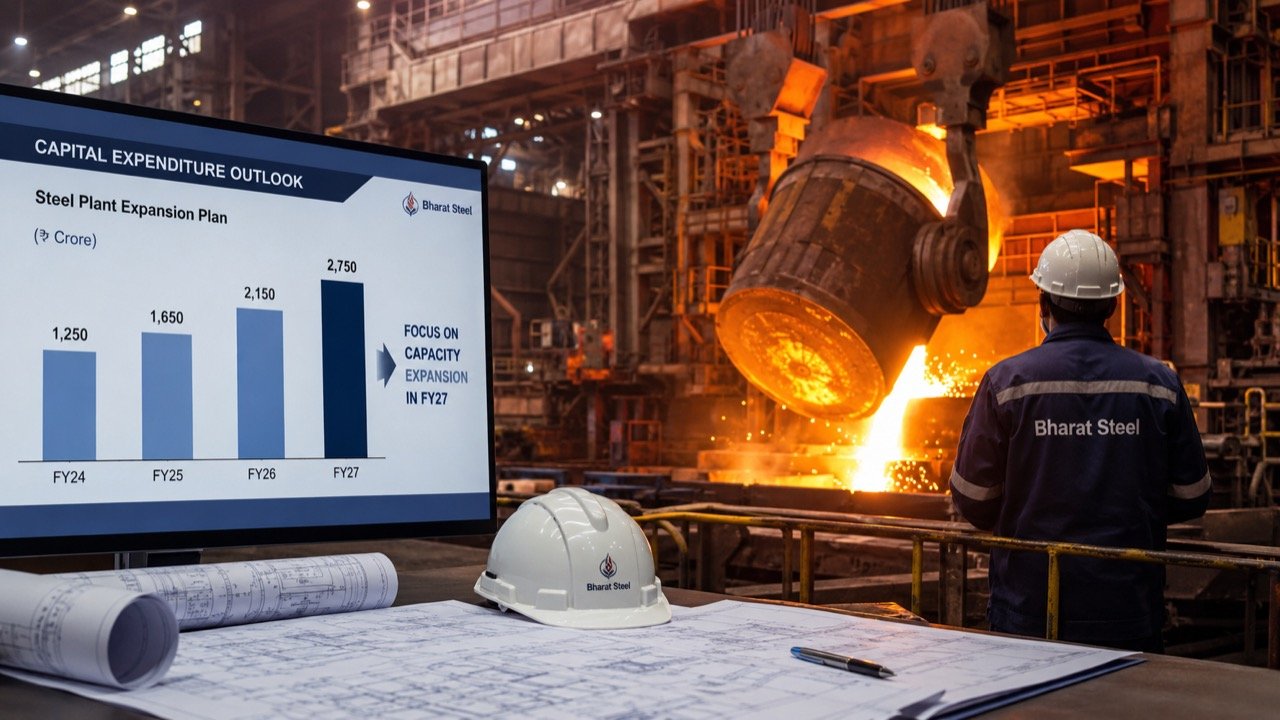
Tata Steel Plans Rs 20,000 Crore FY27 Capex for India Growth
Tata Steel's roughly Rs 20,000 crore capital spending plan for FY27 signals sustained confidence in Indian steel demand, even as execution risks, raw-material costs and emissions pressures loom over the sector.
Tata Readies Sierra EV Launch As Electric SUV Race Heats Up
Tata Motors is set to unveil the Sierra EV on 30 June, reviving an iconic nameplate as an electric SUV at a moment when the company has just posted record monthly EV sales.
More from this section
More
Adani Case: US DOJ Pushes for Permanent Dismissal of Charges
The US Department of Justice has urged a judge to permanently dismiss charges against Gautam Adani, calling the case legally flawed — a reversal with consequences for markets, diplomacy and cross-border enforcement.

Akasa Air Inducts 40th Aircraft in Indian Aviation Scale-Up
Akasa Air's 40th aircraft, ferried to Bengaluru via Seattle, Reykjavik and Cairo, marks a fleet milestone for the young carrier and a fresh signal that India's aviation market remains firmly in expansion mode.

BARC Ratings Suspension Leaves Indian TV Industry Flying Blind
BARC's pause on television ratings has put India's broadcast measurement system under fresh scrutiny, leaving broadcasters, advertisers and media planners without the weekly audience data that anchors the TV economy.