Six Shiv Sena (UBT) MPs Join Eknath Shinde Camp in Maharashtra's 'Split 2.0'
Six Lok Sabha MPs from Uddhav Thackeray's Shiv Sena (UBT) crossed over to Eknath Shinde's faction on June 22, sharply weakening the UBT in Parliament and reigniting Maharashtra's Sena-versus-Sena war.
Commentary & Analysis ·
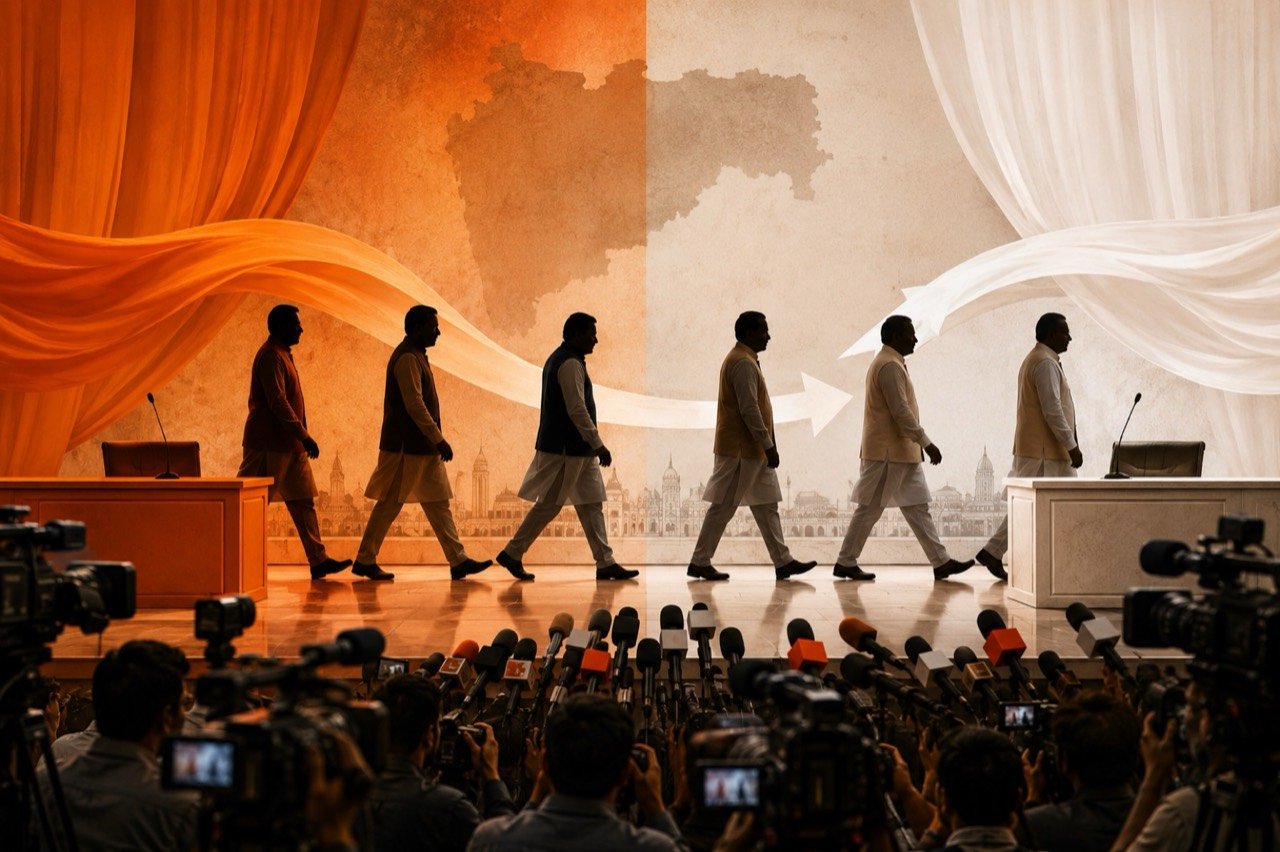
Maharashtra's long-running battle for control of the Shiv Sena legacy lurched into a dramatic new phase on June 22, 2026, as six Lok Sabha MPs from Uddhav Thackeray's Shiv Sena (UBT) formally joined the rival faction led by Deputy Chief Minister Eknath Shinde. The mass crossover, staged in Shinde's presence, drains the UBT's already slim parliamentary strength and hands the ruling camp fresh political momentum in a state where the contest is as much about identity and symbolism as it is about numbers.
Who switched sides
Reports named the defectors as Omprakash Rajenimbalkar, Nagesh Patil-Ashtikar, Sanjay Haribhai Jadhav, Sanjay Dina Patil, Bhausaheb Rajaram Wakchaure and Sanjay Uttamrao Deshmukh. Several of them had won their seats on the UBT ticket, making their exit a direct blow to the party that emerged from the 2022 split as the smaller of the two Senas in legislative terms.
For Shinde, who has steadily built his faction's organisational base since walking out with a bloc of MLAs four years ago, the additions extend his reach into the Lok Sabha and blunt the UBT's claim that it retains the loyalty of the party's traditional voter base.
'Operation Tiger' and the second wave
Shinde framed the development as the success of what he called Operation Tiger, describing it as a second stage of expansion after the original split of 2022. The phrasing was pointed: the tiger has long been a symbol associated with Shiv Sena founder Bal Thackeray, and the choice of name signals an effort to project the Shinde faction as the rightful inheritor of that mantle.
The UBT, which has cast itself as the authentic Sena rooted in Bal Thackeray's ideology, now faces the task of containing the damage and preventing further erosion among its remaining legislators and grassroots workers.
Why the crossover matters
The immediate consequences fall into three buckets: legal, organisational and electoral. Defections of this scale invariably raise questions under the anti-defection framework and over claims to the party name and symbol, even though such moves do not by themselves settle those disputes. Organisationally, the shift could trigger a wider realignment of office-bearers and booth-level cadres.
- Six sitting Lok Sabha MPs leave Shiv Sena (UBT) for the Shinde-led Sena.
- Defectors include Omprakash Rajenimbalkar and Nagesh Patil-Ashtikar.
- Shinde calls it a success of 'Operation Tiger', a second-stage expansion.
- The move cuts the UBT's parliamentary strength and momentum.
- Legal questions over the party symbol and anti-defection rules remain open.
“This is the success of Operation Tiger, the second stage of our expansion after 2022.”
— Eknath Shinde, Deputy Chief Minister of Maharashtra
The episode underscores how fluid Maharashtra's politics has become since the 2022 rupture, with allegiances inside a party built on regional identity proving more negotiable than its emotive image suggests. The decisive test now is whether more leaders follow, how the courts and the Election Commission view competing claims, and how voters interpret yet another round of realignment when they next head to the polls.
The NE Times View
The defection of six MPs hollows out the UBT precisely where it hurts most: parliamentary numbers and the perception of momentum. Maharashtra's politics has become a study in how state power and central patronage redraw loyalties faster than any ballot can. The deeper worry is institutional: when crossovers are this routine, the anti-defection law looks less like a safeguard than a formality, and voters are left wondering whose mandate their representatives actually carry.
This article is original commentary and analysis by The NE Times. Background facts were referenced from India Today and The Times of India.
You may also like to read
Sena UBT Defections Await Speaker's Recognition in Fresh Maharashtra Twist
A reported bid by six Shiv Sena UBT MPs to be recognised as a separate group has opened a new front in Maharashtra's party-split politics, with the Lok Sabha Speaker's call now pivotal.
Eknath Shinde Admitted to Mumbai Hospital With Viral Fever
Maharashtra Deputy Chief Minister Eknath Shinde has been hospitalised in Mumbai with a viral fever, a routine ailment that nonetheless draws statewide attention because of his senior role in the government.
Anna Hazare Warns of July 5 Hunger Strike Over Maharashtra RTI Rule Changes
Veteran activist Anna Hazare has threatened an indefinite fast from July 5 at Ralegan Siddhi unless Maharashtra rolls back amendments to its Right to Information rules that he says could weaken citizens' access to information.
BJP-Led Mahayuti Sweeps Vidarbha in Maharashtra Council Polls
The BJP-led Mahayuti has tightened its grip on Vidarbha, winning local-authority council seats in Nagpur, Amravati and Bhandara-Gondia and signalling its organisational depth ahead of crucial civic battles.
More from this section
More
K Kavitha Party Denied TRS Name by Election Commission
The Election Commission has refused to register K Kavitha's Telangana Rakshana Sena under the TRS acronym after objections, forcing a branding reset for the new party at a politically sensitive moment in Telangana.
Lalu Prasad Yadav Security Downgrade, Bungalow Order Stir Bihar
A government order downgrading Lalu Prasad Yadav's security cover and asking him to vacate an official bungalow has opened a fresh political flashpoint in Bihar, with the RJD chief's reaction fuelling the row.
Manipur CM's Churachandpur Visit: First Since 2023 Unrest
The Manipur Chief Minister travelled to Churachandpur for a BJP MLA's funeral, his first visit to the district since the 2023 violence, lending the sombre occasion an unmistakable political significance.