Pavala Shyamala Dies at 75: Telugu Cinema Confronts a Veteran-Welfare Crisis
Veteran Telugu actor Pavala Shyamala has died at 75 after serious health and financial difficulties, prompting renewed debate about welfare for ageing artists.
Commentary & Analysis ·
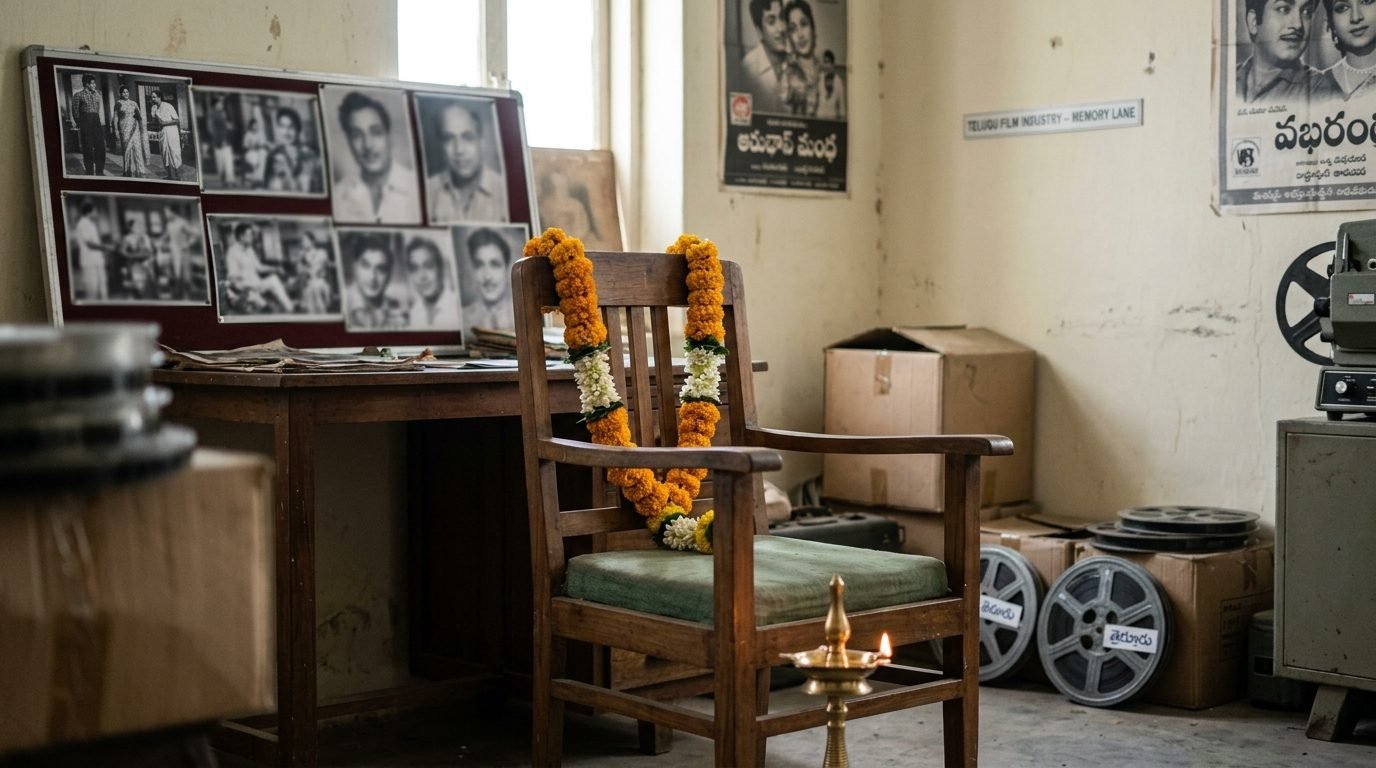
Pavala Shyamala Dies at 75: Telugu Cinema Confronts a Veteran-Welfare Crisis is one of the most searched entertainment developments in India at the current editorial cut-off of 5 August 2026. The core query, “Pavala Shyamala death,” reflects a reader need that is both immediate and practical: audiences want to know what has actually happened, which elements are officially confirmed, where reports remain provisional, and why the development matters beyond a single social-media cycle. Reports say she died from cardiac arrest while being treated at Osmania General Hospital. She had faced severe health problems and was reportedly found in distress weeks earlier. The purpose of this article is to place those facts in a clear timeline while resisting the exaggeration that often accompanies entertainment coverage.
- Reports say she died from cardiac arrest while being treated at Osmania General Hospital.
- She had faced severe health problems and was reportedly found in distress weeks earlier.
- Her death should be covered with dignity and without reproducing humiliating imagery.
The story sits within the wider tollywood & south cinema market, where release calendars, celebrity statements, trade estimates and fan activity can move faster than formal announcements. Shyamala worked across Telugu cinema but, like many supporting performers, did not necessarily retain financial security after her most active years. The contrast between public recognition and private precarity is a recurring industry problem. That context matters because a headline may be accurate at publication but incomplete a day later. A useful long-form report therefore explains the evidence standard, the business or creative implications and the next verifiable milestones rather than simply repeating a trending phrase.
What is confirmed
The verified foundation is straightforward. Reports say she died from cardiac arrest while being treated at Osmania General Hospital. She had faced severe health problems and was reportedly found in distress weeks earlier. Her death should be covered with dignity and without reproducing humiliating imagery. These points come from the source material listed at the end of the article. Where a number is a trade estimate, a casting name is only reported, or a personal statement has not been independently tested, this article labels it accordingly. That distinction protects the reader from confusing publicity, speculation and documented fact.
Timeline and context
The timing is central to understanding the search spike. Shyamala worked across Telugu cinema but, like many supporting performers, did not necessarily retain financial security after her most active years. The contrast between public recognition and private precarity is a recurring industry problem. Entertainment stories often have several overlapping clocks: the date of an announcement, the release or broadcast date, the period during which a quote was given, and the later point when audiences or trade trackers react. Combining those stages without dates can make an old development look new or a provisional report look final.
Why audiences are searching
Search demand around Pavala Shyamala death is being driven by a mixture of fandom, practical viewing questions and uncertainty. Searches focus on age, cause of death, filmography and the circumstances reported before her hospitalisation. Family and hospital information in circulation is worth treating cautiously until verified. The sections above set out those answers as far as they are currently known, with the confirmation status of each point stated.
Creative and industry significance
The development matters to the entertainment business for reasons larger than the personality or title involved. The most important angle is institutional: emergency funds, pensions, health insurance and mechanisms to identify artists in crisis. An obituary should also remember work and colleagues rather than defining a life only by hardship. Inference should still be identified as inference. A release can suggest a platform strategy without proving subscriber growth; a successful opening can indicate demand without establishing lifetime profitability; and a public statement can reveal a person’s position without settling every contested claim.
Business, distribution and audience implications
From an industry perspective, The incident may renew pressure on associations and producers to create transparent welfare systems. One-time donations cannot substitute for predictable support. These effects play out across producers, platforms, exhibitors, advertisers, talent representatives and fan communities. A strong article connects the public-facing headline with those operational consequences while avoiding unsupported budget, salary or revenue claims. It also recognises that the same event can have different meanings in theatrical, streaming, television and music markets.
Platform and format context
South Indian cinema now travels through original-language releases, dubbed versions, overseas premieres and national streaming windows. That reach makes Pavala Shyamala death relevant beyond one state, but “pan-India” should be used carefully. It describes distribution ambition, not an automatic measure of success. Overseas booking reports, fan-club activity and dubbed streaming discovery are important signals, yet each needs its own date, market and source.
Verification and fairness
Verification is especially important because entertainment headlines are frequently recycled. The article uses the status note “Verified reporting; analysis clearly labelled.” It does not treat absence of a response as proof, does not convert reported interest into a contract, and does not present a moving box-office estimate as an audited final total. Sensitive health and relationship material is limited to what the people concerned or reputable reports have made public. If a correction is ever needed, it belongs in the headline and opening, not only in a final paragraph.
What happens next
The next useful checkpoints are concrete. Track any industry memorials or policy responses. Correct misinformation about her age or medical history if official details differ. The developments that could genuinely change this story are concrete: a platform listing, a producer statement, a medical update, a premiere, an official cast reveal, a final trade total or a public response. Anything short of one of those is rumour rather than news.
Conclusion
At this stage, the most reliable reading of Pavala Shyamala death is grounded in the confirmed facts above and the clearly labelled limits of the available evidence. The development is significant because it intersects with audience behaviour, creative choices and the changing economics of Indian entertainment. As the story develops, dates, primary announcements and corrections will matter more than speculation. That is what keeps a report like this useful after the trend moves on.
This article is original commentary and analysis by The NE Times. Background facts were referenced from Hindustan Times.
You may also like to read
Akhil Akkineni Says He Knew Agent Would Fail: Lessons After Lenin’s Success
Akhil Akkineni has spoken candidly about sensing problems with Agent before release and feeling pressure to recover the producer’s investment.
Lenin OTT Release Extends Akhil Akkineni’s Theatrical Comeback
Lenin is moving to streaming after becoming an important theatrical recovery for Akhil Akkineni.
Chiranjeevi and Naga Babu Support Actor Ramesh After Brain Stroke
Chiranjeevi and Naga Babu have extended financial assistance to actor Ramesh after he suffered a brain stroke.

Is Katrina Kaif Joining Spirit? Separating Comeback Rumour From Confirmed Casting
Reports have circulated about Katrina Kaif joining Spirit after motherhood, but available coverage presents the claim as speculation rather than a confirmed casting announcement.
More from this section
More
Akanksha Choudhary’s Claim About Yogesh Rawat During the Family Task: Mental-Health Reporting and Reality-TV Boundaries
During a family-and-friends task, Akanksha Choudhary clashed with Suzanne and referred to Yogesh Rawat as having previously been suicidal

Kamya Punjabi Enters Alliance for Kushal Tandon and Clashes With Aly Goni
Kamya Punjabi entered Alliance as a guest supporting Kushal Tandon and openly criticised Aly Goni’s game

The Traitors Season 2 Full 21-Contestant Line-up and August 13 Premiere Guide
The Traitors Season 2 is scheduled to begin streaming on Prime Video on 13 August, with new episodes expected on Thursdays