The lens has no licence: on Zareen Khan, Aamir Khan and celebrity's vanishing privacy
A paparazzo's out-of-line remark and a "love jihad" smear against Aamir Khan's marriage expose the same entitlement: fame is being read as a waiver of dignity, and it is not.
Opinion & Analysis ·

A photographer's out-of-line remark to Zareen Khan at a Mumbai apparel launch. A Bollywood superstar forced to explain the religion of the woman he married. Two stories, a fortnight apart, and one uncomfortable truth running underneath both: in Indian celebrity culture, the lens no longer merely records public life, it feels entitled to annex private life. We think that entitlement is the real story, and it is time the industry, the press and the audience stopped pretending otherwise.
Two incidents, one appetite
On the surface, Khan's sharp response to a paparazzo who suggested she try on an outfit has little to do with Aamir Khan being asked to account for whether his wife, Gauri Spratt, converted religion to marry him. One is a fleeting altercation outside an event; the other is a marriage dragged into a "love jihad" argument. But both episodes share a structure. In each case, a public figure's ordinary professional or personal moment was treated as raw material for something other than accurate coverage — a viral clip in one case, a political symbol in the other. The camera and the caption did the same job: they converted a person into content, without asking whether the person had agreed to that transaction.
The paparazzi economy rewards the wrong instinct
Indian film photography used to run on planned shoots and occasional candid shots. Social platforms turned it into a continuous market, where photographers compete to post arrivals, gym exits and airport walks within minutes, and publishers chase the clip that produces the strongest emotional reaction — amusement, embarrassment, conflict. Most of this remains a fair exchange: visibility for the star, income for the photographer. But when the chase for a reaction overrides respect, a sexualised remark becomes just another tactic for engagement. Khan's insistence that the photographer "stay within limits" was not a diva moment. It was a rare instance of someone naming, on camera, the precise point where professional access curdles into personal entitlement.
When the intrusion turns political, the stakes rise further
The Aamir Khan episode shows what happens when that same appetite for a reaction is repurposed for ideology rather than clicks. Khan married Gauri Spratt in Mumbai on 5 July, and within days the union was being filtered through allegations of "love jihad" — despite Khan stating plainly that his marriages were civil unions, that Spratt is Christian, and that neither she nor Kiran Rao nor Reena Dutta converted religion to marry him. Here the lens is not a camera but a narrative, and the intrusion is not into a private moment but into the legal, personal choice of two consenting adults. We would argue this is the sharper end of the same problem visible in the Khan-paparazzo clash: a public figure's life treated as a surface onto which anyone can project a story, regardless of what actually happened.
The strongest counterargument, and where it fails
The fair objection here is that celebrity is a bargain: fame invites scrutiny, and actors who benefit from public adoration cannot then demand total shelter from public interest. There is truth in that. A star's professional choices, public statements and, yes, even a newsworthy wedding are legitimate subjects of coverage. Paparazzi work is real media labour, not villainy by default. But scrutiny of a public role is not the same as licence to comment on a person's body, or to assign a hidden religious motive to a marriage on no evidence beyond the fact that it crossed a communal line. The bargain of fame covers work and public conduct; it was never a waiver of dignity or of the ordinary legal protections around private belief and relationships. Conflating "newsworthy" with "anything goes" is precisely the sleight of hand that lets both a rude photographer and a political smear pass themselves off as legitimate coverage.
What should change now
None of this requires less journalism about celebrities — it requires better-drawn lines. Event organisers can mark out designated press areas and brief photographers on what interaction is permitted, as the Khan incident suggests was sorely lacking. Agencies and publishers can train staff to distinguish a pose direction from a personal remark, and can simply decline to reward clips built on humiliation, as audiences already showed some appetite to do by praising Khan's pushback rather than mocking it. On the political side, outlets covering interfaith marriages have an equally clear obligation: attribute allegations to whoever is making them, state the denial and the facts on record — in this case, civil marriage, no conversion — in the same breath as the accusation, and resist repeating a loaded phrase as though it were a settled description of events. Readers, too, are part of this market: every share of an intrusive clip or an unverified conversion claim is a small vote for more of the same.
The bottom line
- Zareen Khan's viral rebuke and Aamir Khan's rebuttal of "love jihad" claims are two faces of the same problem: public figures being treated as raw material rather than people entitled to limits.
- Fame justifies scrutiny of public work and conduct; it does not justify sexualised remarks, humiliation, or unproven claims about a person's private religious choices.
- The paparazzi economy and the political rumour mill both run on the same fuel — audience engagement — which means audiences share responsibility for what gets produced next.
- The fix is not less coverage but clearer boundaries: professional codes for photographers and event organisers, and honest attribution and fact-first framing from publishers covering personal and political controversies alike.
You may also like to read

Celina Jaitly Divorce Notice Account Raises Celebrity Privacy Questions
Celina Jaitly's reported account of her twins encountering a divorce notice has put a sensitive spotlight on how celebrity legal disputes become public stories and what that exposure means for the families involved.
What Reality TV Says About Us Is Not Flattering
India has made conflict and manufactured humiliation its top entertainment choice, and the genre's own warm hits prove that was never the only way to win.

Bollywood's Box Office Reckoning: Brand Names Buy Weekends, Not Loyalty
Alpha's soft Rs 9 crore opening and Welcome To The Jungle's flashy Rs 70 crore milestone are the same warning dressed differently: brand names buy a first weekend, never a second one.
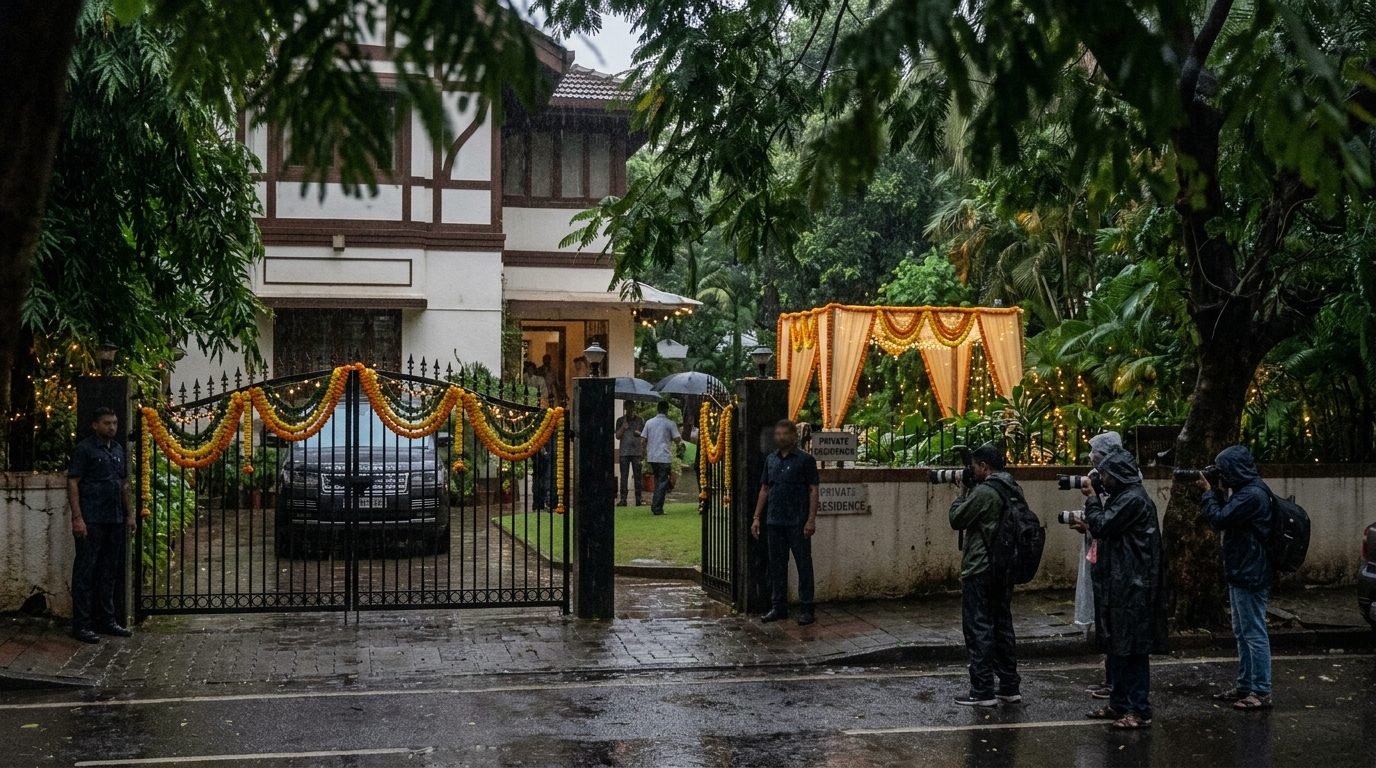
Aamir Khan Confirms July 5 Wedding to Gauri Spratt: 'The News About the Marriage Is True'
The 61-year-old superstar has put months of speculation to rest, confirming an intimate registered marriage to longtime partner Gauri Spratt at his Mumbai home, with no grand celebration planned.