ISRO Fires Semi-Cryogenic Engine Power Head at 175 Tonnes in Landmark Hot Test
ISRO successfully ran its indigenous semi-cryogenic engine power head at 175 tonnes of thrust, clearing a key hurdle toward powering the LVM3 upgrade and the Next Generation Launch Vehicle.
The NE Times Technology Desk
Commentary & Analysis ·
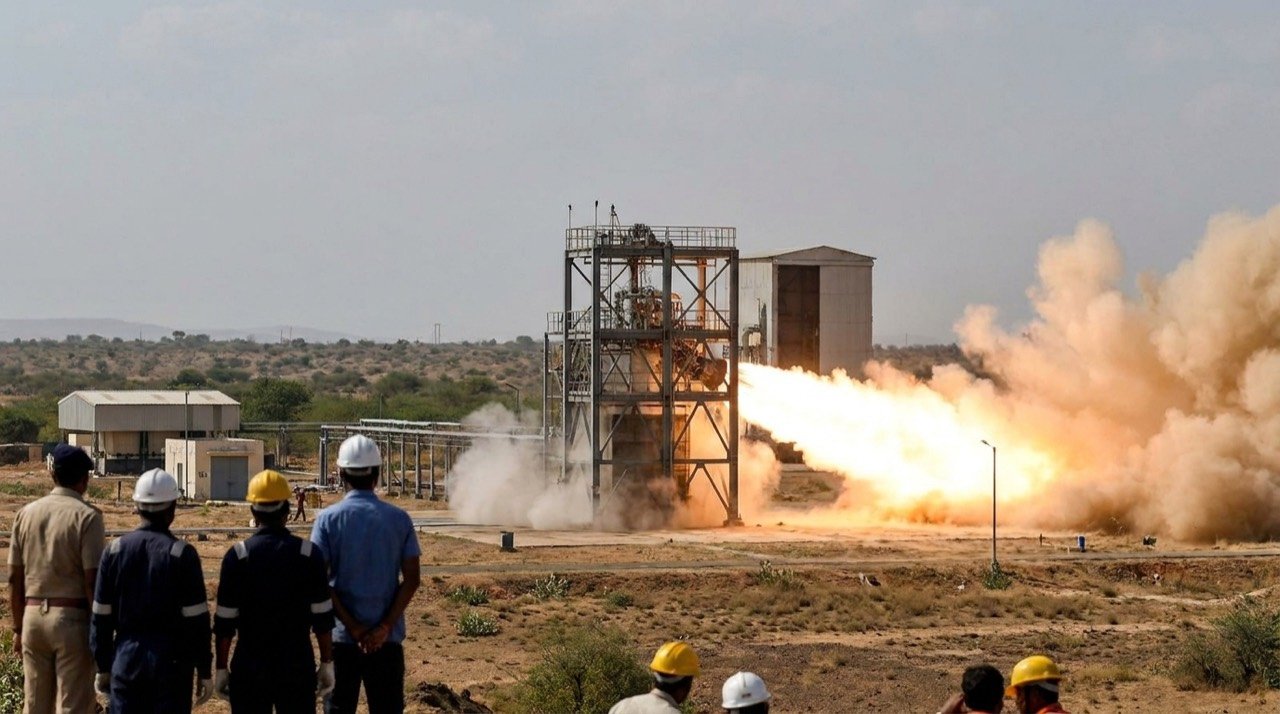
The Indian Space Research Organisation has cleared one of the toughest engineering milestones in its launch-vehicle roadmap, successfully firing the power head of its indigenous semi-cryogenic engine at a thrust level of 175 tonnes. The hot test, conducted at the ISRO Propulsion Complex in Mahendragiri, Tamil Nadu, demonstrated stable operation of the engine's most complex sub-assembly and brings India a step closer to a heavier, more efficient class of rockets.
What was tested
The trial evaluated the Power Head Test Article, which integrates almost every major component of the engine except the thrust chamber. For the first time, the power head ran at 175 tonnes of thrust, equivalent to roughly 88 per cent of its full rated capacity. The engine burns liquid oxygen as the oxidiser and refined kerosene as fuel, a propellant combination that is cheaper, denser and more environment-friendly than the storable toxic propellants used in some older stages.
Officials described the firing as the eighth successful hot test in the development programme, following earlier runs at lower thrust levels. Engineers said the engine behaved as predicted across the demanding sequence, validating the turbopump, gas generator and feed systems that together form the heart of the propulsion unit.
Why it matters for India's rockets
Once fully qualified, the semi-cryogenic engine is expected to replace the liquid core stage of the existing Launch Vehicle Mark-3 (LVM3), raising the payload it can carry to orbit. The same engine cluster is slated to serve as the primary propulsion for the Next Generation Launch Vehicle (NGLV), a heavy-lift rocket envisaged for future deep-space missions, crewed flights and the construction of the planned Bharatiya Antariksh Station.
A more powerful core stage would let India loft heavier communication satellites, reduce dependence on foreign launchers for big payloads and support reusable-rocket ambitions that the agency has signalled for the coming decade.
- Power head fired at 175 tonnes of thrust, about 88 per cent of full rating.
- Eighth successful hot test in the semi-cryogenic engine programme.
- Uses liquid oxygen and kerosene propellants for higher efficiency.
- Intended to upgrade the LVM3 core stage and power the NGLV.
- Full rated thrust of 200 tonnes targeted in the next test phase.
The road ahead
With the power head validated, ISRO's next phase will push the engine toward its full rated thrust of 200 tonnes and eventually integrate the thrust chamber for complete engine-level qualification. Each step narrows the gap between laboratory hardware and a flight-ready stage.
The agency framed the result as a confidence boost for a busy 2026-27, which also includes the uncrewed Gaganyaan test flights and an expanding pipeline of scientific and commercial launches. If qualification stays on schedule, India's heavy-lift capability could take a decisive leap before the end of the decade.
The NE Times View
This is the unglamorous engineering that decides whether India can launch heavier payloads cheaply, and it matters more than the headlines suggest. A homegrown semi-cryogenic power head reduces dependence on imported propulsion and underpins both an upgraded LVM3 and the Next Generation Launch Vehicle. The work to watch now is the leap from a component test to a flight-ready stage; that is where ambitious timelines usually slip.
This article is original commentary and analysis by The NE Times. Background facts were referenced from Business Standard and PTI.
You may also like to read
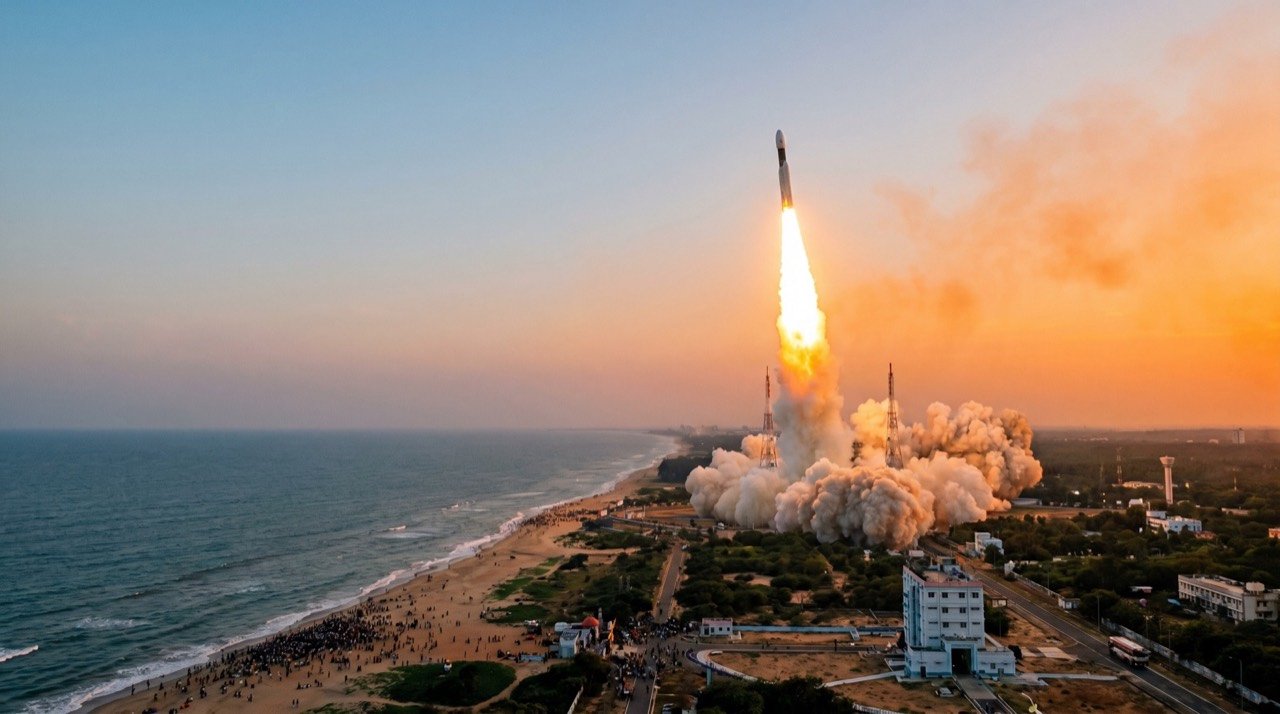
ISRO Successfully Launches Next-Generation Navigation Satellite
The mission strengthens India's homegrown positioning system, with applications spanning aviation, disaster response and everyday navigation.
ISRO Pushes Toward First Uncrewed Gaganyaan Flight With Humanoid Vyommitra Aboard
ISRO has confirmed that flight integration for its first uncrewed Gaganyaan mission is underway, with the humanoid robot Vyommitra set to ride an LVM3 rocket ahead of a crewed launch in 2027.
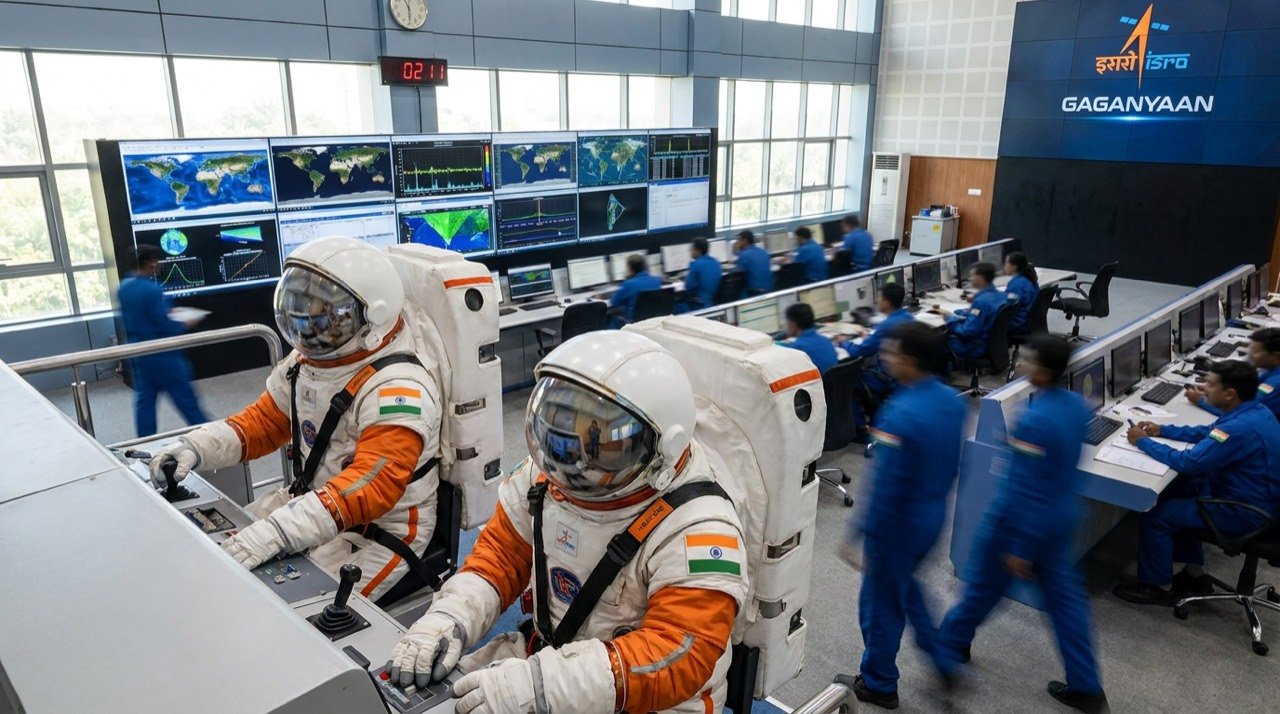
ISRO Lines Up Uncrewed Gaganyaan Test Flights Ahead of 2027 Crewed Mission
The space agency has detailed a packed schedule of uncrewed missions for 2026, including the debut Gaganyaan flight carrying the humanoid robot Vyommitra, as it prepares for India's first human spaceflight.
India and ESA Deepen Human Spaceflight Ties, Eye Joint Work on Space Station
ISRO and the European Space Agency are advancing cooperation on human spaceflight, astronaut training and lunar science, opening the door to European involvement in the planned Bharatiya Antariksh Station.
More from this section
More
India Tech Funding Climbs to $7.2 Billion in H1 2026 Even as Deal Count Slumps
Indian tech startups raised $7.2 billion in the first half of 2026, up 12 per cent year-on-year, but the number of funding rounds fell sharply as capital concentrated in a handful of mega-deals.
OnePlus N6 Headlines a Crowded End-June Gadget Calendar in India
The OnePlus N6, with its 8,000mAh battery and sub-Rs 25,000 price tag, leads a busy late-June run of smartphone launches in India spanning OnePlus, Oppo and Samsung.
IndiaAI Mission Backs Eight New Foundational Models and Expands AI Data Lab Network
The government's IndiaAI Mission has greenlit eight new indigenous foundational model projects and rolled out 30 fresh AI Data Labs, deepening the push for sovereign, India-built artificial intelligence.