ISRO Pushes Toward First Uncrewed Gaganyaan Flight With Humanoid Vyommitra Aboard
ISRO has confirmed that flight integration for its first uncrewed Gaganyaan mission is underway, with the humanoid robot Vyommitra set to ride an LVM3 rocket ahead of a crewed launch in 2027.
The NE Times Technology Desk
Commentary & Analysis ·
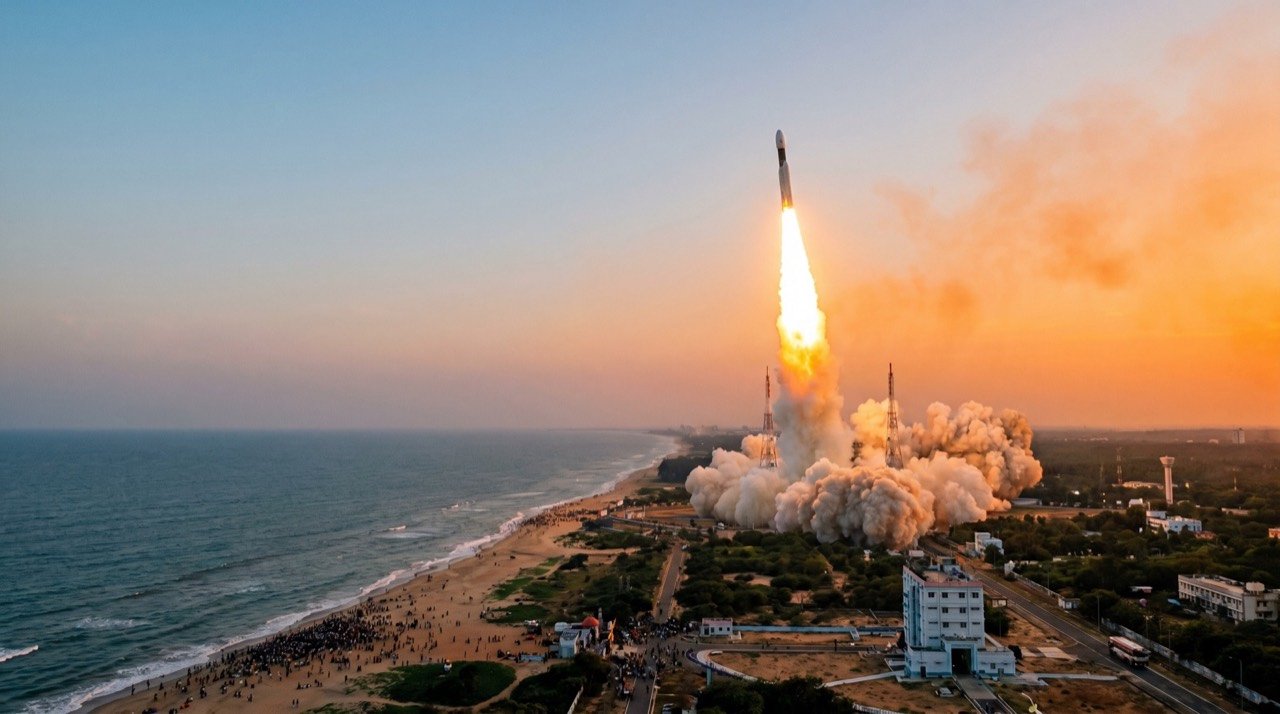
ISRO is moving into the decisive phase of its human spaceflight programme, with the agency confirming that flight integration of the propulsion stages of its LVM3 rocket is complete and the launch campaign for the first uncrewed Gaganyaan mission, G1, has begun. The flight will carry Vyommitra, a half-humanoid robot designed to simulate the conditions an astronaut would experience, and is now slated for the second half of 2026.
Why an uncrewed flight first
Before any Indian astronaut flies, ISRO must prove that its systems can keep a crew alive and return them safely. The G1 mission is built to validate exactly that: the heavy-lift LVM3 launch vehicle, the aerodynamics of the crew module, the fiery re-entry sequence and the recovery of the capsule after it splashes down. Vyommitra serves as a stand-in occupant, monitoring module parameters, issuing alerts and exercising life-support routines throughout the flight.
The road to a crewed mission
ISRO Chairman Dr V Narayanan has described the programme as progressing in deliberate stages. G1 is to be followed by further uncrewed test flights, with the first crewed mission, which will take three Indian astronauts to low Earth orbit and bring them back, now targeted for 2027. The phased approach reflects the agency's emphasis on safety over speed, even amid public anticipation.
- First uncrewed Gaganyaan flight (G1) slated for the second half of 2026
- Humanoid robot Vyommitra to simulate astronaut conditions on board
- LVM3 propulsion stage integration completed; launch campaign underway
- First crewed mission targeted for 2027 with three Indian astronauts
What it means for India
A successful G1 flight would make India one of a small group of nations to demonstrate indigenous human-rated spaceflight capability. It also feeds a wider roadmap that includes the proposed Bharatiya Antariksh Station and future lunar ambitions, anchoring space as a pillar of national technological prestige and a growing commercial sector.
“The uncrewed flights are where the programme proves its safety credentials; nothing about crewed spaceflight is rushed.”
— ISRO official, paraphrased
Each milestone in the Gaganyaan campaign is watched closely, both for its engineering significance and for what it signals about India's place in the new space race. The coming months will show whether G1 lifts off on schedule and clears the way for astronauts in 2027.
The NE Times View
An uncrewed test flight with Vyommitra aboard is exactly the methodical caution human spaceflight demands, and ISRO is right not to rush astronauts onto an unproven stack. The 2027 crewed timeline remains ambitious, but the agency has earned the benefit of the doubt. Success here would cement India among an elite handful of nations capable of putting humans in orbit independently.
This article is original commentary and analysis by The NE Times. Background facts were referenced from The Tribune and ThePrint.
You may also like to read
ISRO Lines Up Uncrewed Gaganyaan Test Flights Ahead of 2027 Crewed Mission
The space agency has detailed a packed schedule of uncrewed missions for 2026, including the debut Gaganyaan flight carrying the humanoid robot Vyommitra, as it prepares for India's first human spaceflight.
ISRO Successfully Launches Next-Generation Navigation Satellite
The mission strengthens India's homegrown positioning system, with applications spanning aviation, disaster response and everyday navigation.
India Backs Homegrown Space Tech With First Technology Adoption Fund Grants
Space regulator IN-SPACe has picked TakeMe2Space, SatSure and Astrobase for its maiden funding round, spotlighting an AI-powered star tracker built in Hyderabad.
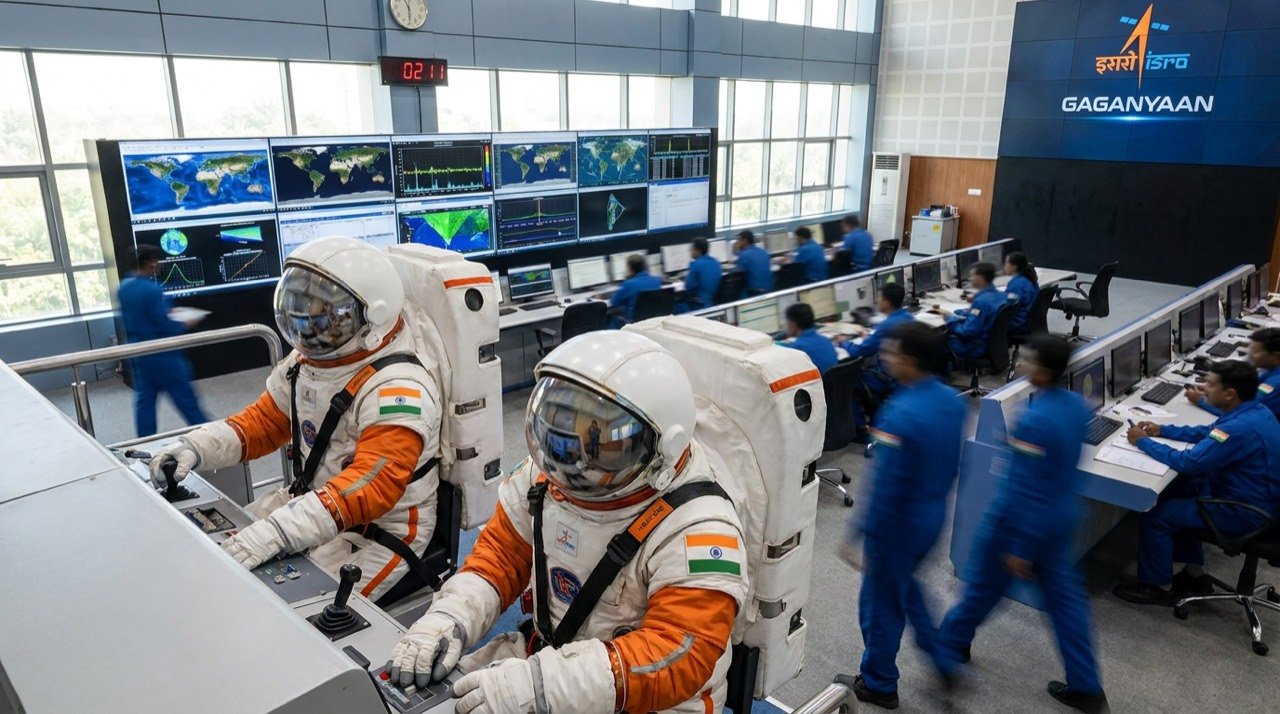
India and ESA Deepen Human Spaceflight Ties, Eye Joint Work on Space Station
ISRO and the European Space Agency are advancing cooperation on human spaceflight, astronaut training and lunar science, opening the door to European involvement in the planned Bharatiya Antariksh Station.
More from this section
More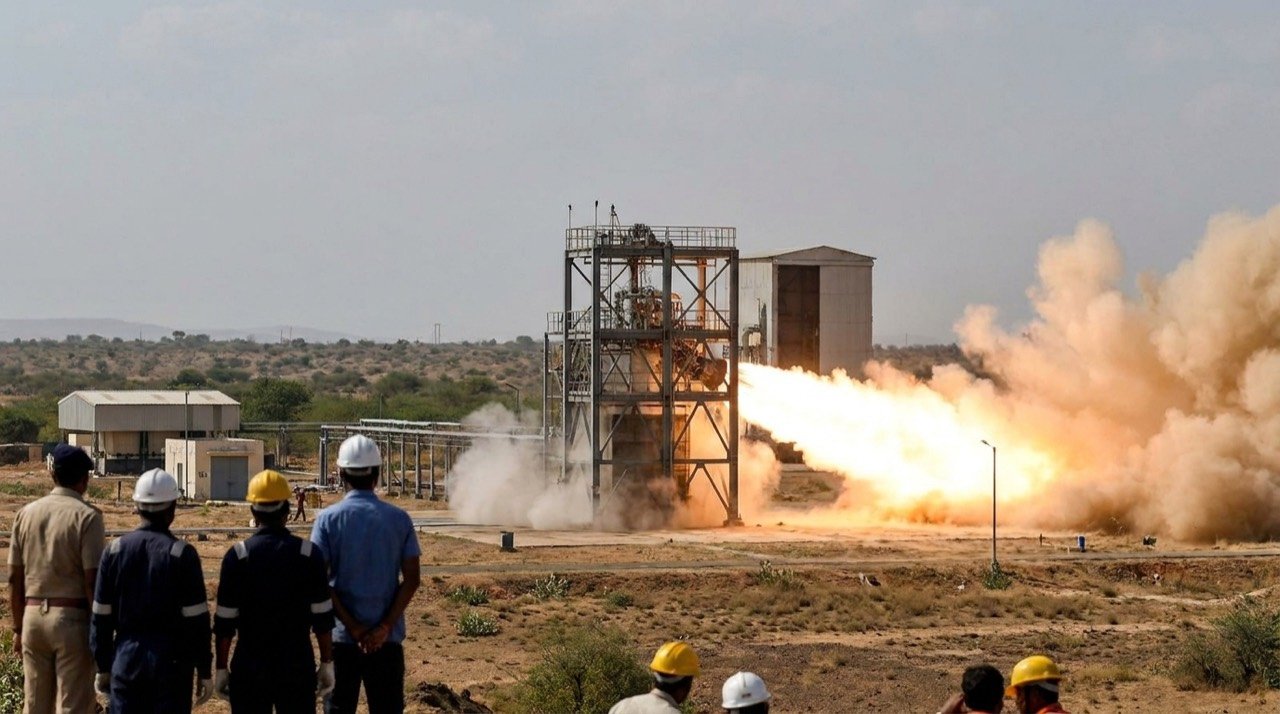
ISRO Fires Semi-Cryogenic Engine Power Head at 175 Tonnes in Landmark Hot Test
ISRO successfully ran its indigenous semi-cryogenic engine power head at 175 tonnes of thrust, clearing a key hurdle toward powering the LVM3 upgrade and the Next Generation Launch Vehicle.
India Tech Funding Climbs to $7.2 Billion in H1 2026 Even as Deal Count Slumps
Indian tech startups raised $7.2 billion in the first half of 2026, up 12 per cent year-on-year, but the number of funding rounds fell sharply as capital concentrated in a handful of mega-deals.
OnePlus N6 Headlines a Crowded End-June Gadget Calendar in India
The OnePlus N6, with its 8,000mAh battery and sub-Rs 25,000 price tag, leads a busy late-June run of smartphone launches in India spanning OnePlus, Oppo and Samsung.