India's Economy Grows 7.7% in FY26, Fastest Since Post-Covid Rebound
March-quarter growth of 7.8% beat forecasts as services and construction powered the full-year expansion, cementing India's lead among major economies.
Commentary & Analysis ·
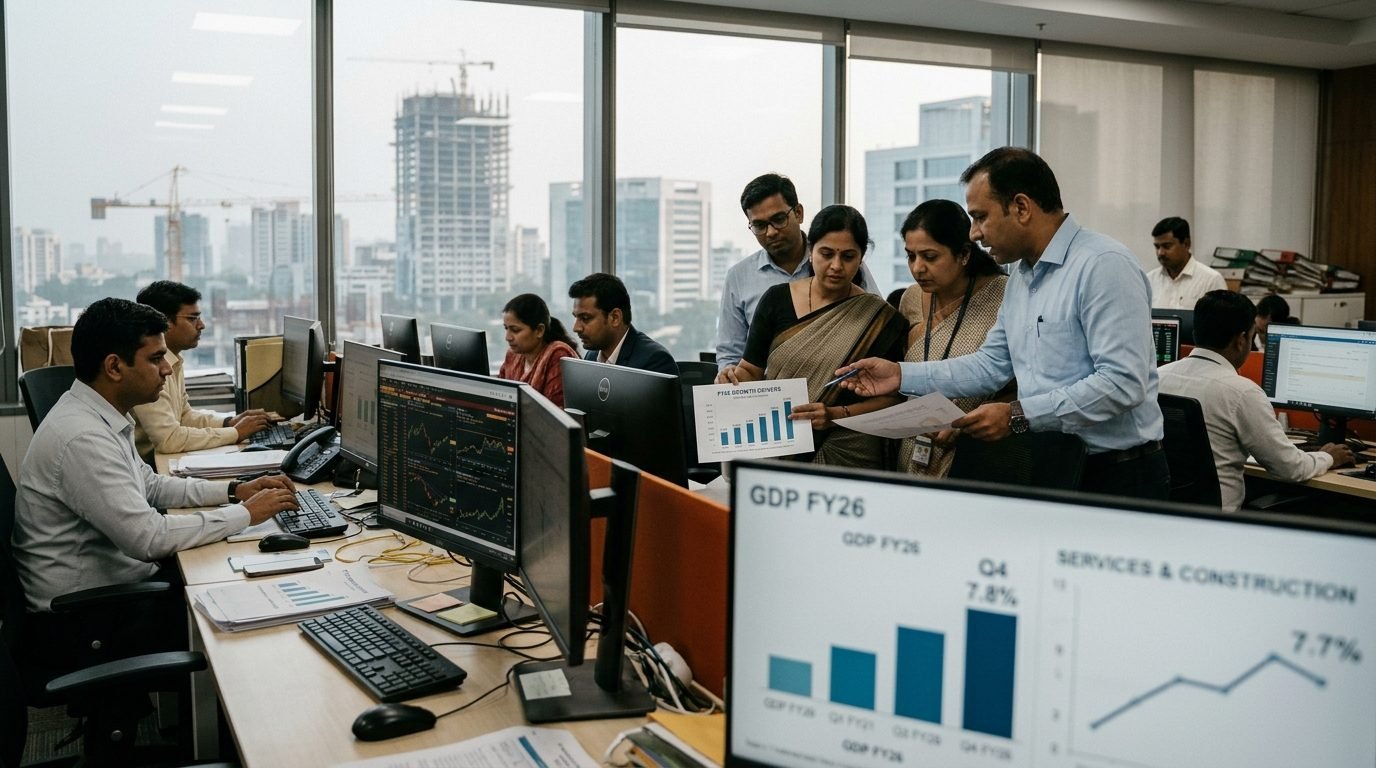
India's economy expanded 7.8 percent year-on-year in the March 2026 quarter, comfortably ahead of market expectations of around 7.2 percent, even as it eased slightly from the upwardly revised 8 percent of the previous quarter. The beat reaffirms India's position at the front of the pack among major economies and points to underlying momentum stronger than analysts had penciled in.
A growth rate that clears forecasts by more than half a percentage point is a meaningful surprise, and the modest sequential dip from a revised 8 percent does little to dull the picture. The headline confirms an economy running hot in services and construction even as parts of the global environment turn more uncertain.
A strong full-year showing
For the full 2026 financial year, GDP grew 7.7 percent, the strongest pace since the sharp rebound from the pandemic recession in FY2022, keeping India firmly among the world's fastest-growing large economies. Excluding that post-Covid bounce, which was inflated by a low base, a 7.7 percent expansion represents one of the more robust full-year performances in recent memory.
Sustaining a pace near 8 percent across a full year is notable for an economy of India's size, where maintaining high growth becomes harder as the base grows larger. The figure cements the narrative of India as the standout performer among major economies at a time when much of the world is grappling with slower expansion.
Where the growth came from
Services led the charge. Trade, hotels, transport and communication grew 12.5 percent, while financial and real estate services rose 10.4 percent and construction added 8.4 percent. Manufacturing expanded a steadier 7.3 percent. The double-digit gains in the broad services categories did much of the heavy lifting, reflecting buoyant domestic activity in travel, logistics, finance and property.
Construction's solid 8.4 percent points to continued investment in infrastructure and real estate, while manufacturing's steadier 7.3 percent suggests the factory sector is growing reliably if less spectacularly. Together the composition shows growth that is broad-based across the major output categories rather than concentrated in a single sector.
- March-quarter growth of 7.8% beat the ~7.2% forecast.
- Full-year FY26 GDP growth of 7.7%, the strongest since FY2022.
- Trade, hotels, transport and communication grew 12.5%.
- Financial and real estate services rose 10.4%; construction 8.4%.
- Manufacturing grew 7.3%, mining 5.4%, agriculture 3.6%.
The softer spots
The weaker spots were mining at 5.4 percent and agriculture at 3.6 percent, the latter a reminder of how monsoon performance still shapes the rural economy. Agriculture's relatively subdued growth underscores that despite India's structural shift toward services and industry, the fortunes of a large share of the population remain tied to the weather and the strength of the monsoon.
A 3.6 percent reading for agriculture is not weak in absolute terms, but it trails the headline pace and highlights the persistent dependence of rural incomes on factors outside policymakers' control. Mining's 5.4 percent, meanwhile, is solid but lags the broader economy, reflecting the more cyclical and capital-intensive nature of the sector.
The figures arrive amid global trade uncertainty and persistent foreign outflows, underscoring that domestic investment and consumption are doing the heavy lifting for now. With external demand clouded by tariff tensions and capital flows volatile, the resilience of the domestic engine is what is keeping the expansion intact. The outlook hinges on whether that internal momentum can be sustained if global headwinds intensify, but for now the data depict an economy outpacing its peers and its own forecasts.
The NE Times View
A 7.7% expansion is genuinely the standout number among major economies, and the services-and-construction engine is real. The caveat editors owe readers: headline growth flatters an economy where private consumption and job creation remain uneven. Leading the world in GDP means little to households still waiting for that growth to reach wages, so celebrate the figure but watch what it does for the bottom half.
This article is original commentary and analysis by The NE Times. Background facts were referenced from CNBC, Trading Economics.
You may also like to read
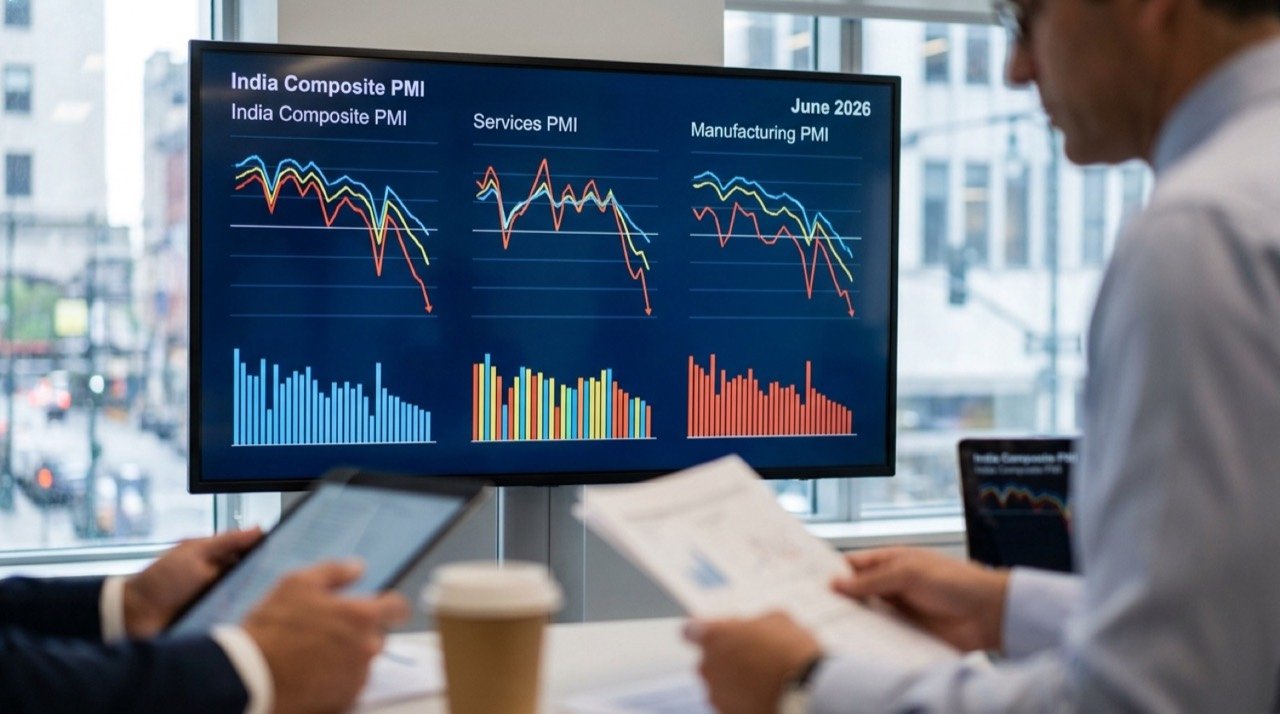
India's June Private Sector PMI Slows to a Three-Month Low
India's private sector kept expanding in June but at its weakest pace in three months, as softer demand and cooler business confidence struck a more cautious note across services and manufacturing.
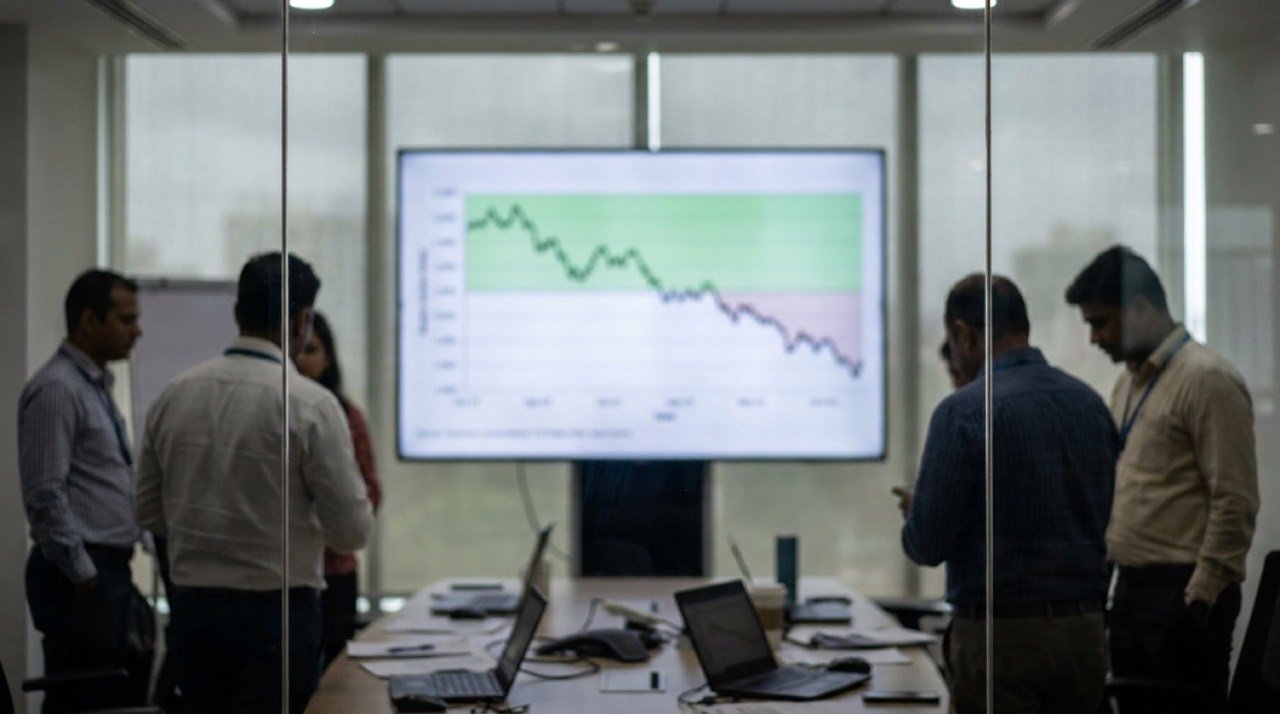
India's June PMI Eases but Holds Firmly in Expansion Zone
India's flash June PMI readings show private-sector momentum cooling across services and manufacturing, even as the economy stays comfortably above the line that separates growth from contraction.
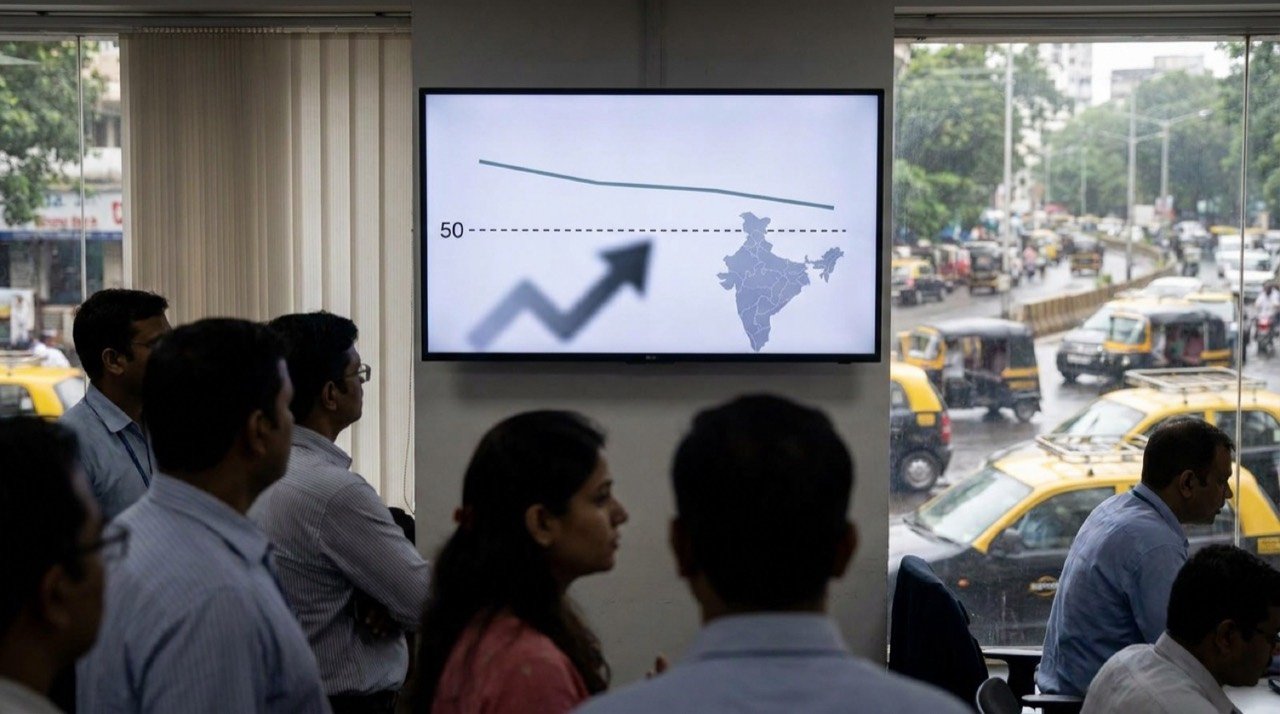
India Flash PMI Eases to 57.4 but Stays in Expansion
India's flash composite PMI slipped to 57.4 in June as demand and hiring lost momentum, yet the reading stayed well above the growth threshold, signalling resilient but more cautious activity.
India's Flash PMI Slows in June but Still Signals Solid Expansion
India's flash PMI eased to 57.4 in June from May's 12-month high, cooling momentum while staying firmly in expansion territory and pointing to continued resilience in manufacturing and services.
More from this section
More
Adani Case: US DOJ Pushes for Permanent Dismissal of Charges
The US Department of Justice has urged a judge to permanently dismiss charges against Gautam Adani, calling the case legally flawed — a reversal with consequences for markets, diplomacy and cross-border enforcement.

Akasa Air Inducts 40th Aircraft in Indian Aviation Scale-Up
Akasa Air's 40th aircraft, ferried to Bengaluru via Seattle, Reykjavik and Cairo, marks a fleet milestone for the young carrier and a fresh signal that India's aviation market remains firmly in expansion mode.
BARC Ratings Suspension Leaves Indian TV Industry Flying Blind
BARC's pause on television ratings has put India's broadcast measurement system under fresh scrutiny, leaving broadcasters, advertisers and media planners without the weekly audience data that anchors the TV economy.