Gram Chikitsalay Season 2 Review: TVF's Rural Healthcare Drama Finds Its Voice
TVF's Gram Chikitsalay returns for a sharper second season, anchoring rural healthcare, community trust and small-town power play in a village clinic led by Amol Parashar.
Commentary & Analysis ·
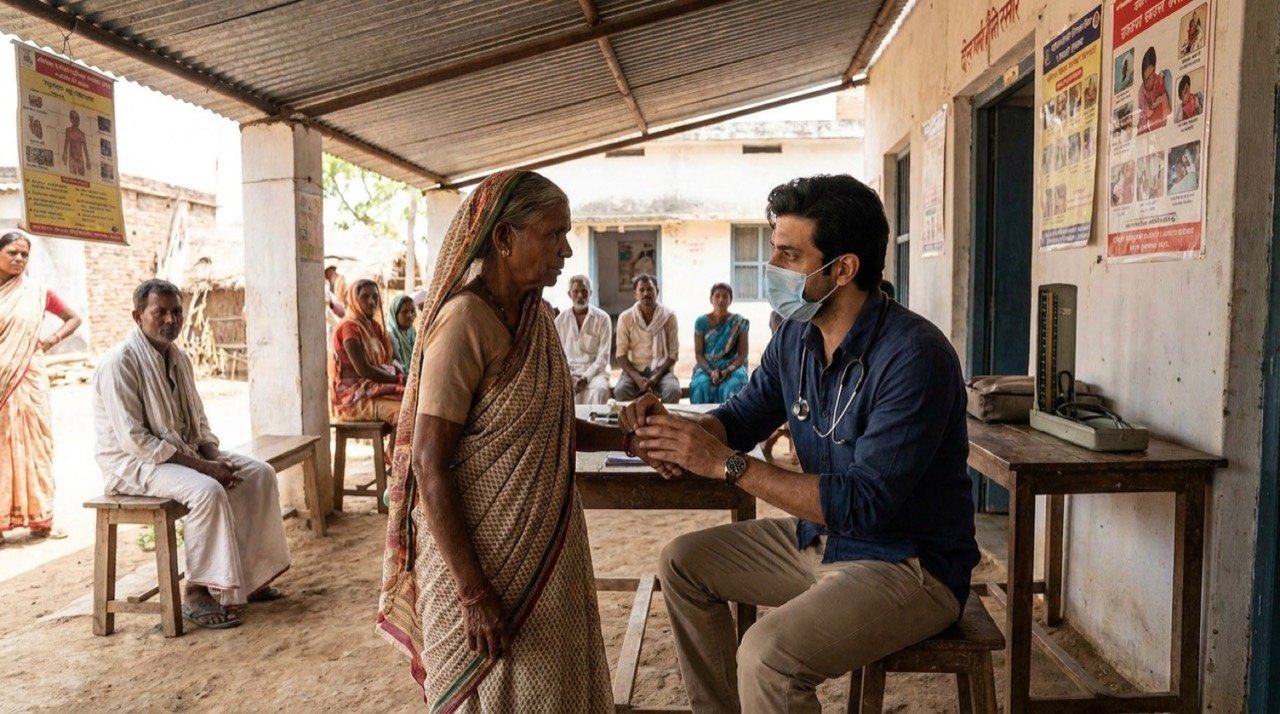
When Gram Chikitsalay Season 2 began drawing reviews on June 23, 2026, the verdict was hard to miss: TVF's village medical drama had returned with a firmer grip on what it wants to be. Led by Amol Parashar, the series uses a modest rural health centre as a stage for stories about access to medicine, the slow building of public trust, and the quiet contests of local power that shape life far from India's metros. Where the first season felt like a promising sketch, the second arrives as a fuller portrait.
A clinic as the centre of the story
The premise remains deceptively simple. A young, idealistic doctor runs a small clinic in a village where modern medicine competes daily with habit, hearsay and the authority of familiar faces. Patients arrive with ailments that are as much about circumstance as biology, and each consultation becomes a negotiation between what the doctor recommends and what the community is willing to accept.
Parashar carries this tension with restraint, playing a protagonist who is neither saviour nor cynic. The supporting ensemble fills out a recognisable rural world, where the compounder, the village elder and the anxious patient each pull the narrative in their own direction.
Why the second season works better
Reviewers noted that the new season corrects the wobble of its predecessor, settling into a steadier rhythm and a clearer identity. The humour is gentler and better earned, the social observation less didactic, and the everyday detail of village life more lived-in than performed.
Crucially, the show resists turning healthcare access into a lecture. It lets the comedy and the conflict do the arguing, trusting viewers to register the gap between policy on paper and care on the ground.
What it signals for Indian streaming
Gram Chikitsalay arrives at a moment when Indian streaming is rediscovering the value of grounded, local storytelling rather than leaning only on glossy thrillers and urban romances. By rooting drama in a primary health centre, TVF demonstrates that subjects often treated as policy concerns can become genuinely entertaining without losing their social weight.
- Amol Parashar anchors the series as the village doctor
- The clinic frames stories of trust, access and local power
- Season 2 sharpens tone and identity over Season 1
- Humour and empathy carry the social message
- Part of a wider streaming shift toward rooted, regional narratives
“The most underrated gem of Indian streaming just got better, finding its own voice in the second outing.”
— Critics' consensus on Gram Chikitsalay Season 2
For audiences, the appeal lies in recognition: the dusty waiting room, the half-trusted prescription, the doctor who must win a village over one patient at a time. If the season's reception holds, Gram Chikitsalay looks set to cement its place as proof that small stories, told with care, can travel far on streaming platforms.
The NE Times View
TVF has carved a niche turning India's overlooked institutions, panchayats, exam factories, now village clinics, into honest, watchable drama, and a sharper second season suggests the formula still has depth. Beyond the entertainment, the show's value is cultural: it puts rural healthcare and small-town power dynamics before urban audiences who rarely see them. When a streaming hit makes the village clinic compelling, it does quiet public service alongside the comedy.
This article is original commentary and analysis by The NE Times. Background facts were referenced from India Today and Hindustan Times.
You may also like to read
Kohrra Returns: Season 2 Of The Netflix Crime Drama Earns Strong Notices
The acclaimed Punjab-set crime thriller Kohrra is back on Netflix for a second season, with a fresh murder mystery and a cast addition that has drawn warm reviews from critics.

'Gullak' Season 5 Returns to Sony LIV With a New Annu and a Wi-Fi-Era Mishra Household
TVF's beloved middle-class saga came back on June 5 with all seven episodes on Sony LIV, but a casting change for elder son Annu split the show's loyal fanbase.
Ab Hoga Hisaab Trailer Sets Up A Punjab Revenge Saga Ahead Of June 18 Premiere
The Amazon MX Player series fronted by Sanjay Kapoor, Shaheer Sheikh and Mouni Roy released its trailer ahead of a free June 18 streaming launch, marking actor Avinash Mishra's OTT debut.
'Raakh' Review Round-Up: Ali Fazal Anchors a Haunting 1978-Set Crime Thriller Inspired by the Ranga-Billa Case
Director Prosit Roy's grim, slow-burn web series, drawn from the chilling 1978 kidnapping case that shook the nation, has earned critical praise for its restraint and Ali Fazal's central performance, even as some reviewers flag pacing concerns.
More from this section
More
72nd National Film Awards: Fans Back Mammootty, Allu Arjun, Sai Pallavi
Speculation around the 72nd National Film Awards is intensifying as fan communities across India's language film industries champion favourites including Mammootty, Allu Arjun and Sai Pallavi ahead of any official announcement.

Aamir Khan Marries Gauri Spratt in Private Pali Hill Ceremony
Aamir Khan and Gauri Spratt tied the knot at the actor's Pali Hill home in Mumbai on July 5, turning a deliberately small family ceremony into Bollywood's biggest story of the day.

Akanksha Chamola's Lock Upp 2 Confession Sets Reality TV Abuzz
A personal revelation by Akanksha Chamola ahead of Lock Upp 2 has handed the reality show a viral talking point, underlining how confession-driven formats continue to dominate Indian television conversation.