ED Searches Rajesh Exports Premises in FEMA Probe Across Bengaluru and Mumbai
The Enforcement Directorate has searched Rajesh Exports-linked premises in Bengaluru and Mumbai in a FEMA probe into alleged foreign exchange violations at the major gold and jewellery exporter.
Commentary & Analysis ·
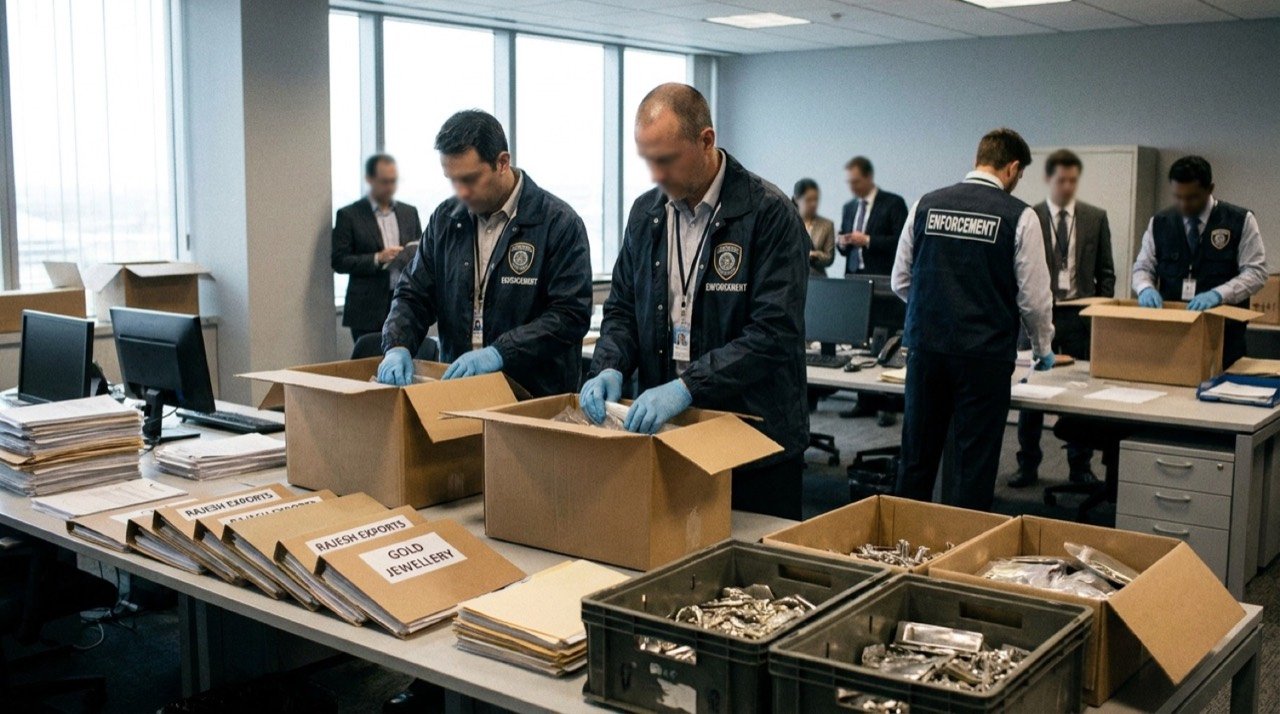
The Enforcement Directorate has carried out searches at locations linked to Rajesh Exports in Bengaluru and Mumbai as part of an investigation under the Foreign Exchange Management Act, or FEMA. According to reports, the agency is examining alleged foreign exchange violations and financial transactions connected with the jewellery exporter, one of India's prominent gold and jewellery businesses.
What the searches involve
The action spanned multiple premises across the two cities, a standard step when investigators seek documents, digital records and other material relevant to a financial probe. At this stage the matter remains at the search-and-record phase, and the allegations have not been tested in court.
FEMA is a civil framework governing cross-border transactions and foreign exchange dealings. Investigations under it typically focus on whether funds moved in compliance with the rules, and on the documentation supporting overseas trade and remittances.
Why it matters for the sector
For investors and the wider gems and jewellery industry, the raids carry weight because compliance with foreign exchange rules, export documentation and fund flows is central to cross-border trade. Gold and jewellery exporters operate on thin margins and high volumes, making regulatory scrutiny a material factor.
Any uncertainty around a large exporter can ripple through suppliers, lenders and counterparties, even before formal findings emerge. Markets tend to react to the perception of risk as much as to confirmed wrongdoing, which makes the company's response and disclosures important.
Due process and what comes next
It is important to note that a search is an investigative step, not a finding of guilt. The allegations remain untested, and the company will have the opportunity to respond and contest any case that follows.
The coming days may clarify what documents were seized, whether any summons are issued to executives and how Rajesh Exports formally addresses the probe to investors and regulators.
- The ED searched Rajesh Exports-linked premises in Bengaluru and Mumbai.
- The probe falls under the Foreign Exchange Management Act (FEMA).
- Investigators are examining alleged forex violations and financial transactions.
- The allegations are untested in court and remain at the search stage.
- Forex compliance, export documentation and fund flows are central to the sector.
“A search is an investigative step, not a verdict; the substance will emerge from what is seized and how the company responds.”
— The NE Times markets view
As the investigation proceeds, attention will turn to the scope of the seized records and any follow-up action by the agency. For a sector built on cross-border trust and tight compliance, the episode is a reminder of how closely foreign exchange rules are watched in India's gold and jewellery trade.
The NE Times View
Searches at a major gold exporter over alleged forex violations land in a sector long shadowed by round-tripping and over-invoicing suspicions. Scrutiny of FEMA compliance in bullion trade is legitimate and overdue. The caveat is familiar: ED raids generate headlines far more reliably than convictions. Markets and workers deserve a probe that ends in a clear finding, not an indefinite cloud over a listed company.
This article is original commentary and analysis by The NE Times. Background facts were referenced from The Economic Times and Business Standard.
You may also like to read
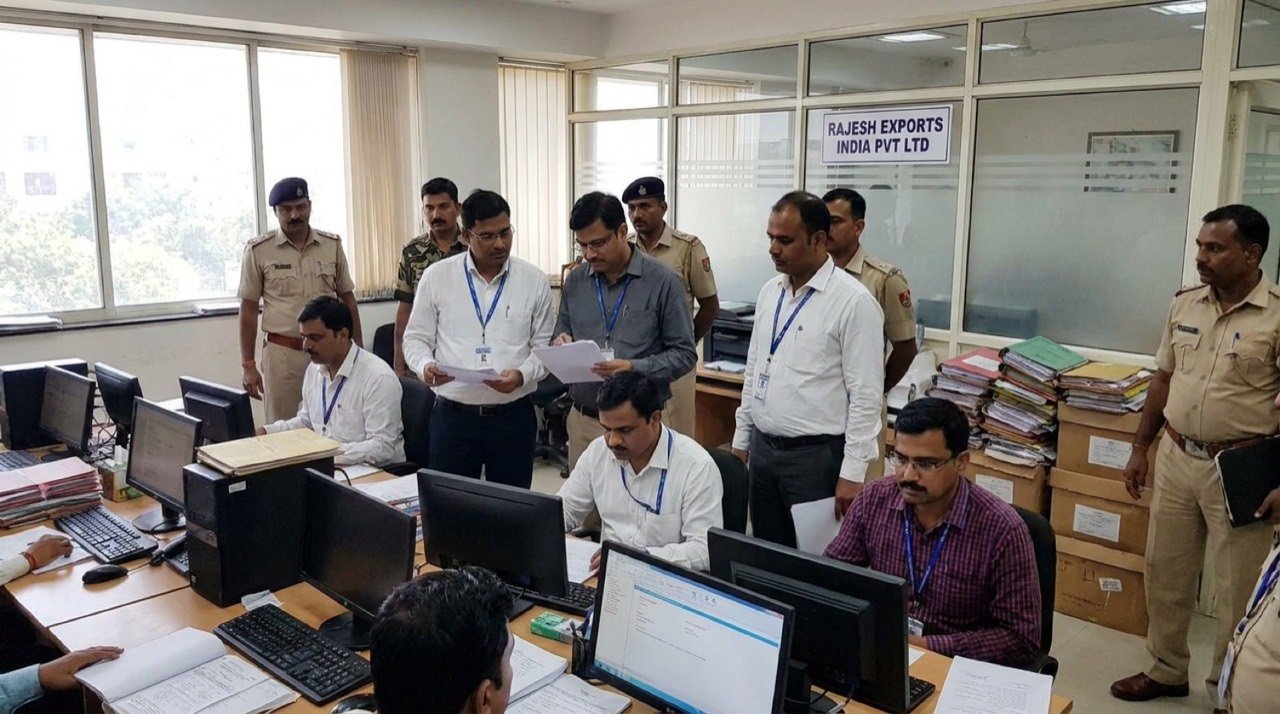
ED Searches Rajesh Exports In Bengaluru And Mumbai Over Alleged FEMA Violations
Enforcement Directorate searches at locations linked to gold refiner Rajesh Exports follow SEBI scrutiny of disclosures, putting corporate governance and FEMA compliance back in the investor spotlight.
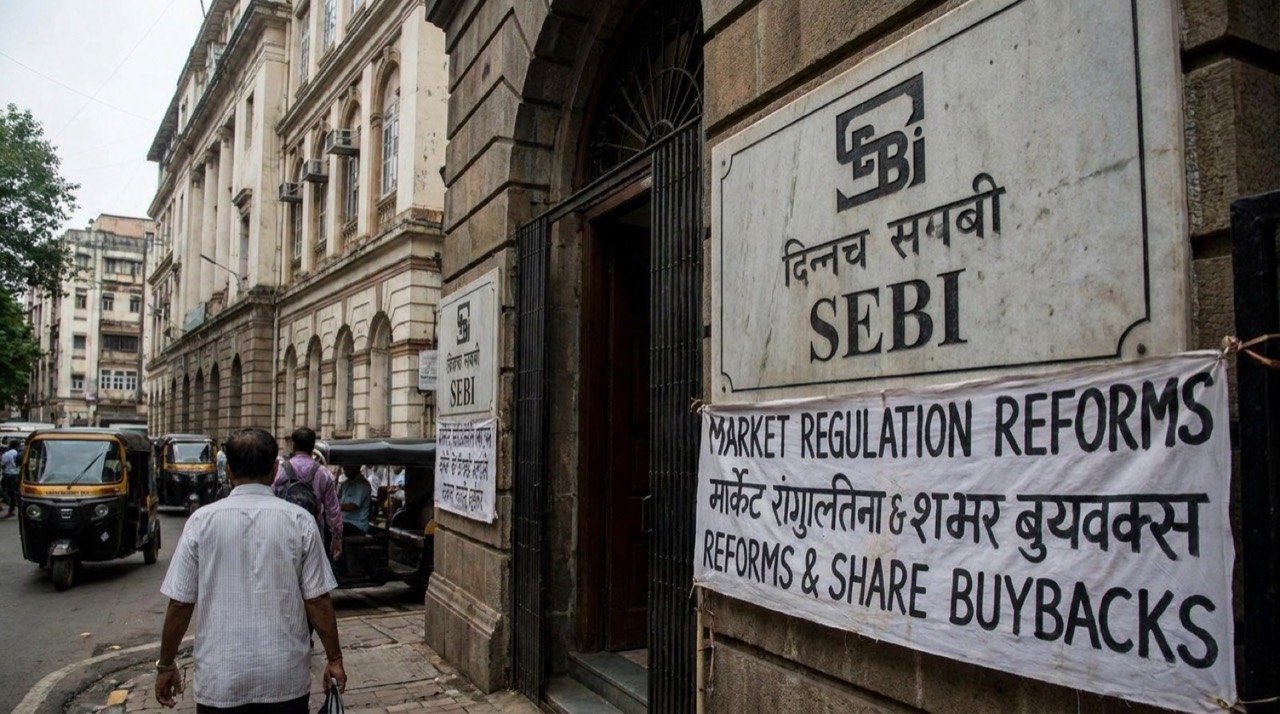
SEBI Reform Push Aims to Simplify Market Plumbing and Revive Open-Market Buybacks
SEBI has proposed a simpler rulebook for stock exchanges and clearing corporations and cleared the return of open-market share buybacks from August 1, signalling a lighter-touch yet sturdier market framework.
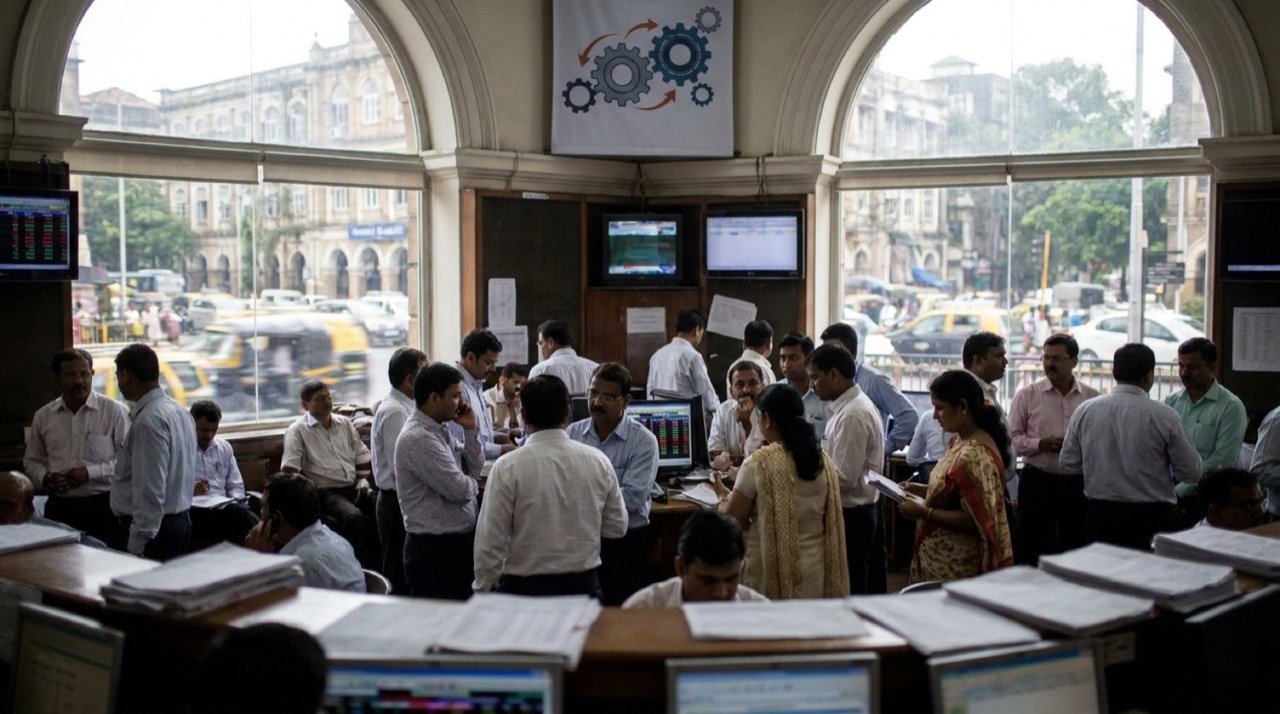
SEBI Proposes Simpler Rulebook for Stock Exchanges, Clearing Firms and Brokers
India's market regulator SEBI has proposed a sweeping ease-of-business overhaul of technology, compliance and reporting rules for exchanges and intermediaries, promising clearer obligations without diluting investor protection.

Gameskraft PMLA Arrests Face Scrutiny After Karnataka HC Order
A Karnataka High Court order over arrests in the Gameskraft money-laundering case has reignited debate on enforcement standards in India's online gaming sector.
More from this section
More
Adani Case: US DOJ Pushes for Permanent Dismissal of Charges
The US Department of Justice has urged a judge to permanently dismiss charges against Gautam Adani, calling the case legally flawed — a reversal with consequences for markets, diplomacy and cross-border enforcement.

Akasa Air Inducts 40th Aircraft in Indian Aviation Scale-Up
Akasa Air's 40th aircraft, ferried to Bengaluru via Seattle, Reykjavik and Cairo, marks a fleet milestone for the young carrier and a fresh signal that India's aviation market remains firmly in expansion mode.
BARC Ratings Suspension Leaves Indian TV Industry Flying Blind
BARC's pause on television ratings has put India's broadcast measurement system under fresh scrutiny, leaving broadcasters, advertisers and media planners without the weekly audience data that anchors the TV economy.