Brent tops $85 as the Strait of Hormuz chokes: what the US-Iran escalation means for India's oil bill
India's Supreme Court imposed Rs 3 lakh costs on Samay Raina, Ranveer Allahbadia and Ashish Chanchlani after finding non-compliance with directions in a disability-related case.
Commentary & Analysis ·

Verified key facts
- Brent September futures hit $85.92 a barrel on 14 July, the highest since 15 June, after rising 3.8% on Tuesday and 9.6% the previous day
- Brent is up about 19% from late-February levels, before the current round of hostilities began
- Strait of Hormuz transits collapsed to 57 between Friday and Sunday, a drop of more than 50% week-on-week, against a pre-conflict norm of about 130 vessels daily
- India's June petroleum and crude imports rose 23% year-on-year to $19.32 billion, helping widen the trade deficit to $30.43 billion
- Indian Navy destroyers are escorting tankers in the Gulf of Oman as war-risk insurance costs climb
Oil at a one-month high
Brent crude climbed above $85 a barrel this week as the confrontation between the United States and Iran entered its most dangerous phase yet. September futures touched $85.92 on Tuesday, 14 July, the highest since 15 June, Al Jazeera reported. The benchmark rose 3.8 per cent on the day after jumping 9.6 per cent in the previous session.
The rally has now unwound the entire relief slide of June, when hopes of a negotiated settlement briefly pushed prices back towards pre-war levels. Brent trades roughly 19 per cent above where it stood in late February, before the first strikes on Iran, according to Al Jazeera's market data.
A three-day spiral of attacks
The trigger was a fresh round of hostilities that began at the weekend. US Central Command said its forces conducted a seven-hour operation against dozens of military targets along Iran's coastline, aimed at degrading Tehran's ability to attack commercial shipping. Iran's Revolutionary Guard responded by striking two oil supertankers and launching missiles and drones at US assets in Kuwait and Bahrain, Al Jazeera reported.
US President Donald Trump said Washington would reimpose its blockade of Iranian ports and would charge transit fees as the self-declared guardian of the waterway. He warned that Iranian power plants and bridges could be targeted next unless Tehran returned to negotiations. Iran, for its part, declared the strait closed until further notice.
Hormuz traffic is grinding to a halt
The commercial consequences are visible in ship-tracking data. Only 57 vessels transited the Strait of Hormuz between Friday and Sunday, a fall of more than 50 per cent from the previous week, Al Jazeera reported. Before the conflict, about 130 vessels moved through the strait every day.
Roughly a fifth of the world's oil normally passes through the channel. Analysts quoted by Al Jazeera were blunt about the risk. June Goh of Sparta Commodities said crude oil is fast losing its strategic reserve buffer. Rory Johnston of Commodity Context said traffic through Hormuz is grinding to a halt. Bart Melek of TD Securities said a move towards $100 a barrel is possible if the disruption persists.
Why India is exposed
India imports the overwhelming majority of the crude it consumes, and a large share arrives through or near the Gulf. The pain is already showing in official data. Petroleum and crude imports rose 23 per cent year-on-year to $19.32 billion in June. The merchandise trade deficit widened to a June record of $30.43 billion, per Commerce Ministry figures.
US tariff pressure aimed at discouraging Indian purchases of Russian oil has narrowed New Delhi's options for cheaper barrels, BusinessToday reported. Freight and war-risk insurance premiums on Gulf routes have also climbed. The Indian and Pakistani navies have both deployed destroyers to escort tankers in the Gulf of Oman, Al Jazeera noted, though not inside the strait itself.
The domestic fallout spreads across sectors:
- Oil marketing companies face margin pressure if retail fuel prices are held steady
- Airlines, paints, chemicals and logistics firms confront higher input costs
- A wider import bill pressures the rupee and complicates RBI policy with inflation already above the 4 per cent target
- Upstream producers benefit from higher realisations on domestic crude
The timing compounds the policy dilemma. Retail inflation is already past the central bank's target. A sustained oil rally would feed through to transport and manufactured goods prices, narrowing the space for any further rate easing.
Markets are trading the barrel, not the earnings
Equity markets have moved in lockstep with the strait. The Sensex fell 561 points on Tuesday as crude surged, Business Standard reported, before a partial recovery on Wednesday led by banks. Oil and gas stocks have swung with each headline, and the India VIX has stayed elevated through July.
Wednesday's session showed the sensitivity in both directions. The Sensex opened more than 590 points higher on hopes that the worst was priced in, then surrendered most of the gain as crude refused to retreat. Buying in financials salvaged a 130-point advance by the close.
The government's buffer is better than in past crises. Diversified supplies from the United States, West Africa and Latin America, plus strategic reserves, give refiners some room. But none of those routes fully replaces Gulf volumes if the strait stays impaired for weeks.
What happens next
The immediate variable is diplomacy. Peace talks in Geneva were abruptly postponed in June, CNBC reported, and no new date has held since the latest strikes. Washington says military operations will continue until Tehran returns to the table.
The US insists the waterway remains passable under escort, saying 8.5 million barrels have moved through with military assistance. Shippers appear unconvinced. Many owners are declining Gulf voyages at any premium, insurers have repriced war risk sharply, and each day of reduced transits tightens the physical market a little further.
For India, the watch list is specific: the pace of Hormuz transits, war-risk premiums on tanker insurance, and the July trade data due next month. Analysts cited by Al Jazeera see prices staying volatile either way. A durable ceasefire could unwind the risk premium quickly; a strike on export infrastructure could do the opposite.
Sources
- Al Jazeera - Oil hits 1-month high as US-Iran fighting clouds Strait of Hormuz outlook (14 July 2026)
- Al Jazeera - Oil prices jump as US and Iran trade attacks over Strait of Hormuz (13 July 2026)
- Business Standard - Sensex falls 562 pts, Nifty ends at 24,052 as US-Iran tension escalates (14 July 2026)
- CNBC - Brent rises after US-Iran peace talks in Geneva are abruptly postponed (19 June 2026)
You may also like to read

TCS Earnings, Crude Oil and Global Cues Set to Steer Dalal Street
Indian equities head into a cue-heavy week as the June-quarter earnings season opens with TCS, while crude oil prices and global risk signals shape how investors position across sectors.
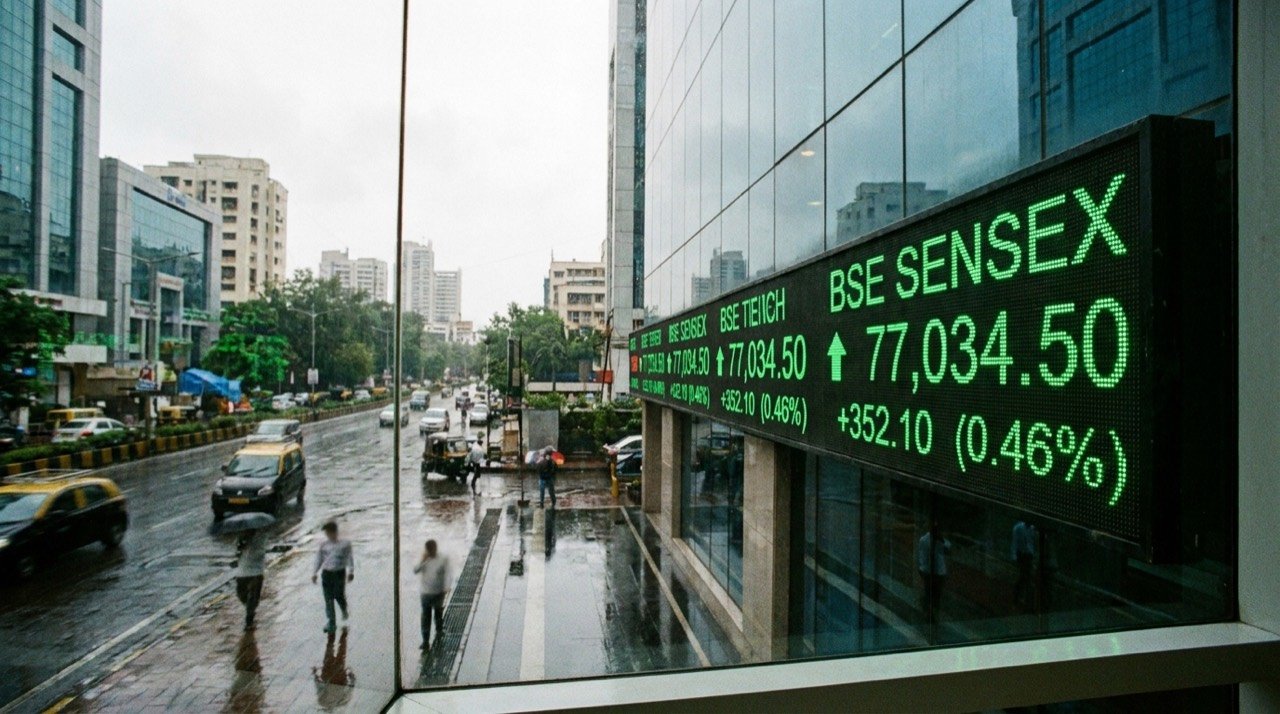
Sensex Holds Above 77,000 As Crude Pullback And RBI Liquidity Push Lift Indian Markets
Indian benchmarks extended gains around 24 June 2026 as easing crude prices, calmer West Asia tensions and fresh RBI liquidity support kept financial and auto stocks firmly in demand.
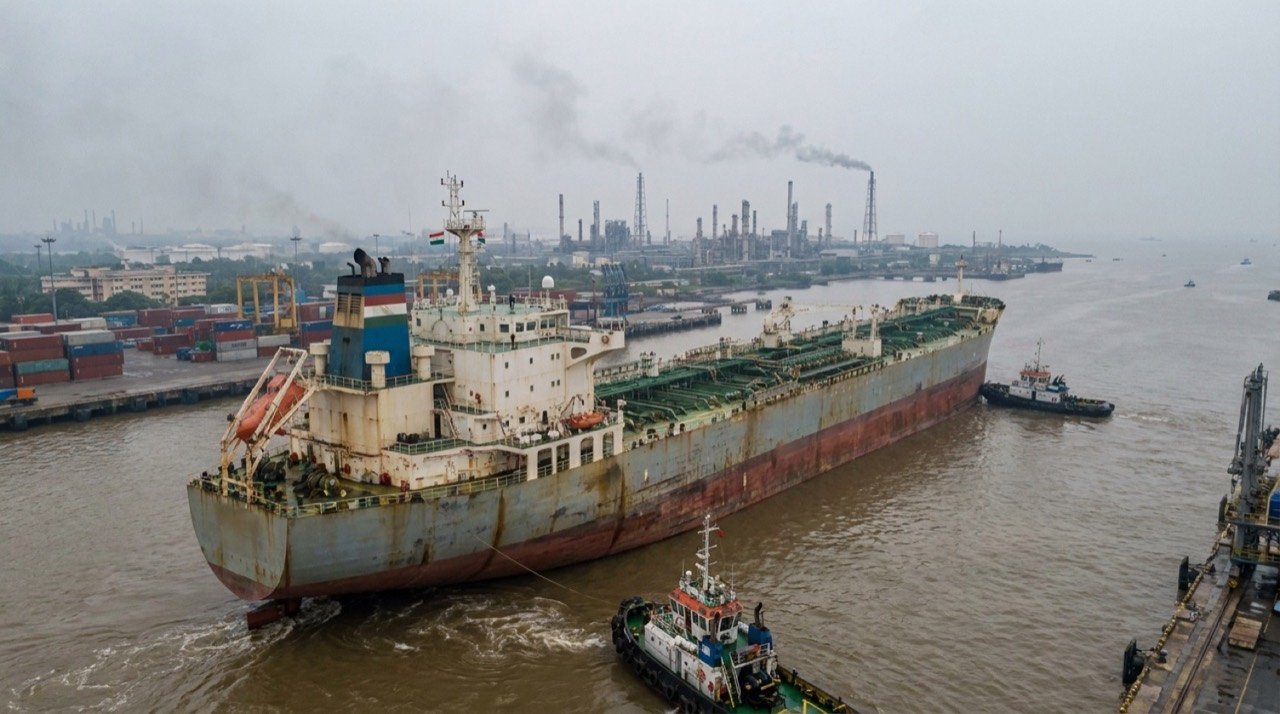
India's Russian Crude Imports May Hit Record June Share
India's Russian crude imports could touch a record high in June, with Moscow supplying nearly half of total purchases until June 20, as discounts and shifting supply reshape the energy basket.
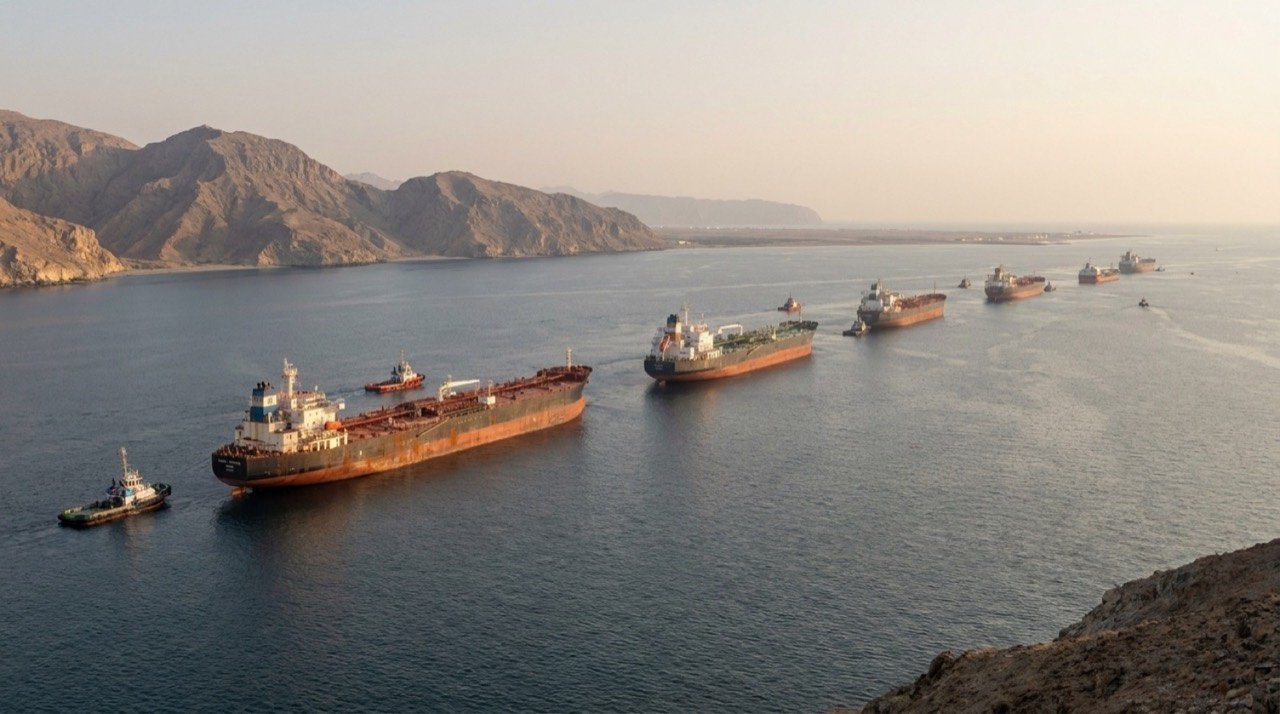
India-Bound Vessels Cross Strait of Hormuz After US-Iran De-escalation
Tankers carrying oil, gas and fertiliser bound for India have crossed the Strait of Hormuz after signs of US-Iran de-escalation, easing immediate fears over a critical energy supply lane.