Boss Scam Advisory Warns Indian Companies Over Executive Impersonation Fraud
Indian firms are being warned about the rising Boss Scam, in which fraudsters impersonate senior executives to push urgent payments or data transfers, exploiting hierarchy and trust rather than technical weakness.
Commentary & Analysis ·
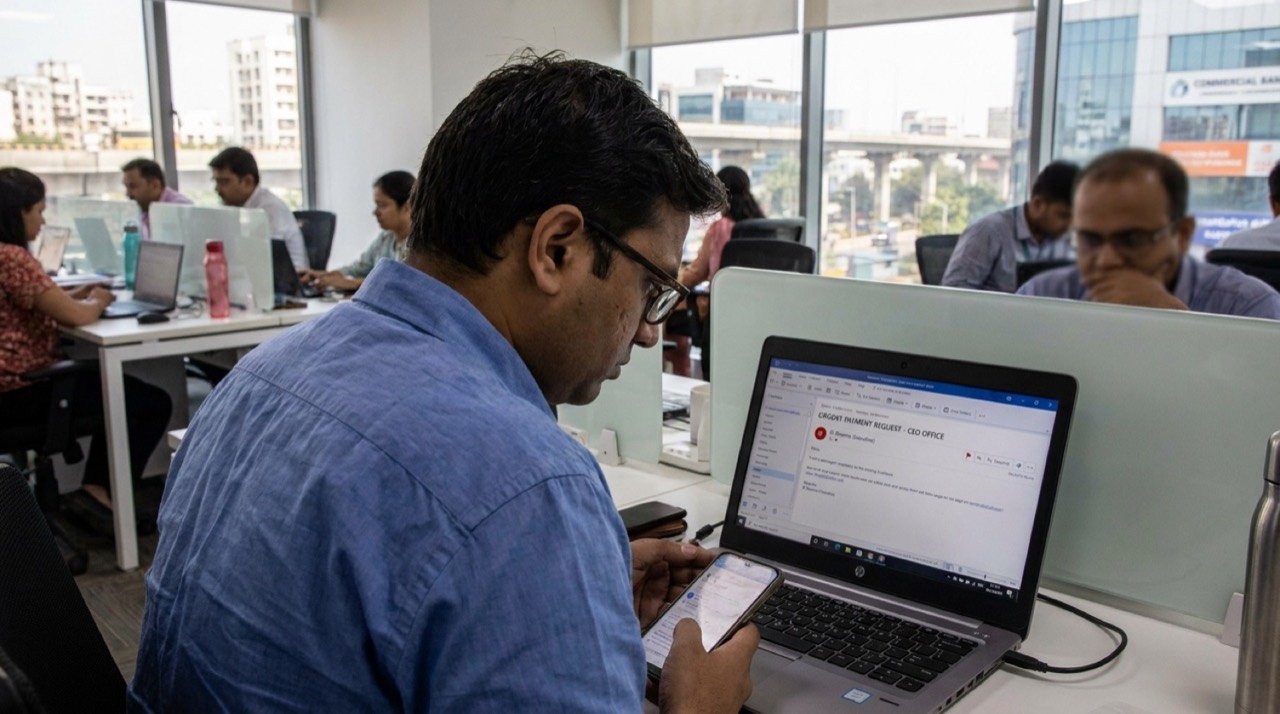
Indian companies are being cautioned about a fast-growing threat known as the Boss Scam, in which fraudsters impersonate senior executives to pressure staff into making urgent payments or transferring sensitive data. The advisory matters because the scheme exploits organisational hierarchy, time pressure and personal trust far more than any technical vulnerability, making conventional security tools insufficient on their own.
How the Boss Scam Works
The tactic typically begins with an email, message or call that appears to come from a chief executive, finance head or other senior figure. The supposed boss claims to be tied up in a confidential deal, an acquisition or a travel emergency, and instructs a junior employee to release a payment immediately or share confidential records, while stressing secrecy and urgency.
Because the request seems to flow down the chain of command, employees are reluctant to question it. Attackers often study a company's structure, leadership names and communication style in advance, lending the message a convincing veneer of authenticity that can defeat instinctive caution.
Why It Targets People, Not Systems
Unlike malware or network breaches, the Boss Scam is a social-engineering attack built around human psychology. It preys on the deference staff show to authority, the fear of disappointing a superior and the pressure to act quickly. That is precisely why finance teams, executive assistants and vendors are seen as the most exposed links in the chain.
The advisory urges organisations to treat any unusual payment instruction or data request as suspicious until verified through a separate, trusted channel, such as a direct phone call to a known number rather than a reply to the original message.
Building Defences Across the Workforce
Security experts say resilience against the Boss Scam depends on clear internal processes as much as on technology. Approval workflows, dual sign-off for large transfers and a workplace culture in which staff feel safe to pause and verify even a request from the top are central to reducing risk.
- Verify unusual payment or data requests through a second, independent channel before acting.
- Require dual authorisation for high-value or out-of-pattern transfers.
- Train finance teams, assistants and vendors to recognise urgency-based pressure tactics.
- Confirm changes to bank details directly with known contacts, never via email alone.
- Encourage staff to question suspicious instructions without fear of reprisal.
“Attackers exploit hierarchy, pressure and trust rather than only technical weakness.”
— Enterprise fraud advisory
As digital payments and remote working deepen across Indian businesses, the Boss Scam is likely to grow more sophisticated, including the possible use of AI-generated voice and video to mimic executives. The outlook for companies hinges less on buying new tools and more on embedding verification habits into daily operations, so that a single rushed click cannot drain accounts or expose data. For now, the simplest defence remains a deliberate pause and a second check.
The NE Times View
The Boss Scam's genius is that it exploits culture, not code. In hierarchical Indian workplaces where a senior's instruction goes unquestioned, urgency and authority become the attack surface. No firewall stops an employee who believes the CEO personally ordered a transfer. The defence is unglamorous but effective: verification protocols that make pausing to confirm a payment normal rather than insubordinate. Companies that treat this as an IT issue alone have already misdiagnosed the threat.
This article is original commentary and analysis by The NE Times. Background facts were referenced from Business Standard and CERT-In.
You may also like to read
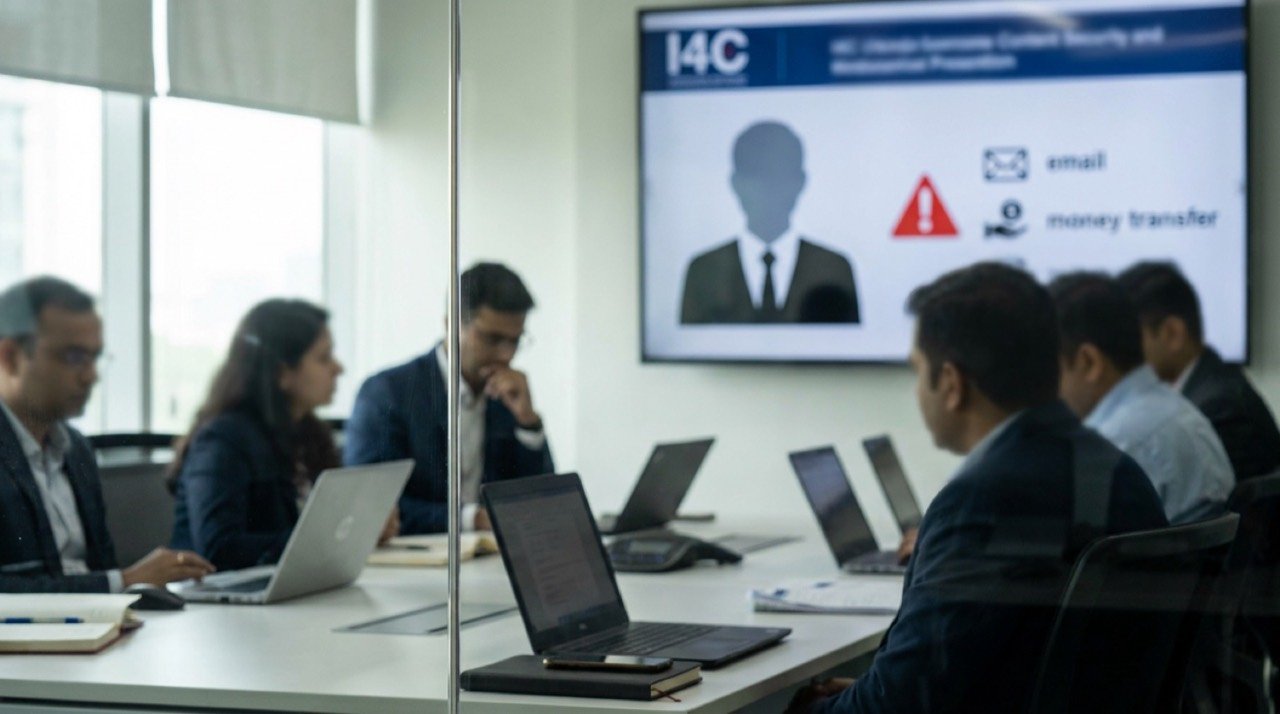
I4C Warns Indian Companies of Rising 'Boss Scam' CEO-Impersonation Cyber Fraud
India's cybercrime coordination agency has flagged an emerging 'Boss Scam' in which fraudsters impersonate regulators and executives to push urgent, fraudulent money transfers at companies.
RBI Warns AI-Driven Cyberattacks Are Top Risk for Banks, NBFCs
The Reserve Bank of India has flagged AI-powered cyberattacks as a leading threat to banks and NBFCs, pushing cybersecurity to the centre of India's increasingly digital financial system.
I4C Warns Companies About Malware-Driven 'Boss Scam' Targeting Executives
India's cybercrime coordination body has flagged a 'Boss Scam' in which fraudsters impersonate senior executives, hijack WhatsApp sessions and push finance teams into urgent money transfers.

CBI Arrests Former RCFL and RHFL CEOs in Rs 7,623 Crore Bank Fraud Case
The Central Bureau of Investigation has arrested two former Reliance finance executives over alleged loan diversion that investigators say cost public sector banks Rs 7,623 crore.
More from this section
More
Adani Case: US DOJ Pushes for Permanent Dismissal of Charges
The US Department of Justice has urged a judge to permanently dismiss charges against Gautam Adani, calling the case legally flawed — a reversal with consequences for markets, diplomacy and cross-border enforcement.

Akasa Air Inducts 40th Aircraft in Indian Aviation Scale-Up
Akasa Air's 40th aircraft, ferried to Bengaluru via Seattle, Reykjavik and Cairo, marks a fleet milestone for the young carrier and a fresh signal that India's aviation market remains firmly in expansion mode.
BARC Ratings Suspension Leaves Indian TV Industry Flying Blind
BARC's pause on television ratings has put India's broadcast measurement system under fresh scrutiny, leaving broadcasters, advertisers and media planners without the weekly audience data that anchors the TV economy.