Behind the NEET-UG Crisis, a Quieter Emergency: The Well-Being of India's Aspirants
As the NEET-UG 2026 leak row and protests deepen aspirant anxiety, here is what India's mental-health helplines offer, the warning signs, and how families can help.
Commentary & Analysis ·
Key facts
- Tele-MANAS (dial 14416) offers free, 24x7 counselling in English and 20 regional languages; the older KIRAN line (1800-599-0019) now routes into it.
- The Education Ministry's Manodarpan programme runs a tele-counselling helpline (8448440632) for students, parents and teachers.
- India has roughly 0.3 psychiatrists per 100,000 people, a fraction of what many high-income countries report, leaving demand far ahead of supply.
- WHO and Indian media guidelines urge non-sensational coverage of distress and prominent display of help-seeking resources.
A crisis with a hidden second front
The NEET-UG 2026 paper-leak controversy has been measured so far in the language of institutions: petitions, adjournments, First Information Reports, and the question of whether an examination sat by lakhs of young Indians can still be trusted. On 24 July, activist Sonam Wangchuk ended a fast that had become a rallying point for the Chhatra Justice Protests, keeping the demand for a fair, transparent process in the headlines.
But there is a second front to this crisis, and it is far quieter. It is playing out in bedrooms and hostel rooms, in the silences at the dinner table, in the aspirant who has stopped answering messages from friends. For a generation that has organised years of its life around a single exam, uncertainty is not an abstraction. It is a daily weight. This article is about that weight, and about the support that exists to carry it.
Why exam uncertainty hits so hard
The stakes of a high-competition entrance test are already steep. A limited number of medical seats, families that have often stretched their finances for coaching, and the sense that a single result will decide a lifetime of possibilities all combine into what psychologists call chronic, anticipatory stress. Repeated attempts, or the fear of a wasted year, only sharpen it.
A leak or a re-examination adds a cruel new variable: the loss of control. Aspirants who prepared for a fixed date now face an open-ended wait, unsure whether their effort will count. Counsellors note that unpredictability is one of the most corrosive forms of stress, because the mind cannot rehearse for an outcome it cannot see. When the very fairness of the process is in doubt, motivation and hope, the fuel of long preparation, are the first casualties.
The helplines that exist
India does have a public safety net, and it is more accessible than many families realise. The national mental-health helpline Tele-MANAS can be reached by dialling 14416. It is free, available around the clock, and offers support in English and twenty regional languages, connecting callers to trained counsellors. The earlier KIRAN helpline (1800-599-0019) has been folded into this system, so a call to either is designed to reach help.
For students specifically, the Education Ministry's Manodarpan initiative runs a tele-counselling service (8448440632) aimed at students, parents and teachers, alongside advisories and self-help resources. These lines are staffed by people trained to listen without judgement, to de-escalate a moment of panic, and to guide callers toward longer-term care. Reaching out is not an admission of weakness; it is the same practical step as consulting a doctor for a fever that will not break.
The gaps we should be honest about
Helplines are a vital first door, but they are not the whole house. India's shortage of mental-health professionals is well documented, with roughly 0.3 psychiatrists per 100,000 people by widely cited estimates, far below what many high-income countries report. That gap means waiting lists, uneven access outside big cities, and a heavy reliance on families and schools as the front line of support.
Stigma remains a second barrier. In many households, distress is read as a lack of discipline rather than a health need, and boys in particular are often taught to suppress it. Awareness of the helplines themselves is patchy. Closing these gaps is a policy task, but it is also a cultural one, and it begins with treating a struggling aspirant as someone who needs support, not correction.
Warning signs families can watch for
Distress rarely announces itself. More often it shows up as change. Counsellors point to a cluster of signals worth noticing: a sharp withdrawal from friends and family, sleep that has collapsed or ballooned, loss of appetite, giving up on activities once enjoyed, and expressions of hopelessness such as feeling like a burden or that nothing will improve. A sudden, unexplained calm after a period of visible anguish can also warrant gentle attention.
None of these signs is a diagnosis, and no parent should turn detective. The point is simpler: patterns of change are an invitation to check in. If a young person voices thoughts of self-harm, it should be taken seriously and met with calm presence rather than alarm, and professional help, through a helpline or a clinician, should be sought without delay.
How families and institutions can help
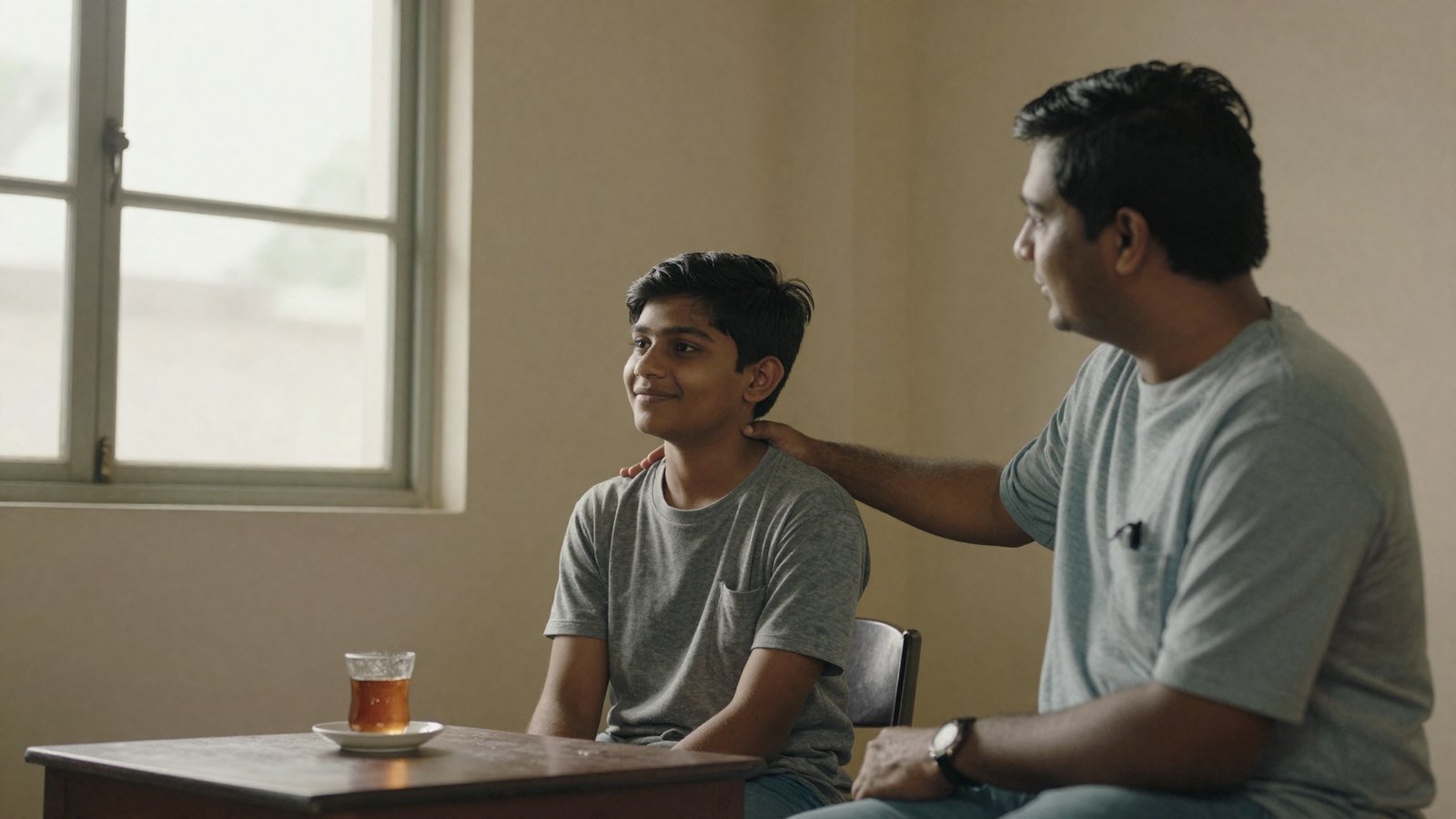
The most useful thing an adult can offer is often the least dramatic: unhurried, non-judgemental listening. Experts advising through programmes like Manodarpan stress that parents help most when they reassure rather than interrogate, when they separate a child's worth from a rank, and when they manage their own anxiety so they can be a steadying presence. A phrase as plain as 'whatever happens with this exam, you matter more to us than the result' can do real work.
Coaching institutes and schools carry responsibility too. Ready access to a counsellor, staff trained to spot a student in trouble, and a culture that does not publicly rank and shame all lower the temperature. Small daily habits help individuals as well: regular sleep, short breaks, movement, time offline, and staying connected to at least one trusted person. These are not cures, but they are ballast, and in an uncertain season ballast matters.
Reporting responsibly, together
The way a crisis is talked about shapes how those inside it feel. The World Health Organization and Indian media guidelines are clear that coverage of distress should avoid sensationalism and graphic detail, resist framing any single outcome as the end of a life's possibilities, and prominently carry sources of help. Research suggests that responsible reporting which points toward coping and support can act as a protective factor, while sensational coverage can do harm.
That principle applies beyond newsrooms. In family WhatsApp groups and classroom conversations, the same restraint holds. An exam, even one as consequential as NEET, is a chapter, not a verdict. Keeping that perspective visible, and keeping a helpline number within reach, is something every one of us can do.
The NE Times View
The fight for a fair NEET-UG is necessary, and it must continue. But fairness on paper means little if the young people it is meant to protect are quietly breaking under the strain. Accountability for the leak and compassion for the aspirant are not competing priorities; they are two halves of the same duty. If you or someone you know is struggling, help is a phone call away: Tele-MANAS on 14416. Reaching out is strength, and no examination is worth more than a life.
Sources
- https://telemanas.mohfw.gov.in/
- https://manodarpan.education.gov.in/
- https://www.iasp.info/2023/09/12/who-updated-resource-for-media-professionals/
- https://www.theweek.in/news/health/2025/09/10/the-pressure-cooker-effect-student-mental-health-under-siege-in-india-s-education-system.html
This article is original news analysis and commentary by The NE Times, based on reporting from the sources listed above.
You may also like to read
India's Second National Mental Health Survey Reframes Wellbeing as the Goal
As NIMHANS conducts India's second National Mental Health Survey, researchers are shifting the lens from illness to wellness, amid mounting evidence that young Indians are struggling more than ever.

The Delhi High Court's Medical-Monitoring Order Revisited After the Fast Ended
The end of the fast allows a clearer assessment of how judicial monitoring operated between respect for protest autonomy and the state's duty to
Forced Hospitalisation of a Hunger Striker: What Happened and What Indian Law Tries to Balance
Wangchuk's transfer to hospital placed autonomy, medical necessity, public order and state responsibility in direct tension
Sonam Wangchuk Recovery After 26 Days of Fasting: Refeeding, Monitoring and the Road Ahead
Breaking a prolonged fast begins a medically sensitive recovery phase in which gradual nutrition and clinical monitoring can matter as much as the
More from this section
More
Medical Risks of a 20-Day Hunger Strike: What Doctors Monitor and Why Refeeding Is Also Dangerous
A medically cautious guide to what doctors monitor during a prolonged hunger strike, why risk varies and why restarting food requires careful supervision
Aarogya Setu 2.0 Returns as India's Personal Health Record App
The pandemic-era contact tracing app has been relaunched as a personal health record platform, betting that portable medical data can find a place in India's growing digital health ecosystem.
India Bets on AI to Catch the Next Outbreak Under One Health Mission in 2026
Drawing on the hard lessons of COVID-19, the ICMR is inviting proposals for AI systems to detect emerging pathogens across people, animals and the environment, in a bid to predict outbreaks rather than react to them.