Apple Rebuilds Siri From the Ground Up, and Quietly Hands the Brains to Google
At WWDC 2026 Apple unveiled 'Siri AI', a top-to-bottom overhaul powered by Google's Gemini models under a reported $1 billion-a-year deal.
The NE Times Technology Desk
Commentary & Analysis ·

Apple used its Worldwide Developers Conference at Apple Park to reintroduce its long-criticised voice assistant as 'Siri AI', a rebuild the company describes as its most significant overhaul of the assistant to date. The rebrand acknowledges, at least implicitly, how far Siri had fallen behind the conversational AI assistants that reshaped user expectations over the past few years, and it sets up the assistant as a central pillar of Apple's software story rather than an afterthought.
The most striking detail is what sits underneath. After years of being seen as a laggard in generative AI, Apple has signed a multi-year agreement to run Siri AI on Google's Gemini models, a deal reported to cost the company around $1 billion a year. For a company that prizes vertical integration and rarely cedes core technology to outside vendors, leaning on a direct competitor's models for the brains of its flagship assistant is a remarkable concession, and a tacit admission that buying capability was faster than building it.
An unlikely partnership
The Google arrangement is striking precisely because the two companies compete head-to-head in smartphones, with the iPhone and Android pitted against each other globally. Yet the partners already have a long commercial relationship, most visibly the arrangement that makes Google the default search engine on Apple devices. Outsourcing the heavy lifting of large-language-model reasoning lets Apple close a capability gap quickly, while the reported billion-dollar annual cost underscores both how expensive frontier AI has become and how seriously Apple now treats the assistant's reinvention.
Privacy framing intact
Apple insisted the partnership does not abandon its privacy posture. Requests can be handled on-device, routed through its Private Cloud Compute servers, or sent to Gemini only when the heavier reasoning is required. The redesigned assistant can read on-screen content, understand personal context and chain actions across apps with far less prompting. This tiered approach, keeping lightweight tasks local and escalating only the most demanding queries off-device, is designed to reassure users that personal data is not being indiscriminately shipped to a third party.
- On-device processing for lighter, privacy-sensitive tasks
- Apple's Private Cloud Compute servers for intermediate requests
- Google's Gemini models reserved for the heaviest reasoning
- New abilities: reading on-screen content, understanding personal context, chaining actions across apps
The capacity to read what is on screen and string together multi-step actions across apps points toward a more agentic assistant, one that can carry out tasks on a user's behalf rather than simply answering questions. That shift, if it works smoothly, would represent the most consequential change to how people interact with their iPhones in years.
A broad software wave
The reveal landed alongside iOS 27, iPadOS 27 and macOS 27 Golden Gate, with matching updates across watchOS, visionOS and tvOS. All are due as free updates this autumn, putting a Google-powered Siri in the hands of hundreds of millions of iPhone owners. By bundling the assistant's relaunch into its annual platform refresh, Apple ensures Siri AI reaches an enormous installed base almost immediately, rather than as a niche feature gated behind new hardware.
The reinvention carries real stakes. If Siri AI delivers the responsiveness and contextual intelligence users now expect, Apple can neutralise one of its most persistent criticisms and reframe the iPhone as a credible AI device. If it stumbles, the company will have spent heavily and ceded ground to a rival only to fall short again. The autumn rollout will reveal whether outsourcing the brains was a pragmatic masterstroke or a dependency Apple comes to regret.
The NE Times View
Apple outsourcing Siri's intelligence to Google is the most consequential admission in the company's recent history. The NE Times View: the firm that built its brand on doing everything in-house now rents its AI brain for a reported billion a year, conceding it fell behind. For users this may finally make Siri useful; strategically it deepens Apple's dependence on a rival. Convenience today, vulnerability tomorrow, is a risky trade for a control-obsessed company.
This article is original commentary and analysis by The NE Times. Background facts were referenced from Business Standard, TechRadar.
You may also like to read

Microsoft unveils seven in-house MAI models at Build 2026, loosening its grip on OpenAI
With a reasoning model, a coding flash variant and image generators trained on its own licensed data, Microsoft is signalling it wants to build at the frontier rather than rent it.
Anthropic puts a Mythos-class model in public hands with Claude Fable 5
The company is releasing its most capable widely available model yet, paired with a locked-down sibling reserved for cybersecurity work, in a careful balancing act between power and safety.
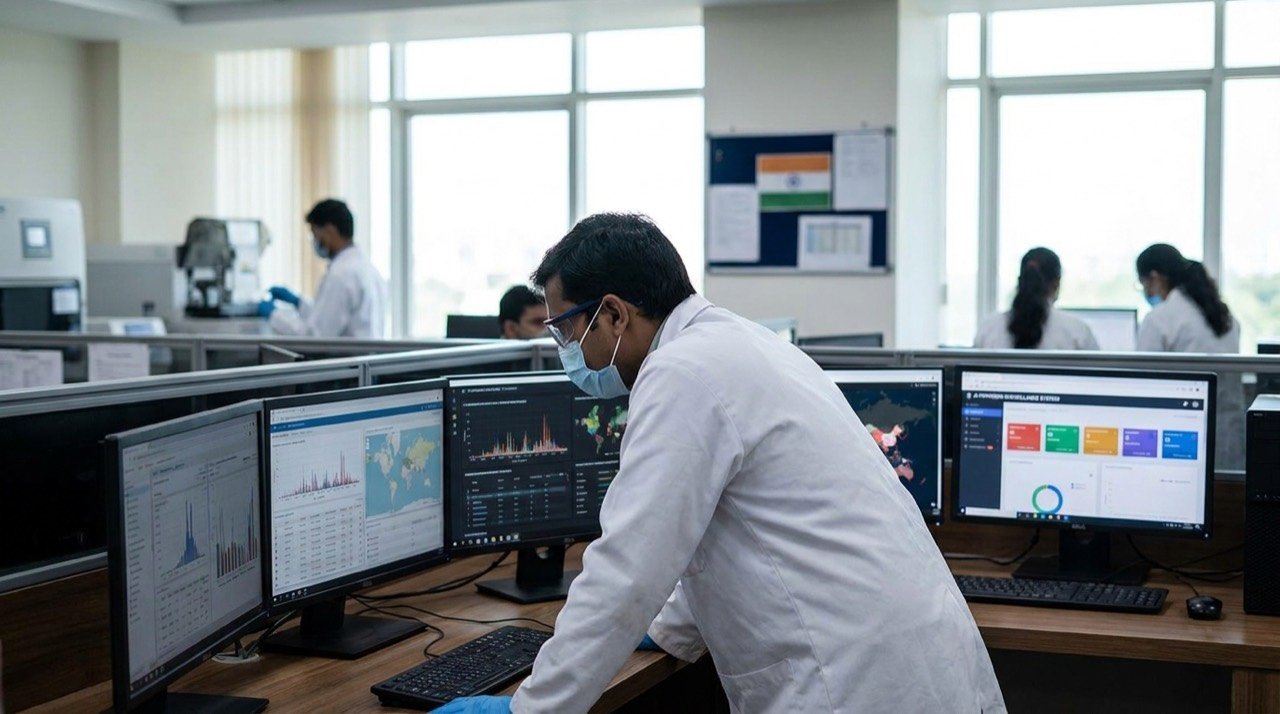
India Bets on AI to Catch the Next Outbreak Under One Health Mission in 2026
Drawing on the hard lessons of COVID-19, the ICMR is inviting proposals for AI systems to detect emerging pathogens across people, animals and the environment, in a bid to predict outbreaks rather than react to them.

Sabarimala to Get AI-Powered Crowd Control for 2026 Pilgrimage Season
Kerala temple authorities are readying an AI-enabled system of smart cameras, drones and GIS mapping to monitor crowds and predict congestion at Sabarimala ahead of the busy pilgrimage season.
More from this section
More
ISRO Fires Semi-Cryogenic Engine Power Head at 175 Tonnes in Landmark Hot Test
ISRO successfully ran its indigenous semi-cryogenic engine power head at 175 tonnes of thrust, clearing a key hurdle toward powering the LVM3 upgrade and the Next Generation Launch Vehicle.
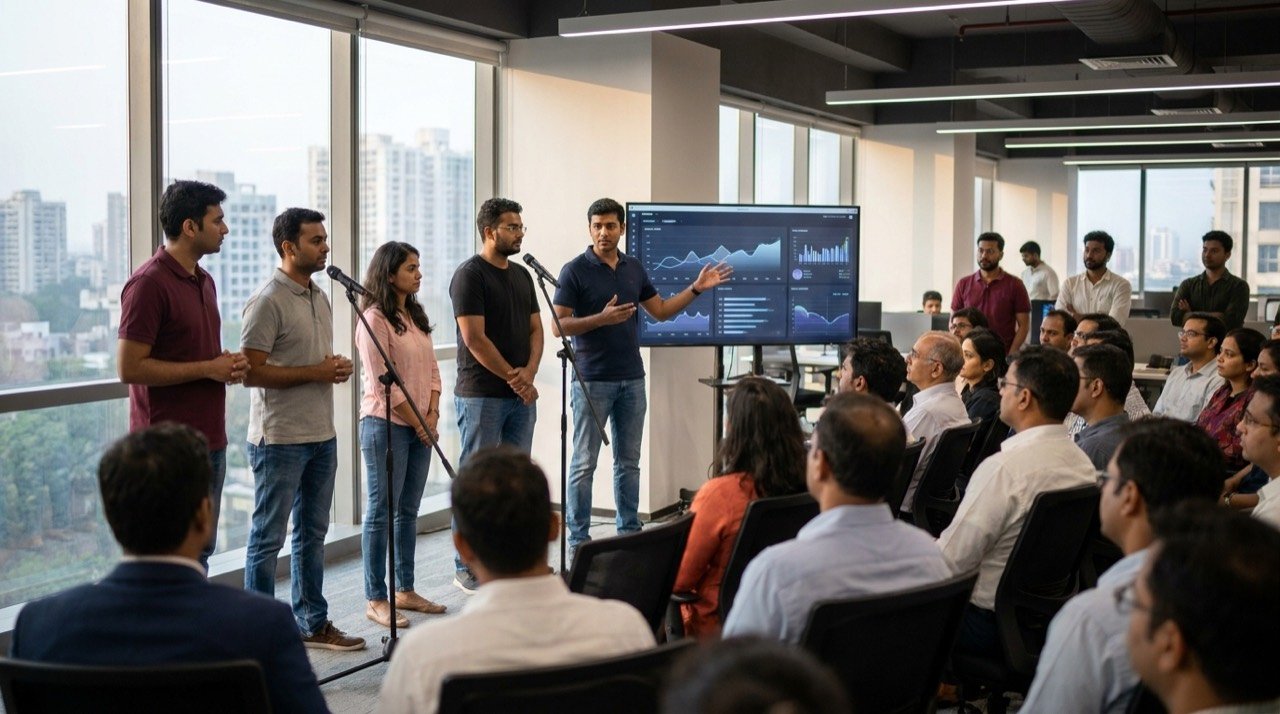
India Tech Funding Climbs to $7.2 Billion in H1 2026 Even as Deal Count Slumps
Indian tech startups raised $7.2 billion in the first half of 2026, up 12 per cent year-on-year, but the number of funding rounds fell sharply as capital concentrated in a handful of mega-deals.
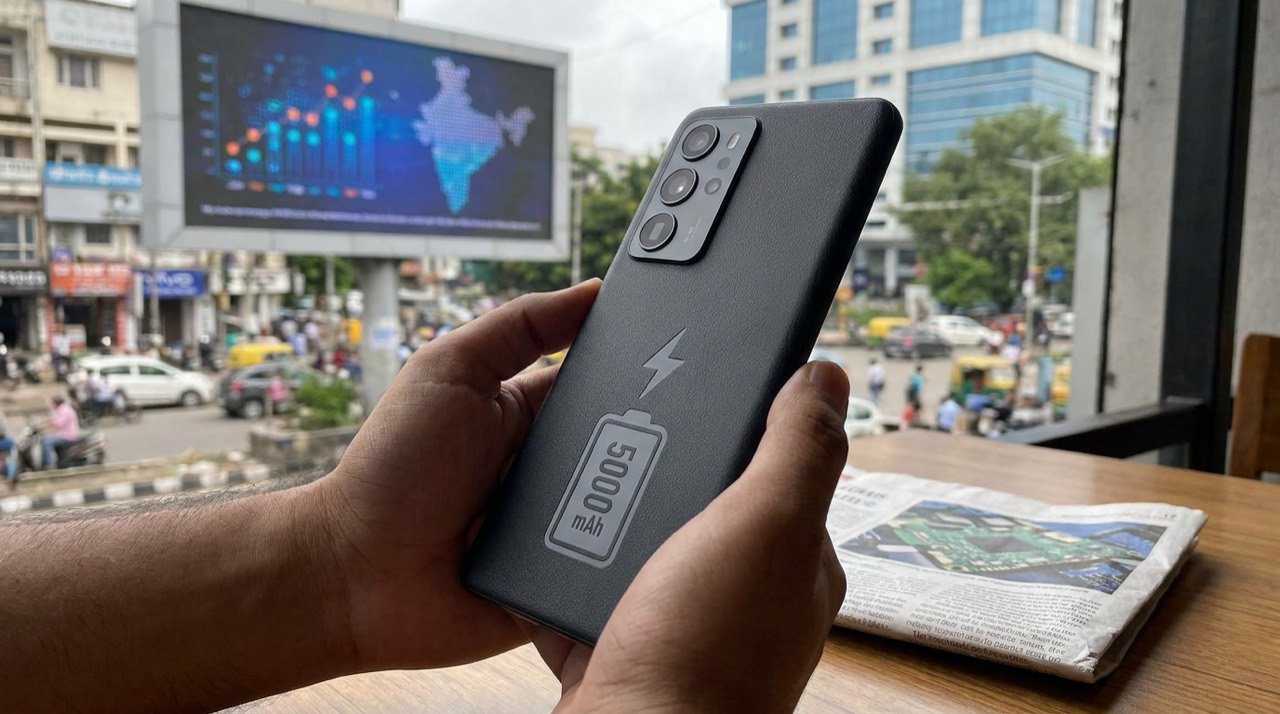
OnePlus N6 Headlines a Crowded End-June Gadget Calendar in India
The OnePlus N6, with its 8,000mAh battery and sub-Rs 25,000 price tag, leads a busy late-June run of smartphone launches in India spanning OnePlus, Oppo and Samsung.