WhatsApp begins its shift from phone numbers to usernames, with India in the firing line
The messaging giant is rolling out optional handles that let people connect without sharing their number, a change that quietly rewrites how its largest market communicates.
The NE Times Technology Desk
Commentary & Analysis ·

WhatsApp is finally moving away from the phone number as the sole key to its identity system. The platform has begun rolling out usernames, optional handles that let people message and call one another without ever exchanging a number, in what amounts to one of the most significant changes to how the app works since it introduced end-to-end encryption.
The rollout begins in selected test countries in June before expanding globally through the rest of the year. India, as WhatsApp's single largest market, is among the regions most likely to feature early, making the change especially consequential for hundreds of millions of users who treat the app as their default channel for everything from family chats to small-business transactions.
What is changing
Until now, finding someone on WhatsApp meant having their phone number. Usernames break that link: people will be able to claim a unique handle, much as they would on Instagram or X, and share that instead. The result is a layer of privacy that has long been absent from the service, allowing contact without disclosing a personal number.
Crucially, the feature is optional. WhatsApp says users who prefer to keep operating purely on phone numbers can continue to do so, and the username system is being layered on top of the existing model rather than replacing it.
A staged timeline
The transition has been carefully sequenced over several months, with the technical groundwork laid well before consumers see the change:
- Earlier in 2026: a business-scoped user identifier began appearing in developer webhooks
- Mid-2026: testing of the new identifier opened up for businesses
- June 2026: people in test countries begin adopting usernames as the rollout starts
- Rest of 2026: a gradual global expansion to all users
Why businesses care
For the millions of businesses that use WhatsApp to reach customers, usernames are more than a privacy tweak. Meta has told companies their systems must be updated to support the new identifiers by mid-2026, and businesses on the official API are getting first access to reserve handles that match their display names or verified branding.
That matters in India in particular, where WhatsApp has become a primary commerce and customer-service channel for everyone from neighbourhood shops to large brands. A memorable, official username could become a marketing asset, while failing to secure one risks impersonation or customer confusion.
The privacy calculus
The headline benefit is straightforward: less exposure of personal phone numbers. In markets plagued by spam calls and number-based scams, the ability to give out a handle instead of a digit string is a meaningful shield. It also nudges WhatsApp closer to the social-platform model, where identity is built around a chosen name rather than a piece of telecom infrastructure.
There are open questions, including how WhatsApp will handle squatting on desirable handles and how username discovery will interact with its privacy controls. But the direction is set, and for a country as dependent on the app as India, the gradual arrival of usernames will reshape a daily habit for a very large number of people.
The NE Times View
For a country where WhatsApp doubles as a payments rail, a small-business storefront and a civic noticeboard, decoupling identity from the phone number is no minor tweak. It should curb the spam and stalking that plague Indian users, but the real test is whether Meta lets people stay genuinely unfindable rather than nudging them toward discoverable handles. Watch how it interacts with India's traceability demands.
This article is original commentary and analysis by The NE Times. Background facts were referenced from Croma Unboxed and WABetaInfo.
You may also like to read

Kunal Shah Named WhatsApp Global CEO as Meta Leads $900 Million CRED Round
CRED founder Kunal Shah has been named global CEO of WhatsApp as Meta leads a $900 million round valuing the Indian fintech at about $4.5 billion, placing a homegrown founder atop one of the world's biggest apps.

Kunal Shah Named WhatsApp Global Head, Putting India at Centre of Meta's Strategy
CRED founder Kunal Shah has been named global head of WhatsApp as Meta deepens its India bets, placing an Indian fintech entrepreneur in charge of the platform's largest market.
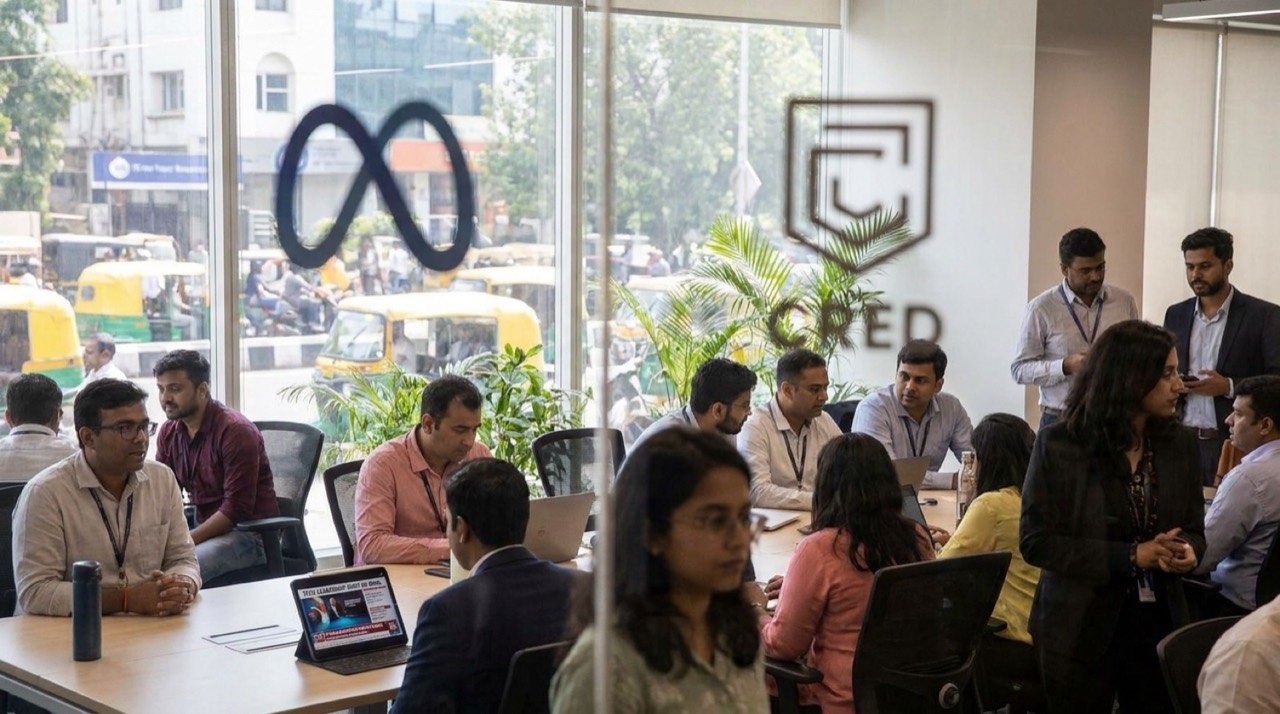
Meta Buys Stake in CRED and Names Kunal Shah WhatsApp Head, Reports Say
Reports that Meta has acquired a stake in CRED at an $8.8 billion valuation and tapped founder Kunal Shah to lead WhatsApp thrust Indian fintech leadership into a global spotlight.

Meta Backs CRED With $900 Million As Kunal Shah Is Tapped To Lead WhatsApp Globally
Meta is investing about $900 million in Indian fintech CRED and has chosen founder Kunal Shah to lead WhatsApp globally, a twin move that ties one of the world's biggest platforms ever closer to Indian consumer technology.
More from this section
More
ISRO Fires Semi-Cryogenic Engine Power Head at 175 Tonnes in Landmark Hot Test
ISRO successfully ran its indigenous semi-cryogenic engine power head at 175 tonnes of thrust, clearing a key hurdle toward powering the LVM3 upgrade and the Next Generation Launch Vehicle.

India Tech Funding Climbs to $7.2 Billion in H1 2026 Even as Deal Count Slumps
Indian tech startups raised $7.2 billion in the first half of 2026, up 12 per cent year-on-year, but the number of funding rounds fell sharply as capital concentrated in a handful of mega-deals.
OnePlus N6 Headlines a Crowded End-June Gadget Calendar in India
The OnePlus N6, with its 8,000mAh battery and sub-Rs 25,000 price tag, leads a busy late-June run of smartphone launches in India spanning OnePlus, Oppo and Samsung.