Theatre commands reach the decision point as CDS Raja Subramani prepares presentation for Rajnath Singh
India's Supreme Court imposed Rs 3 lakh costs on Samay Raina, Ranveer Allahbadia and Ashish Chanchlani after finding non-compliance with directions in a disability-related case.
Commentary & Analysis ·

Verified key facts
- CDS General N S Raja Subramani is expected to present the theatre command plan to Defence Minister Rajnath Singh by end-July 2026
- The plan consolidates 17 single-service commands into three theatres: Northern (Lucknow), Western (Jaipur) and Maritime
- An Army officer would head the northern theatre, an Air Force officer the western, and a Navy officer the maritime command
- Former CDS General Anil Chauhan submitted the final draft before his tenure ended on 30 May
- After the minister's approval, the proposal goes to the Cabinet Committee on Security chaired by the Prime Minister
A plan two decades in the making reaches the minister's desk
India's Chief of Defence Staff, General N S Raja Subramani, is preparing to present the armed forces' theatre command plan to Defence Minister Rajnath Singh. The Federal reported on 13 July that the presentation, expected by end-July, will set out the future command structure and seek the minister's approval. The proposal would then move to the Cabinet Committee on Security, chaired by Prime Minister Narendra Modi, for final clearance.
If cleared, theatre commands would be the biggest reorganisation of the Indian military since Independence. The idea has circulated since the Kargil Review Committee era, gained a mandate when the CDS post was created in 2019, and has now produced a concrete blueprint.
General Subramani is the third Chief of Defence Staff, appointed in May 2026. General Anil Chauhan, his predecessor, reworked the model into adversary-based theatres during his tenure and submitted the final draft before completing his term on 30 May, The Federal reported. The new CDS inherited a finished document rather than a debate.
What the blueprint proposes
The plan consolidates 17 existing single-service commands into three unified theatres, according to The Federal. A Northern Theatre Command, headquartered in Lucknow, would face China. A Western Theatre Command, based in Jaipur, would face Pakistan. A Maritime Theatre Command would take charge of the seaboard and the wider Indian Ocean.
Service balance is built into the leadership. An Army officer would head the northern theatre, an Air Force officer the western, and a Navy officer the maritime command, Indian Defence News reported. The same reports say the plan creates new four-star posts, including a Vice Chief of Defence Staff, though official confirmation is awaited.
Under theaterisation, service chiefs would step back from operational command. Their role would shift to raising, training and equipping their forces, while theatre commanders run operations. That is broadly the model followed by the United States and, in a different form, by China's military.
Why the push has new momentum
Two events changed the debate. Operation Sindoor in May 2025 was the first major operation in which the Army, Navy and Air Force fought in an integrated format. The Federal reported that the operation also exposed coordination gaps, with a joint arrangement improvised inside the Army war room.
That lesson cut both ways. Integration worked well enough to deliver results, which strengthened the reformers' hand. But the improvised nature of the setup showed that ad hoc jointness is no substitute for standing structures with clear command authority, a point the Organiser also made in its reporting.
Exercise Trishul, one of the largest tri-services exercises, was designed around the theatre concept and tested joint deployments at scale. Together, the operation and the exercise gave planners real-world evidence that the services can fight as one when the structure demands it.
The Air Force's unresolved objection
The proposal's oldest critic remains the Indian Air Force. The IAF has consistently opposed permanently dividing its limited combat squadrons among geographic theatres, arguing that air power's value lies in rapid concentration across fronts. The Federal reported that this concern persists even as the plan advances.
How the blueprint answers that objection will shape the rollout. Options discussed over the years include centralised control of air assets with theatre-level allocation, or an air defence overlay spanning theatres. The published reports do not confirm which formula the final draft adopts.
The approval path and its politics
The sequence now is administrative but consequential. Singh's approval sends the file to the Cabinet Committee on Security. Republic World reported that the presentation is expected around Kargil Vijay Diwas in late July, timing with symbolic weight, since the Kargil review began the jointness debate.
CCS clearance would trigger enabling orders under the Inter-Services Organisations Act, passed by Parliament in 2023 to give joint commanders disciplinary and administrative authority over personnel of all three services. That statute was widely read as legal scaffolding built in advance for theatre commands.
What changes on the ground, and when
Even with approval, the transition will be phased. Seventeen command headquarters, their staffs, signal networks and logistics chains cannot be merged quickly. The maritime command, which builds on the existing Andaman and Nicobar joint command, is widely expected to be the least disruptive to stand up.
Personnel policy is the quiet challenge. Cross-service postings, common appraisals and joint staff training must expand to fill theatre headquarters with officers who think beyond their uniform. The services have begun cross-staffing in integrated headquarters, but three theatres demand that on a different scale.
- Presentation to the Defence Minister expected by end-July 2026
- Cabinet Committee on Security decision to follow
- Northern (Lucknow), Western (Jaipur) and Maritime commands proposed
- New four-star posts, including a Vice CDS, reported to be under consideration
The stakes are practical rather than ceremonial. Integrated theatres determine how fast India can mobilise for a two-front contingency, how procurement priorities are set, and who commands in a crisis. After two decades of committee reports, the question has narrowed to execution.
Sources
- The Federal - After over two decades of debate, is India's theatre command plan close to reality? (13 July 2026)
- Republic World - Learning from Op Sindoor: Is the new CDS ready to reshape the armed forces into theatre commands? (13 July 2026)
- Indian Defence News - CDS Subramani to present theatre command plan to Rajnath Singh for CCS approval (July 2026)
- Organiser - Bharat's leap towards integrated theatre commands as CDS pushes military reform (13 July 2026)
You may also like to read
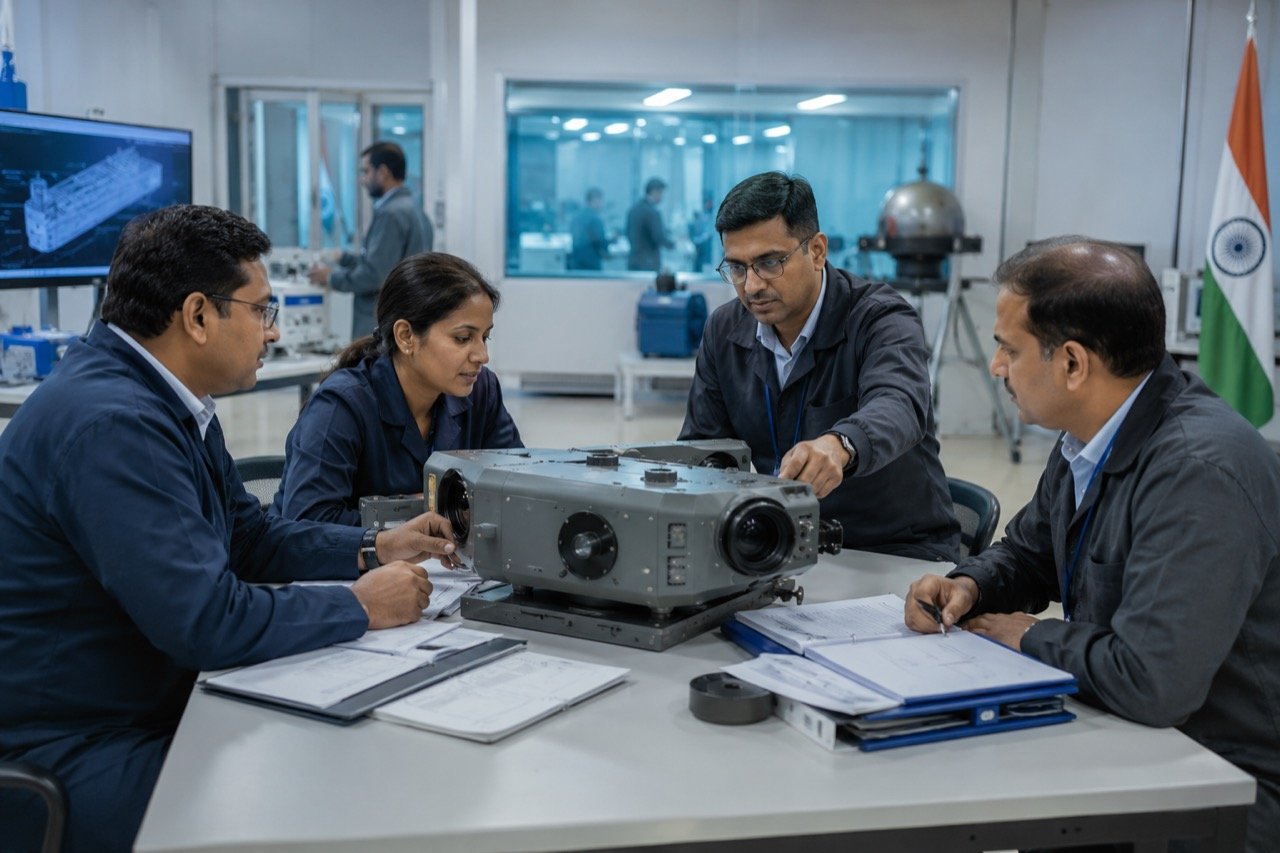
DFP 2026 Unveiled: Rajnath Singh Moves to Fast-Track Defence R&D
Defence Minister Rajnath Singh has released the Defence Framework Procedure 2026, a revised procurement framework meant to push research and development outputs into the armed forces faster and deepen ties with industry and academia.

Ahmedabad Bullet Train Station Gets Kite-Inspired Multimodal Hub Plan
Ahmedabad's bullet train station is set to be developed as a multimodal transport hub with a kite-inspired design, giving India's high-speed rail project a distinctive urban landmark rooted in local identity.

Rushikonda Complex PPP Plan Revives Andhra Coastal Asset Debate
Andhra Pradesh has invited private operators to run the nearly Rs 450 crore Rushikonda Building Complex in Visakhapatnam, reopening questions about tourism potential, transparency and the future of a politically contested coastal asset.
BJP MLA Raju Singh Jailed Four Years Over Celebratory Firing Death
A Delhi court has sentenced BJP legislator Raju Singh to four years in prison after holding him responsible for a fatal bullet fired in celebration, renewing focus on reckless gun use at private events.